

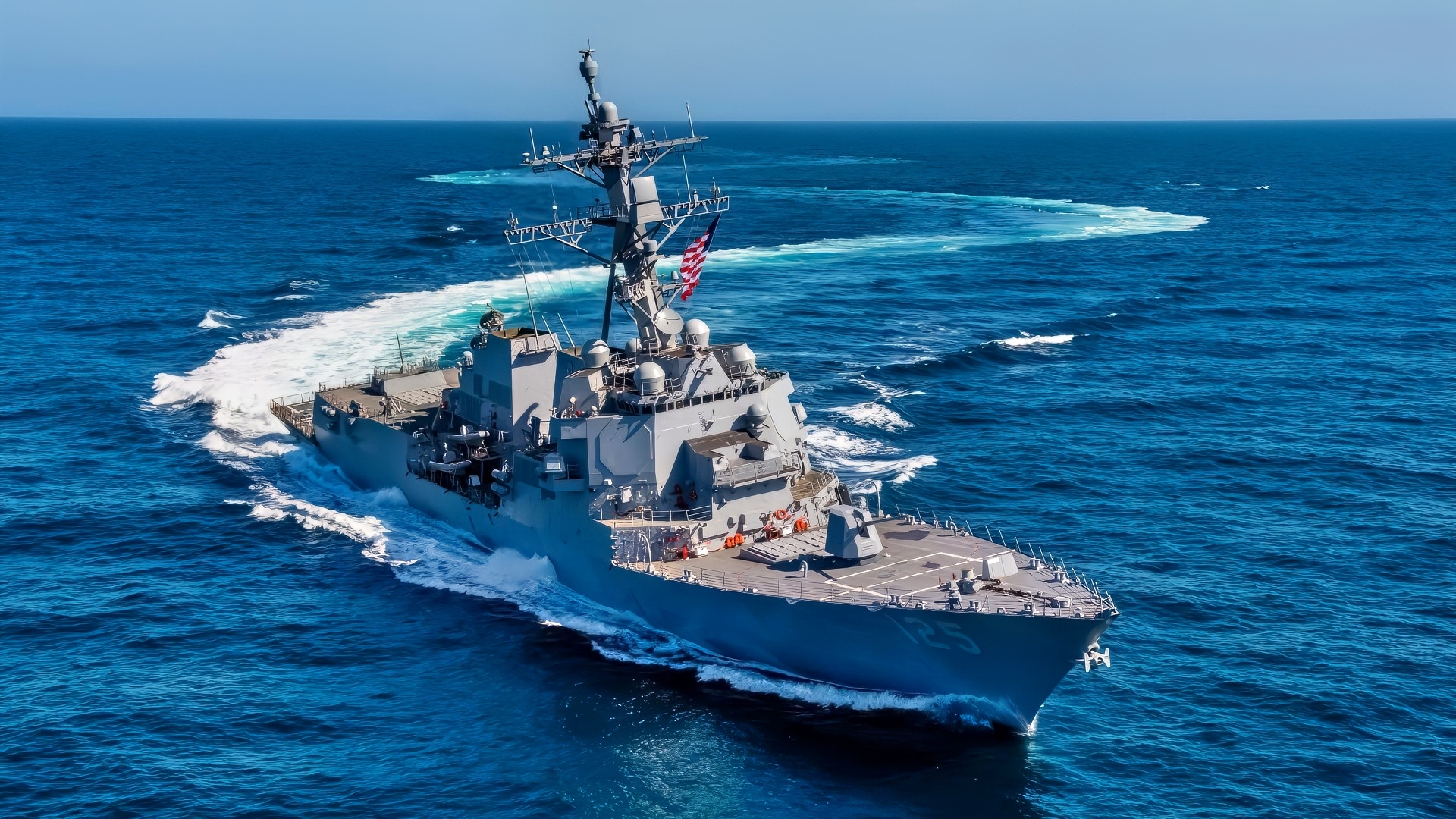
Key Points and Summary – UNITAS 2025 brought together 25 nations and 8,000 personnel off the U.S. East Coast in a massive test of coalition naval power.
-The three-week exercise culminated in a live-fire SINKEX that sent a decommissioned U.S. warship to the bottom—likely the former frigate USS Simpson—after coordinated missile and gunnery strikes.

A U.S. Navy MH-60S Seahawk helicopter with Helicopter Sea Combat Squadron (HSC) 9 transfers ammunition between aircraft carriers USS George H.W. Bush (CVN 77), foreground, and USS Harry S. Truman (CVN 75) in the Atlantic Ocean Feb. 17, 2011. (U.S. Navy photo by Mass Communication Specialist 3rd Class Leonard Adams/Released)
-Beyond training value, the event underscored a strategic message to China: U.S. and allied forces can find and kill large surface combatants at range using weapons like LRASM, Maritime Strike Tomahawk, and QUICKSINK.
U.S. Navy’s UNITAS 2025 Just Sent China a Message From the Deep
At a time when Beijing boasts of ship-killing capabilities, UNITAS 2025 reminded the world the U.S. Navy still knows how to sink fleets.
The U.S. Navy recently ended its extensive naval exercise UNITAS 2025 on October 6, off the coast of the United States.
UNITAS 2025 was a multinational maritime exercise held from September 15 to October 6, 2025, off the East Coast of the United States, involving approximately 8,000 personnel from 25 allied and partner nations.
The exercise, which included ship-to-shore landings, live-fire events, and other naval operations, focused on strengthening interoperability and maritime partnerships. The event’s theme was “A Legacy of Maritime Partnerships,” and it also celebrated the 250th anniversary of the US Navy.
Participating nations included Argentina, Belize, Brazil, Canada, Chile, Colombia, Dominican Republic, Ecuador, El Salvador, France, Germany, Greece, Guatemala, Honduras, Italy, Jamaica, Japan, Mexico, Morocco, Netherlands, Panama, Paraguay, Peru, Spain, and the United States.

Zumwalt-Class U.S. Navy Image.
“Our combined efforts as a maritime sea service are critical to ensuring free and open seas … UNITAS is an extraordinary opportunity for us to unite, operate, enhance proficiency, and improve interoperability of participating forces to respond to common threats,” said US Navy Rear Admiral Carlos Sardiello, the commander of the US Naval Forces Southern Command, in a press release.
SINKEX Tests Weapons And Shipboard Built-in Defenses
The culmination of the exercise was the Navy conducting a “SINKEX,” where the Navy sank one of its retired warships, sending a subtle but powerful message to China that the US Navy is still a force to be reckoned with.
A SINKEX, or Sink Exercise, is a live-fire training exercise where the U.S. Navy and its allies use decommissioned ships as targets for live-fire exercises with missiles and torpedoes.
These exercises provide realistic training opportunities for participating military forces to test weapon systems, practice tactics, and build interoperability in a maritime environment.
However, before a ship is sunk, it undergoes a rigorous environmental cleaning process to remove harmful materials like PCBs and petroleum.
U.S. Navy Sending The Chinese A Clear Message
During a similar SINKEX in the Pacific during Operation Rimpac 2024, the US Navy sank the decommissioned USS Dubuque (LPD 8) on July 11, 2024, and the decommissioned USS Tarawa (LHA 1) on July 19, 2024.
The sinking of the ex-Tarawa included the employment of a Long-Range Anti-Ship Missile (LRASM) from a U.S. Navy F/A-18F Super Hornet. As a precise, stealthy, and survivable cruise missile, LRASM provides multi-service, multi-platform, and multi-mission capabilities for offensive anti-surface warfare.
Currently, LRASMs are deployed from US Navy F/A-18 and U.S. Air Force B-1B aircraft.
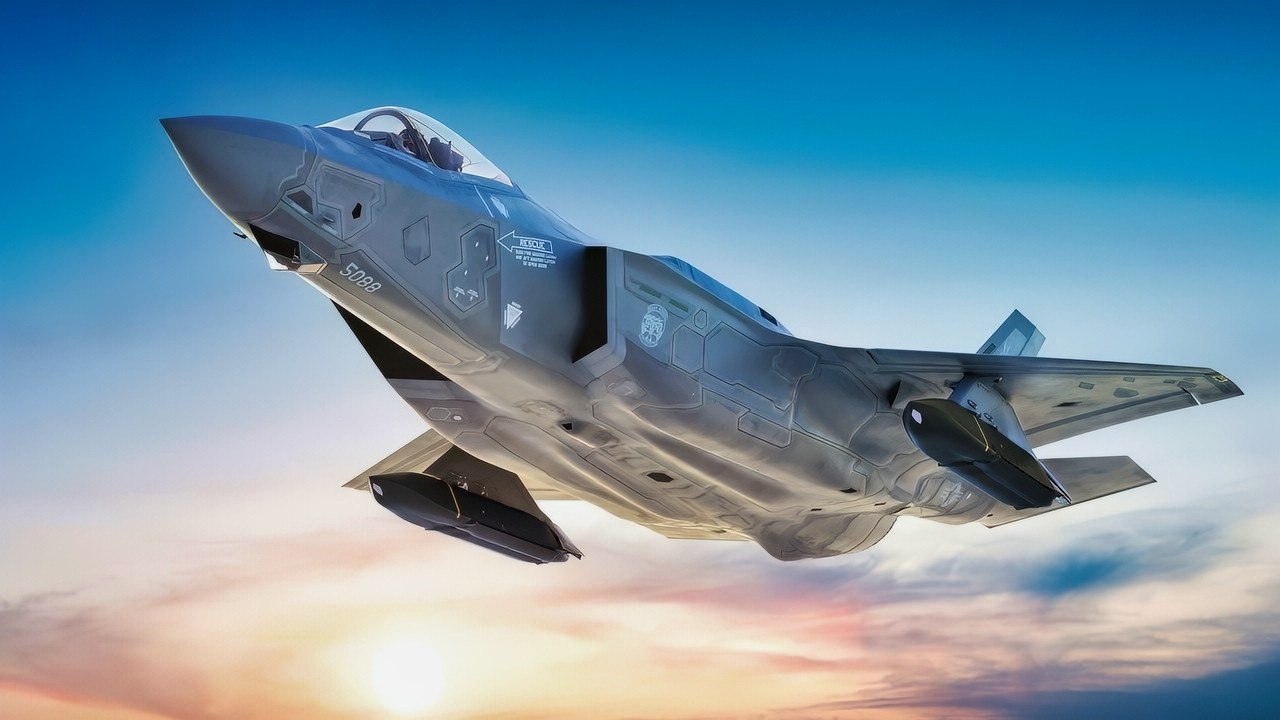
F-35 Fighter With LRASM Missiles. Image Credit: Lockheed Martin.

AGM-158 Extreme Range LRASM. Image Credit: Industry Handout.

NAS PATUXENT RIVER, Md. — An F-35 Lightning II test pilot conducts flight test Sept. 10 to certify the carrier variant of the fighter aircraft for carrying the AGM-158C Long-Range Anti-Ship Missile (LRASM). As part of ongoing integration efforts, the Pax River F-35 Integrated Test Force (Pax ITF) team flew two days of test flights to evaluate flutter, loads, and flying qualities with two AGM-158 loaded on external stations. LRASM is a defined near-term solution for the Offensive Anti-Surface Warfare (OASuW) air-launch capability gap that will provide flexible, long-range, advanced, anti-surface capability against high-threat maritime targets. The Pax River ITF’s mission is to effectively plan, coordinate, and conduct safe, secure, and efficient flight test for F-35B and C variants, and provide necessary and timely data to support program verification / certification and fleet operational requirements.
Why Is it Important?
The reason for conducting these SINKEX operations and their importance are two-fold.
One is that China now has the largest Navy in terms of the number of ships (the US Navy is still the largest in terms of tonnage). And China likes to rattle its saber with the ship-killing abilities, in an obvious finger pointed at the US.
Well, the LRASM and the new Maritime Strike Tomahawk cruise missile, along with the precision QUICKSINK bombs, have extended the US Navy’s reach in the Pacific Ocean to show China that their Navy, while still operating close to their shores and under the protection of its A2/AD systems, is still a viable target in the case of war over Taiwan.
What Was The Target Ship In the UNITAS 2025 SINKEX? Maybe a U.S. Navy Destroyer
The Navy, which sank the target ship on October 7, didn’t officially release the name of the target vessel, although they did publish screenshots of the sinking.
However, most naval analysts believe that the targeted warship could be the former U.S. Navy frigate USS Simpson, which was seen being towed out of the Naval Inactive Ship Maintenance Facility in Philadelphia on September 25, according to @WarshipCam on the social media platform X.
The frigate USS Simpson (FFG-56) was commissioned in 1985 and took part in the recovery effort of the Space Shuttle Challenger after it blew up 73 seconds into its flight.
In 1986, the guided missile cruiser Wainwright (CG-28), the Simpson, and frigate Bagley (FF-1069) sank the Iranian missile boat Joshan (P.225) with RIM-66 and RIM-67 Standard surface-to-air missiles (set for surface attacks), at least one RGM-84 Harpoon surface-to-surface missile, and 5-inch and 76 millimeter gunfire, after an Iranian mine in the gulf damaged the USS Samuel B. Roberts.
The USS Simpson was decommissioned from the U.S. Navy on September 30, 2015, at Naval Station Mayport, Fla.
“Our live fire sinking exercise (SINKEX), a keystone event of UNITAS 2025, demonstrated the lethality our warfighters bring to the security of the region every day. Each SINKEX is conducted in strict compliance with applicable U.S. environmental laws, regulations, and permit requirements to minimize potential environmental harm,” wrote the Navy’s Destroyer Squadron 40 on its Facebook page.
About the Author: Steve Balestrieri
Steve Balestrieri is a National Security Columnist. He served as a US Army Special Forces NCO and Warrant Officer. In addition to writing on defense, he covers the NFL for PatsFans.com and is a member of the Pro Football Writers of America (PFWA). His work was regularly featured in many military publications.


