
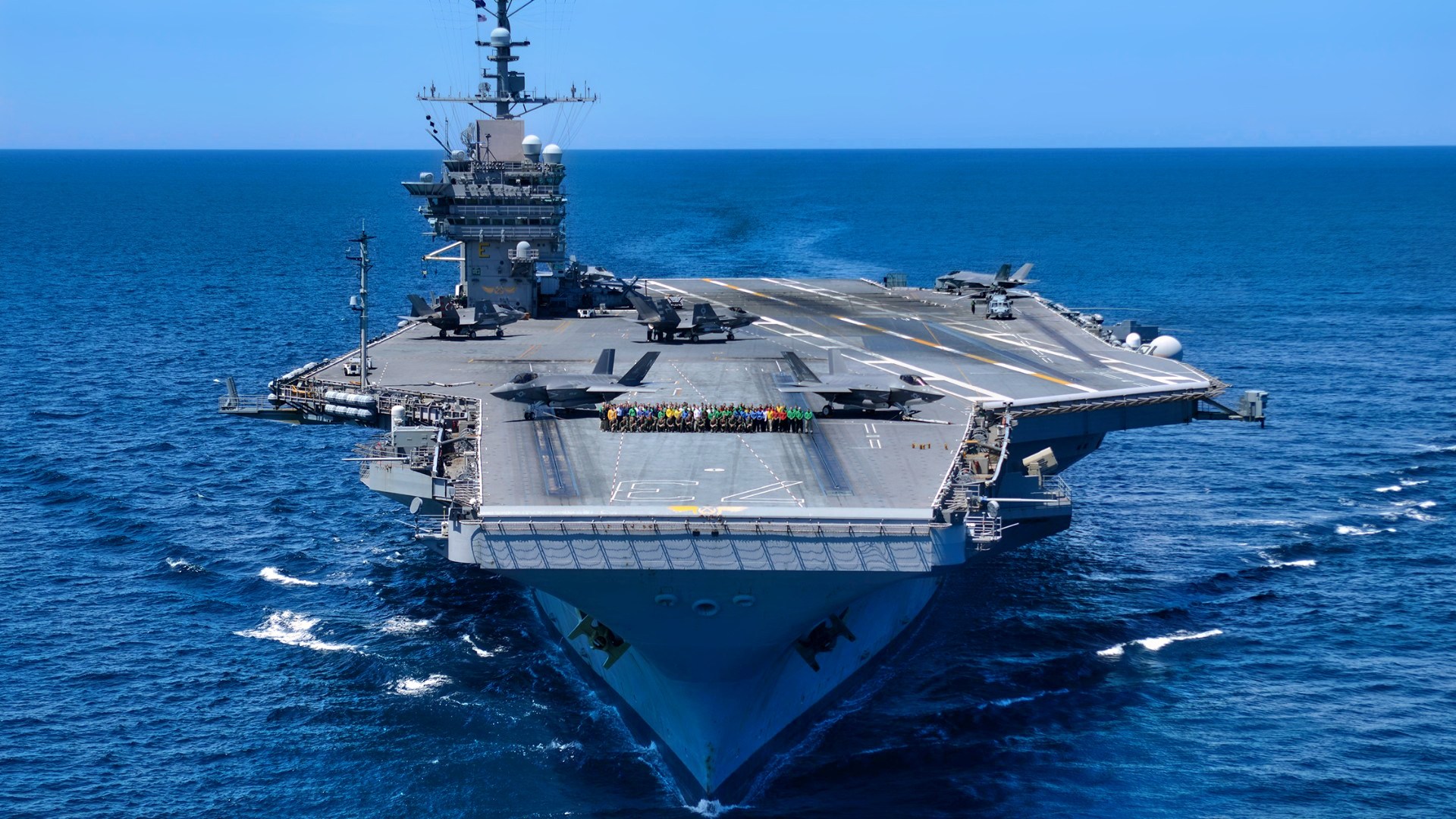
Key Points and Summary – The aircraft carrier USS George Washington (CVN-73) was out of action for six years, a catastrophic delay of its mid-life overhaul (RCOH).
-The maintenance, which began in 2017 and was scheduled for four years, was not completed until May 2023.

USS George Washington. Image Credit: Creative Commons.
-The U.S. Navy attributed the delay to the ship’s unexpectedly poor “arrival condition,” pandemic-related labor and supply chain disruptions, and the strain of having only one shipyard capable of nuclear carrier work.
-This extended yard period had a severe human cost, contributing to poor morale and multiple sailor suicides, while also creating a major gap in U.S. naval readiness.
Why the USS George Washington Was Out Of Action for Six Years
The U.S. Navy’s forward-deployed carrier USS George Washington (CVN-73) spent nearly six years tied up in overhaul – a dramatically more extended period than the usual four-year mid-life maintenance cycle for a Nimitz-class carrier.
The carrier entered its Refueling and Complex Overhaul (RCOH) in 2017.
It only returned to sea trials in May 2023—a remarkably extended downtime that has attracted media and analyst attention for years—and for good reason.
That extended maintenance time raises serious questions about the United States’ industrial base, readiness posture, and growing maintenance burden on its carrier force.
RCOH: What It Means and What It Should Have Been
When a carrier reaches mid-life, it means that the nuclear-powered carrier’s reactor cores are expended, that is, central systems are worn after years of use, and a complete refueling is necessary.
The RCOH for a Nimitz-class carrier typically takes about four years, during which the nuclear plant is defueled, the reactors re-fueled, and the propulsion plant upgraded.
The carrier’s combat, aviation support, and habitability systems are also modernized during this process.

Nimitz-class carrier USS George H.W. Bush (CVN 77) transits the Atlantic Ocean while offloading munitions via helicopter to the world’s largest aircraft carrier, USS Gerald R. Ford (CVN 78), June 27, 2025. Gerald R. Ford, a first-in- class nuclear aircraft carrier and deployed flagship of Carrier Strike Group Twelve, incorporates modern technology, innovative shipbuilding designs, and best practices from legacy aircraft carriers to increase the U.S. Navy’s capacity to underpin American security and economic prosperity, deter adversaries, and project power on a global scale through sustained operations at sea. (U.S. Navy photo by Mass Communication Specialist Seaman Jarrod Bury)
In theory, the George Washington, commissioned in the 1990s, was at a mid-life point when it entered RCOH in August 2017. The four-year schedule should have meant that the process was complete around 2021.
By March 2022, the carrier was already more than a year behind schedule, with completion moved from the original 2021 target to December 2022.
On May 22, 2023, the ship finally departed the yard for sea trials, marking roughly six years in maintenance.
What should have been four years turned into six, and that gap is significant because it constitutes a substantial loss of operational availability for the U.S. carrier force. It’s also an alarming sign of things to come if nothing changes.
Why the Delay Occurred
There are several interlocking reasons for the extended RCOH—and while some directly relate to structural issues in the United States’ industrial base, others were hard to predict.
First, the Newport News shipyard and the Navy reported that, once work began, the “arrival condition” of the ship proved far more challenging than initially expected. It meant that more repair work was required, the retrofit became more complex, and replacement tasks more extensive. All of these problems impacted scheduling.
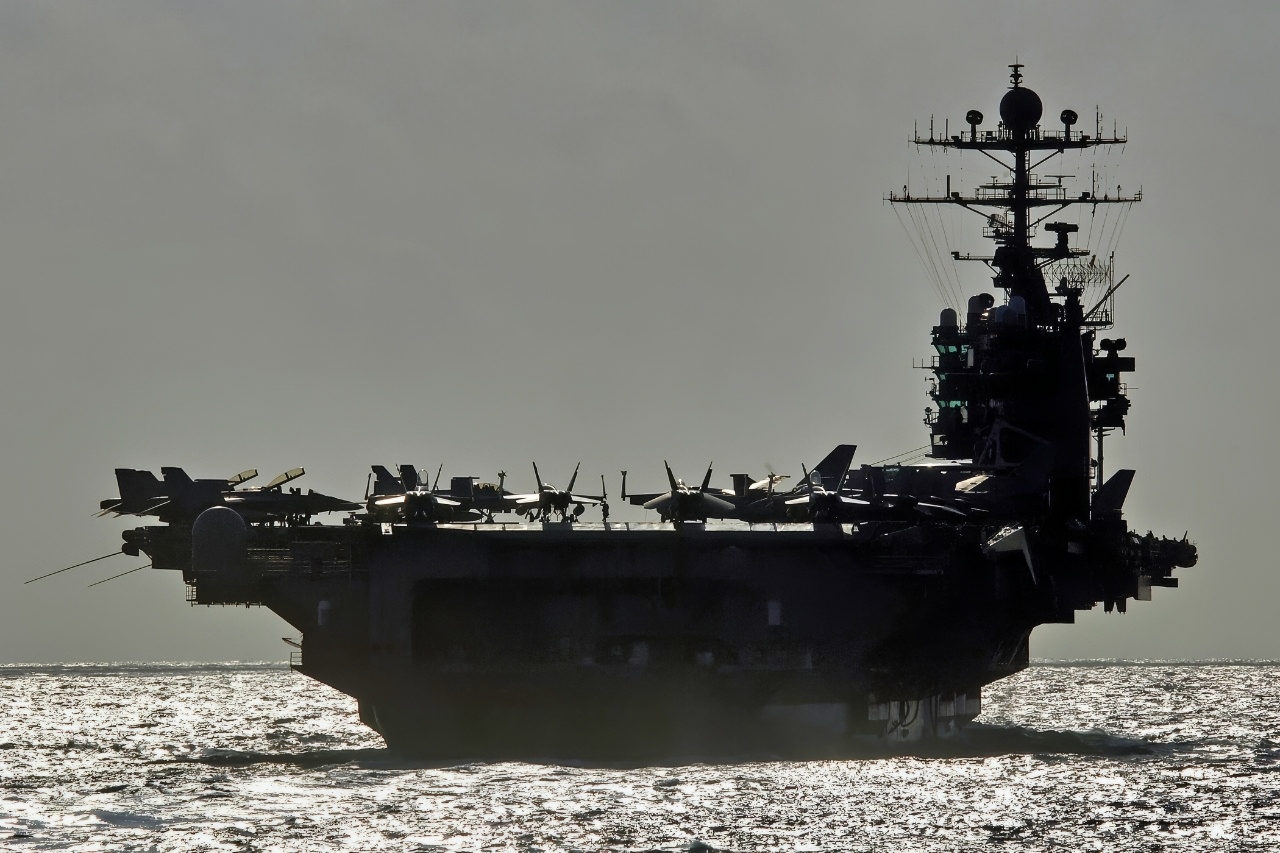
The aircraft carrier USS George Washington (CVN 73) prepares to conduct a refueling at sea with the guided missile cruiser USS Monterey (CG 61) as the two ships operate in the Caribbean Sea on April 20, 2006. The George Washington Carrier Strike group is participating in Partnership of the Americas, a maritime training and readiness deployment of U.S. Naval Forces along with navies of Caribbean and Latin American countries for enhanced maritime security.
(DoD photo by Petty Officer 3rd Class Michael D. Blackwell II, U.S. Navy. (Released))
Then came COVID-19. The pandemic had a direct impact on the labor force and supply chains. Quarantines and workforce reductions left the shipyard short of the workers needed to complete the work on time. In contrast, indirect problems—like vendor delays and an overall decrease in productivity—continued through 2021. The shipyard had multiple carriers in maintenance at the same time, too, adding even more strain.
The fact that only one shipyard—Newport News—is capable of performing a nuclear carrier RCOH is another major problem. While the shipyard was focusing on multiple maintenance projects and working to minimize delays on each, it was also building new carriers.
All these problems compounded, creating serious delays—and at times during the RCOH, parts originally intended for the George Washington were reportedly removed to support other, higher-priority carriers, further delaying the RCOH.
The Implications
The extended RCOH did not simply represent a scheduling issue or minor inconvenience; it impacted readiness, morale, and force posture. The carrier was out of its forward-deployed mission for years, reducing U.S. carrier presence in the strategic theatre. Meanwhile, the crew was often serving in a shipyard environment rather than at sea—a setting that is obviously less suited to training, operations, and even to retention and morale.
A command investigation found, in fact, that the prolonged yard period contributed to poor living and working conditions aboard the ship, and the Navy even confirmed multiple sailor suicides during that period. The human cost of the delays, therefore, should not be ignored – this is more than just an industrial base issue and one that directly affects force morale, recruitment, and retention.
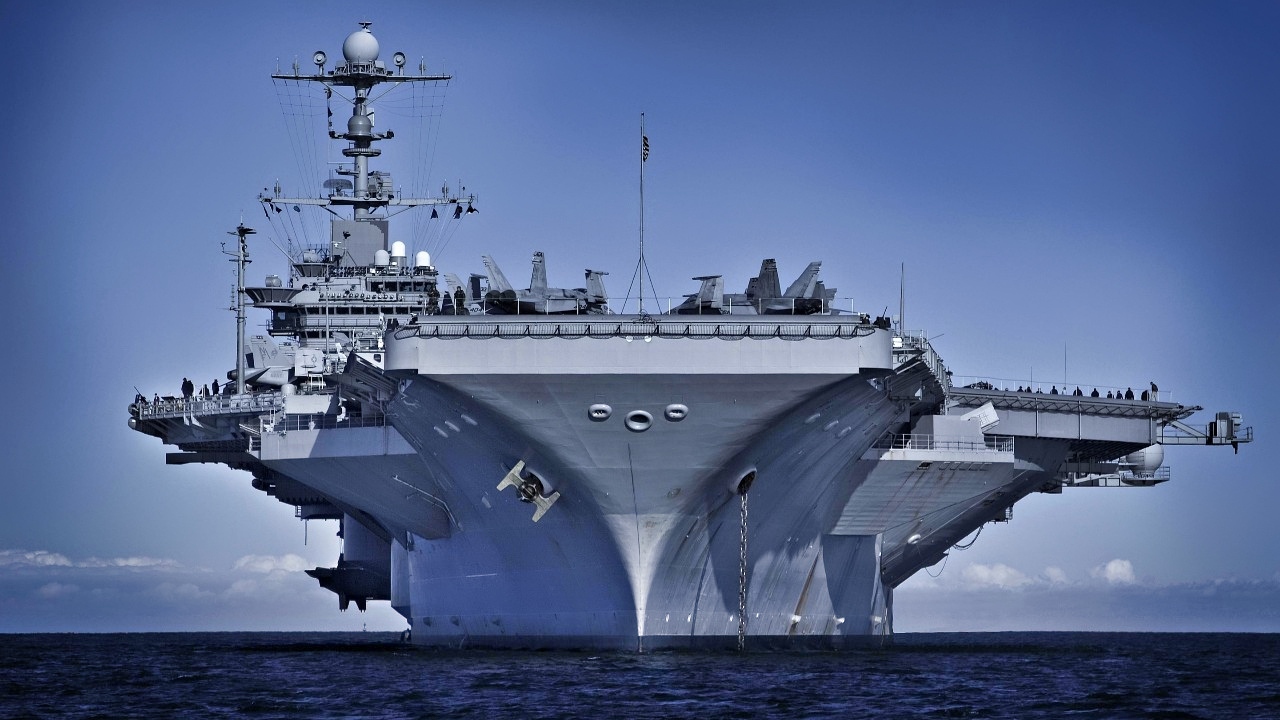
NRL is currently working with Naval Sea Systems Command, Naval Systems Engineering Directorate, Ship Integrity & Performance Engineering (SEA 05P) to transition the new pigment combination into a military specification. The most recent vessel to receive it was USS George Washington (CVN 73).
From a readiness perspective, six years of downtime for a carrier also stretched the remaining carrier force to its limit, forcing the Navy to rely on older platforms or to allow longer deployment intervals.
The U.S. Navy leadership has acknowledged the problems and is taking steps to avoid a repeat. As part of the response, the U.S. Fleet Forces Command’s Quality of Service investigation identified shortfalls in yard-duty living conditions and industrial support, prompting a memo from Adm. Michael Gilday and Carlos Del Toro, the Secretary of the Navy, outlining several priorities for improvement. Among them were improvements to off-ship housing, more substantial mental health support, and fewer first-tour sailors spending their entire enlistments at industrial facilities.
Additionally, the carrier’s refit industrial base has already begun shifting to integrated digital planning tools, earlier condition assessments to prepare for future RCOH work, and expanded subcontractor capacity, helping relieve pressure, though problems remain.
The lesson, however, should be that for the U.S. to sustain a credible global carrier-strike force, the Navy must not only improve its maintenance pipeline but also build better shipyard infrastructure. Urgently.
About the Author:
Jack Buckby is a British author, counter-extremism researcher, and journalist based in New York. Reporting on the U.K., Europe, and the U.S., he works to analyze and understand left-wing and right-wing radicalization, and reports on Western governments’ approaches to the pressing issues of today. His books and research papers explore these themes and propose pragmatic solutions to our increasingly polarized society. His latest book is The Truth Teller: RFK Jr. and the Case for a Post-Partisan Presidency.
More Military
Nimitz-Class Aircraft Carrier USS Carl Vinson Has a Message for the U.S. Navy
The Navy’s New DDG(X) Destroyer Looks Like a Missile and Laser Machine
Germany’s Big F-35 Fighter Purchase Comes Down to 1 Word
Eurofighter Typhoon vs. JAS 39 Gripen E: Who Wins Summed up in 4 Words
JAS 39 Gripen E vs. Dassault Rafale Fighter: Who Wins in a Fight Summed Up in 4 Words


