


Key Points and Summary – Nuclear war remains unlikely, but not impossible—and five regions stand out as potential flashpoints in 2026.
-Dr. Brent M. Eastwood walks through scenarios where Israel could be pushed toward its opaque nuclear arsenal, and where long-simmering India–Pakistan tensions might escalate from dogfights to something far worse.
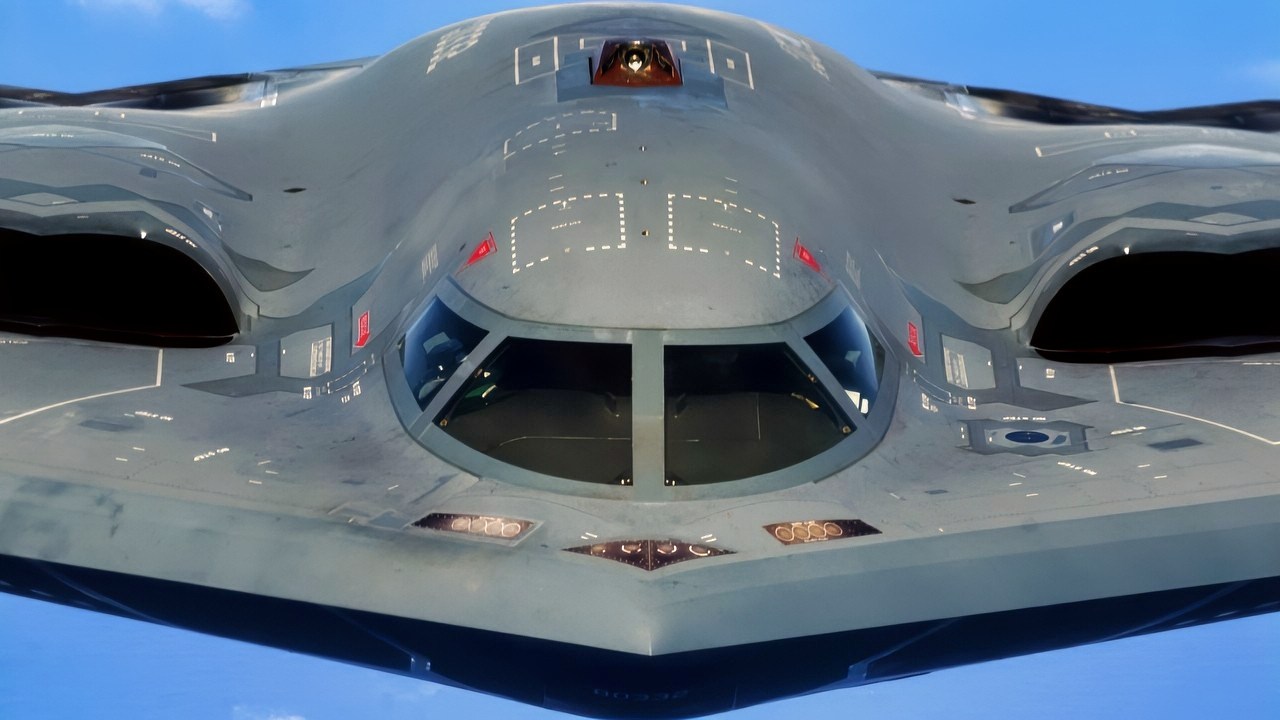
B-2 Spirit Stealth Bomber Flying. Image Credit: Creative Commons.
He examines U.S.–Russia dynamics as New START nears expiry, China’s growing strategic arsenal and refusal to join arms control, and North Korea’s expanding capabilities and suspected nuclear tech trade with Moscow.
-Dr. Eastwood concludes that while deterrence is holding for now, proliferation risks are rising—and renewed great-power arms control is urgently needed.
Five Locations Where Nuclear War Could Happen In 2026
The Cold War has been over for decades, and as a result, the likelihood of nuclear war between the United States and Russia has been reduced substantially.
Any nuclear exchange would be a low-probability event. But it is possible that a war with weapons of mass destruction could happen at any time.
Let’s look at five locations where nuclear war could take place in 2026.
Could Israel Be Pushed to Go Nuclear?

F-16I Fighter from Israel. Image Credit: Creative Commons.
The Middle East is one possibility. Israel is equipped with nuclear weapons, and after the October 7, 2023, terrorist attacks, the Jewish State is always willing to take a furious approach to vengeance.
While a nuclear strike against Hamas in Gaza would not be warranted due to the current ceasefire, the terrorist groups in Gaza could always strike back against Jerusalem or Tel Aviv in a so-called “dirty bomb” attack or some type of massive and spectacular terror incident that could force Prime Minister Benjamin Netanyahu to take extreme measures with nuclear weapons. Israel is highly secretive about its nuclear program, but it may have around 90 warheads in its stockpile.
During the Yom Kippur War of 1973, Israel considered using the “Temple Weapons” – code for a nuclear strike. Its nuclear arsenal was placed on alert in the “Samson Option” when Egypt and Syria attacked.
The Israeli national command authority was always prepared to take the nuclear option if met with a crushing conventional military defeat. Israel has also considered going nuclear against Iran if Tehran ever achieves a nuclear device.
Pakistan and India Hate Each Other
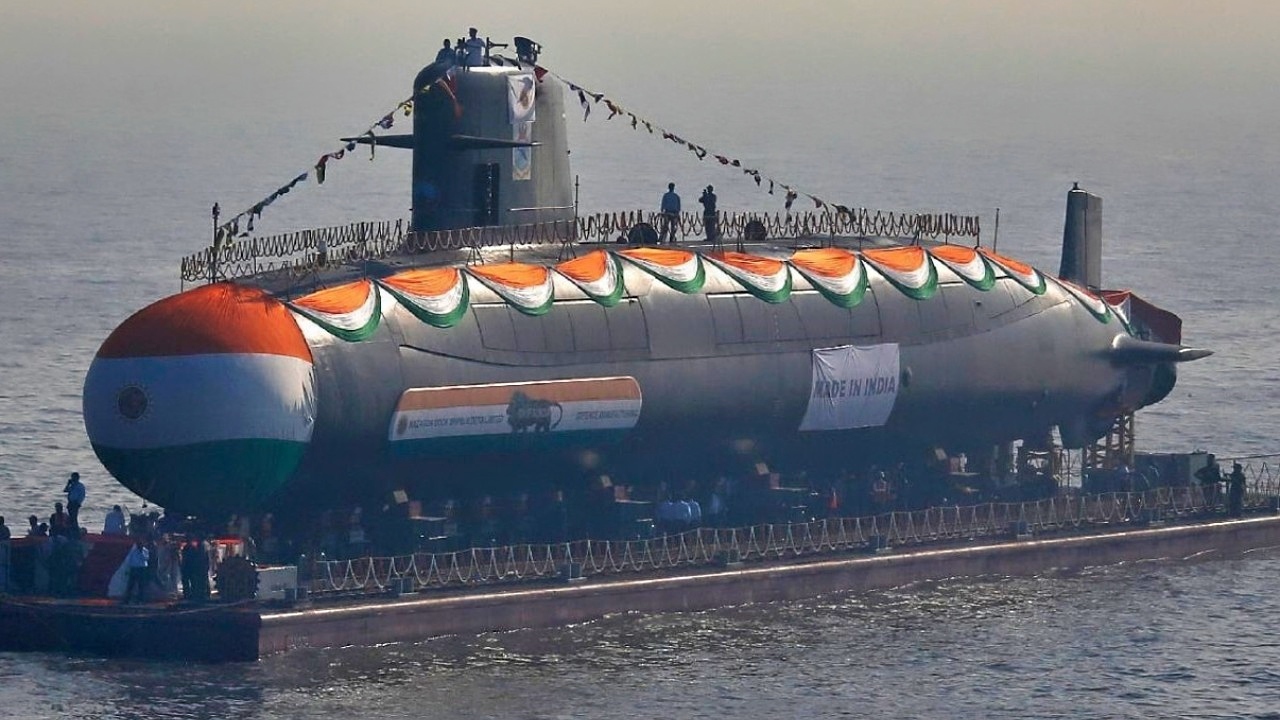
Arihant Indian Submarine. Image Credit: Creative Commons.
Pakistan and India, both nuclear powers, have been enemies for decades. Both countries have around 170 nuclear warheads each. Recently, their air forces engaged in a massive dogfight.
The Pakistanis got the best of the Indians in the sky, and Pakistan’s Chinese-made J-10C fighters destroyed more than one Indian Rafale fighter.
This could have prodded both countries to go on nuclear alert. The Kashmir region is always a source of tension, as both countries have territorial disputes there.
The Long Nuclear Struggle Between the US and Russia
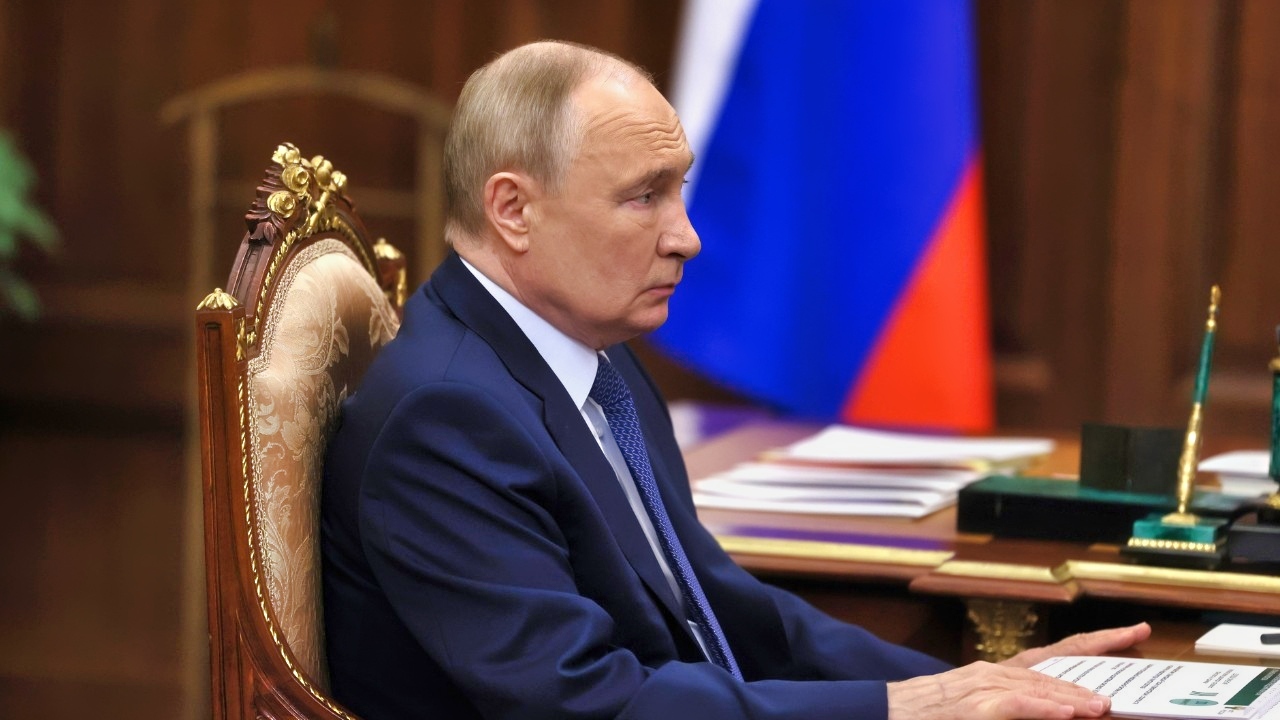
Putin in October 2024 Kremlin. Image Credit: Russian Government.
The United States and Russia have thousands of nuclear weapons, either active or in reserve. The two sides are talking peace now as the Russo-Ukraine war enters its fourth year, but there was a time early in the conflict when Vladimir Putin was rattling nuclear sabers.
He claimed that Russia could go thermonuclear if the United States or NATO ordered a military response against his country. I even predicted that Putin could test a tactical nuclear weapon in Kazakhstan to show the world he meant business.
Russia had earlier suspended its adherence to the New START treaty that limits Moscow and Washington to 1,550 strategic warheads and 700 strategic launchers on each side. New START officially expires in February 2026. Putin announced in September that he would consider provisional adherence to New START.
The Arms Control Association said that Russia is “prepared to continue observing the … central quantitative restrictions” of New START for one year after its expiration if the United States “acts in a similar spirit.” President Donald Trump and Russian President Vladimir Putin should extend New START to improve arms control.
China Has the Means for a Nuclear Attack

China Nuclear Submarine. Image Credit: Creative Commons.
China and the United States are also nuclear rivals. China has around 600 nuclear warheads in its stockpile and the nuclear-tipped ICBMs that can reach at least Hawaii or the West Coast of the United States.
China has resisted all forms of arms limitation talks, claiming that the Americans are interested in selling weapons systems to Taiwan. The Chinese are also upset that Trump is pursuing the Golden Dome missile defense shield.
I have called for some type of arms negotiations between Xi Jinping and Trump in a book on grand strategy that I wrote in 2024. As it stands now, trade is the more pressing issue between Washington and Beijing, but if Trump and Xi meet in April 2026 as planned, the pair of influential leaders could discuss ways to enter into an arms control treaty.
North Korea: Kim Jong Un Could Light the Sky with Nukes

HWASONG-18 ICBM North Korea. Image Credit: North Korean state media.
The Korean peninsula is also a potential location for nuclear war. The North Koreans have as many as 50 nuclear weapons. Kim Jong Un has a program in which his country is working on mating the warheads onto ballistic missiles that could be fired from ground mobile launchers or from submarines.
North Korea has both solid-fueled and liquid-fueled ballistic missiles. The DPRK has provided troops to fight in Russia against the Ukrainians – allegedly in exchange for nuclear weapons technology from Moscow.
This could hasten the arrival of a North Korean program that can deliver a long-range ICBM atomic missile to the United States and a short-range delivery that could hit Seoul.
South Korea could potentially acquire a nuclear weapon, and it likely has the technological expertise to do so. A majority of its citizens favor the effort to create a nuclear device to match North Korea in capability.
Due to international efforts at denuclearization on the peninsula and a nonproliferation strategy from the United States, South Korea is unlikely to produce a weapon of mass destruction. As a result, Kim Jong Un has continued to pursue his nuclear weapons program and could perhaps use them against South Korea and the United States.
Nuclear war could conceivably happen in these locations, but it is not likely in the near future. There are leaders in the world who maintain that they need nuclear weapons as part of a deterrence strategy.
Nuclear War In 2026? Not Likely, But…
These are often symbols of national pride and prestige. I don’t see nuclear war taking place in 2026. Still, more proliferation is likely, and it is imperative that the United States, Russia, and China either extend or create arms control agreements and that the other nuclear-equipped powers refrain from doing the unthinkable.
About the Author: Brent M. Eastwood
Author of now over 3,000 articles on defense issues, Brent M. Eastwood, PhD is the author of Don’t Turn Your Back On the World: a Conservative Foreign Policy and Humans, Machines, and Data: Future Trends in Warfare plus two other books. Brent was the founder and CEO of a tech firm that predicted world events using artificial intelligence. He served as a legislative fellow for US Senator Tim Scott and advised the senator on defense and foreign policy issues. He has taught at American University, George Washington University, and George Mason University. Brent is a former US Army Infantry officer. He can be followed on X @BMEastwood.


