
Ukraine continues its long-range drone and missile strike campaign against Russia, having struck two large oil refineries in long-range attacks overnight into August 6.
The strikes damaged critical Russian fuel infrastructure over 800 miles from the front lines as Moscow struggles to keep its domestic oil market supplied.
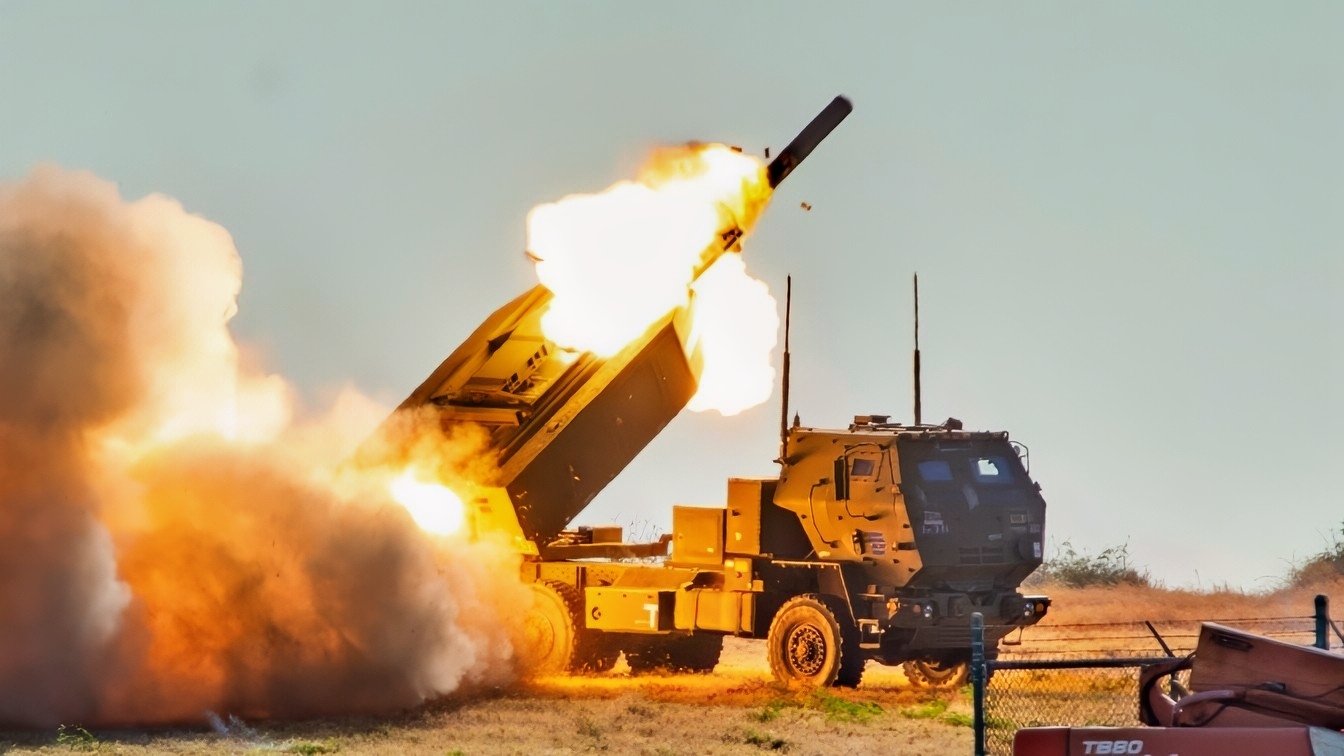
KEKAHA, Hawaii — U.S. Army 3rd Multi-Domain Task Force fires the High Mobility Artillery Rocket System (HIMARS), which can fire traditional rocket artillery rounds or long-range missiles with various payloads, on Pacific Missile Range Facility, Barking Sands, during Exercise Rim of the Pacific (RIMPAC) 2024, July 11. Twenty-nine nations, 40 surface ships, three submarines, 14 national land forces, more than 150 aircraft and 25,000 personnel are participating in RIMPAC in and around the Hawaiian Islands, June 27 to Aug. 1. The world’ s largest international maritime exercise, RIMPAC provides a unique training opportunity while fostering and sustaining cooperative relationships among participants critical to ensuring the safety of sea lanes and security on the world’ s oceans. RIMPAC 2024 is the 29th exercise in the series that began in 1971. (Japanese Ground Self Defense Force Courtesy Photo)
The overnight strikes hit the Slavneft-YANOS refinery in Yaroslavl, one of Russia’s largest oil processing plants, as well as the Bashneft-Novoil facility in Ufa, Ukrainian President Volodymyr Zelenskyy said in a statement on Thursday.
Authorities also reported fires at both sites, although the extent of the damage was not immediately clear.
The timing threatens to disrupt a tentative recovery in Russian refining as Moscow seeks to mitigate the impact of recent long-range Ukrainian strikes through a combination of export restrictions and redistribution measures.
Russia Reports Record Attack On Yaroslavl
Yaroslavl Governor Mikhail Evraev said Russian air defenses and electronic-warfare systems intercepted 93 drones during what he described as the largest attack on the region since the war began.
Debris reportedly hit storage tanks at the Slavneft-YANOS refinery, igniting a fire that emergency crews were working to extinguish, Evraev said in a statement on Telegram.
Four people were said to have suffered shrapnel injuries, and no deaths were reported.
Images and videos of the attack circulated on social media, showing large plumes of thick, black smoke rising from the site.
Ukraine took credit for the attack, saying its forces had struck the refinery directly.
Russian authorities, however, claimed that the damage was caused by falling wreckage from intercepted drones.
Regardless of exactly how the damage occurred, it appears to have been the result of a Ukrainian strike.
Damage to storage tanks at refineries can lead to significant problems and delays.
While refining infrastructure may have been spared in the strike, and it’s still not clear whether that is the case, a lack of storage facilities means that infrastructure is useless until repairs are made.
If the fire spread to the processing units, power systems, or other infrastructure, the repair work would inevitably be much more extensive.
What Zelenskyy Said
In a statement issued on X, Ukrainian President Volodymyr Zelenskyy thanked Defense Forces for continuing to expand the country’s long-range campaign and “thereby increasing the chances for diplomacy,” adding that “Russia must choose peace.”
The statement was accompanied by video footage showing enormous plumes of black smoke billowing out of multiple oil refinery sites. The footage appears to have been recorded by Russian citizens observing the strikes from afar.
Zelenskyy again characterized the strikes as part of an ongoing “long-range sanctions” campaign intended to raise the cost of sustaining the war.
“Ukraine’s Defense Forces struck the aggressor’s facilities more than 1,300 kilometers from the front line. The Bashneft-Novoil refinery was hit in Bashkortostan. In the Yaroslavl region, nearly 700 kilometers from our border, the Slavneft-YANOS refinery was hit,” he said.
He also described retaliatory overnight strikes against Russian military patrol boats and shadow fleet vessels.
These Strikes Really Matter
While Russia attempts to mitigate the damage caused over the last month or more, Ukraine continues to cause additional disruption at some of the country’s most crucial oil refining sites.
The Yaroslavl refinery, located around 155 miles to the northeast of Moscow, can process around 15 million metric tons of crude per year, or around 300,000 barrels per day.
The facility produces a wide variety of petroleum products, including gasoline, diesel, aviation fuel, lubricants, and more. It also employs more than 3,500 people.
The facility is operated by Slavneft – a venture controlled by Rosneft and Gazprom Neft.
This is also not the first time the refinery has been targeted by Ukraine.
In December 2025, a Ukrainian strike damaged a primary processing unit and a loading rack, forcing a suspension of production. Ukraine reported another strike near the refinery on July 6.
Repeated attacks like this are not necessarily a sign that the first strikes didn’t work, but an indication that Russia is struggling to defend even some of its most valuable energy infrastructure sites all over the country.
Multiple attacks on one site can prove far more consequential than a single shutdown, forcing operators to repeatedly redirect maintenance crews and conduct new safety inspections, and continue repairs over longer periods of time.
A barrage of regular strikes may also compel Russia to concentrate its air defense systems around industrial sites hundreds of miles from the battlefield, thereby allowing Ukrainian drones and missiles to strike other sites that may be less protected.
Ukraine Reaches Deep Into Bashkortostan
The second refinery struck overnight, Bashneft-Novoil, is located in Ufa, the capital of Bashkortostan. The site is more than 1,300 kilometers, about 810 miles, from the front line.
It represents one of the longest-distance strikes of the campaign so far.
The refinery can process more than 7 million metric tons of oil annually and is part of the Rosneft integrated Ufa refining complex, producing automotive and aviation fuel, as well as lubricants and other petroleum products.
Ukraine has now surpassed the originally anticipated campaign of 40 days of long-range strikes, with no sign of strikes ending soon.
About the Author: Jack Buckby
Jack Buckby is a British researcher and analyst specializing in defense and national security, based in New York. His work focuses on military capability, procurement, and strategic competition, producing and editing analysis for policy and defense audiences. He brings extensive editorial experience, with a career output spanning over 1,000 articles at 19FortyFive and National Security Journal, and has previously authored books and papers on extremism and deradicalization.


