

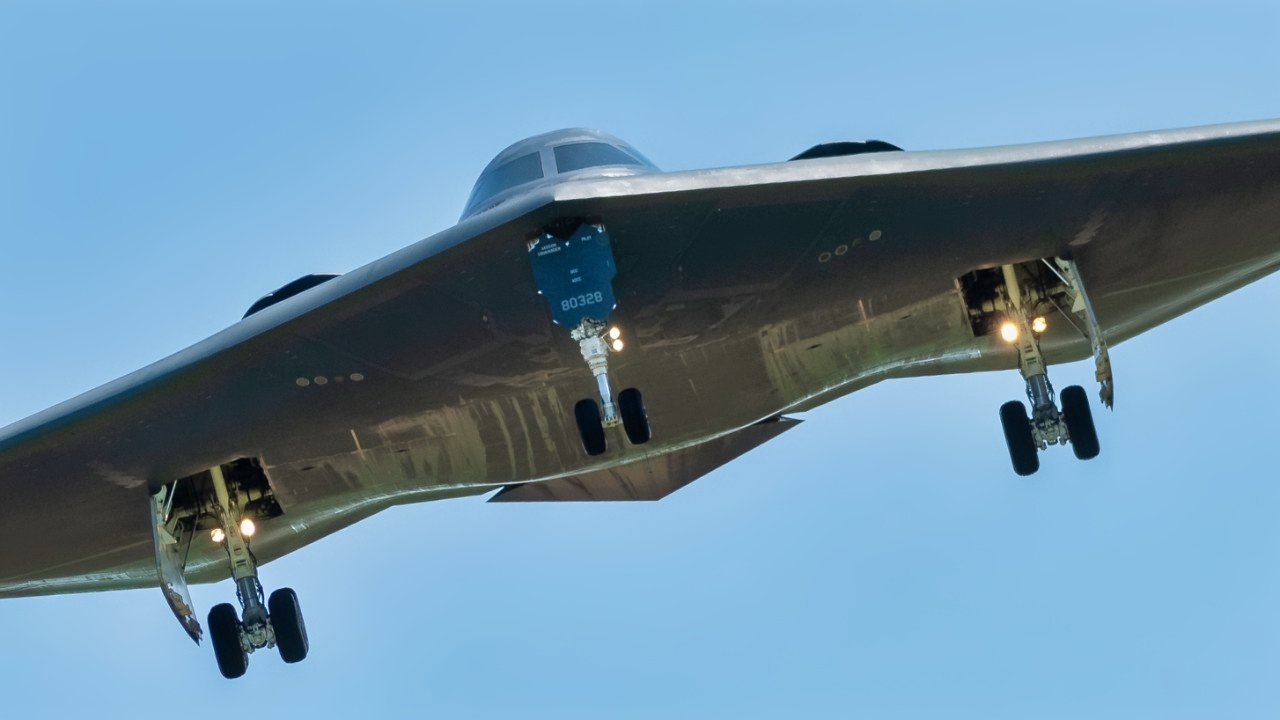
Key Points – The recent US-Israeli air war against Iran, while tactically successful, was a strategic failure.
-The strikes did not end Iran’s nuclear ambitions; they likely created a powerful new incentive for Tehran to acquire a bomb for permanent deterrence.
-With military options exhausted and regime change a fantasy, the only viable path forward is diplomacy.
-The ultimate irony is that President Trump, who broke the 2015 nuclear deal, may be forced to pursue a similar agreement.
-The alternative is a new Middle East quagmire that distracts the U.S. from the more significant threat posed by China.
The Iran Strikes Might Have ‘Failed’
The Israeli air war against Iran, with a brief US assist, is over. While it succeeded in its tactical goal of damaging the Iranian nuclear program by a still undetermined amount of time, the larger strategic problem of Iran for Israel and the US remains.
In fact, the air strikes likely made the situation worse: the obvious lesson for Tehran to take from the war is to build nuclear weapons as fast as possible to prevent a repeat of these air strikes permanently.
The strikes, it appears, did not set back the Iranian program by more than a few years at best. This result is not that surprising. Air power has rarely delivered major strategic goals by itself. Even the impact of the atomic bomb drops on Japan’s decision to surrender in World War II was complemented by the Soviet invasion of Manchuria and a looming threat of a US invasion.
The larger strategic goals thrown around in this campaign—that Iran’s nuclear program was ‘obliterated’ (US President Donald Trump) or Iranian regime change (Israeli Prime Minister Benjamin Netanyahu)—were always fantastical hopes.
Back Where We Started
All of this suggests that the US and Israel are still where they were a month ago. That is, Iran is still run by repressive theocrats committed to Israel’s destruction, supportive of terrorism, and curious about a nuclear weapon.
Iran is still in a standoff with the West, and Western options are still limited. Israel has badly damaged Iranian proxies in Syria and Lebanon. So it is safer from Iranian retaliation. However, the core standoff remains, as does the possibility of a nuclear-armed Iran.
Barring a US invasion, external pressure probably cannot prevent Iran from developing a nuclear weapon if it really wants one. This lesson is akin to that of North Korean nuclearization: for states willing to carry the costs of nuclearization (sanctions, threats, isolation), nuclearization is not that difficult anymore.
Similarly, external pressure is unlikely to dislodge the clerical regime. Sanctions, espionage, and so on can slow Iran’s march towards a nuclear weapon. And they can cripple Iran’s ability to build a modern economy and military by choking off access to modern technologies and materials.
But these options only slow or inhibit Iranian capabilities. These lessons do not eliminate progression or the leadership’s malign intentions. Worse, the recent air strikes are now a powerful argument for Tehran’s hawks to insist Iran no longer dithers on nukes. Yes, the US and Israel could strike Iran yet again, but falling into a ‘mowing the lawn’ relationship with Iran does not resolve the program; it creates a permanent risk of escalation and broader conflict.
Back to Iran Deal
If a regime change war against the clerical state is unacceptable, and if military and pressure options only kick the can down the road, then that leaves diplomacy. The US did, of course, strike a deal with Iran back in 2015, under the administration of former President Barack Obama. This agreement kept Iran from acquiring nuclear weapons but did permit it to retain some of the nuclear fuel cycle.
Hawks objected to that. However, the Nuclear Non-Proliferation Treaty does permit it. Realistically, the Iran deal was probably the best deal the US and Israel would get. Iran had to receive some concessions in the negotiations, or there was no reason for it to accept the accord. Trump did not accept this reasoning and broke the deal in 2018 in his first term.
The irony of Trump’s withdrawal is that the deal was working. Without some give-and-take in a compromise deal, there was no way for the US and Israel to slow Iran’s nuclear march without the use of force.
While Netanyahu appears to have wanted war all along, the stakes for the US are much greater. America is desperately trying to pivot to Asia, given China’s vastly greater importance to US security than the Middle East. Every new war in the Middle East pulls the US back into the region and makes it harder for us to focus on China.
The curious result, then, is Trump finding his way back to the 2015 deal. Once again, Iran will not just give up everything and take nothing. It will demand counter-concessions for concessions. Netanyahu will oppose this, as he has for ten years, but Trump will have to oppose him for once.
The alternative is yet another US quagmire in the Middle East, undercutting the pivot yet again.
About the Author: Dr. Robert Kelly
Dr. Robert E. Kelly is a professor of international relations in the Department of Political Science and Diplomacy at Pusan National University in South Korea. His research interests focus on security in Northeast Asia, U.S. foreign policy, and international financial institutions. He has written for outlets including Foreign Affairs, the European Journal of International Relations, and the Economist, and he has spoken on television news services including BBC and CCTV. His personal website/blog is here; his Twitter page is here.
More Military
We Almost Touched the F-117 Stealth Fighter


Jim
July 23, 2025 at 12:22 pm
This is a good article, basically suggesting diplomacy is better than bombs.
This is the right tact to take.
But there is a misconception along the way: it’s Netanyahu’s coalition and others in Israel who want to destroy Iran as it’s currently constituted.
Iran has its chants, we all know that, but after all, the U. S. has wanted regime change from the moment the Mullahs took power back in 1979.
Now, if you know a country wants regime change and has taken actions to do it (starting with U. S. support for Iraq in the Iraq — Iran War, which Iraq initiated) your feelings for that country are bound to be negative… ditto for Israel where Netanyahu has been scheming for over 20 years to get regime change in Iran.
Be careful about projection… it happens all too often, what one claims about the other is actually what the first person is doing, themselves, but then they cast that action onto the other to distract or mislead.
To avoid a Middle East War each side has to own up to its actions and intentions.
The 12 Day War demonstrated each side has significant deterrence as Iran hit Israel with pinpoint kill shots at military & infrastructure targets to such a large degree that Netanyahu was forced to accept the cease fire… some even think Netanyahu desperately wanted or needed a cease fire, the damage was so significant.
Good faith negotiations are key, not sucker punch gambits in the midst of head-fake negotiations, mafia-style.
But we all know Netanyahu’s style: pure mafia tactics of kill & murder to get what you want and if you can’t control a physical asset (or country) you destroy it.
Netanyahu is way past his “sell date,” he needs to be removed for the peace & security of Israel.
Netanyahu’s coalition is the biggest threat to Israel in the 21st Century.
D-O-Y-L-E
July 23, 2025 at 1:43 pm
The bombing of fordow and the other sites will go down as a strategic error of judgement, one not seen since the decision to bomb oahu in 1941.
The western mindset of insisting always at allowing Israel to do what it wants in the middle east is like a village head thinking it’s okay to let the friendly or tame fox to roam among the hens in the village farmer’s chicken coop.
If the hens (or the hens owner) rope in a puppy dog to their side, the village head must squash the puppy dog.
That kind of mindset is wrong.
It’s like the oahu attackers thinking sinking the great fleet would force the owner to leave the arena and let the fox roam free. Among the hens.