

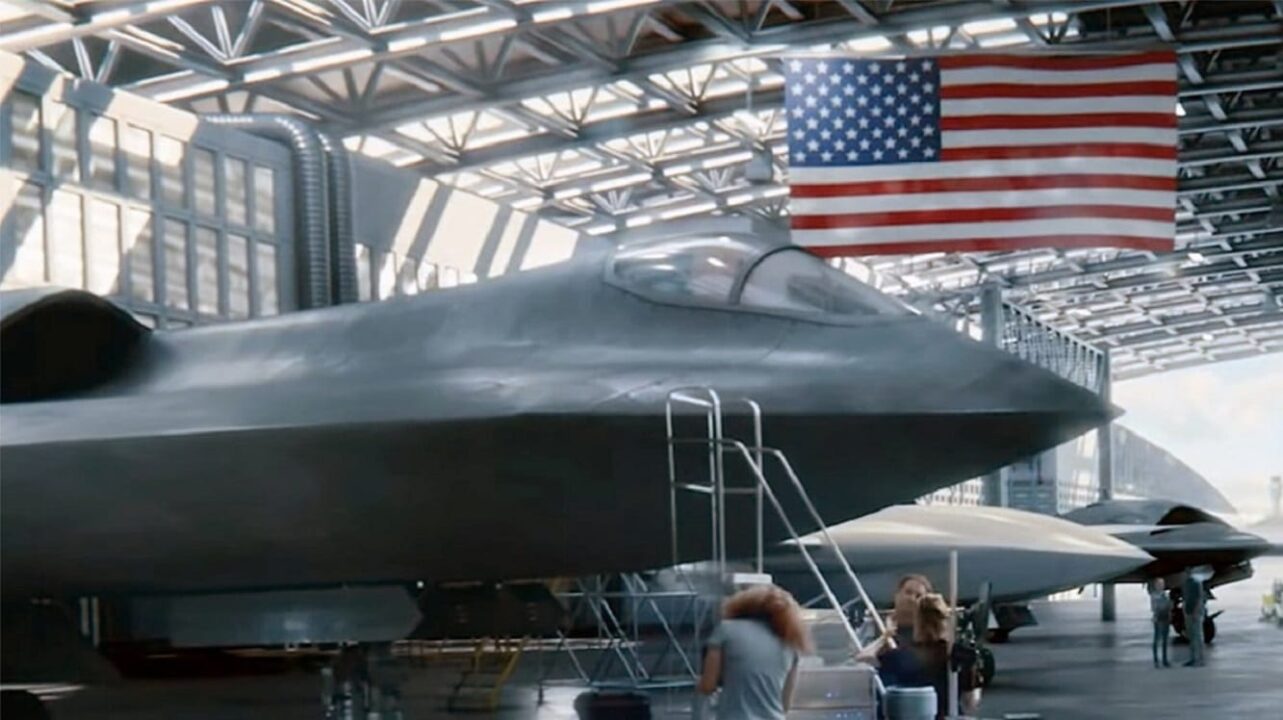
Key Points and Summary – The F-47 NGAD is built to be far more than a faster, stealthier fighter.
-With a combat radius beyond 1,000 nautical miles, adaptive “variable cycle” engines, and stealth++ coatings, it is designed to survive deep inside advanced A2/AD bubbles.
-Its real power, however, lies in acting as a quarterback for autonomous drone wingmen, fusing data, directing strikes, and waging electronic warfare across a vast battlespace.
-Whether NGAD is judged a success will hinge on those benchmarks: range, survivability, seamless teaming with Collaborative Combat Aircraft, and whether its staggering cost truly delivers a generational edge.
F-47 NGAD: The 6th-Generation ‘Stealth++’ Fighter America Is Betting Everything On
The new F-47 NGAD, the first sixth-generation stealth fighter, will excel in its ability to act as a “quarterback” for drone swarms and perform long-range, deep-strike operations, thanks to its advanced stealth capabilities, adaptive engines, and AI-powered features.
It is designed for air superiority and intelligence, surveillance, and reconnaissance (ISR) missions, as well as to provide electromagnetic dominance through radar jamming and cyber payloads. Its performance will also be enhanced by a long combat radius, potentially exceeding 1,000 nautical miles.
However, what are the benchmarks the new F-47 stealth fighter will be measured against in determining whether the NGAD is successful or not? Here are a few factors that may determine that.
Factors That Will Determine The Success Of the F-47
The Air Force’s Next Generation Air Dominance (NGAD) sixth-generation fighter, the F-47, will feature a combat radius exceeding 1,000 nautical miles, a speed surpassing Mach 2, advanced stealth capabilities, and a cost potentially around $300 million per aircraft.
The F-47 will excel at air superiority, deep-strike missions, and intelligence, surveillance, and reconnaissance (ISR) due to its advanced stealth, speed, and ability to operate with drone swarms.
It is designed to leverage technologies like autonomous drone “wingmen” and sophisticated sensors to dominate the future battlespace. The aircraft will also serve as a “quarterback” for its drone companions, utilizing them to extend its reach and capabilities.
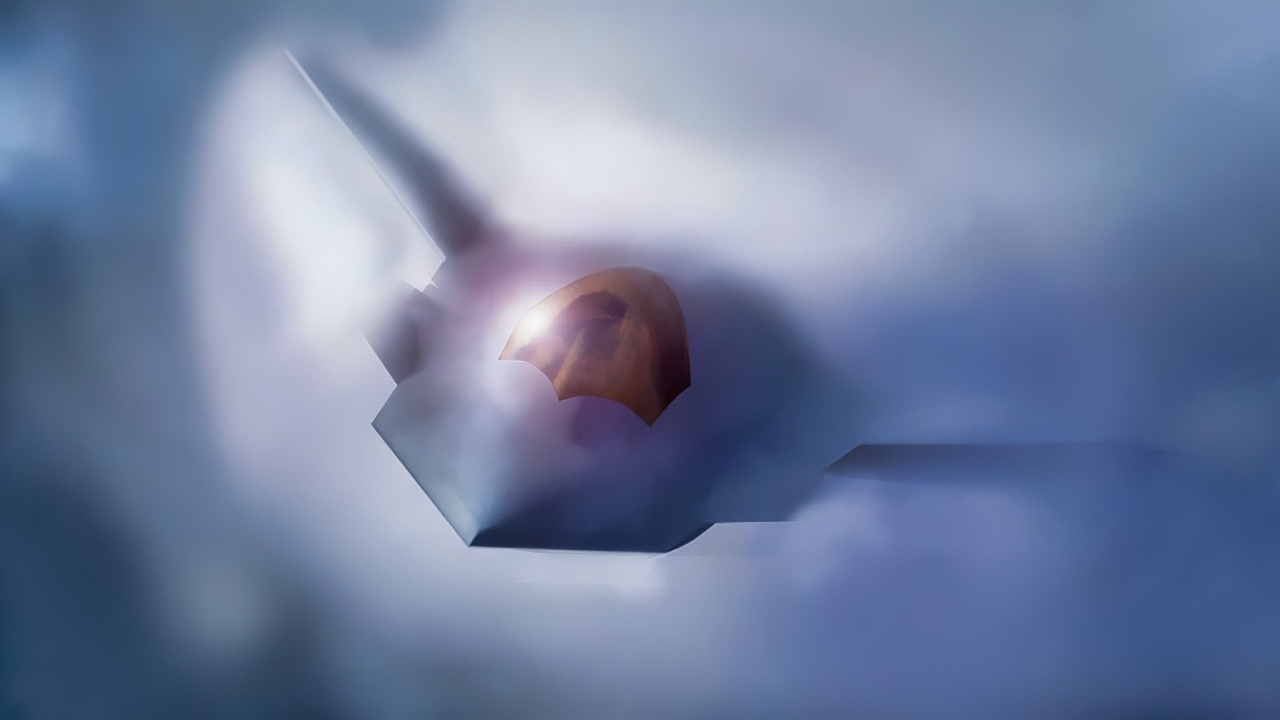
Shown is a graphical artist rendering of the Next Generation Air Dominance (NGAD) Platform. The rendering highlights the Air Force’s sixth generation fighter, the F-47. The NGAD Platform will bring lethal, next-generation technologies to ensure air superiority for the Joint Force in any conflict. (U.S. Air Force graphic)
Range
The F-47 will have a combat radius of over 1,000 nautical miles (1,150 miles, 1,850 kilometers), significantly further than the F-22’s range, according to an infographic posted in the spring on X by Air Force Chief of Staff Gen. David Allvin.
Defense One reports that this extended range will allow tankers to stay further from the action, a key advantage in potential conflicts, especially in the Pacific theater.
Variable Cycle Engines
The F-47 variable cycle engine is a key part of the US’s future F-47 combat aircraft, designed to dynamically adjust its operation for optimal performance across different flight phases.
Developed under the Next Generation Adaptive Propulsion (NGAP) program, these engines can shift between high-thrust combat modes and fuel-efficient long-range cruise modes, offering increased range, efficiency, and survivability. The engine can use a third stream of cooled air to improve performance or efficiency, depending on the mission requirements.
Pratt & Whitney and General Electric are developing competing engines (XA103 and XA102, respectively) for the NGAP program.
Speed
The F-47 is expected to exceed Mach 2 (1,500 mph, 2,400 km/h), indicating high supersonic speeds. The exact speed is classified, but reports suggest it could be Mach 2.25 (approximately 1,726.35 mph) or higher.
President Trump said, “Its speed is top, so ‘over two,’ which is something that you don’t hear very often.”
“It’s something the likes of which nobody has seen before,” Trump said. “In terms of all of the attributes of a fighter jet, there’s never been anything even close to it, from speed to maneuverability, to what it can carry as a payload. The F-47 will be the most advanced, most capable, most lethal aircraft ever built.”
That speed is incredible for a stealth aircraft, but how can the F-47 maintain its stealth coatings at such a speed?
New Stealth Coatings
Stealth coating materials can deteriorate due to both speed and temperature. High speeds, especially supersonic flight, generate significant heat, which can damage or degrade the radar-absorbing materials (RAMs) used in stealth technology. Additionally, the materials are susceptible to damage from abrasion, moisture, and other environmental factors.
Many radar-absorbent polymers used in stealth coatings rapidly decompose at temperatures above 250°C. This necessitates careful design considerations to manage heat and protect the coatings.
Scientists at NC State have been working on creating a tougher skin that also has more desirable stealth characteristics. Researchers believe that the new material will enable the aircraft to fly at higher speeds while maintaining its stealth capabilities.
Chengying “Cheryl” Xu, who is leading the program at NC State, said that “the material we’ve engineered is not only more radar absorbent, it will also allow the next generation of stealth aircraft to be faster, more maneuverable and able to travel further.”
Xu and her team have developed a ceramic material with an impressive array of stealth attributes. During lab testing, it was found that the ceramic is more radar-absorbent than existing polymers, capable of absorbing 90% or more of the energy from radar.
The ceramic material is water-resistant and harder than sand. In other words, it can better withstand harsh conditions, such as flying in desert-like environments or in the rain. More importantly, the ceramic material retains its radar-absorbent characteristics over a wide temperature range, from as high as 1,800 °C to as low as -100 °C.
The ceramic coating can be applied easily to the entire skin of the aircraft. The whole process, from using a liquid ceramic precursor to completion, takes one to two days, Xu said.
The liquid ceramic precursor is sprayed onto the aircraft’s surface. As the liquid precursor is exposed to ambient air, it undergoes a series of chemical reactions, converting it into the solid ceramic material.
Stealth Capabilities
While the F-35 was described as a “stealth” aircraft, as were the CCAs, the F-22 was described as a “Stealth +” type. In contrast, the F-47 was described as “Stealth ++,” consistent with service comments that it would have to be substantially stealthier than the F-22 to survive anticipated adversary air defenses.
As Luke Diaz of “Simple Flying” wrote, the term “Stealth Supremacy” is being used to describe the F-47. “The goal is for the US Air Force’s F-47 to achieve superior stealth performance, or ‘stealth++,’ enabling it to penetrate deep into enemy territory without being detected.”
Alex Hollings of Airpower and Sandboxx provides a detailed explanation of the complex calculations involved in radar cross sections and stealth.
“Radar cross sections are notoriously difficult to calculate and vary depending on radar frequency and angle of observation, but speaking in general terms, the F-35’s radar cross section is estimated to be .005 square meters – nearly half the size of the F-117 Nighthawk on radar scopes.
“But the larger and stealthier F-22 Raptor is said to have a frontal radar cross section of an incredible .0001 square meters – an astonishing 50 times smaller than the very stealthy F-35.
“If that difference is encapsulated in the distinction between ‘Stealth’ and ‘Stealth+’ on this graphic, then it suggests the F-47 that is designated as ‘Stealth++’ may be the stealthiest fighter ever designed by a wide margin.”
Cost
Initial estimates place the cost of an individual F-47 at around $300 million. While this is significantly more than the F-35, it’s projected to be less expensive than the F-22.
The Air Force has requested $2.7 billion for the platform in its fiscal 2025 budget, indicating its commitment to the program, according to DefenseScoop.
The total cost of the F-47 program is expected to be high, with some estimates reaching $55.5 billion, including the initial development costs.
Collaborative Combat Aircraft
According to the graphic by Gen. Allvin, the Air Force plans to acquire at least 185 F-47s; this could provide it with enough aircraft to replace the Raptor fleet on a one-to-one basis, but that figure can be somewhat misleading.
The F-47 is designed to operate as the quarterback of several drone wingmen, with initial assessments suggesting that each new fighter would be paired with at least two, and possibly as many as five, AI-enabled drone wingmen.
However, more recent tests by Lockheed Martin have shown that the final figure could be significantly higher, demonstrating the ability to control up to eight drones from a single F-35.
That means each of the 185 new F-47s should be thought of as a fighter formation unto itself, rather than as a single jet.
Examples of drones that will be utilized with the F-47 include the YFQ-42A, a dogfighting specialist developed by General Atomics, designed for close-in air-to-air combat, and the YFQ-44A ‘Fury’ from Anduril Industries. This multi-role drone can perform both air-to-air and air-to-ground missions. Others, such as Lockheed Martin’s Vectus, a stealthy, highly autonomous drone from Lockheed Martin’s Skunk Works, are designed to operate with both the F-35 and the F-47.
These drones will be networked with the F-47 to enhance its capabilities in areas such as reconnaissance, electronic warfare, and air-to-air or air-to-ground attacks.
The Pentagon has already committed vast resources to the F-47 program. For FY2026, the US defense budget includes $3.5 billion for F-47 development, which in itself is part of a broader $20 billion request for the NGAD program.
The USAF is all in on the F-47 stealth fighter. The proof is in the cash being spent on it. The first F-47 aircraft is now being built and is expected to be ready to go in 2028.
About the Author: Steve Balestrieri
Steve Balestrieri is a National Security Columnist. He served as a US Army Special Forces NCO and Warrant Officer. In addition to writing on defense, he covers the NFL for PatsFans.com and is a member of the Pro Football Writers of America (PFWA). His work was regularly featured in many military publications.


J.D.Cahill
November 4, 2025 at 4:23 am
Have you noticed how the fake story keeps repeating itself just to take up column space. Such a BS story and why is the story putting out military info like this ????
Robert S. Stack
November 4, 2025 at 5:01 am
Hey, do you happen to know if this Chengying “Cheryl” Xu has been THOROUGHLY & COMPLETELY VETTED, inside out & from top to bottom, by as many U.S. agencies as necessary who would do that as a precaution of her being a DEEPLY ROOTED RED CHINESE SPY, eh, and to anyone in the US national defense heirarchy as that’s all we would need is for her to be YET ANOTHER WELL ESTABLISHED, DEEPLY ROOTED RED CHINESE SPY,ouch!
Rick
November 4, 2025 at 8:06 am
Drones are the future of air combat…A well programmed squadron of drones will take out these stealth aircraft in seconds for a tenth of the cost…Plus any thing mentioning 47 is ass
Toxic
November 4, 2025 at 9:21 am
Pump and dump, this plane is made by Boeing they’ll be lucky if it doesn’t catch fire on the runway.
2guncarnage
November 4, 2025 at 12:15 pm
So much money being dumped into technology that kills humans. Instead of developing technology that takes humans to the next level they make technology to exterminate.
George Palmer
November 4, 2025 at 1:07 pm
Guaranteed the Chinese lady in the N.C. school has already sent all the new technology to Mainland China, otherwise the Chinese would whack her relatives. I love how we taxpayers pay millions and billions for development of tech, and the Chinese download it for free.
Carl Lee
November 4, 2025 at 2:24 pm
Funny, how people try to make a living these days. I didn’t bother to read your lies. Show me the products. Don’t just bs
GOD KARMA
November 4, 2025 at 2:55 pm
God has a message for you guys.
Dave
November 4, 2025 at 5:50 pm
Besides doing away with the heap loads of lies and assumptions; a message for “Every Air Force On Earth” should perhaps be written using SI units, not imperial.. and avoid arbitrary references like “.. act as a Quarterback”. Most of all, quoting a rambling, incompetent despot does not instill confidence. This reads more as masturbatory material for self-announced “patriot” neck beards. Also, good luck with the budgeting.
Stephan Larose
November 4, 2025 at 7:09 pm
The US is bankrupt, the empire in free-fall collapse. These overpriced lemons will likely never see the light of day. If they ever do, they will be immediately obsolete. China and Russia will be able to detect these from space. If it’s made of matter, it is detectable. Just a way for the military industrial complex to fleece taxpayers.
John Ulmer
November 4, 2025 at 8:21 pm
It will never be built. We don’t have the rare earth materials to build these very very expensive pipedreams. Until we can get self sufficient in our mining and refining capabilities, they’re just empty wishes.
Carlos
November 4, 2025 at 10:14 pm
Wishful thinking on the part of the US to talk about having a jet fighter like this, which will never exist because the US doesn’t have the resources or know how to make it happen. Finally it is at the mercy of the Chinese.
Bob
November 5, 2025 at 9:52 am
For the cost of one of these they could probably build 100,000 drones that would be far more effective at reaching targets.
Sage
November 6, 2025 at 11:22 am
Another piece of American military crap that will get blown out of the sky by superior Chinese air defenses.