

A former Trump Administration economics adviser made a bold prediction when I spoke to him last week: “If the Strait of Hormuz isn’t opened by Labor Day, Trump will have a political problem worse than Vietnam, Iraq, and Afghanistan combined.”
Well, that wasn’t the response I was planning on, that’s for sure. While clearly the former official was trying to make a dramatic point, the crisis is clear.

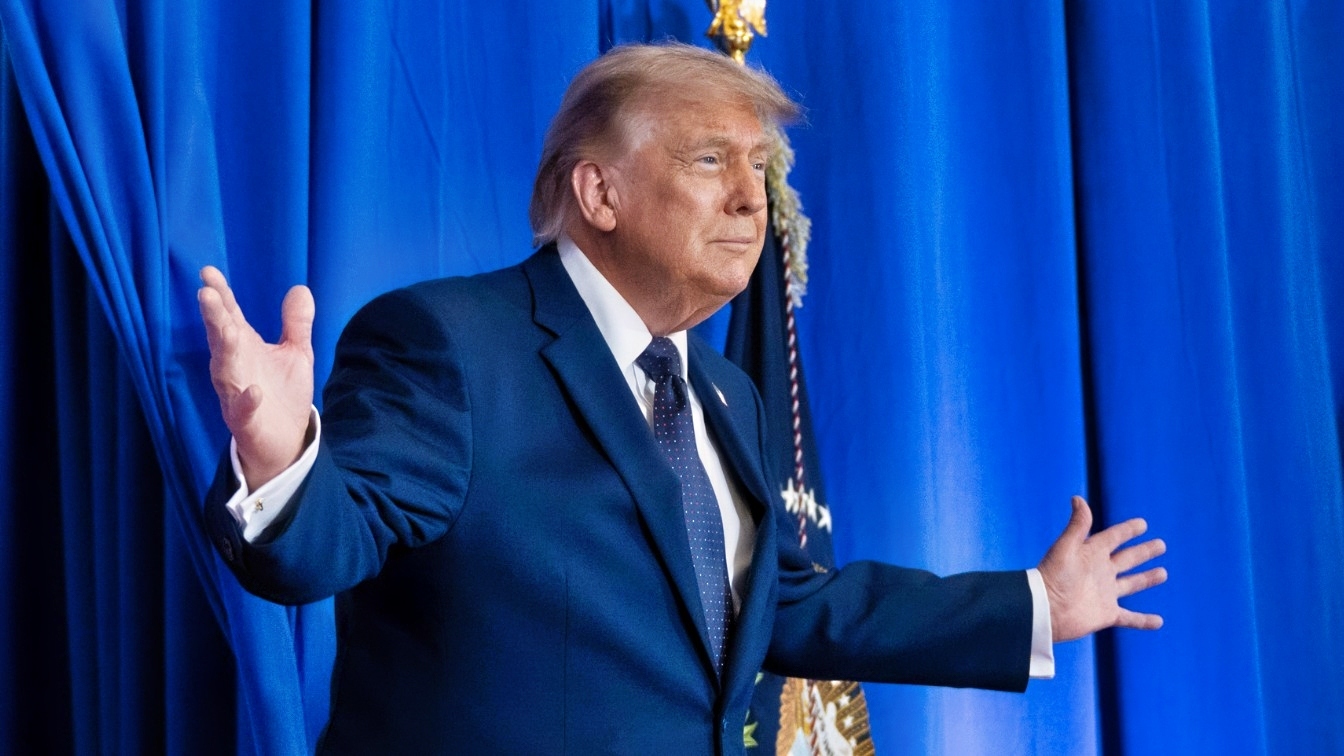
President Donald Trump participates in the swearing-in ceremony for Administrator of the Centers for Medicare and Medicaid Services Mehmet Oz, Friday, April 18, 2025, in the Oval Office. (Official White House Photo by Molly Riley)
If Trump can’t open the Strait soon, a massive oil shortage will hit the global economy, something we are not feeling right now thanks to a historic drawdown of the U.S. Strategic Petroleum Reserve.
However, with oil being consumed quickly, the clock is ticking before a historic energy shock hits the world. And everyone will blame one person: Donald J. Trump.
Hormuz Crisis: The Calm Before The Energy Storm
The oil market this week looks deceptively calm. Brent crude is trading at approximately $98-$100 per barrel as of May 26, down more than 10 percent over the past week as markets price in optimism around the U.S.-Iran negotiations now underway. WTI sits near a five-week low around $93 per barrel. Trump told reporters over the weekend that talks with Tehran are progressing well, and his entire Cabinet is scheduled to meet at Camp David on Wednesday to evaluate the framework. Qatar has dispatched a negotiating team to Tehran. Secretary of State Marco Rubio noted “slight progress” in the talks.
The proposed framework would extend the current ceasefire by approximately two months, during which Washington would lift its blockade, and Tehran would reopen the Strait of Hormuz to normal commercial traffic. Brent fell more than 6 percent in a single session earlier this week on the news that a deal was nearing.
That is the optimistic case. The pessimistic case is what concerns the former Trump economic adviser who gave me the Labor Day warning. Negotiations of this complexity routinely collapse due to technical disagreements that remain invisible to the public until they surface. And of course, combat isn’t exactly over just yet.
Reuters reported on Thursday that Iran’s Supreme Leader has insisted enriched uranium must remain inside Iran rather than be transferred abroad — a position that the United States and Israel have publicly opposed for years. Trump has warned that fresh strikes could follow if talks break down, and we already had an incident over the weekend. The U.S. military conducted strikes on Iranian missile launch sites and mine-laying vessels in southern Iran over the Memorial Day weekend, and Brent jumped roughly 4 percent on Tuesday morning in response to the renewed military activity. The market is not currently pricing a return to crisis. It also does not provide a guaranteed resolution.

President Donald Trump sits for an interview with Fox News journalist Rachel Campos Duffy, Monday, April 14, 2025.(Official White House Photo by Daniel Torok)
What Is Actually Happening Under The Surface
The reason the oil market looks calmer than it should is that the Strategic Petroleum Reserve has been functioning as a financial shock absorber for the past three months at a pace that cannot be sustained.
The EIA confirmed earlier this month that the Department of Energy released 17.5 million barrels from the SPR between March 20 and April 24, with 7.1 million barrels released in the single week ending April 24 — the largest weekly release since October 2022. SPR stocks stood at 397.9 million barrels in mid-March. The reserve has continued drawing down since, with the most recent EIA Weekly Petroleum Status Report showing a 786,300-barrel decline for the week ending May 15 — the largest weekly SPR-specific decline on record.
The broader supply picture is more alarming than the SPR figures alone suggest. The EIA Short-Term Energy Outlook, published on May 12, estimates that disrupted Middle Eastern crude production averaged 10.5 million barrels per day in April and is expected to peak at nearly 10.8 million barrels per day in May as storage at Persian Gulf producers reaches capacity. The EIA expects Hormuz flows to “slowly start to resume in late May or early June.” Even under the optimistic scenario where the strait reopens on that timeline, pre-conflict production and trade patterns are not expected to return until late 2026 or early 2027. The damage to the global oil supply chain has already been done.
U.S. commercial crude inventories have erased the entire 2026 build in just five weeks. Global oil markets are now relying on emergency reserves and inventory drawdowns to offset lost supply, while demand destruction has remained surprisingly limited. The supply crunch the global economy has so far been spared from is being delayed, not avoided.
The financial buffer is depleting in real time. The physical scarcity that has so far been masked by reserve releases will become visible the moment those releases slow.
What Happens If Labor Day Arrives And The Strait of Hormuz Is Still Closed
Labor Day 2026 falls on September 7. From today’s date, May 26, that is 14 weeks away. The Strait of Hormuz has been effectively closed to normal commercial traffic since the opening of Operation Epic Fury on February 28, which means we are already at the thirteen-week mark of a disruption that energy analysts originally modeled as the worst-case sustained closure scenario.
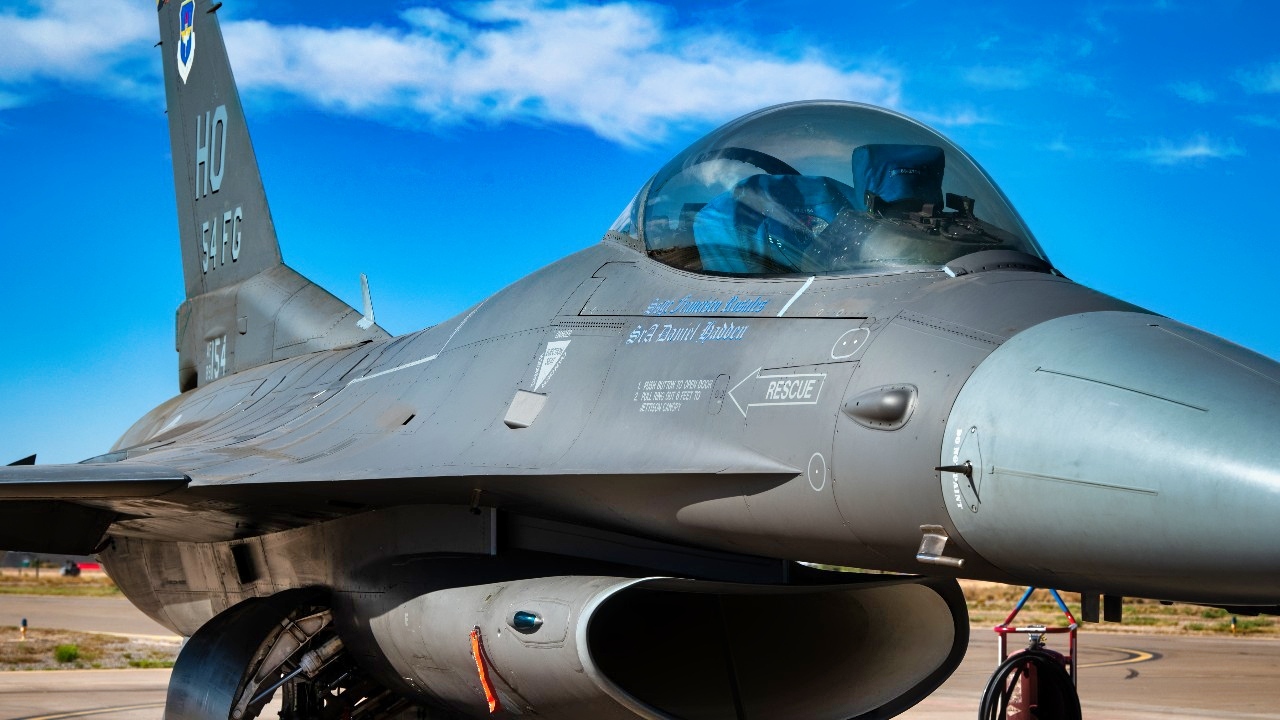
An F-16 Fighting Falcon assigned to the 54th Fighter Group sits on the flightline at Holloman Air Force Base, May 1, 2025. The F-16 was the first production aircraft with a fly-by-wire flight control system, meaning it’s controlled electronically instead of with direct mechanical linkages, allowing for more precise and safer maneuvers. (U.S. Air Force photo by Staff Sgt. Gaspar A. Cortez)
If the strait remains effectively closed through Labor Day, the United States will be at the twenty-seven-week mark of disruption — more than double the duration the global oil market was designed to withstand without permanent damage. The SPR would be at the lowest level in more than three decades. Brent would likely trade well above $130 per barrel under that scenario, with the upside ceiling energy analysts have circulated at $175 per barrel, representing sustained physical scarcity rather than a financial market panic. Gasoline at American pumps would reach $5.50 to $6.00 per gallon. Inflation, already running at 4.5 percent PCE through Q1, would accelerate sharply again. The Federal Reserve would face the choice of either tightening monetary policy into an active oil shock or accepting the kind of sustained price increases that produced the political destruction of the Carter administration in 1979 and 1980.
But, to be frank, the above is a more optimistic scenario. Some experts I have talked to are firmly convinced that if we get to Labor Day and there is no deal to open the Strait, a deep recession is very possible. These experts believe we will draw down the SPR much faster, creating an energy crisis we could only dream of. Think 1970s gas lines sort of stuff.
The political consequences of that economic environment would land squarely on Donald Trump. The Iran war was his decision. The decision to keep the strike campaign running long enough to cause the current closure of the Hormuz closure was his. The decision to drain the Strategic Petroleum Reserve at the fastest rate in American history, rather than secure an earlier diplomatic resolution, was his decision. American voters who would be paying historic prices at the pump heading into the November midterm elections would not be looking past the man in the Oval Office when they assigned responsibility.
The Negotiating Window Trump Has Right Now
The framework Trump has on the table this week is the off-ramp that prevents the Labor Day scenario from becoming a reality. The two-month ceasefire extension with the Strait reopening would buy enough time to allow Middle Eastern producers to restore production, allow the SPR to stop drawing down and potentially begin refilling, allow gasoline prices to stabilize before the politically critical summer driving season ends, and allow the Federal Reserve to address inflation without fighting an active oil shock at the same time.
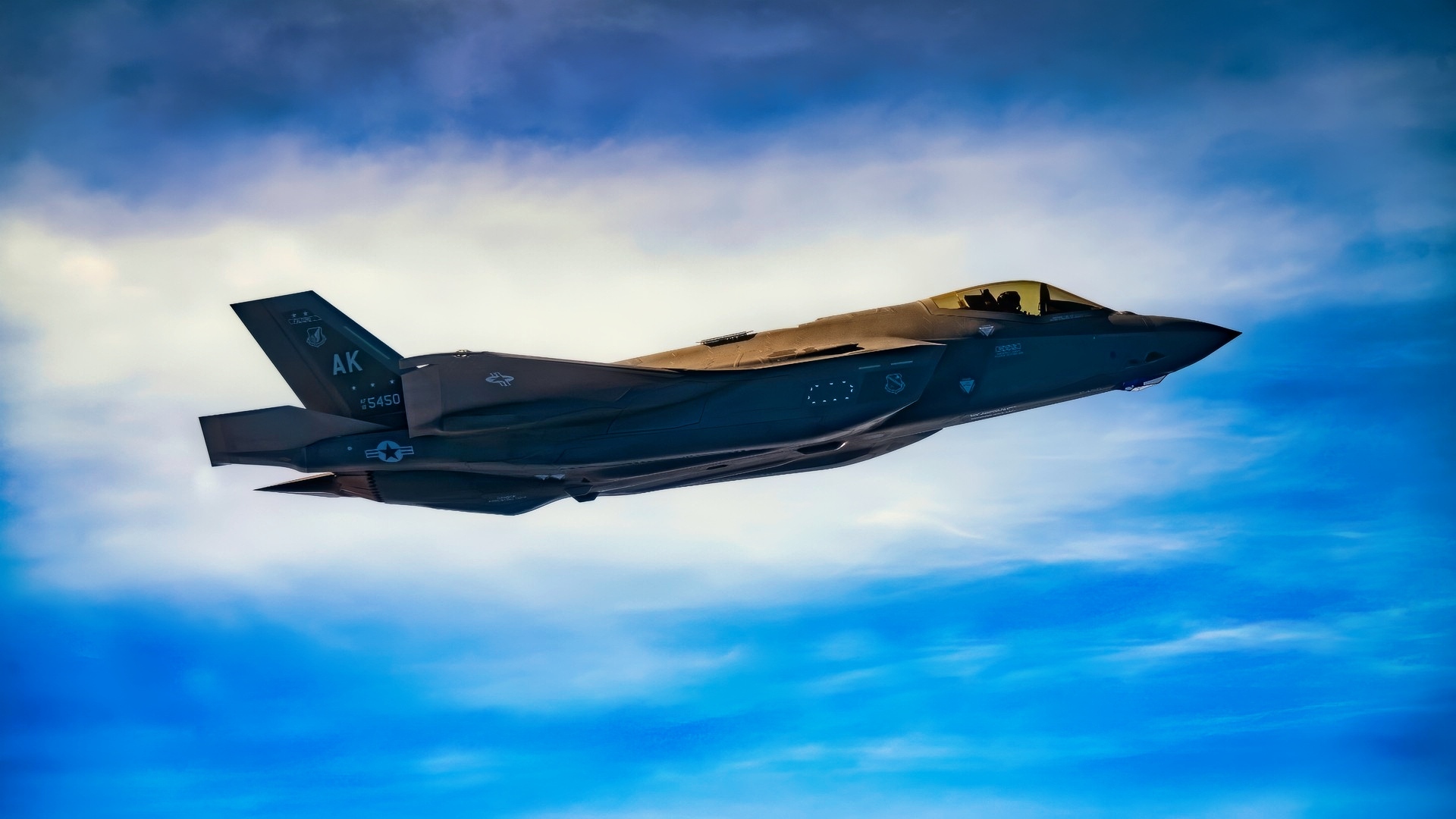
A U.S. Air Force F-35A Lightning assigned to the 356th Fighter Squadron, Eielson Air Force Base, Alaska, flies alongside of a U.S. Air Force KC-46A Pegasus assigned to the 77th Aerial Refueling Squadron, Seymour Johnson AFB, North Carolina, over the Pacific Ocean while enroute to the Singapore Airshow 2022, Feb. 11, 2022. The Singapore Airshow is the largest defense exhibition and biennial international tradeshow in the Pacific attracting thousands of participants from 50 countries. The U.S. Military is participating in Singapore Airshow 2022 by providing aerial demonstrations and static aircraft to demonstrate commitment and build upon partnerships with Singapore. (U.S. Air Force photo by Master Sgt. Richard P. Ebensberger)
The framework is also fragile. The enriched uranium dispute is the kind of technical disagreement that has collapsed Middle East negotiations before, and the Iranian Supreme Leader’s public position on the matter does not lend itself to easy compromise. The Israeli government has not signed off on the framework. The renewed U.S. strikes over Memorial Day weekend complicate the negotiating environment even as Trump publicly says talks are progressing.
The former Trump economic adviser who gave me the Labor Day warning framed it as political analysis rather than a prediction. The numbers underneath that warning indicate the warning is closer to certainty than analysis if the negotiations now underway fail to produce a durable agreement that reopens the strait. Trump has roughly fourteen weeks to either close the deal or accept that the political fallout from an oil shock arriving after Labor Day will define the rest of his presidency and the midterm elections that follow eight weeks later.
The clock is ticking. The president running the clock can stop it. The question is whether he closes the deal before the deal closes him.
About the Author: Harry J. Kazianis
Harry J. Kazianis (@Grecianformula) was the former Senior Director of National Security Affairs at the Center for the National Interest (CFTNI), a foreign policy think tank founded by Richard Nixon based in Washington, DC. Harry has over a decade of experience in think tanks and national security publishing. His ideas have been published in the NY Times, The Washington Post, The Wall Street Journal, CNN, and many other outlets worldwide. He has held positions at CSIS, the Heritage Foundation, the University of Nottingham, and several other institutions focused on national security research and analysis. He is the former Executive Editor of the National Interest and the Diplomat. He holds a Master’s degree focusing on international affairs from Harvard University.


