

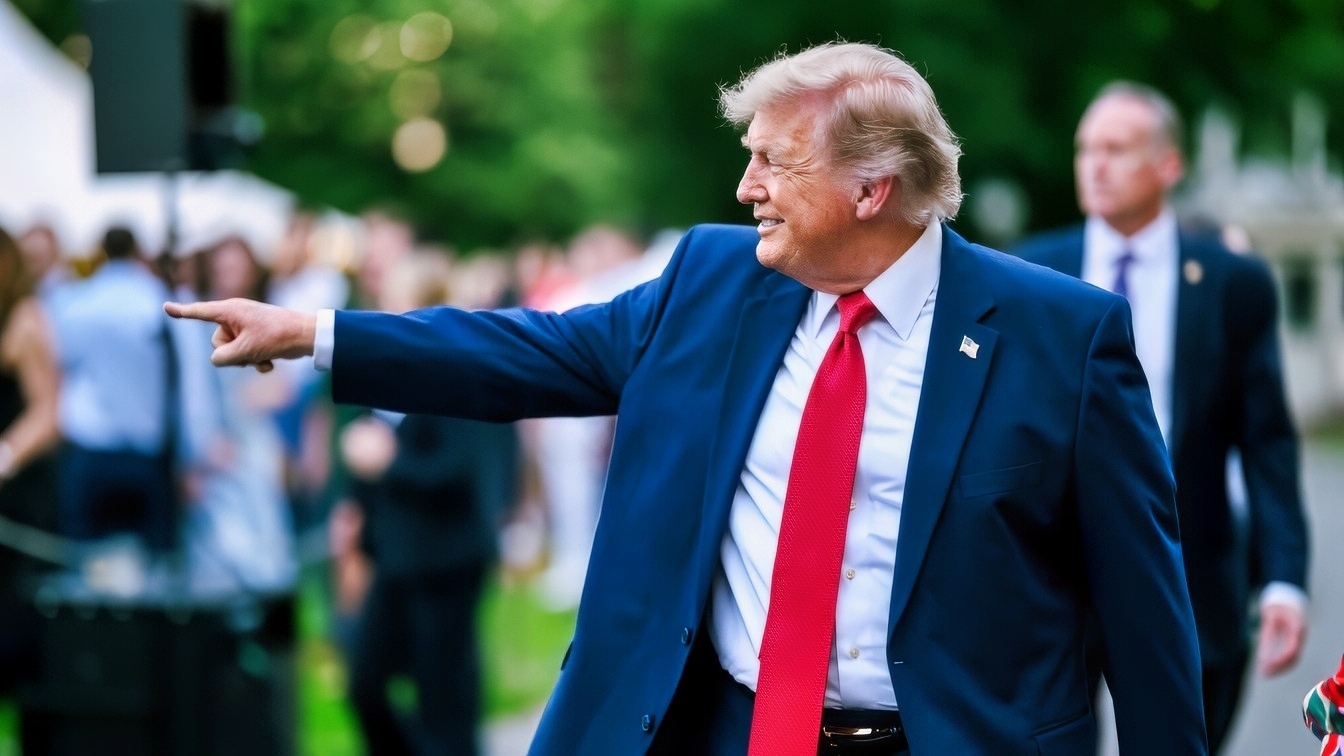
“The GOP is in a silent state of panic.” That’s what a former 2016 and 2020 top Trump presidential campaign official told me this morning. And you don’t need a Princeton PhD in political science to understand why. The president’s political position as of late May 2026 is the worst of his career, and the people inside his own party who track these numbers professionally have stopped pretending otherwise.
The most recent aggregate of Gallup, Reuters/Ipsos, YouGov, Quinnipiac, and Morning Consult places Trump’s approval at 38.6 percent against 58.2 percent disapproval, a net rating of minus 19.6 that exceeds anything either of Trump’s terms has produced before.
The New York Times/Siena College poll conducted between May 11 and May 15 recorded the highest disapproval figure in the survey’s history at 59 percent.
An AP/NORC poll conducted between May 14 and May 18 registered a 22-point net increase in disapproval, with only 38 percent of respondents approving of the president’s job performance compared to 60 percent disapproving.
Donald Trump Is In Serious Trouble
These are not soft margins driven by sampling noise.
The Reuters/Ipsos, Marist, AP-NORC, and YouGov surveys are independently arriving at the same picture from different methodological positions, which is the polling pattern that tends to precede a genuine political crisis rather than the kind of temporary slump that recovers within a news cycle or two.
The Iran War Stings
The collapse has two specific causes, and the people running Republican campaigns in House and Senate districts across the country understand both.
The first is Operation Epic Fury and the broader American military involvement in Iran that opened on February 28, 2026.
The Iran war was supposed to be Trump’s foreign policy showcase — the moment when American military power would be used decisively against a regional adversary and produce both strategic gains and political dividends at home.
Months in, the political dividend has not materialized. Approximately half of Americans polled across multiple recent surveys disapprove of Trump’s handling of the war specifically and of the military operations in Iran generally.
The American public absorbed the opening strikes on Iranian nuclear infrastructure as a reasonable response to immediate threats. What the public has not absorbed is the second-order economic and strategic consequences that have followed — the disruption to global energy markets, the Strait of Hormuz crisis that has driven up shipping insurance costs, the deployment of two American carrier strike groups for substantially longer than the original campaign was supposed to require, and the casualties from incidents like the F-15E Strike Eagle shot down on April 3 and the laundry fire aboard USS Gerald R. Ford on March 12 that displaced 600 sailors from their berthing compartments.
The war has produced exactly the kind of slow attritional pressure on American resources and public attention that drives approval ratings down rather than up.
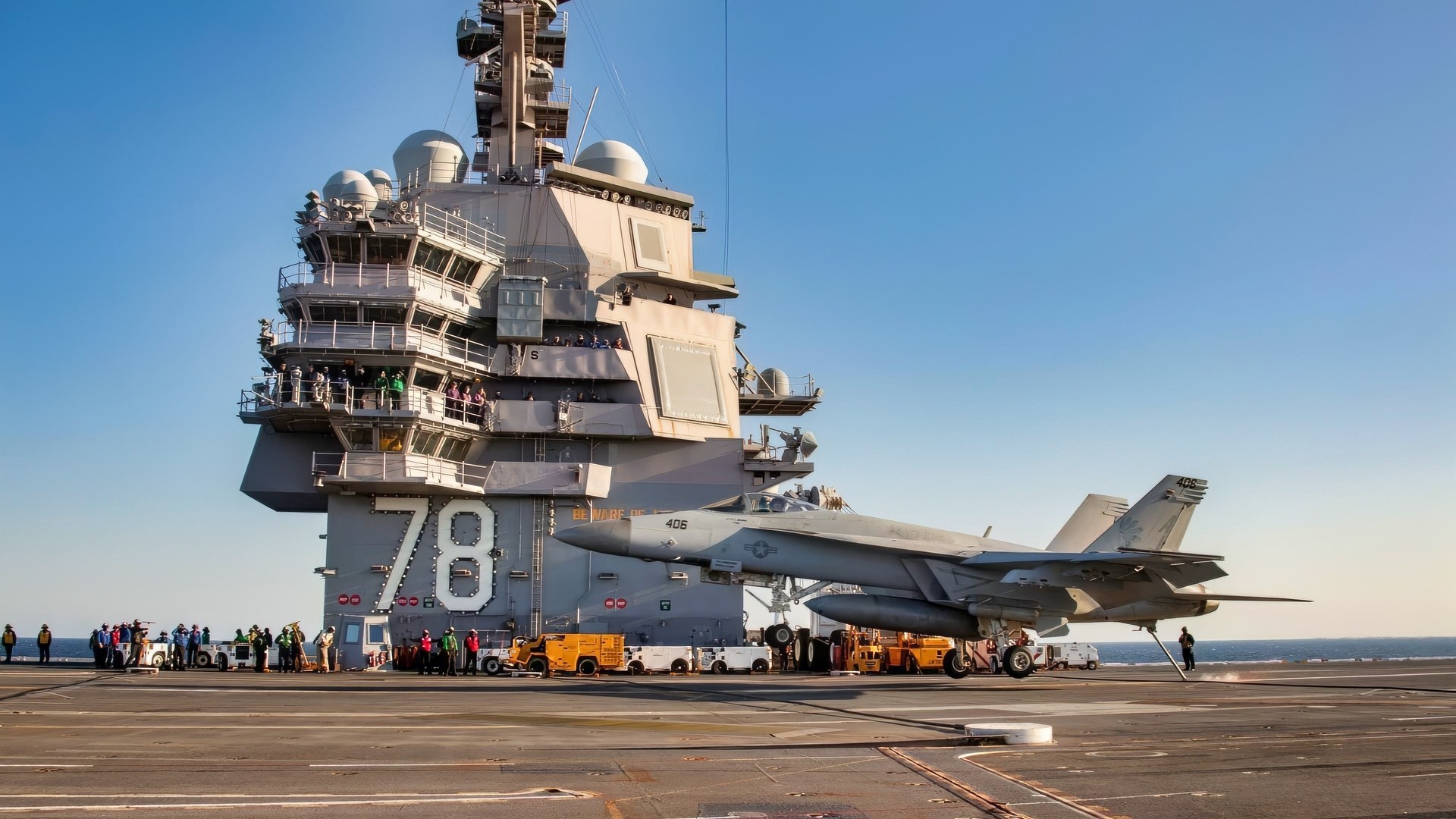
USS Gerald R. Ford Training. Image Credit: U.S. Navy.
The Economy Is In Trouble
The second cause is the economic environment, which is now substantially worse than it was at the start of Trump’s second term, clearly being damaged thanks to the Iran War.
Q1 2026 GDP came in at +2.0 percent against PCE inflation running at 4.5 percent, which is the textbook definition of incipient stagflation that has not been seen in American economic data since the late 1970s.
But the war in Iran is only half the economic story. The accelerant is the tariff regime, which has now been in place long enough for the price effects to flow through consumer prices in a way that voters can directly observe.
Combine these together, and Trump has a real problem on his hands that he can’t easily fix.
Gas prices are way up. Grocery prices substantially higher year over year. Mortgage rates have not come down despite the political pressure on the Federal Reserve. The cumulative effect is that Americans across demographics now identify inflation and prices as their most pressing concern, and the president’s name is the one most directly associated with the tariff policies driving those prices upward.
Even among Republicans, the percentage who disapprove of Trump’s handling of the cost of living has climbed from 27 percent to 34 percent in the space of a single week, which is the kind of base erosion that ends political careers.
The Midterms Are a Problem
The midterm implications follow directly from the polling collapse. Trump’s approval among independent voters now stands at 34 percent, down 14 points from the 48 percent he held at inauguration.

President Donald J. Trump delivers remarks on the Iran Strategy in the Diplomatic Reception Room at the White House, Friday, October 13, 2017. In Washington, D.C. (Official White House Photo by D. Myles Cullen)
In 2018, the midterm cycle that produced Democratic gains of 41 House seats and gave Nancy Pelosi her second speakership, Trump’s independent approval was 36 percent.
The president has now crossed beneath that historical threshold by two full points, which is the polling indicator that political scientists treat as the most reliable predictor of midterm losses.
The generic ballot has moved accordingly, with Democrats now leading by approximately D+6.9 across the major surveys — a margin consistent with House gains in the 30-to-50-seat range based on the historical relationship between generic ballot polling six months before a midterm and the actual outcome.
The GOP Is Scared
The view from inside the Republican congressional campaign apparatus is that the May 2026 polling environment is not a temporary problem that can be addressed through better messaging.
The structural drivers are the Iran war and the inflation regime, and both are at least partially outside the president’s ability to control without policy reversals he has so far refused to make.
Tariff cuts would acknowledge that the trade strategy is failing. A negotiated end to the Iran war would acknowledge that the military strategy has not produced a clean victory. Neither concession appears to be forthcoming, which means the polling environment is likely to remain as it is or worsen heading into the November 2026 elections.
The president’s political team continues to argue publicly that the numbers will recover, that the base is holding at 87 percent Republican approval, and that the media is exaggerating the scale of the collapse.
The base is, in fact, holding, but the base does not decide American elections. Independent voters do, and the independent voters who decided 2024 in Trump’s favor have now broken decisively against him. My guess is that the upcoming midterms will not be close. The GOP will be crushed.
About the Author: Harry J. Kazianis
Harry J. Kazianis (@Grecianformula) was the former Senior Director of National Security Affairs at the Center for the National Interest (CFTNI), a foreign policy think tank founded by Richard Nixon based in Washington, DC. Harry has over a decade of experience in think tanks and national security publishing. His ideas have been published in the NY Times, The Washington Post, The Wall Street Journal, CNN, and many other outlets worldwide. He has held positions at CSIS, the Heritage Foundation, the University of Nottingham, and several other institutions related to national security research and studies. He is the former Executive Editor of the National Interest and the Diplomat. He holds a Master’s degree focusing on international affairs from Harvard University.


