

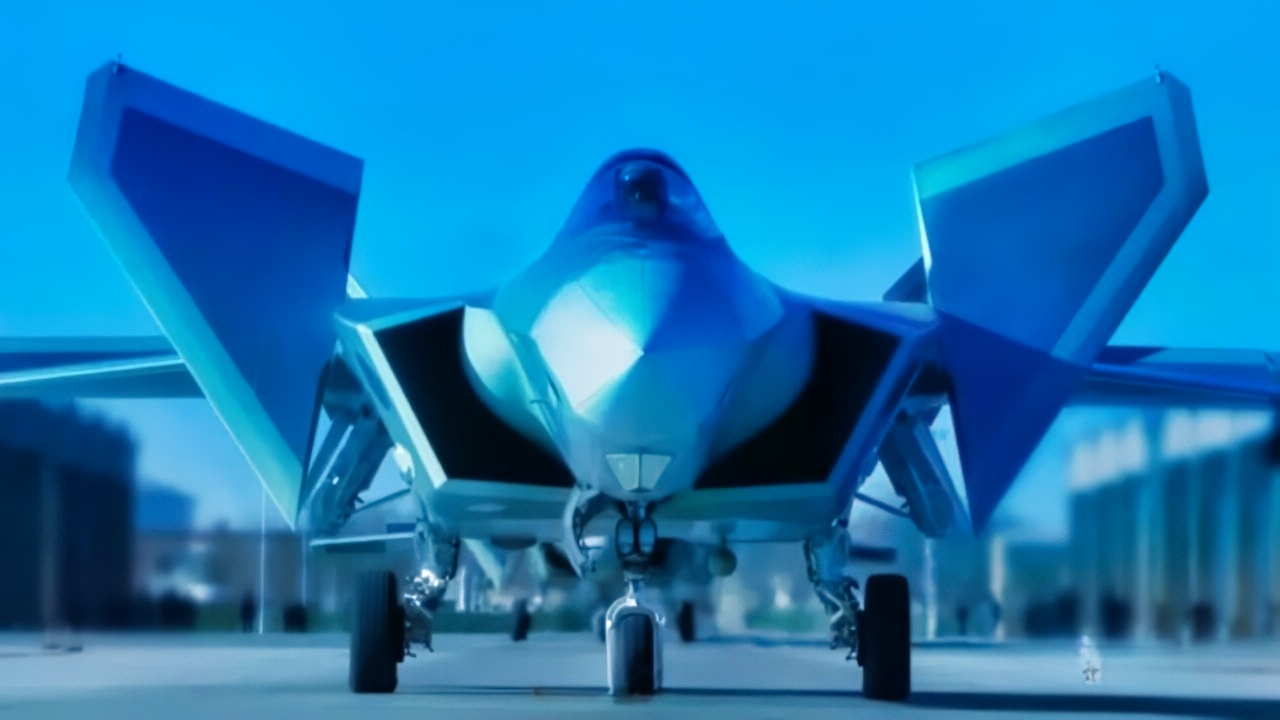
In 2011, the Chengdu J-20 Mighty Dragon made its first flight. Years later, the aircraft officially entered service with the Chinese military, cementing the CCP as the second country in the world to field a domestically built fifth-generation stealth fighter. The introduction of the J-20 was a shock to the U.S., which had long enjoyed a monopoly on stealth aircraft.
The introduction of the aircraft, along with China’s other advances in its aerospace industry, spurred endless speculation in the West about how China had achieved this in such a short time. Many speculate that the J-20 may have been built using stolen U.S. technology acquired through cyber espionage.
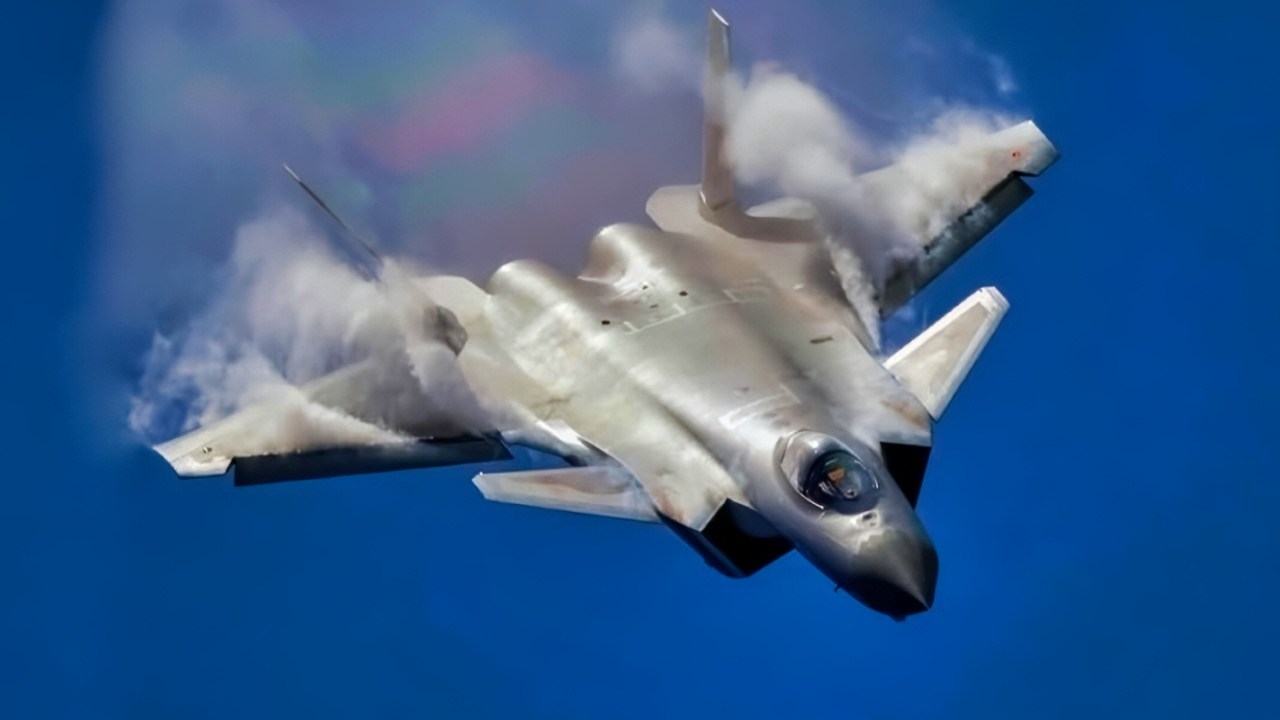
J-20S Fighter Chinese Internet Image.
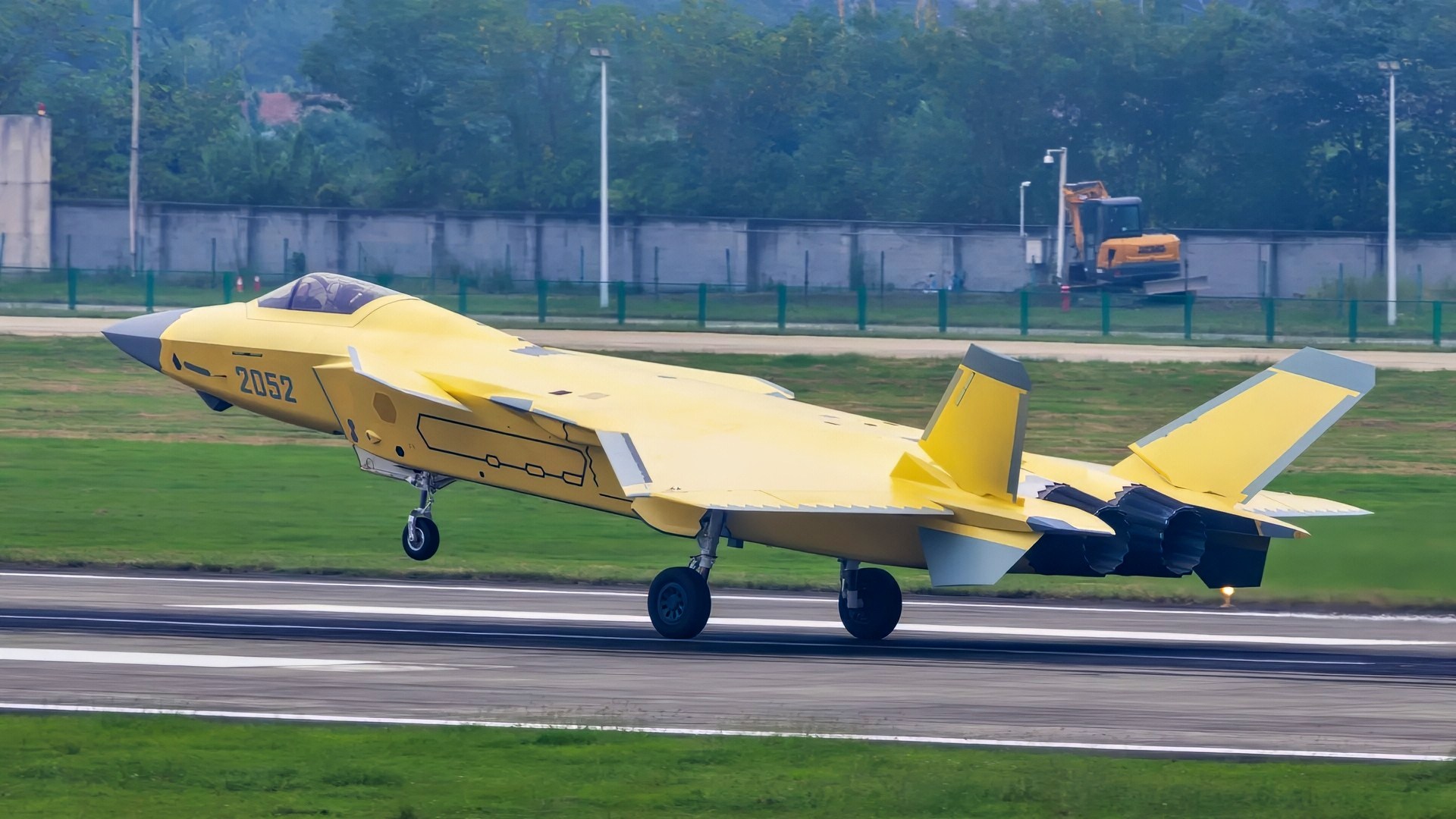
J-20A Fighter in Yellow. Image Credit: X Screenshot.
Development of the J-20
In the 1990s, China began researching the development of a fifth-generation stealth fighter under the J-XX (or J-X, depending on the source) program. The program was officially acknowledged by the CCP in 2001, when a paper from Chengdu was published in China, describing the advantages of the unstable canard configuration that the J-20 would later adopt.
Between the years 2001 and 2008, several design bureaus, including Chengdu and Shenyang, submitted proposals for the program. The PLAAF finally selected Chengdu’s proposal, Project 718 designed by Yang Wei, as the fighter that would eventually evolve into China’s first fifth-generation aircraft.
Only two years later, a prototype of the J-20 made its first flight at the Chengdu Aircraft Design Institute. In 2014, another prototype took flight, this one more closely resembling the final production variant of the J-20.
It featured redesigned vertical stabilizers, divertless supersonic inlets, visible stealth coatings, and integrated targeting pods for air-to-ground combat. This suggested that the aircraft would not be a purely air-to-air aircraft like the F-22, but would assume a multi-role function within the PLAAF. The aircraft entered low-rate initial production in 2015 before entering full service in 2017.
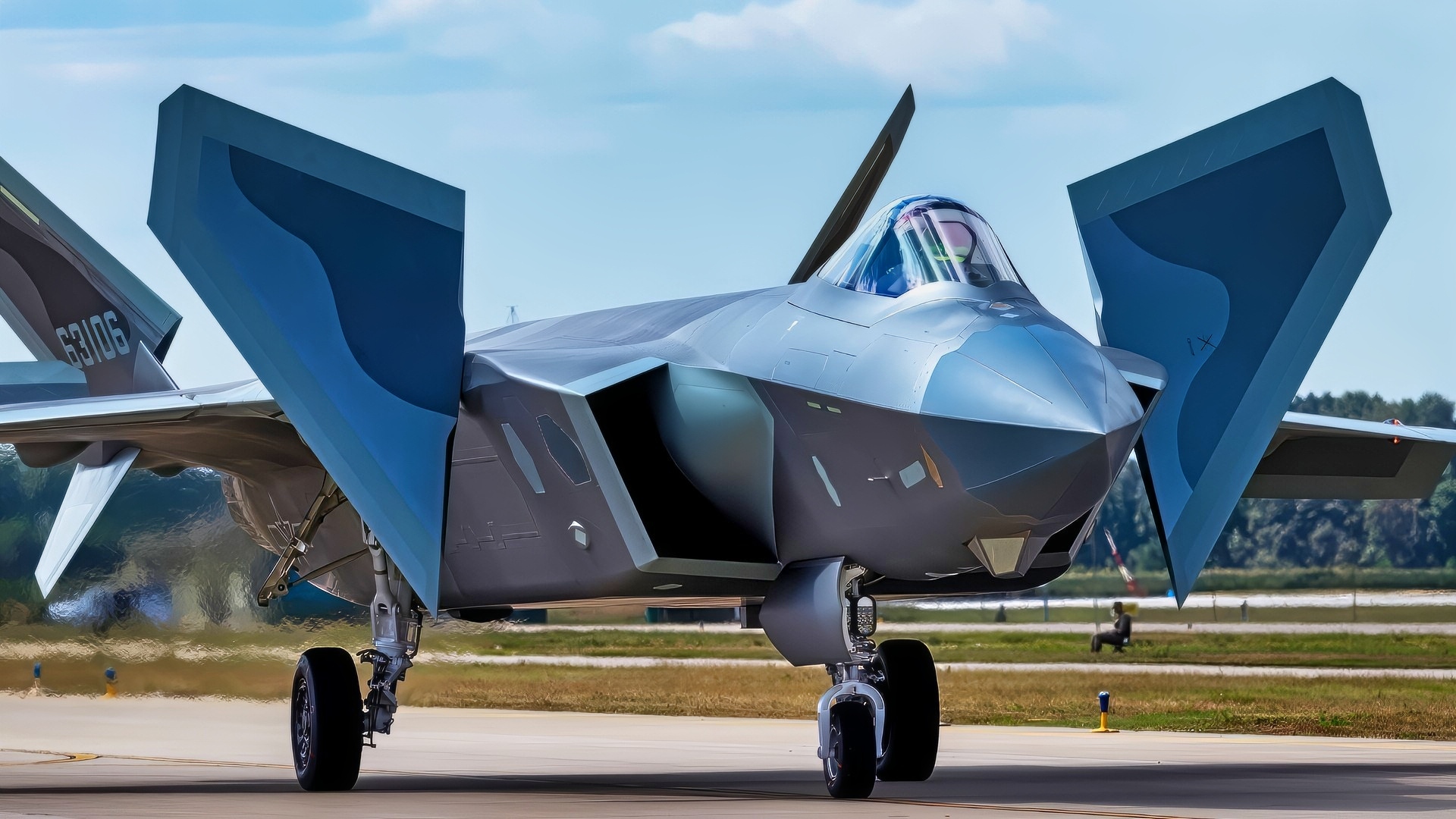
J-20 Fighter 2025 Photo. Image Credit: Chinese Military.

J-20 on the Tarmac. Image Credit: Creative Commons.
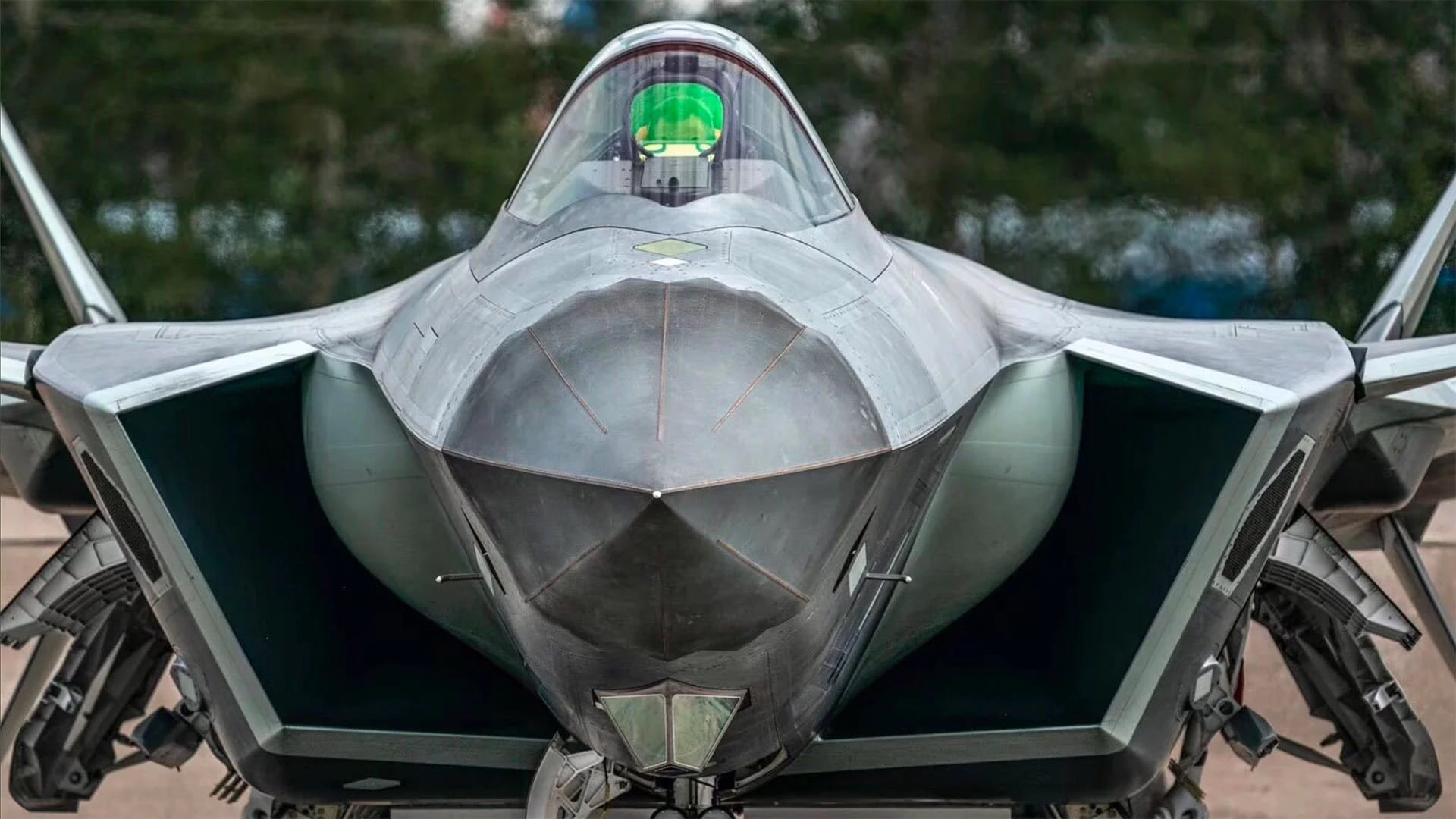
J-20 Fighter Image. Image Credit: Creative Commons.
Did China Steal Secrets From the West for the J-20?
The rapid development of the J-20 alarmed many Western analysts. Each of the U.S. stealth fighters took decades to develop, and this was with the advantage of prior knowledge in stealth technology. How had China managed to produce its own fifth-generation stealth fighter in such a short amount of time?
The answer, many concluded, was cyber espionage. China has been known to launch cyber attacks against the U.S., targeting important classified information on its military secrets, especially those of its fighter jets. Combined with the fact that the Chinese industry was known for reverse-engineering Soviet fighters, it seems relatively obvious.
The J-20 does share some similarities with the U.S.’s stealth fighters. The aircraft takes a holistic approach to stealth, utilizing stealth shaping and a chined forebody, similar to that of the F-22. The J-20’s DSI inlets and S-duct intakes look visually similar to the F-35.
Other analysts have noted that the aircraft’s usage of electro-optical systems is also similar to the F-35’s electro-optical targeting system (EOTS). These visual similarities, along with China’s propensity for cyber-espionage, led many analysts and experts to conclude that the CCP had stolen secrets from the U.S. and used them to accelerate development of the J-20.
Recent Developments
With all that being said, however, there is still no hard evidence that the J-20 was developed using stolen secrets (plausible deniability is part of any good espionage operation). While it is highly likely that espionage was used, the aircraft is not a carbon copy of the F-22 or the F-35.
It is a distinctly Chinese design built to meet the PLAAF’s requirements. It has a completely different wing layout, a completely different weapons bay design, stabilizers, and more. The extent of cyber espionage’s influence on the development of the J-20 will likely never be known for certain.
Over the past decade, the J-20 has evolved significantly, further separating it from its American counterparts. One of the biggest bottlenecks in the aircraft’s development has been its engines. The J-20 has gone through many engine models before finally being fitted with the long-delayed WS-15 powerplant.
Earlier models used Russian-made AL-31FM engines, which were later replaced by domestic WS-10C/B engines. The aircraft’s avionics have also reportedly been upgraded, with its radar range increased by up to three times. In 2022, however, China broke new ground when a prototype of the J-20S took its first flight. The J-20S is a twin-seater version of the J-20, designed to facilitate coordination with loyal wingman drones.
Built to Combat American Stealth Fighters Like the F-22 and F-35
Overall, the J-20 is China’s answer to the American F-22 and F-35. It is designed to protect Chinese airspace from enemy aircraft and to target sensitive assets such as aerial refuelers and AWACS aircraft. It is fitted with a powerful AESA radar and IRST systems to detect and target low-observable targets.

U.S. Air Force Capt. Samuel “RaZZ” Larson, F-22 Raptor Demonstration Team commander, performs an aerial maneuver in preparation for the ongoing airshow season at Joint Base Langley-Eustis, Virginia, July 9, 2024. Airshows play a crucial role in highlighting the importance of air power in modern warfare and help reinforce the deterrence capabilities of advanced fighter aircraft like the F-22 Raptor. (U.S. Air Force photo by Senior Airman Mikaela Smith)

F-22 Raptor. Image Credit: Creative Commons.
One can make a compelling argument that the fighter would not win an aerial battle against an F-22 or an F-35, but that is not the point. The technological chasm that once existed between the USAF and the PLAAF is rapidly closing, and as the J-20 continues to improve, that gap is closing even further.
About the Author: Isaac Seitz
Isaac Seitz, a Defense Columnist, graduated from Patrick Henry College’s Strategic Intelligence and National Security program. He has also studied Russian at Middlebury Language Schools and has worked as an intelligence Analyst in the private sector.


