


Key Points and Summary – China’s J-20A Mighty Dragon is the sharp edge of Beijing’s push to end American air dominance in the Indo-Pacific.
-Powered by indigenous WS-10C engines and optimized for front-aspect stealth, the large canard-delta jet carries long-range PL-15 missiles in internal bays and links into China’s wider A2/AD sensor network.
-It’s built to hunt U.S. fifth-gen fighters, kill tankers and AWACS, and impose air denial around Taiwan and the South China Sea from bases deep inside China.
-Questions remain over engines, stealth, sensors, software maturity and pilot training—but in mass, the J-20A is a serious, rapidly growing threat.
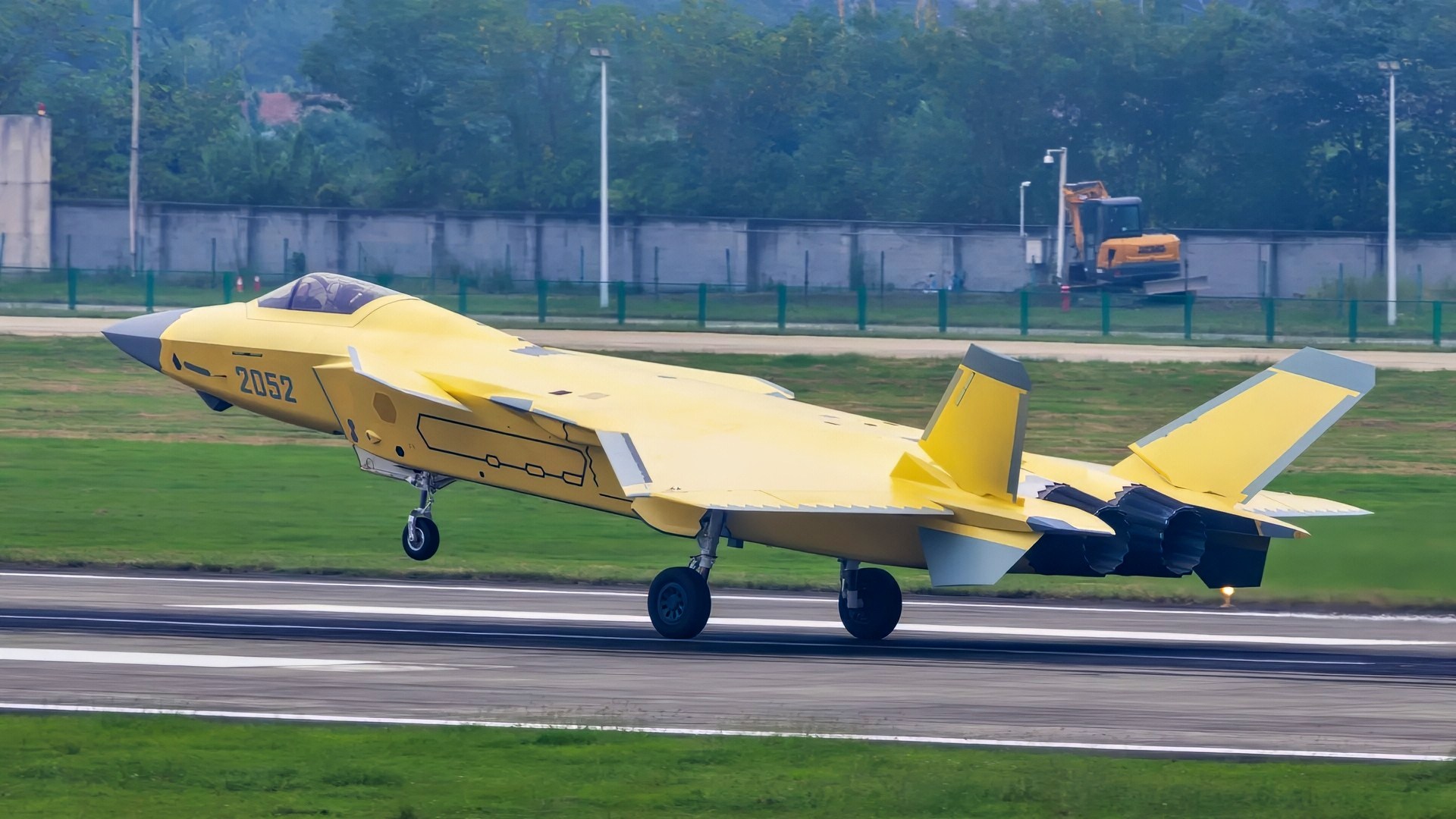
J-20A Fighter in Yellow. Image Credit: X Screenshot.
The J-20A is the main operational variant of China’s Chengdu J-20 “Mighty Dragon.” It is a true fifth-generation fighter and the core of China’s modernization efforts.
The platform symbolizes China’s leap from copying old Soviet designs to fielding its own, cutting-edge indigenous models.
The J-20A is now operational and is deployed in growing numbers across multiple People’s Liberation Army Air Force (PLAAF) brigades.
Introducing the J-20A Mighty Dragon Fighter
The J-20A first flew in 2011. Early prototypes depended on Russian AL-31FN engines due to China’s limited ability to produce an indigenous engine worthy of a fifth-generation fighter.
But over time, China refined its own engines, adopting the WS-10C for use in the J-20A, upgrading the flight control systems, enhancing the avionics and stealth shaping, and improving the radar and sensor fusion.
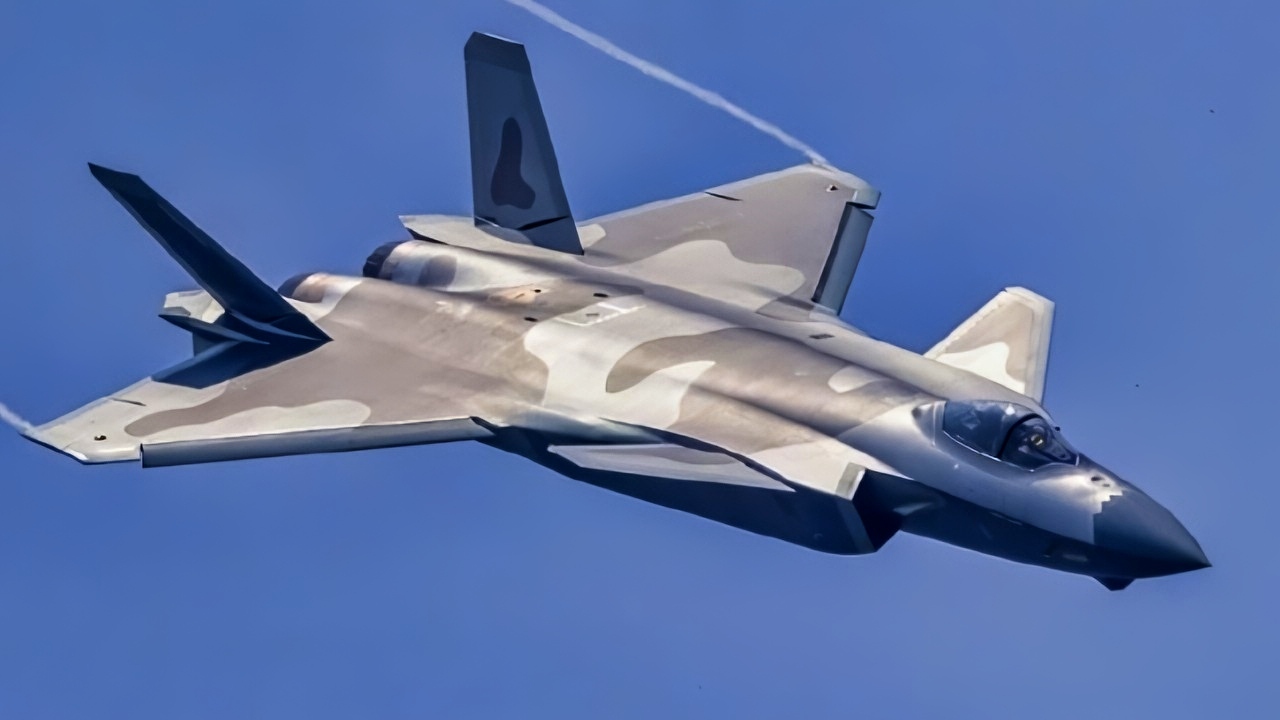
China J-20A Fighter in the Sky. Image Credit: Creative Commons.
The platform gradually emerged as something capable of challenging U.S. air dominance in the Indo-Pacific.
The airframe is large, with a twin-engine canard-delta configuration.
The platform is stealth-optimized (albeit not as much as Western counterparts) with faceted intakes, aligned edges, and internal weapon bays.
The emphasis is on front-aspect stealth, ideal for the long-range beyond-visual-range (BVR) engagements likely to characterize air conflict in the sprawling Indo-Pacific.
The airframe makes extensive use of composite materials and radar-absorbent coatings.
The J-20A’s sensors and avionics are understood to lag behind Western counterparts yet remain capable, featuring an Active Electronically Scanned Array radar, distributed infrared sensors, multiple electro-optical apertures, and advanced datalinks for networked warfare with airborne early warning and control aircraft (AWACS), drones, and legacy fighters.
The J-20A is designed to fuse radar, Infrared, Electronic Warfare, and passive detection into a single picture for the lone pilot.
Within the internal weapon bay, the J-20A can carry long-range PL-15 air-to-missiles with an estimated range of up to 200 kilometers. In side bays, the aircraft carries PL-10 high-off-boresight missiles. And in the future, the aircraft may be upgraded to integrate ultra-long-range PL-17 missiles.
The J-20A can reach speeds of about Mach 2.0 with the AL-31 or WS-10 engines.
The upcoming WS-15 engine is expected to give the platform supercruise ability. The platform’s combat radius is estimated at more than 1,000 miles, which is far greater than that of the American F-22.
Operational Application for J-20A: Aircraft
The J-20A will be used for a variety of operational roles, for starters, including long-range air superiority.

J-20 on the Tarmac. Image Credit: Creative Commons.
The aircraft was designed to challenge U.S. and allied fifth-generation fighters in the region. PL-15 missiles give it a strong BVR advantage, mainly when supported by China’s sensor network.
The J-20A will also be used to counter U.S. force multipliers, namely enabler aircraft such as AWACS, tankers, and maritime patrol aircraft—the platforms that enable U.S. fighters to operate.
Targeting enablement aircraft, which are non-stealthy and especially vulnerable, would reduce the U.S. ability to project power into the Pacific.
The J-20A will be used to establish forward air dominance over Taiwan and the South China Sea. The aircraft’s impressive range enables operations without reliance on tankers. And thanks to the aircraft’s range, the fleet can operate from inland bases far from the reach of U.S. first-strike systems.
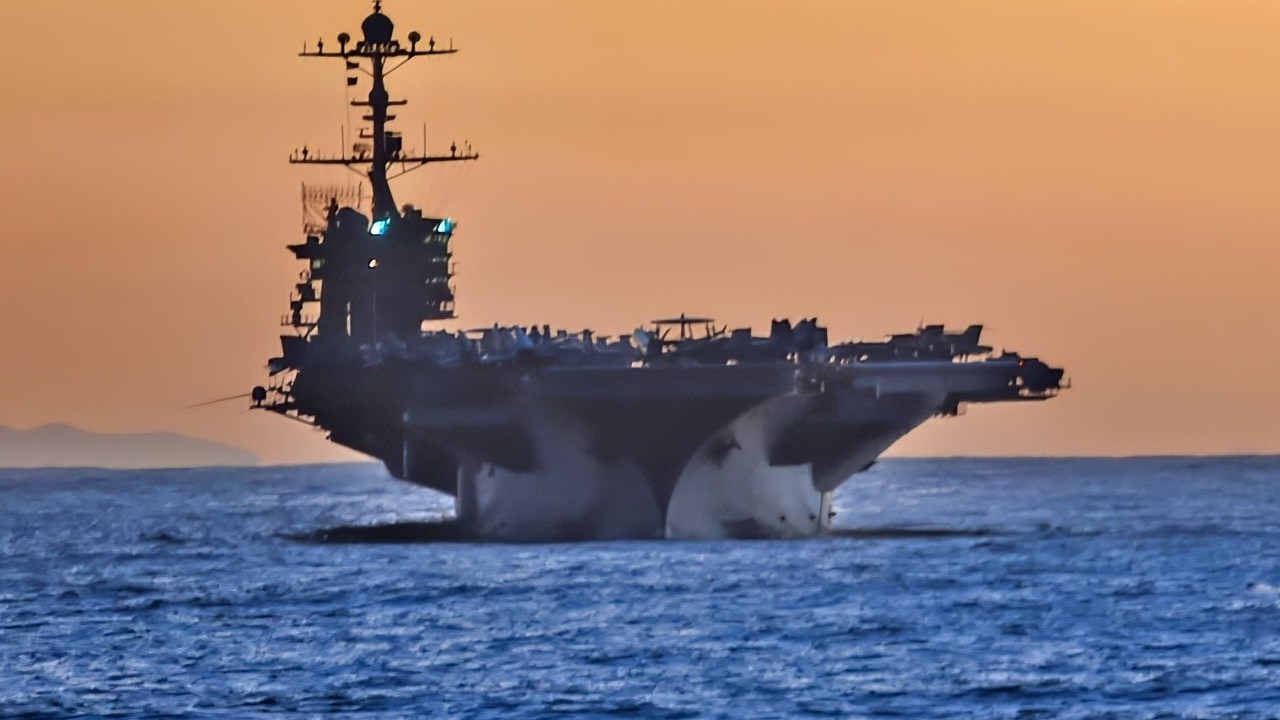
151111-N-KM939-021 PACIFIC OCEAN (Nov. 11, 2015) – USS John C. Stennis (CVN 74) travels behind the guided-missile destroyer USS Stockdale (DDG 106) during a Missile Exercise (MSLEX). Sailors from the John C. Stennis Strike Group are participating in a sustainment training exercise (SUSTEX) to prepare for future deployments. (U.S. Navy photo by Mass Communication Specialist 3rd Class David A. Cox/Released)
Last, the J-20A will likely be used for maritime strike and air denial.
When paired with PLA radar networks, the J-20A will be a potent tool in China’s anti-access/area denial (A2/AD) network, used to challenge carrier strike group access.
Strategically, the J-20A helps China displace U.S. tactical air dominance in the Indo-Pacific.
The J-20A was specifically tailored to China’s strategic environment, characterized by long distances, a heavy reliance on BVR, networked air-defense systems, and U.S. support aircraft. The platform was designed as a node in the A2/AD network.
Production is accelerating. As many as 150 have likely already been built and are entering service with multiple PLAAF brigades across China’s Eastern, Southern, and Western theaters. China will aim to field several hundreds J-20A/Bs, giving President Xi Jinping’s government the largest fifth-generation fleet outside of the U.S.
Questions about the aircraft’s quality remain. The WS-10 engine is reliable but probably not optimal.
The stealth performance is questionable. Sensor maturity is unknown. And pilot training is likely limited relative to U.S. standards.
But the J-20A poses a symbolic challenge to U.S. air dominance in the region.
This is a platform that will prompt the U.S. to accelerate next-generation aircraft development and compel Taiwan, Japan, etc. to invest in fifth-generation technology and sophisticated air defense networks.
The J-20A may not be on par with Western fifth-generation fighters.
Still, the platform represents a shift in global air power—an end to the era when U.S. forces could expect to face second-rate adversaries with outdated tech, and the beginning of an era when the U.S. can expect to encounter peers armed with modern fifth-generation fighters.
About the Author: Harrison Kass
Harrison Kass is an attorney and journalist covering national security, technology, and politics. Previously, he was a political staffer, candidate, and a US Air Force pilot select. He holds a JD from the University of Oregon and a master’s in global journalism and international relations from NYU.


