
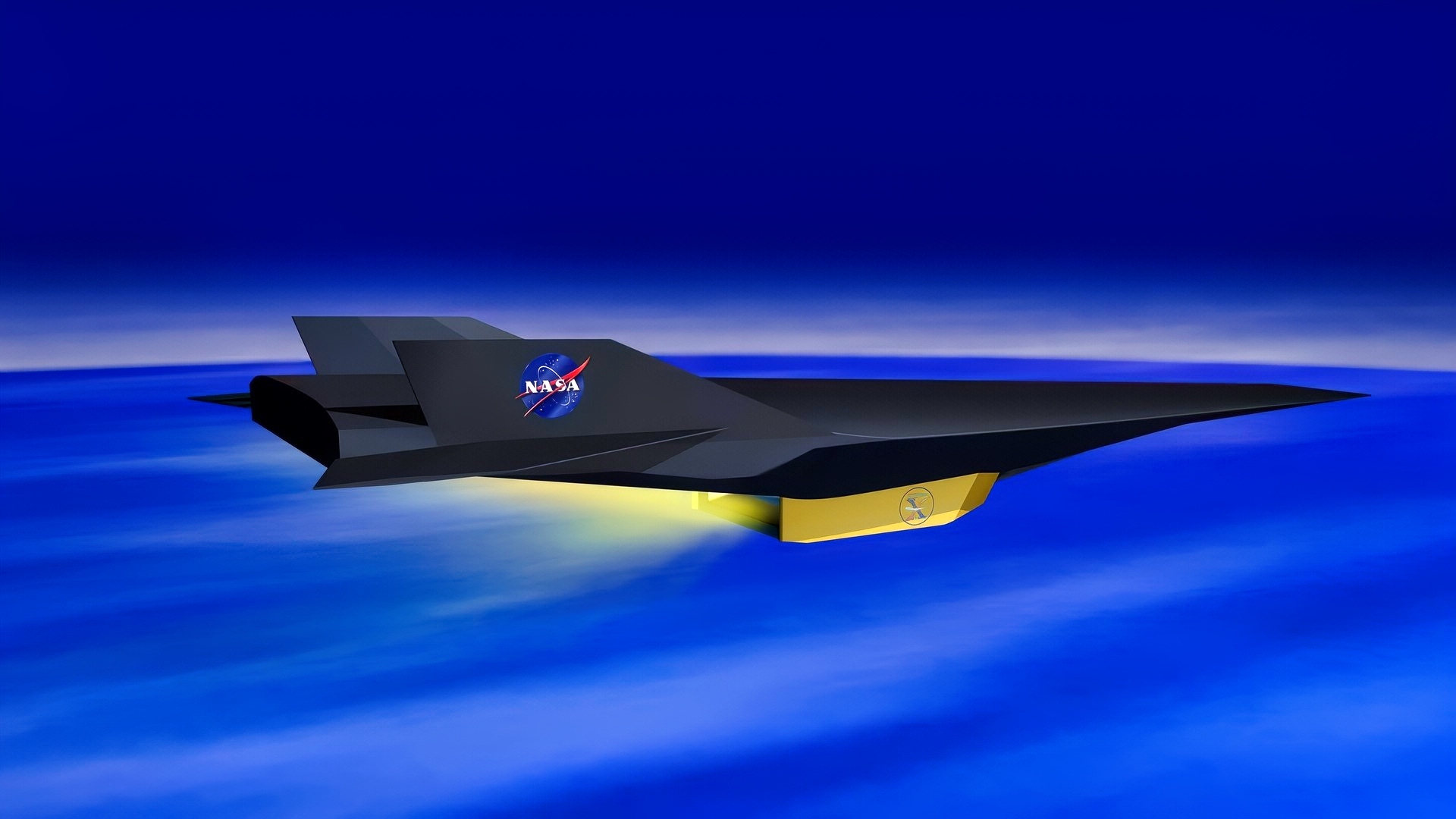
NASA’s X-43D was designed to fly at speeds approaching Mach 15 — roughly 11,000 miles per hour — using a hydrogen-fueled scramjet to sustain just 30 seconds of powered flight before gliding to splashdown. A joint Boeing and NASA Langley Research Center feasibility study warned that engineers would need active cooling systems to prevent the aircraft’s engine inlets and leading edges from literally melting during flight, given the thermal loads at that speed. The program never moved past the feasibility study, and 20 years later DARPA’s Hypersonic Air-breathing Weapon Concept and the Air Force’s Hypersonic Attack Cruise Missile program are picking up where the X-43D left off.
The X-43D Would Have Been a Mach 15 Marvel

X-43 from NASA. Image Credit: Creative Commons.
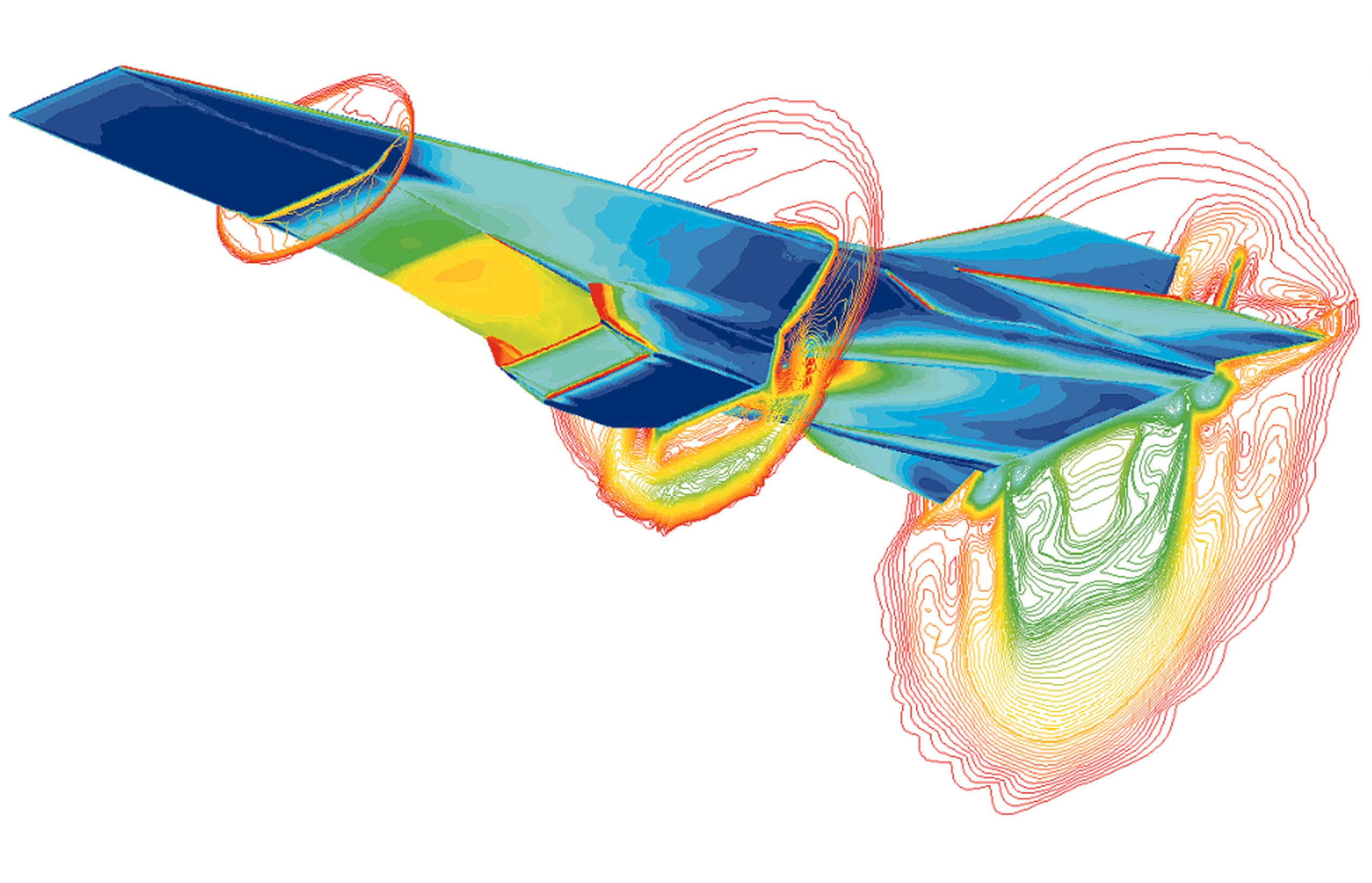
X-43A
NASA once studied an experimental hypersonic aircraft capable of flying at nearly Mach 15, a speed so extreme that engineers warned conventional materials and testing methods were reaching their limits.
The proposed aircraft, known as the X-43D, never progressed beyond a feasibility study, but the program is particularly interesting today as the United States races to expand modern hypersonic weapons and propulsion technology amid growing competition with China and Russia.
The X-43D was conceived in the early 2000s as a follow-on to NASA’s successful X-43A Hyper-X program, which set world records for air-breathing flight after demonstrating scramjet-powered speeds approaching Mach 10.
According to a joint Boeing and NASA Langley Research Center feasibility study, the X-43D would have expanded the operational envelope even further, targeting sustained flight in the Mach 12-15 range.
The study stated that one of the aircraft’s primary goals was to “gather high Mach number flight environment and engine operability information which is difficult, if not impossible, to gather on the ground.”
Hypersonic speed generally refers to speeds above Mach 5, or five times the speed of sound. At Mach 15, an aircraft would travel at roughly 11,000 miles per hour, depending on altitude and atmospheric conditions.
The X-43D concept was the result of NASA’s Hyper-X effort, a research initiative launched during the 1990s after the collapse of the ambitious National Aerospace Plane program. The goal was to prove that scramjets – short for supersonic combustion ramjets – could operate in real flight conditions.
Unlike rockets, scramjets use atmospheric oxygen rather than carrying onboard oxidizer, potentially enabling dramatically faster, more efficient atmospheric or near-space flight.
The X-43A itself was a relatively small unmanned lifting-body aircraft launched from a B-52 bomber using a modified Pegasus rocket booster.
After separating from the booster at extreme altitude and speed, the aircraft ignited its own hydrogen-fueled scramjet engine for only a few seconds before gliding into the Pacific Ocean.

X-15. Image Credit: Creative Commons.
The first X-43A test in 2001 ended in failure when the booster rocket lost control, and the vehicle was deliberately destroyed for safety reasons.
But two later flights succeeded. In March 2004, the aircraft reached nearly Mach 7 at an altitude of roughly 95,000 feet, setting a new speed record for an air-breathing aircraft.
Then, during its final flight in November 2004, the X-43A accelerated to approximately Mach 9.6 at an altitude of roughly 109,000 feet, equivalent to about 7,000 mph. NASA still describes the aircraft as the fastest air-breathing vehicle ever flown.
NASA described the Mach 10 mission as being high-risk and high-payoff, and the proposed X-43D would have pushed those numbers much further.
According to the feasibility study, the vehicle would have remained broadly similar in shape to the X-43A but would have operated in a dramatically harsher thermal environment.
Engineers were concerned that total-temperature limits would become an insurmountable challenge at Mach 15, particularly at the engine inlets and the craft’s leading edges. The study discussed the likely need for active cooling systems to prevent parts of the aircraft from literally melting during flight.
Even the X-43A had already encountered serious heating problems at lower hypersonic speeds. NASA documentation explained that water had to circulate behind parts of the engine and airframe to cool surfaces exposed to extreme aerodynamic heating.
The Project Never Happened
The X-43D study envisioned a roughly four-year development schedule beginning in fiscal year 2005, followed by three separate test flights spaced roughly a year apart. The aircraft would have used a hydrogen-fueled scramjet engine and aimed to achieve approximately 30 seconds of powered flight at Mach 15.
But the project never advanced into full development.
The feasibility study itself acknowledged uncertainty surrounding future funding, noting that the long-term impact of the X-43A’s success on NASA’s hypersonic programs remained unclear. Around the same time, NASA’s planned X-43C variant was also indefinitely suspended amid broader agency restructuring and shifting budget priorities.
Scramjets Are Moving Closer to Operational Use
Although the X-43D never flew, many of the same technological problems remain central to modern hypersonic programs today. Scramjet propulsion, thermal protection, guidance stability, and high-speed maneuverability continue to define current American, Chinese, and Russian hypersonic development efforts. The technology is still there, it is getting better, and these remarkable projects are becoming increasingly feasible.
Modern U.S. programs such as DARPA’s Hypersonic Air-breathing Weapon Concept, or HAWC, have focused heavily on scramjet-powered systems capable of sustained hypersonic cruise flight.
The Air Force’s future Hypersonic Attack Cruise Missile program also builds directly on research from earlier scramjet demonstrators.
The new technology is becoming increasingly visible outside of experimental programs. In September 2024, defense contractor Kratos announced a successful ground test of its Erinyes reusable hypersonic engine, a scramjet system intended for future high-speed drones and strike platforms.
At the same time, the Pentagon’s HACM effort and other programs are pushing steadily toward operational deployment. Two decades ago, this kind of technology would have been unthinkable – but today, we are on the verge of fielding it.
About the Author: Jack Buckby
Jack Buckby is a British researcher and analyst specializing in defense and national security, based in New York. His work focuses on military capability, procurement, and strategic competition, producing and editing analysis for policy and defense audiences. He brings extensive editorial experience, with a career output spanning over 1,000 articles at 19FortyFive and National Security Journal, and has previously authored books and papers on extremism and deradicalization.


