

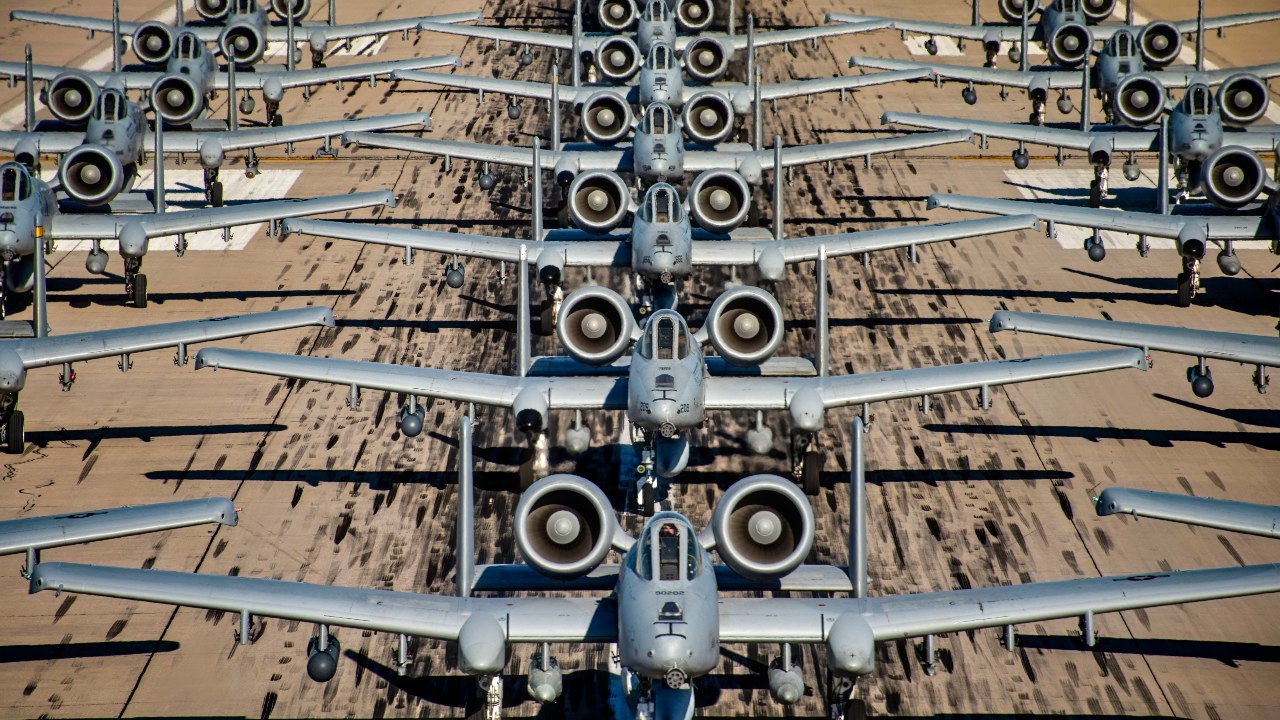
Summary and Key Points: The A-10 “Warthog” is the plane the U.S. Air Force keeps trying to retire — and Congress keeps refusing to let go.
-Built around a massive 30mm GAU-8 Avenger cannon and a titanium “bathtub” cockpit, the Cold War tank-killer became indispensable for close air support in Afghanistan and Iraq.
-In the Iran War, it became a surprising drone-hunter — and even helped rescue a downed U.S. pilot.
-No other aircraft, Congress argues, can replace it.
-BONUS: We present our own video and photos of the A-10 Warthog from our visit to the National Museum of the U.S. Air Force last July.
The A-10 Warthog Won’t Go Away
The debate over retiring the Fairchild A-10 Thunderbolt II, known as the “Warthog,” has become one of the biggest, longest-running doctrinal fights within the United States Air Force in recent decades. Air Force leaders assert that the A-10 is past its prime and obsolete. They’re saying that because the Air Force desperately wants to divest from the program and redirect its funds to other systems, such as the F-35 program.
In fact, the Air Force argues that the fifth-generation air superiority fighter, the F-35 Lightning II, can do the work of the A-10 and then some.
What the Air Force has been saying is grossly inaccurate. And they know it. They just want the plane gone. Yet, Congress refuses to allow the Air Force to retire this bird. When I worked on Capitol Hill a decade ago, I participated in the fights over the A-10’s future.
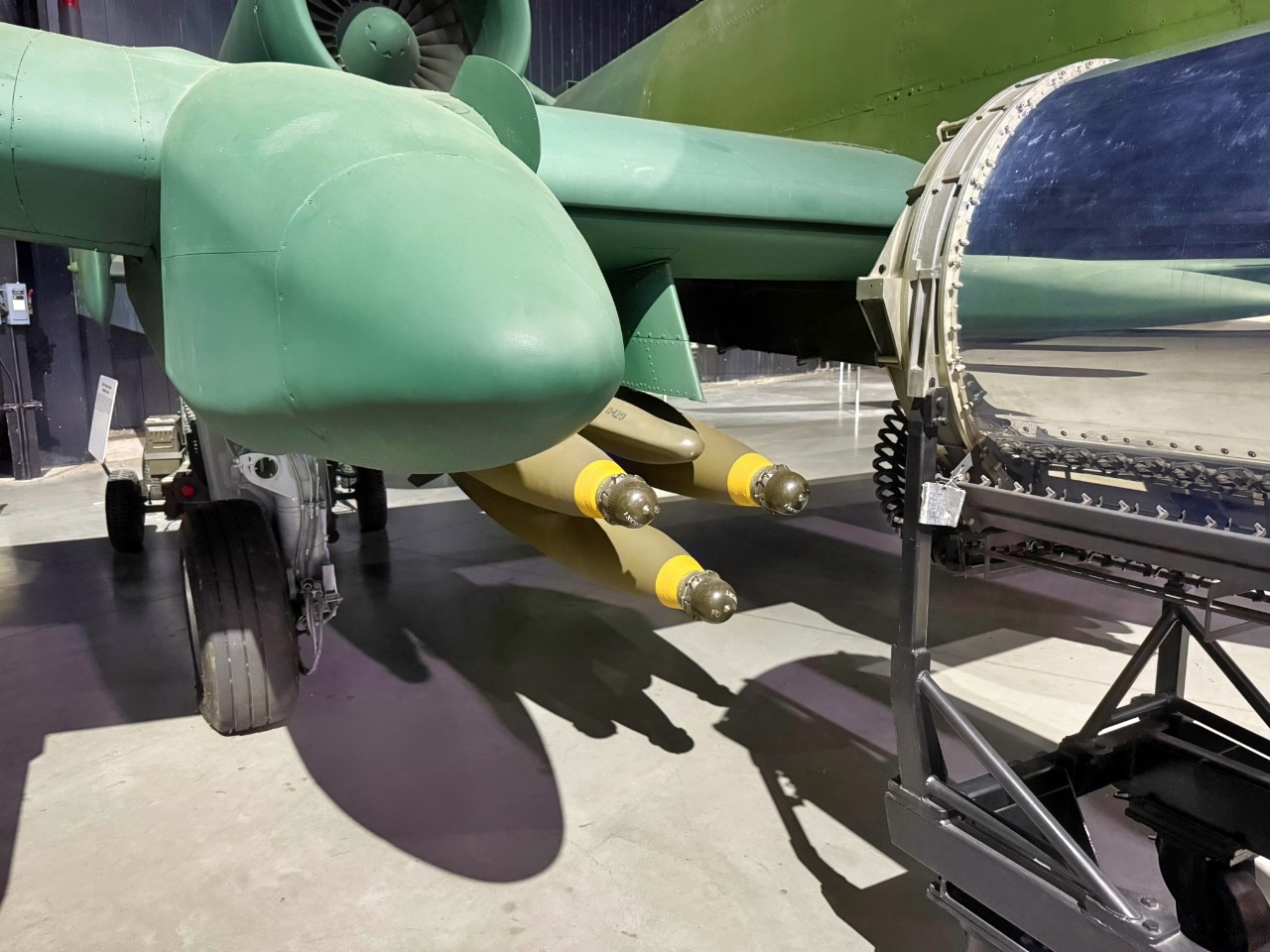
A-10 Warthog Bombs. Image Credit: National Security Journal.

A-10 Warthog NSJ Photos. Image taken on 7/20/2025.

A-10 Warthog National Security Journal Photo Essay Picture.
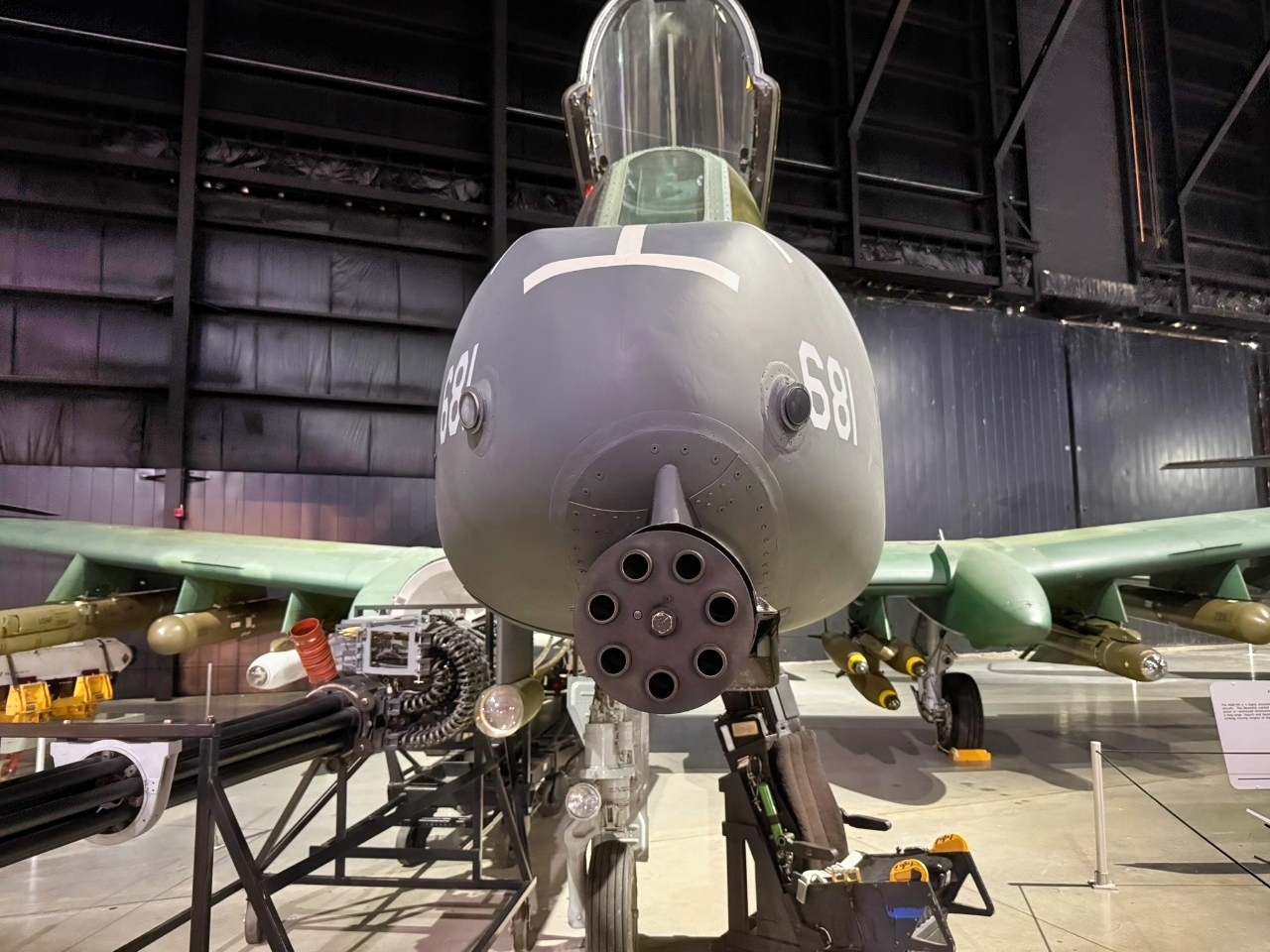
A-10 Warthog Cannon NSJ Photo. Taken at U.S. Air Force Museum on 7/19/2025.
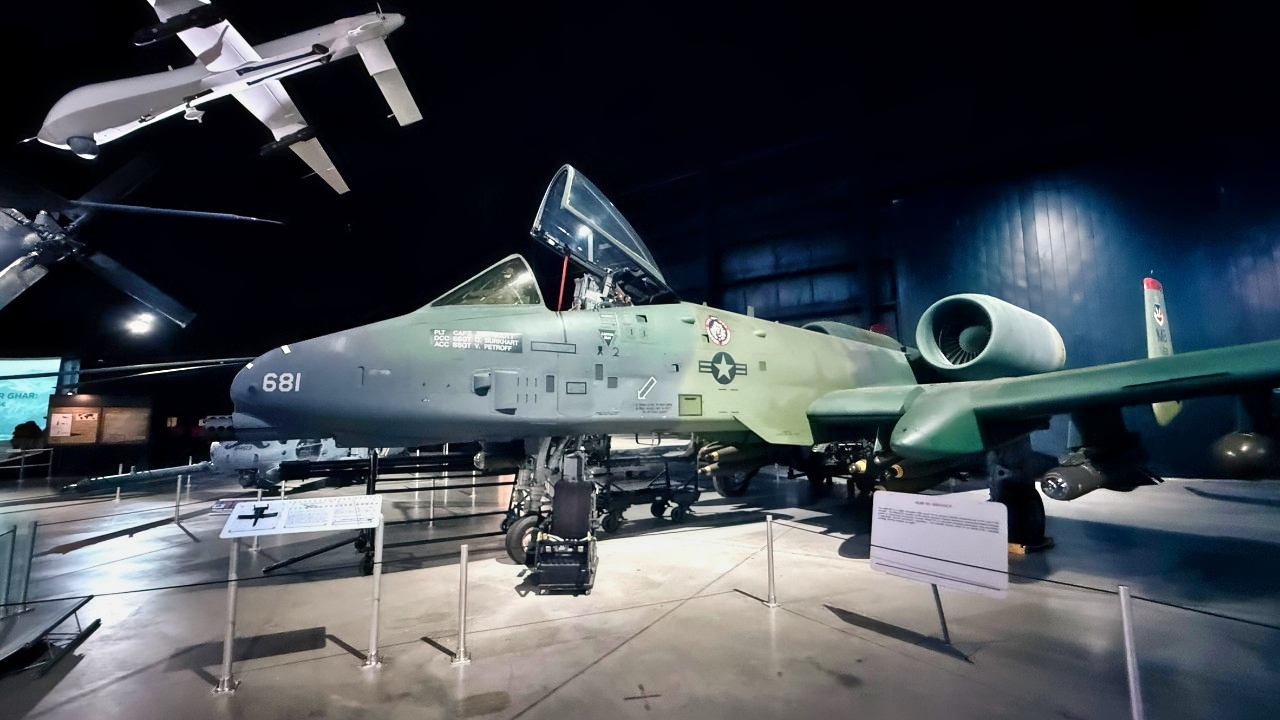
A-10 Warthog National Security Journal Photo.
To demonstrate how vital the A-10 was, proponents of the A-10 brought in a group of former US Special Forces operators to explain to the skeptics how the A-10 saved all their lives in the thick of combat against the Taliban and al Qaeda in Afghanistan. The stories were harrowing. But the Air Force didn’t care. They’ve never stopped trying to cancel this brilliant plane.
Why the Air Force Wants the A-10 Gone
To be clear: the A-10 is an aging bird.
It was first designed during the Cold War for one mission above all else: destroying Soviet Red Army tanks in any potential hot war in Europe. At its core, the A-10 is little more than a flying cannon. It is designed around a massive 30mm GAU-8/A Avenger cannon.
A-10 Warthogs excel at close air support (CAS) and low altitude loitering. A titanium bathtub surrounds the cockpit, ensuring that the slow, low-flying A-10s are relatively protected from ground fire.
These birds have excellent protection against light-to-medium air defenses, too. Indeed, the A-10s have proven remarkably useful in the Wars in Afghanistan and Iraq. Few other planes–including the F-35s–can orbit a battlefield and deliver untold amounts of death from above, at extremely close ranges, allowing for maximum protection of US forces engaged in ground combat.
And they can do it for protracted periods–far longer than can even the vaunted F-35.

U.S. Air Force Maj. Melanie “Mach” Kluesner, pilot of the F-35A Demonstration Team, performs aerial maneuvers at the Sun ‘n Fun Airshow in Lakeland, Florida, April 1, 2025. The team travels across the country to demonstrate the unmatched capabilities of the F-35A Lightning II and highlight the skill of U.S. Air Force pilots. (U.S. Air Force photo by Senior Airman Nicholas Rupiper)
But the Air Force insists that the A-10 is poorly suited for any potential war with China, especially over Taiwan or the Western Pacific. Air Force strategists claim that the A-10 is too slow, lacks stealth, and is an easy target for Chinese integrated air defenses in densely packed, contested airspace.
Plus, the Air Force thinks China’s long-range missile threat is too great for the A-10. What’s more, China’s fifth-generation (and now sixth-generation) warplanes could easily destroy the A-10 before it even reached any potential battlefield.
Of course, that seems like a patently absurd argument. After all, the A-10 was designed to fight in a great power, mechanized war in Europe against the Soviet Red Army. One could argue that everything it has done since the end of the Cold War, while the A-10 has excelled in every mission it undertook since that time, was operating outside of its original design parameters.
A Drone Killer
Even if the Air Force is accurate in its claims that the A-10 is ill-suited to fighting a great-power air war against China, the A-10 has proven remarkably adaptable. Originally designed to fight the final great battle of the Cold War, the plane spent its service as a dedicated counterinsurgency and counterterrorism platform in the Global War on Terror.
Reports surfaced that the Air Force during the Iran War employed the A-10s over the Middle East as dedicated anti-drone and anti-missile air defense systems after the US military blew through its endlessly decreasing stockpile of critical missile defense interceptors. The A-10 demonstrated an effectiveness that most assumed it could not.

A U.S. Air Force A-10 Thunderbolt II flies a routine mission over the U.S. Central Command area of responsibility Dec. 23, 2024. A-10 Thunderbolt II pilots train and operate under night vision, allowing them to conduct presence patrols critical to regional security at any time and under any conditions. (U.S. Air Force photo)
Given how ubiquitous drone and missile swarms are becoming in modern warfare, the fact that the A-10 was so good at knocking these threats out before they could hit their targets in the Arab states and Israel, and that the A-10s performed this mission far cheaper than what it costs to deploy missile defense interceptors against missile and drone swarms, the Air Force leaders who want to cancel the A-10 program are being put through a loop.
The “Sandy” Mission Problem
Where things get politically complicated is in combat search and rescue (CSAR).
The A-10 has long performed the famous “Sandy” mission: protecting downed pilots and rescue helicopters in hostile territory. That role demands flying low and slow, visually identifying friend from foe, orbiting for long periods, absorbing damage, and strafing enemy forces dangerously close to enemy personnel. This is where the Warthog–and really only the A-10–shines.
A contentious story about a downed F-15E Strike Eagle over Iran highlights the importance of the A-10. According to Gen. Kenneth Wilsbach, A-10s helped support the rescue of the downed F-15SE Strike Eagle crew in Iran. They also hunted Iranian fast-attack boats in the Strait of Hormuz that threatened shipping.
Here we have multiple demonstrations of the A-10’s viability, even under the stresses of modern combat.
Why Congress Is Nervous
Lawmakers are rightly worried that the Air Force is simply assuming that the F-35 and upgraded Boeing F-15EX Eagle II can seamlessly replace the A-10.
Sure, these planes can conduct CSAR mission sets.
But critics of the Air Force’s plans to end the A-10 program insist that neither the F-35 nor the F-15EX is a culturally or operationally identical replacement.
The A-10 is predicated upon CAS specialization, visual battlefield awareness, and direct coordination with ground forces. As noted above, a key element of this unique culture is the plane’s role in rescue escort.
F-35 pilots, meanwhile, are trained primarily for air superiority, deep strike, network-centric warfare, and long-range precision engagement.
Congress fears that when the A-10 disappears, the Air Force could lose decades of institutional knowledge surrounding CAS and CSAR operations.
Thus, Congress continues to support the A-10 despite institutional resistance within the Air Force.
The Bigger Strategic Debate
There is an identity crisis within the Air Force today. The service is desperate to pivot toward China as its main threat. To do that, the Air Force desires warplanes that prioritize long-range stealth warfare, high-tech air dominance, and networked operations. Yet, America continues to be dragged into messy regional wars, such as the Iran War, where rugged, persistent aircraft still matter.
The A-10’s continued usefulness in Iran highlights the uncomfortable truth: the future battlefield may demand both stealthy fifth-generation aircraft and brutally simple low-altitude attack planes. But Congress remains the sticking point. Congress is not yet convinced the battlefield will allow for the Air Force to drop the A-10.
In this case, Congress might be right.
About the Author: Brandon J. Weichert
Brandon J. Weichert is Senior National Security Editor. Recently, Weichert became the editor of the “NatSec Guy” section at Emerald. TV. He was previously the senior national security editor at The National Interest. Weichert hosts The National Security Hour on iHeartRadio, where he discusses national security policy every Wednesday at 8 p.m. Eastern. He hosts a companion show on Rumble entitled “National Security Talk.” Weichert consults regularly with various government institutions and private organizations on geopolitical issues. His writings have appeared in numerous publications, among them Popular Mechanics, National Review, MSN, and The American Spectator. His books include Winning Space: How America Remains a Superpower, Biohacked: China’s Race to Control Life, and The Shadow War: Iran’s Quest for Supremacy. Weichert’s newest book, A Disaster of Our Own Making: How the West Lost Ukraine, is available for purchase at any bookstore. Follow him via Twitter/X @WeTheBrandon.


