

On 9 May, when Russian President Vladimir Putin was presiding over his annual Victory in WWII parade, the combined lack of any meaningful dignitaries, the even more noticeable absence of any military hardware rolling through Moscow’s Red Square, and endless paranoia about the potential of a Ukrainian drone strike during the event created an eerie atmosphere. One could not help but sense that the one-time supposedly all-powerful Russian military machine was a very poor shadow of its former self, firing on only about half its cylinders.
China’s Military Has a Problem

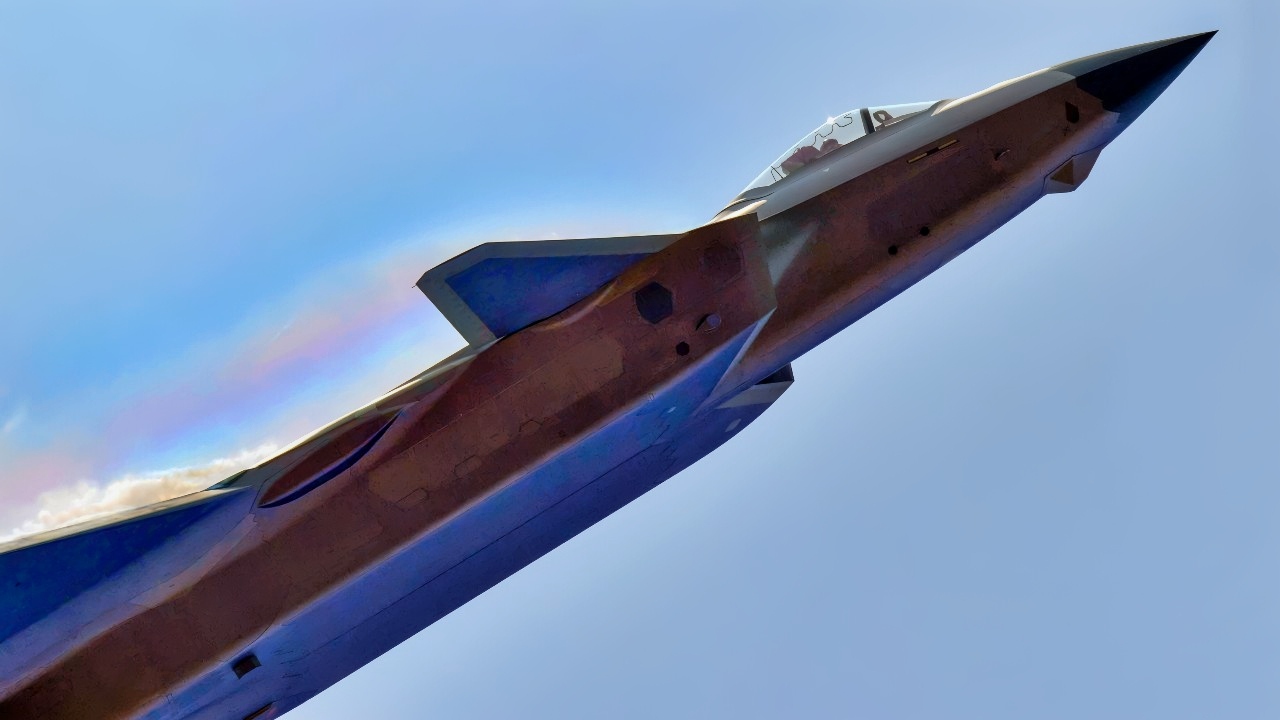
J-35A Stealth Fighter from China. Image Credit: Chinese Military.
On the same day, the New York Times ran a long profile about how the other peer competitor for the US military – the People’s Liberation Army – also appears to be being turned into a fallen giant.
Russia’s military is today a shambles due to an almost four-and-a-half-year war that long ago stopped producing any meaningful gains despite horrendous expenditures of both blood and treasure by Moscow.
Russian casualty numbers are 35,000 soldiers or more per month, and for the 5th month in a row, greater than the numbers of military replacements that Russia can mobilize to take their places.
But the actions that have so damaged the PLA have not been carried out by some enemy on the battlefield. They have been enacted by the Communist Party (CCP) leader himself, Xi Jinping.
He has not been sending huge formations of soldiers in cannon fodder assaults against a wall of drones and machine-gun fire to die at rates of 80-90 percent, as Putin has in Russia.
The Chinese leader has instead been demobilizing his military not by butchering the lower ranks, but by decapitation at the top, decimating a leadership corps over concerns that they are all mostly not loyal enough and too corrupt.
The Empty Chairs
The author of the profile, Chris Buckley, is the New York Daily’s chief correspondent in the People’s Republic of China (PRC).
He paints a picture of a purge of the PLA that is leaving many empty chairs and raising ongoing speculation about where this process of cashiering these senior generals is headed, when it might end, and what, in Xi’s mind, constitutes “mission accomplished” in this regard.
“The purge China’s leader, Xi Jinping, has inflicted on the military elite was plain to see at a recent legislative meeting,” he writes. “A year earlier, state television footage showed around 40 generals in the room. This time, there were only a handful,” he writes.
“Yet Mr. Xi indicated that an upheaval that rivaled those of the Mao era was not over. Stony-faced, he warned the remaining officers to beware of disloyalty.”
“The military,” he said, “must never have anyone who harbors a divided heart toward the party.”
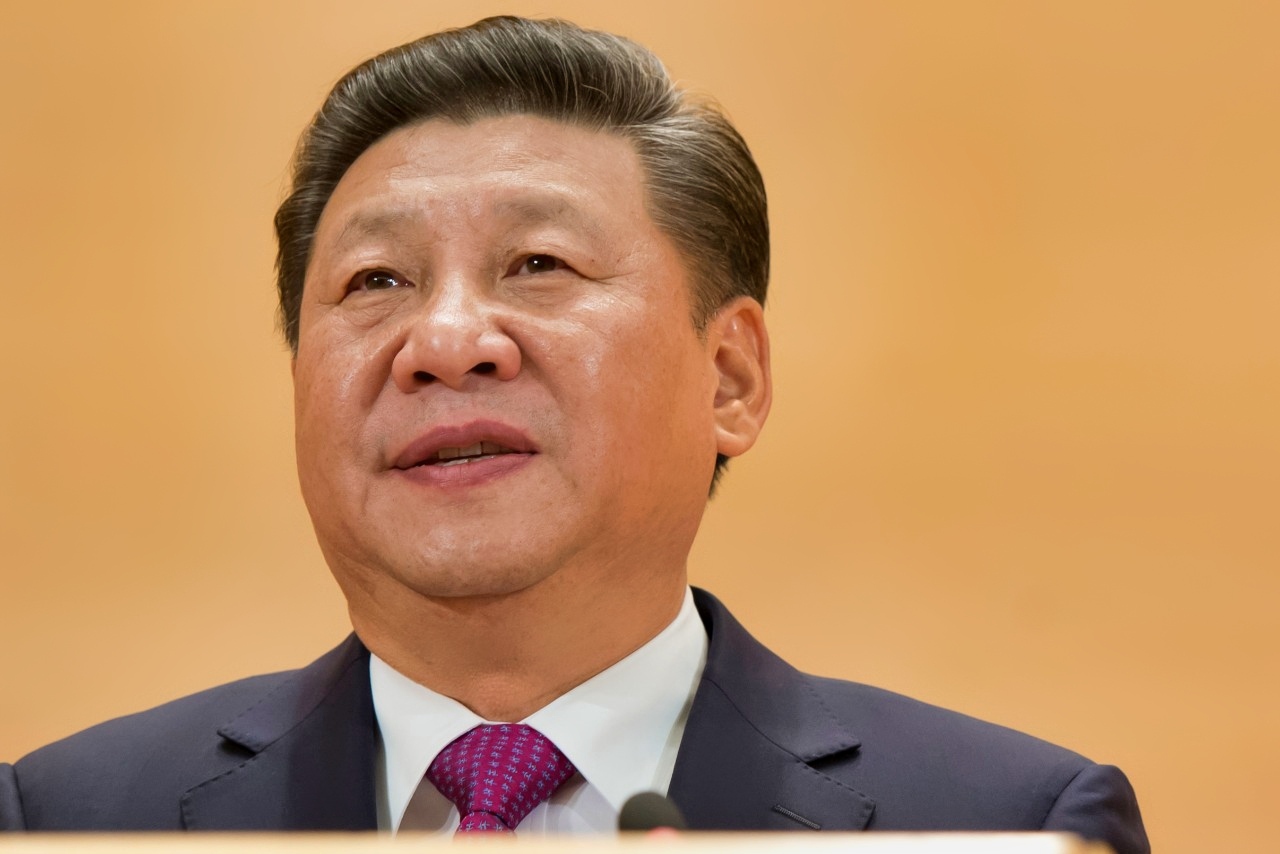
Xi Jinping, President of the People’s Republic of China, speaks at the United Nations Office at Geneva. 18 January 2017. UN Photo / Jean-Marc Ferré
“It was a rare public reference by Mr. Xi to one of the worst political crises of his 13 years in power: He had lost faith in the military leadership that he had spent a decade remolding.”
“When Xi uses the words ‘divided heart,’ they are heavy with meaning,” said Chien-wen Kou, a professor at National Chengchi University in the Republic of China on Taiwan, who was quoted in the NYT profile. The phrase, he emphasized, is one found in ancient Chinese treatises that counsel rulers against treacherous generals.
One of these ancient works includes a volume that the CCP leader now keeps for reference on his bookshelf.
The Casualties: Loyalty, Transformation, Modernization, and Readiness
One of the well-known bits of CCP lore concerns Deng Xiaoping handing power to Jiang Zemin a generation ago.
A widely recounted story is that he advised his successor, “For every five working days, spend four with the top brass of the PLA.”
The message was that for a Party General Secretary to function effectively, he must have the loyalty and trust of the senior military leadership.
But as Professor Kuo told the NYT, almost every military leader – including many that Xi himself had promoted – has been disappeared, put on trial, sentenced to death, etc. “Who else [is left who] can gain his [Xi’s] trust?” he asks.
In the meantime, the goals of transforming the PLA into a modernized digital force that makes readiness and maintaining a high op-tempo primary objectives will be difficult to implement, given the military’s leadership is so thoroughly gutted today.
Having a war-ready PLA may likely be sidelined by this “cleaning house” crusade that Xi states is necessary to purify and strengthen the ranks. “What once looked like a limited crackdown on corruption became a sweeping dismissal of dozens of top officers, and culminated in the downfall early this year of Zhang Youxia, China’s top uniformed commander, who had appeared to be a confidant of Mr. Xi’s,” reports the Times.

China New J-35 Fighter on Aircraft Carrier. Image Credit: Chinese Weibo.
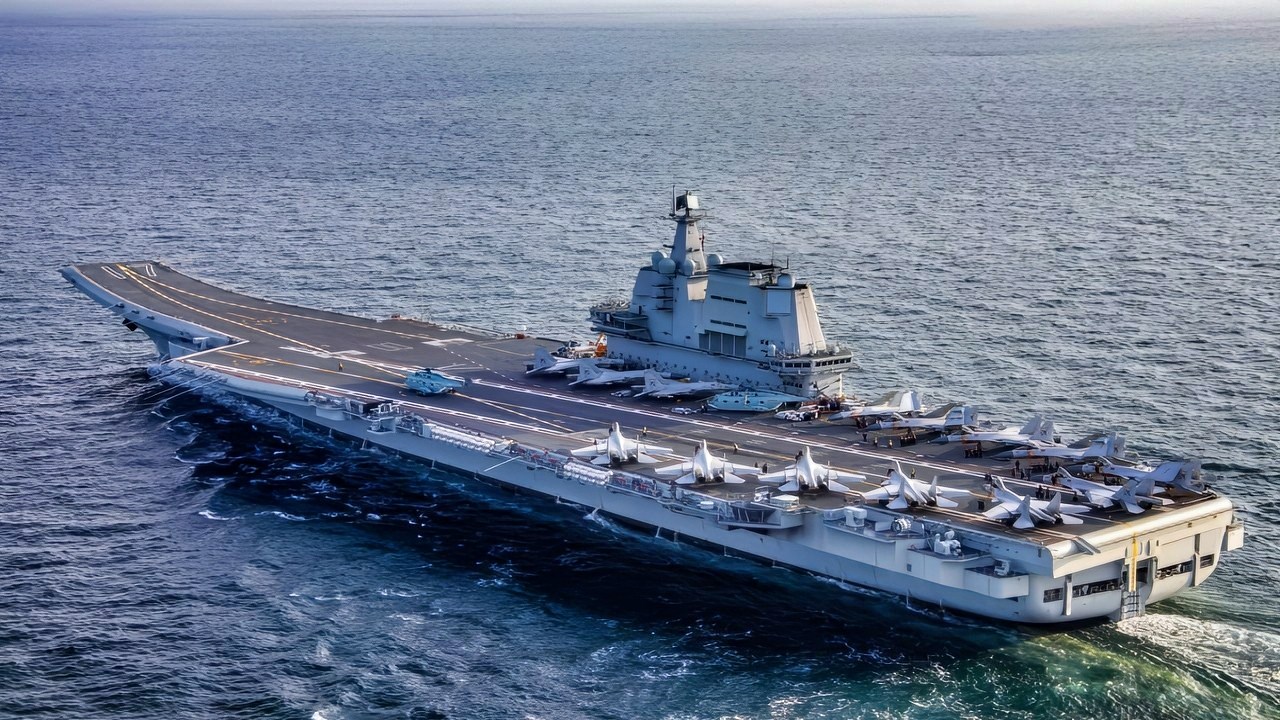
New China Aircraft Carrier. Image Credit: Weibo.
Zhang was the most senior member of the PLA leadership and one of the few left remaining on an almost completely purged Central Military Commission.
The nail in Zhang’s coffin, so to speak, came when Xi moved to promote the very general leading the house-cleaning into a position that would have rivaled General Zhang’s. General Zhang objected to this move, and within months, he himself was purged.
“This is Xi Jinping’s military,” Daniel Mattingly, an associate professor at Yale University, told the paper.
Mattingly is a US-based specialist in PRC politics and the PLA. “Why does he break the thing that he built?” he asks in reference to the CCP leader.
“It’s not what people would have expected of Xi, even five years ago. Something profound changed,” he said.
About the Author: Reuben F. Johnson
Reuben F. Johnson has thirty-six years of experience analyzing and reporting on foreign weapons systems, defense technologies, and international arms export policy. Johnson is the Director of Research at the Casimir Pulaski Foundation. He is also a survivor of the Russian invasion of Ukraine in February 2022. He worked for years in the American defense industry as a foreign technology analyst and later as a consultant for the U.S. Department of Defense, the Departments of the Navy and Air Force, and the governments of the United Kingdom and Australia. In 2022-2023, he won two consecutive awards for his defense reporting. He holds a bachelor’s degree from DePauw University and a master’s degree from Miami University in Ohio, specializing in Soviet and Russian studies. He lives in Warsaw.


Chuan the nation builder
May 17, 2026 at 10:12 am
Xi jinping has long, been widely known, in some, or many circles, as an american agent.
Xi in the past, has secretly met with goldman sachs officials (the same ones responsible for the greek post-2004 crisis as well as the malaysia 1MDB fiasco) with virtually nobody in china being any the wiser.
Xi has also spent massive sums of money to bribe foreign officials, foreign companies, and to purchase fake friendships, including at least $30 mil in ‘grease money’ to the biden clan.
Xi has also betrayed numerous hardworking persons, enticing them to ‘work’ abroad, resulting in many getting detained and held in dank jails, including in south asia. Well known for its notorious jails and 19th century lockups, where toilet is basically a shared hole dug in the ground.
Xi’s errors and crimes are many, too many to be detailed here, but his latest crime was he’s stupidly agreeing to meet president chuanpu in busan, south korea on oct 30 2025.
That act resulted in the jan 2026 invasion of venezuela and the feb 2026 attack on iran.
The masses in china must rise up and kick him out of the country and exile him to rikers, where he can then provide answers to fentanyl, covid and opioid and other great mysteries to chuanpu’s officials.
Swamplaw Yankee
May 17, 2026 at 5:07 pm
The complete capitulation of POTUS Benedict Arnold Obama to World War Xi’s Balkanization of independent Ukraine on February 6th 2014 (+ before).
Xi’s Han intelligence just out smacked the few Yankee brains in DNI, et al, right to the 2026 GULF Muslim miasma.
AS the Han inserts inside the USA, deflected US policy, Xi had time to test if he needed all those top Brass in the PLA.
The Han intelligence understand that if Bin Ladin could keep his South Parkdale Terrorist HQ a “TOP” secret, then Xi was OK.
Shittaya
May 17, 2026 at 6:09 pm
Reports in the past have recorded that china gave joe biden and hunter about $30 million in a series of deals involving chinese spy officials and a form called CEFC.
Those deals were orchestrated by xi jinping, through an intermediary, who now, has since disappeared. The aim was to ‘buy over’ joe biden.
But joe is notoriously unreliable. As a result, joe has rewarded xi with the title of dictator, vowed to defend taiwan, and warned xi against pursuing continuing FOBS tests.
So, today, joe has moved on, now, today, awaiting the dreaded call from the Great Harvester or great reaper. While xi still holds fast to his task of fully controlling china.
In the meantime, president chuanpu will have very little incentive to stop his arms sales to taipei, thereby encouraging Taipei to up the temperature, and lay the groundwork for the coming high-end conflict awaiting china.
The people must rise up now, and pull xi down from his horse, and send him abroad.