

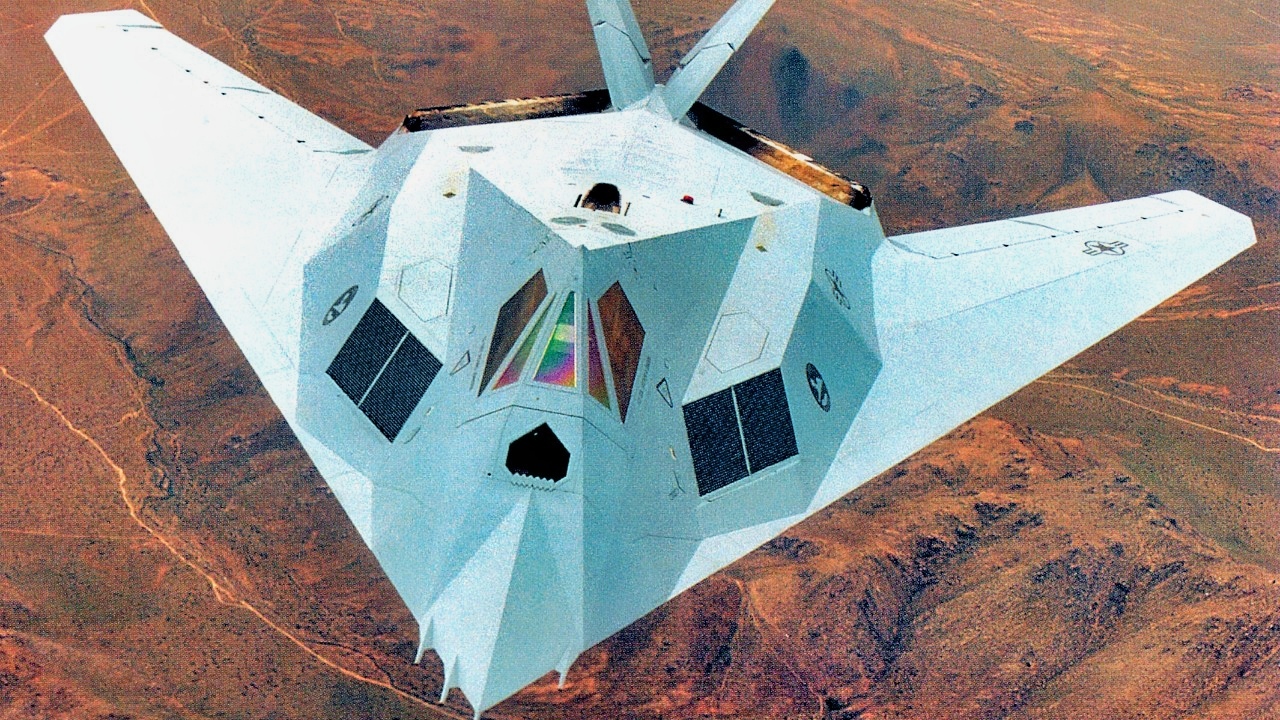
The Pentagon has a problem flying mock dogfights against China’s J-20 and Russia’s Su-57. The U.S. doesn’t actually have either aircraft to throw into the simulation, so the Air Force has been pressing the F-117A Nighthawk back into service as a stealth surrogate — the same aircraft that pioneered radar-evading flight in the late 1970s, then was officially retired in 2008. The problem, as Military Technology Editor Kris Osborn argues, is that the F-117 isn’t actually stealthy enough anymore. Today’s J-20 and J-35 use F-35-style blended wing-body shaping that smooths radar returns. The F-117, by contrast, is built from sharp facets and protruding angles — exactly the geometry modern radars are designed to grab. Red Flag exercises already show that fifth-generation F-35s can see and destroy fourth-generation aircraft at standoff ranges where they can’t be detected. The harder question, the one the Pentagon hasn’t really tested, is whether the F-22 and F-35 can actually see a J-20 or Su-57 the same way.
The F-117 Comeback Is All About the J-20 and Su-57
Pentagon “Red Teaming” has enabled many developmental breakthroughs by allowing platforms, emerging technologies, networks, and weapons systems to be tested against representative models of the most advanced threats.
The idea, which aligns with a form of wargaming, is to identify vulnerabilities and weaknesses in weapons systems by simulating or conducting mock attacks against enemy systems.
Should specific weapons systems, such as the Chinese J-20 or Russian Su-57, be beyond the Pentagon’s reach, weapons testers and developers would manufacture surrogates or threat-representative models of the aircraft to fly against F-35s and F-22s in wargaming and “red-team” scenarios.
Developing the best and most accurate replicas or representations of advanced threats is naturally quite challenging, as there are often many unknown factors.
For instance, what kinds of mission systems, targeting, weapons interfaces, or sensors do the J-20 and Su-57 use?
To what extent are they AI-enabled and able to shorten the sensor-to-shooter curve with advanced algorithms?
Red-Teaming for Vulnerabilities
The intent is to identify vulnerabilities with U.S. aircraft and determine where they might be “targeted,” “detected,” or “hit” with enemy fire.
Once these weaknesses are identified, then “fixes” or adjustments can be made to harden the aircraft and make them more survivable and resistant to advanced enemy attacks.
In some cases, aircraft such as reconfigured older F-22s can be used as enemy replicas, and the Pentagon plans to preserve its older, Gulf-War era F-117A Nighthawk to use in red-teaming and training exercises against U.S. 5th-generation aircraft.
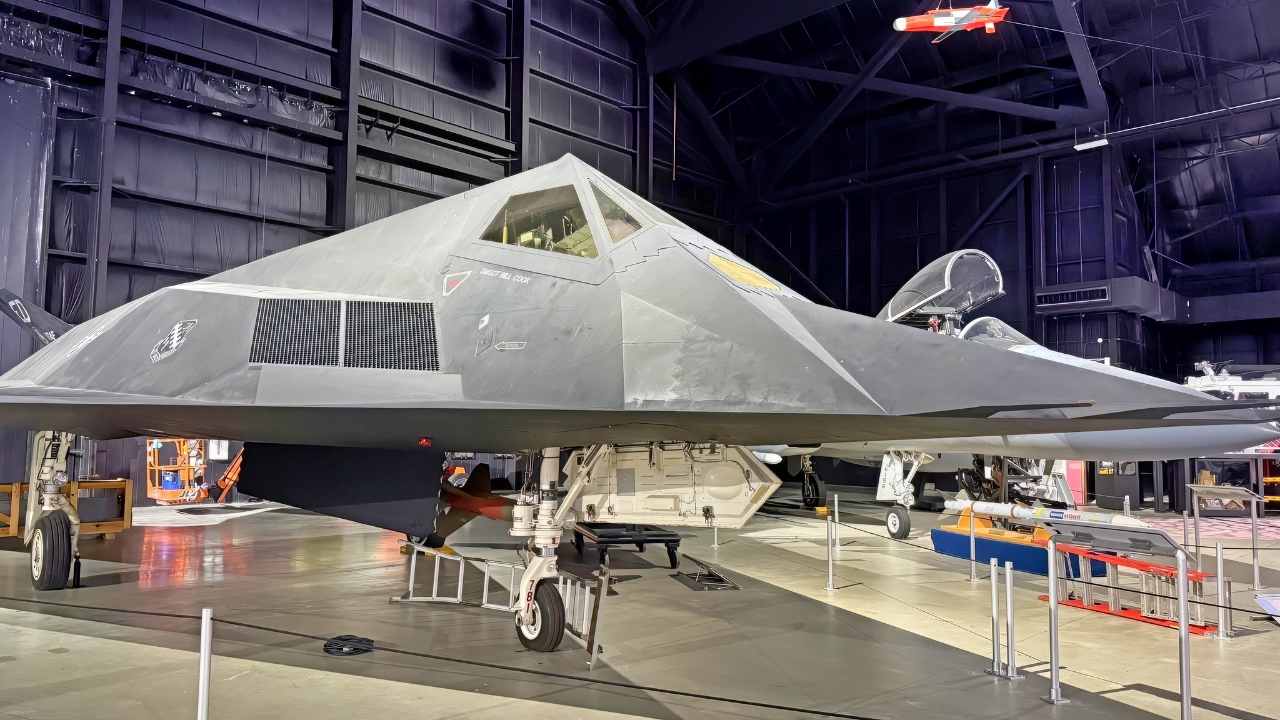
F-117 Nighthawk July 2025 National Security Journal Image HD. Photo by Harry J. Kazianis.
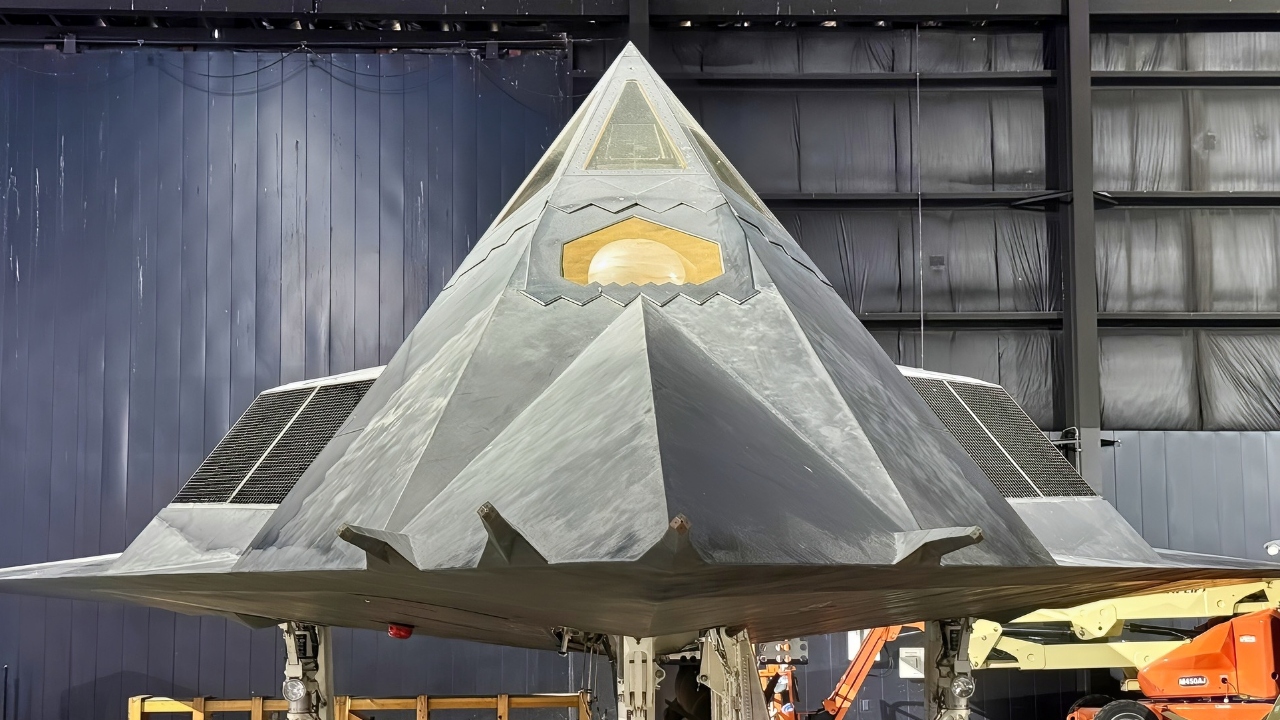
F-117 Nighthawk National Security Journal Photo July 2025

Full F-117 Nighthawk Shot. Image Credit: National Security Journal.
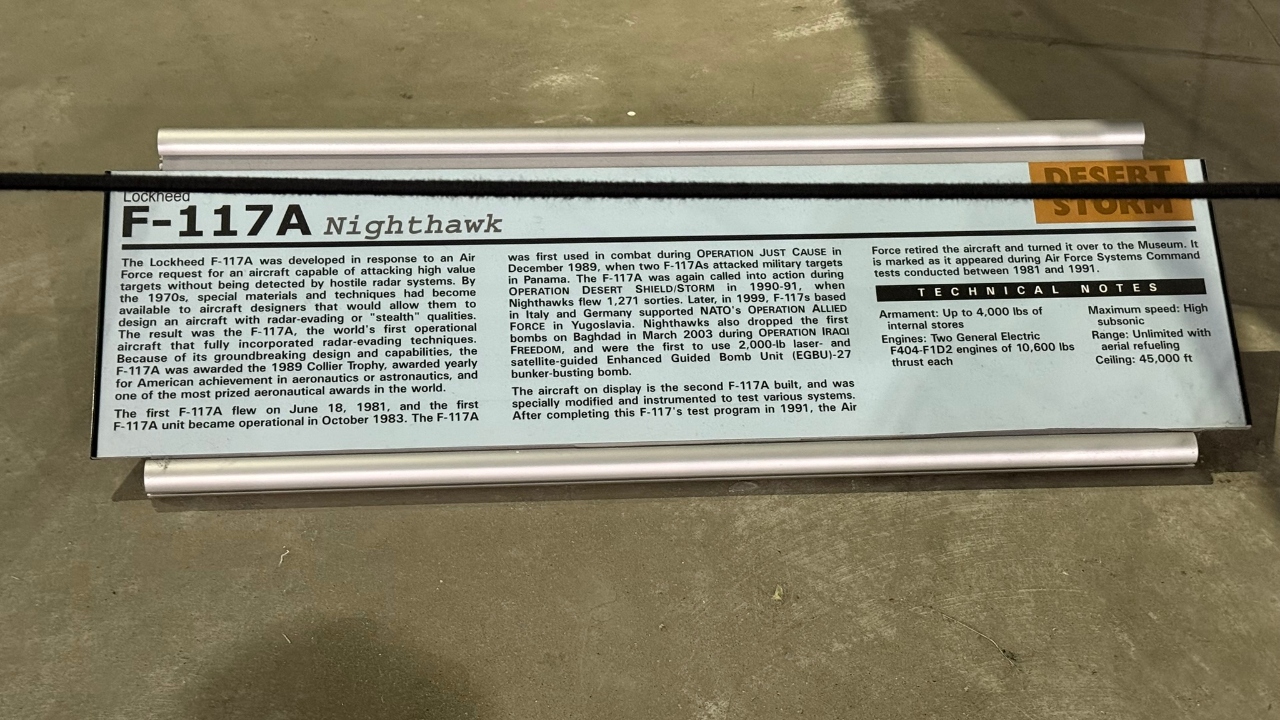
F-117A Nighthawk Sign Image Taken at USAF Museum. Image Credit: National Security Journal.
The F-117 Nighthawk is being pushed as a threat representative aircraft designed to simulate or approximate a Chinese J-20 or Russian Su-57.
While training of this kind certainly does not seem to be “useless,” conducting war-training exercises against the F-117 NightHawk may not be the best way to test the U.S. Air Force’s ability to detect advanced enemy stealth.
There are many reasons for this, the first and most self-evident being a simple configuration.
F-117 Not Stealthy Enough
Yes, the F-117 was a pioneering aircraft in the realm of stealth to an extent, yet it is simply nowhere near as stealthy as today’s F-22, F-35, or J-20.
Current 5th-generation aircraft, such as China’s J-20 or J-35, are built with F-35-like blended wing-body configurations less likely to generate a return “ping” or electromagnetic signal to ground-based radar.
Sharper edges and contours, by contrast, create protruding angles and structures that an electromagnetic ping can bounce off more easily.
In this case, ground-based enemy radar systems can receive a more accurate “rendering” of a threat object and determine its shape, size, speed, and azimuth.
Therefore, to prepare to detect a Chinese J-20, for example, the U.S. Air Force might be better served to red-team against more advanced threat representative aircraft which are simply more “stealthy.”
Live-fire wargaming exercises, such as the Air Force’s Red Flag, have already shown that 5th-generation F-35s can “see” and destroy groups of 4th-generation aircraft at stand-off distances from which they cannot themselves be detected.
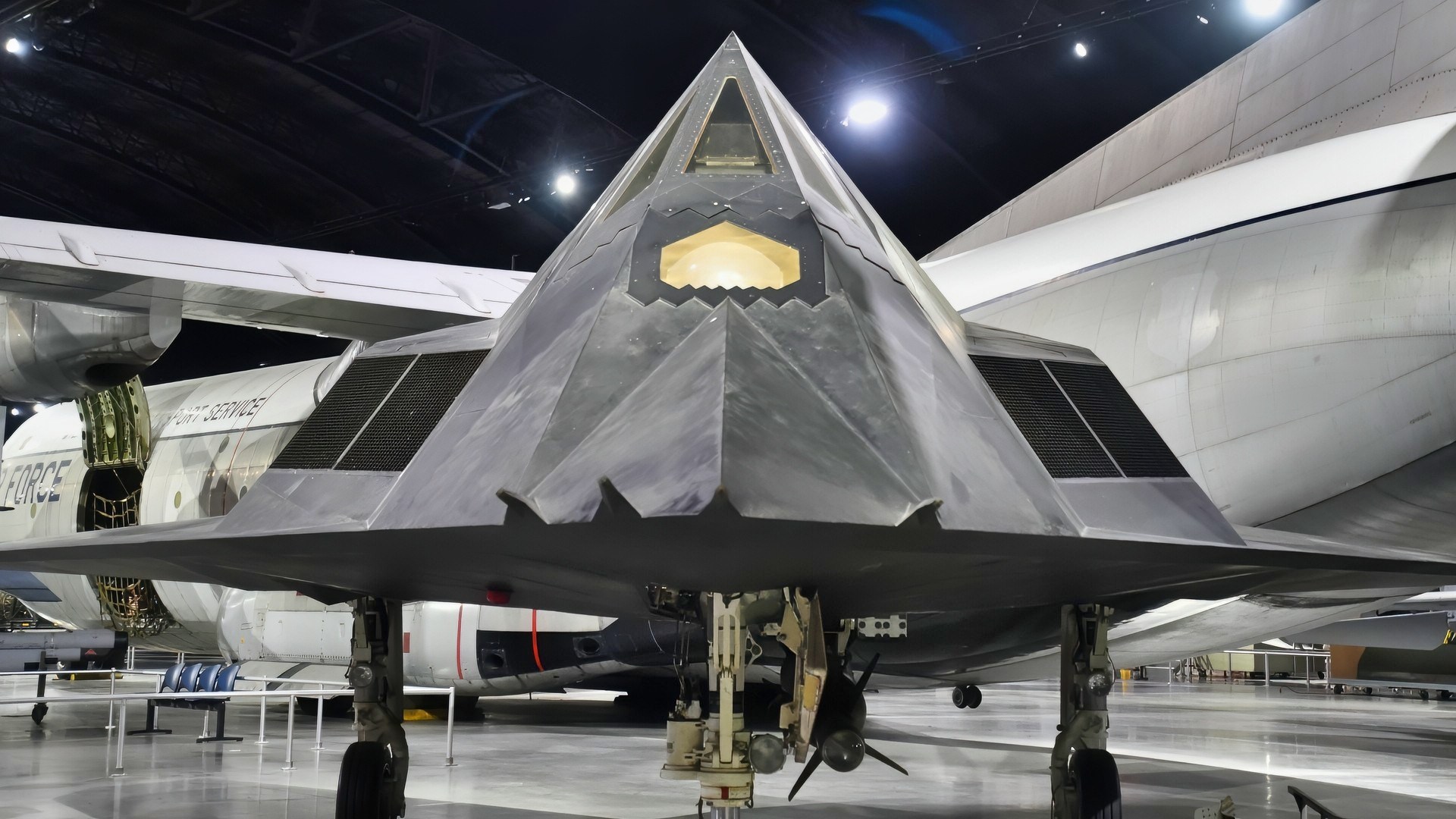
F-117A Nighthawk Stealth Fighter in Museum. Image Credit: Creative Commons.
Yet a more pressing question may be how to determine how well an F-35 or F-22 can detect or see a stealthy J-20, J-35, or Su-57.
It would not be surprising if different kinds of ultra-stealthy threat representative aircraft were developed and used for targeting, live-fire, and testing of U.S. 5th-generation aircraft, as it seems critical that the Pentagon wants to assess “stealth on stealth” scenarios.
The F-117A may certainly prove useful and relevant in testing to some extent, yet it is simply far too pointy, jagged, and angled to be anywhere near as stealthy as Chinese and Russian 5th-generation aircraft.
About the Author: Kris Osborn
Kris Osborn is the Military Technology Editor of 19FortyFive. Osborn is also President of Warrior Maven – Center for Military Modernization. Osborn previously served at the Pentagon as a highly qualified expert in the Office of the Assistant Secretary of the Army—Acquisition, Logistics & Technology. Osborn has also worked as an anchor and on-air military specialist at national TV networks. He has appeared as a guest military expert on Fox News, MSNBC, The Military Channel, and The History Channel. He also has a Masters Degree in Comparative Literature from Columbia University.


