


Russia’s New PAK DA stealth bomber is finally being worked on after years of delays. The Russian Air Force also has big plans for the Tu-160 as important modernizations are being done as well.
PAK DA and Tu-160 Update Could Change the Russian Air Force
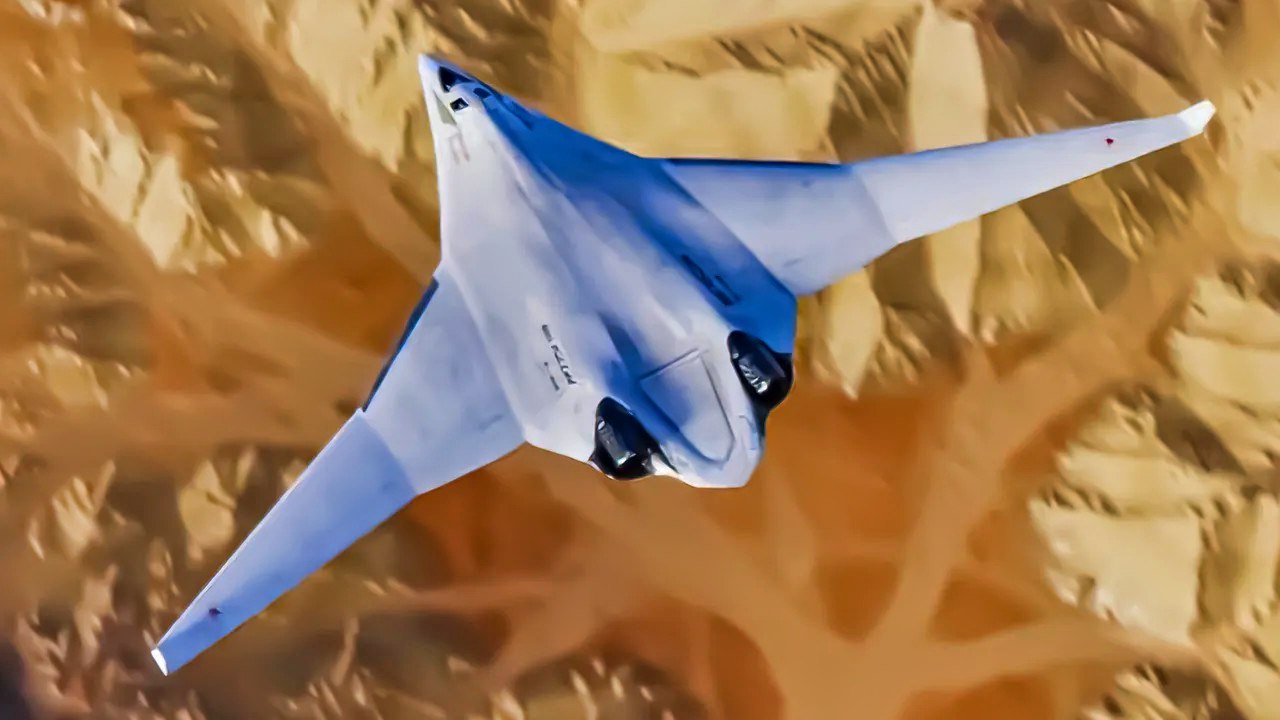
PAK DA Russian Bomber. Image Credit: Creative Commons.

PAK DA Bomber Russian Air Force. Image Credit: Creative Commons.
Russia’s Tu-160 bomber is, in broad terms, somewhat akin to the United States B-1B Lancer bomber. Both jets are variable-sweep wing strategic bombers, intended to ferry their countries’ nuclear weapons to their respective targets. But neither class of bombers has ever dropped nuclear weapons onto a target — instead, they’ve dropped conventional payloads on a variety of targets.
They’re unique platforms.
Thanks to the adjustable geometry of their wings and high-thrust jet engines, both jets can quickly sprint to station with their wings tucked in close to the fuselage, but can also extend their wings and reduce speed to remain on station for extended periods of time, flying in wait for conditions on the ground to become favorable.
Russia’s Tu-160 Bomber Explained
Designed in the 1970s as a counter to American strategic bombers and missile systems, the Tu-160 entered service in 1987, late in the Soviet Union’s history. It was one of the last major Soviet strategic bomber designs.
In what is today an unfortunate twist of irony, some Tu-160s ended up in Ukraine after the end of the Cold War. But as part of post-Soviet arms reduction efforts, some Tu-160s were transferred to Russia, and some were scrapped.
Dubbed White Swan on account of its white livery, the bomber’s color is a nod to its strategic role as a nuclear weapons delivery platform, and would reflect the intense light of nuclear explosions.
The Tu-160 is rather distinct, and each Tu-160 is powered by a whopping four engines, each of which can produce 55,000 pounds of thrust — the highest combined output for any combat aircraft.
During high-speed runs, the Tu-160 can sustain Mach 2-plus speeds under ideal conditions, making it faster than the United States Air Force’s B-52 and B-1B Lancer.
Today, however, the Tu-160 is used by Russia as a long-range cruise missile launch platform. Instead of penetrating enemy air defenses, the Tu-160 launches missiles from stand-off range, a measure that protects the jet from them — a tactic that preserves the jet from air defenses in Ukraine.
That frontline is among the world’s most contested air spaces, and neither Ukrainian nor Russian aircraft has freedom of maneuver.
According to one report, only about a third of Russia’s Tu-160s are used in combat operations in Ukraine, with the other two-thirds in maintenance, training, undergoing upgrades and modernization, or still under construction.
Upgrades and Refurbishment
Though the Tu-160 is certainly younger than some Russian bombers, a modernization program will keep that jet in the air longer than originally anticipated, according to a series of leaked documents related to the bomber.

Tu-160M Bomber from Russia. Image Credit: Russian Military/Creative Commons.

Tu-160 Bomber from Russia. Image Credit: Creative Commons.
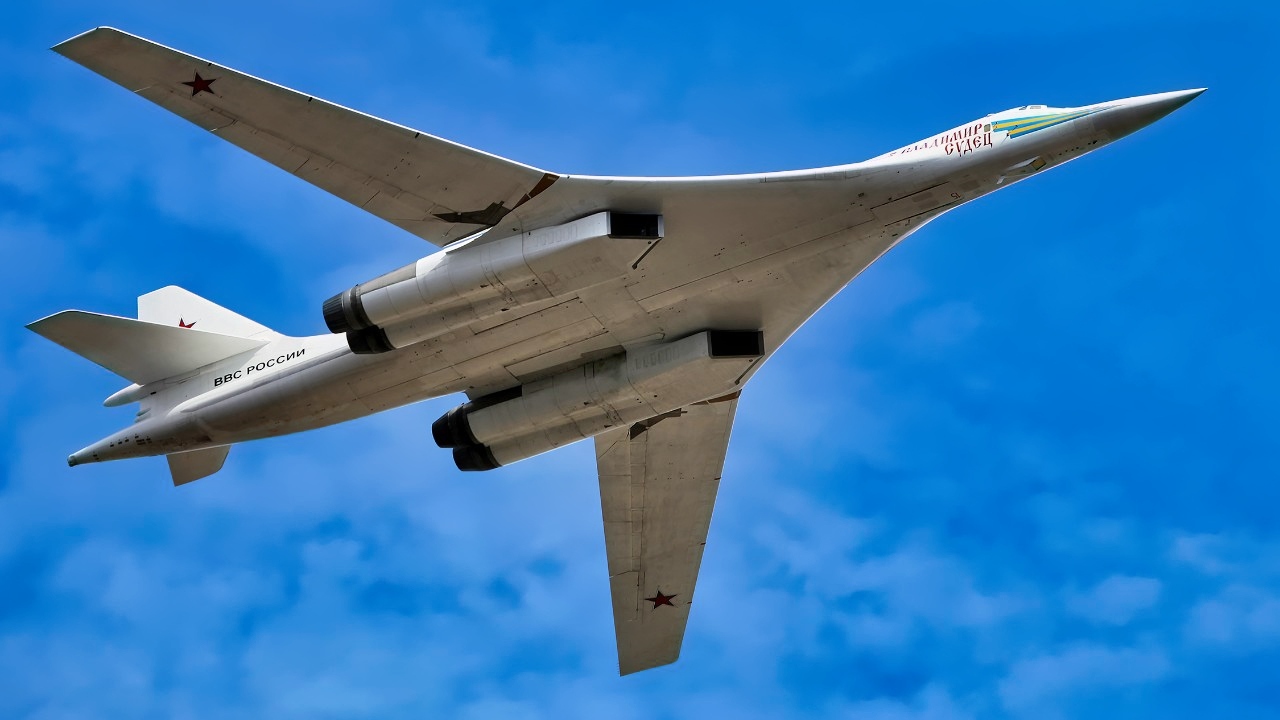
Tu-160 Bomber from Russia. Image Credit: Creative Commons
“Meanwhile, at the Kazan Aviation Plant named for S.P. Gorbunov – the main production hub for Tupolev aircraft – the backlog includes seven new-build and repair orders for Tu-160 supersonic bombers, along with two Tu-22M upgrades,” analysts who reviewed the documents explain. “The specific airframes in the Tu-160 program carry serial numbers 705, 801, 401, 703, 804, 904, and 905, while the Tu-22M schedule covers airframes 8301 and 9205.”
More from Dallas Analytics, who reviewed the data:
“Among these aircraft, four Tu-160s are already deep in modernization, with completion slated by 2026. In parallel, Kazan is assembling the lone prototype of Russia’s futuristic PAK DA (“Prospective Long-Range Aviation Complex”), codenamed “Izdelie 80.” This static prototype, intended for ground testing of its stealthy “flying wing” design, is currently in the midst of component installation and – barring any setbacks – could be completed within a few years.”
Straight from the Top
According to Tass, the Russian wire service, the impetus for the Tu-160 program is attributed to Russian President Vladimir Putin. “The program for upgrading the Tu-160 was launched under the president’s personal decision,” Tass wrote.
The initiative included refurbishing some old components and installing newer ones.
“Under the government contract concluded between the Ministry of Industry and Trade and the Tupolev design bureau, the design documentation for the Tu-160M aircraft was fully digitized within a short period of time, the technique of vacuum welding of titanium products was restored, and the production of airframe units was resumed,” Tass explained. “Rostec’s leading industrial enterprises in the field of metallurgy, aircraft design, engineering, and instrument making revitalized their cooperation.”
Into the Future
Despite the Tu-160’s Soviet vintage, it will likely remain in Russian service for years to come.
Boosted by its conventional role as a stand-off cruise missile launch pad, as well as the Putin-ordered modernization program, it is entirely possible that the White Swan remains in service well into the middle of the century.
About the Author: Caleb Larson
Caleb Larson is an American multiformat journalist based in Berlin, Germany. His work covers the intersection of conflict and society, focusing on American foreign policy and European security. He has reported from Germany, Russia, and the United States. Most recently, he covered the war in Ukraine, reporting extensively on the war’s shifting battle lines from Donbas and writing on the war’s civilian and humanitarian toll. Previously, he worked as a Defense Reporter for POLITICO Europe. You can follow his latest work on X.


Dr. Hujjathullah M.H.Babu Sahib
May 17, 2026 at 2:48 pm
Though Larson’s underlying thread in this write-up generally reflects the usual biases of Western writings, his wise conclusion would stand the test of time. His implicit finger-pointing at Putin, though, is not very right. Given the Tu-160s better aerodynamics, if not also its avionics, in comparison to the U.S.’ B-1Bs and even its B-2s, it is not surprising that Russia under Putin has decided to update its White Swans which NATO usually derides as Blackjacks! They can rightly delay their PAK DAs in order to give it better stealth and earth-sensing features and perhaps a higher altitudinal capability to operate into the LEO. Meanwhile, configuring the Tu-160s as strategic BVR-cruise-missile-launching platforms is certainly wise if those missiles are also intended as hypersonic bunker-busters. As more and more geo-strategic and geo-political assets of peer-powers take up residences deep underground and into the LEO, those features would prove salient.