

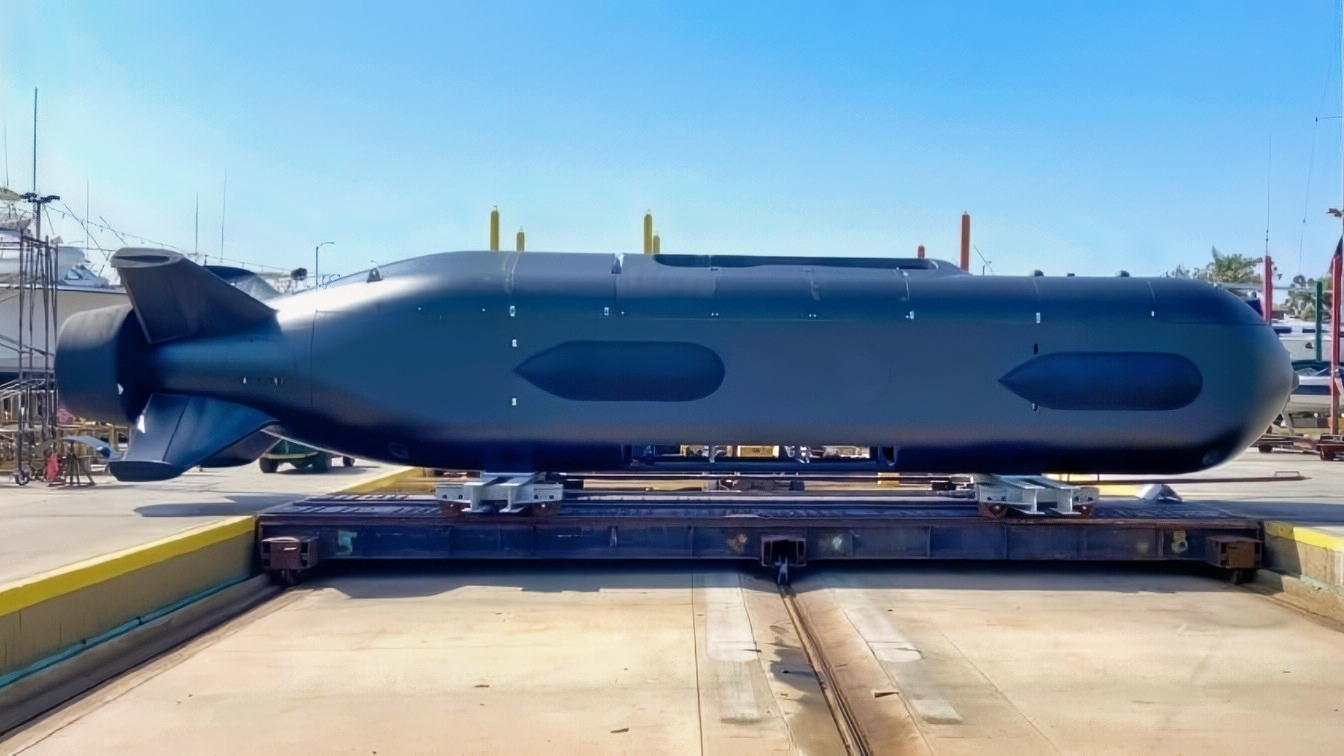
The U.S. Navy’s Orca XLUUV — Extra Large Uncrewed Undersea Vehicle — is an 84-foot autonomous submarine drone with a 6,500 nautical mile range, built by Boeing under a 2019 Navy contract that began with DARPA’s Manta Ray program and Northrop Grumman’s prototype before Boeing inherited the production line.
The Orca Could Change Naval Warfare and Submarines Forever
If you are of a certain age and perhaps a member of the Baby Boom or “X” generation, you may remember a 1977 movie by the name of Orca: the Killer Whale. This helped define the horror-adventure genre kicked off by the film Jaws. But what if I told you the U.S. Navy has an underwater drone called “Orca” that is designed to lead a hybrid fleet of surface warships and uncrewed undersea vehicles? This is modern maritime warfare at its finest.
What Is an XLUUV?
The XLUUV, which stands for Extra Large Uncrewed Undersea Vehicle, is nicknamed Orca to denote just how powerful the new UUV will be. This is a drone submarine that could maybe sneak around and deliver ample damage to an enemy fleet someday. It is the largest UUV planned for the Navy, and it is autonomous.
An Undersea “Buddy” for Manned Submarines
Orca has a “modular, high‑volume payload bay” – perfect for a diverse number of undersea missions. The Orca’s range is incredible. A long-range mission could constitute 6,500 nautical miles. It would be perfect for accompanying the new Block V Virginia-class fast attack submarines. The Orca could sail with a wolfpack of Virginia-class boats and assist in monitoring enemy shipping, providing more situational awareness for the manned submarines.
This will create a hybrid fleet that the Navy is depending on to dominate next-generation undersea warfare. Boeing believes Orca could be used along the seafloor to collect additional intelligence data to improve mapping and navigation.
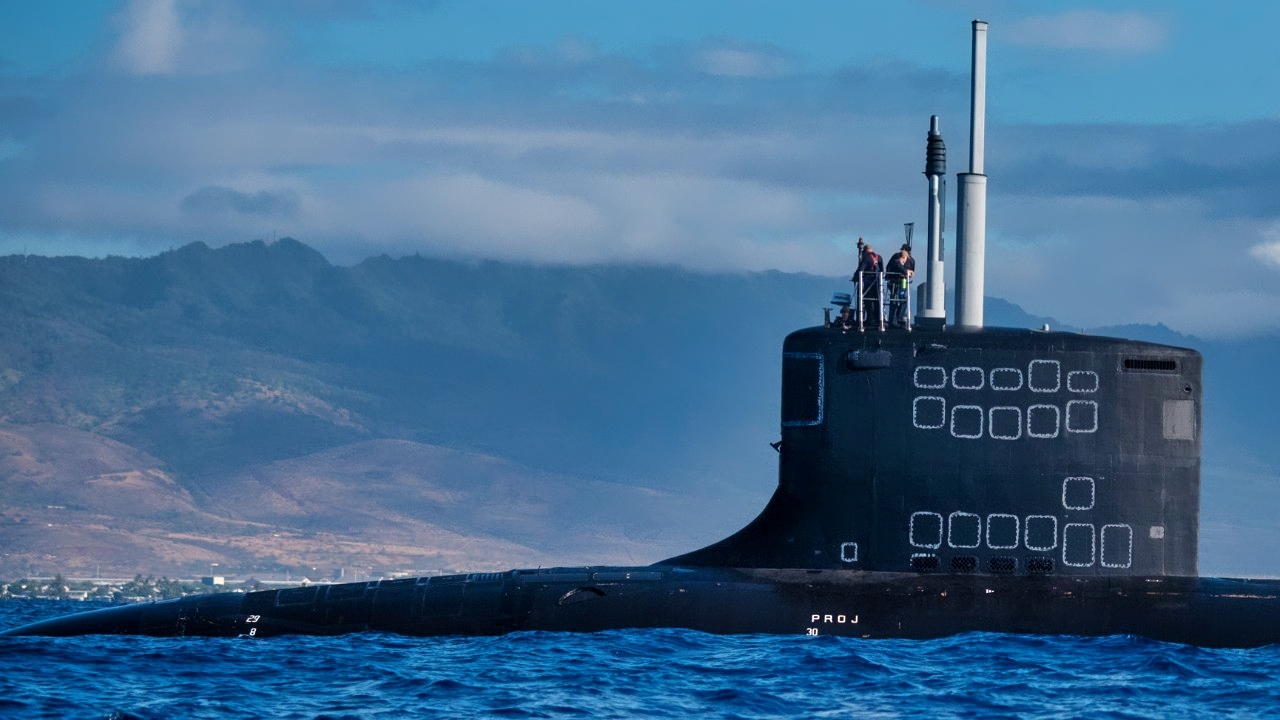
180709-N-KC128-1131 PEARL HARBOR (July 9, 2018) – Multi-national Special Operations Forces (SOF) participate in a submarine insertion exercise with the fast-attack submarine USS Hawaii (SSN 776) and combat rubber raiding craft off the coast of Oahu, Hawaii during Rim of the Pacific (RIMPAC) exercise, July 9. Twenty-five nations, 46 ships and five submarines, about 200 aircraft, and 25,000 personnel are participating in RIMPAC from June 27 to Aug. 2 in and around the Hawaiian Islands and Southern California. The world’s largest international maritime exercise, RIMPAC provides a unique training opportunity while fostering and sustaining cooperative relationships among participants critical to ensuring the safety of sea lanes and security of the world’s oceans. RIMPAC 2018 is the 26th exercise in the series that began in 1971.` (U.S. Navy photo by Mass Communication Specialist 1st Class Daniel Hinton)
‘Deep Minds’ Are Working on the Ocean Explorer Program
Orca is part of a Navy program called Ocean Explorer, or OEX, and Boeing is one of the defense contractors that the maritime branch is looking at to increase the OEX inventory of proposals for manned-unmanned underwater teaming. I call this a “deep mind” experiment.
The brilliant folks at DARPA were behind this effort from the start. It was originally named the Manta Ray program. Northrop Grumman tested a Manta Ray prototype in 2024.
The Navy took off from there to bring OEX into the lexicon, hoping to produce an Extra Large sea drone. That’s where Orca comes in.
This Thing Could Be an Undersea Drone ‘Semi Truck’
The War Zone reported that the Orca is a “semi-tractor trailer-sized” submersible, measuring around 84 feet long. The Navy first approached Boeing in 2019 to develop a prototype. It has not been a smooth acquisition journey. Orca sustained cost overruns and schedule slips – likely due to the autonomous control feature and the propulsion system that must power the huge UUV.
Component of the Future Hybrid Navy
Orca is being put through its paces during a thorough test-and-evaluation process. The Navy is reviewing its OEX program and identifying new use cases to bolster the hybrid navy concept.
UUVs are becoming more popular. China is forging ahead with its own unmanned submarines. The United States is getting in on the act with other UUVs of various sizes.
For the Navy, the UUV is a more cost-effective option compared to full-size crewed nuclear-powered attack submarines and boomer SSBNs. But there are still some questions about whether UUVs could make a difference in warfare.
Perhaps Not an Attack Asset
I see them more as reconnaissance craft than as attack assets. Compared to Orca, the other UUVs may not be large enough to deliver a destructive hit to enemy surface vessels.
What About Sea Mines?
Orca could deliver sea mines, so that is one option. The United States’ ability to mine areas of the ocean is an effective way to blockade strategic choke points, such as the Strait of Malacca in the western South China Sea. This means Orca could allow the Navy to implement its own anti-access/area-denial strategy against China.
Long Way to Go Before Serial Production
But first, Orca needs to be integrated with the fleet somehow. The autonomous feature may not be ready yet to integrate seamlessly with other manned submarines and surface vessels. The submersible’s large size could make it difficult to produce in numbers.
Use Orca to Protect Aircraft Carriers
I could also see the Orca as a member of an aircraft carrier strike group, sailing out ahead of the flotilla to provide early warning of enemy submarines and ships. I’m not certain that it could be more than a reconnaissance or mine-laying asset at this point. There could be an option for Orca to launch its own aerial drones if it surfaces.
Integration With the Fleet May Be Difficult
Connecting the Orca with other ships and submarines is difficult due to the limited communication capabilities of undersea assets.
The War Zone interviewed Captain Matt Lewis, a director for the Navy’s Unmanned Maritime Systems program.
“Once you go underwater, you have that air-water interface to manage, and so with that comes a latency of command and control and information data flow from that system. So the submariners are used to going out and being in a receive-only mode, where we communicate very little off the ship. And that has all the decision-making and the power of the human brain all underway with it,” Lewis said.
Because of the integration and communication problems, I’m not entirely convinced that the Navy’s UUV program is quite ready for full operations. Perhaps by the 2030s, the Navy could work out all the kinks. But Orca is intriguing and could become a valuable asset for future missions, protecting carrier strike groups or supporting hunter-killer missions with manned submarines.
About the Author: Brent M. Eastwood, PhD
Author of now over 3,500 articles on defense issues, Brent M. Eastwood, PhD, is the author of Don’t Turn Your Back On the World: A Conservative Foreign Policy and Humans, Machines, and Data: Future Trends in Warfare, plus two other books. Brent was the founder and CEO of a tech firm that predicted world events using artificial intelligence. He served as a legislative fellow for US Senator Tim Scott and advised the senator on defense and foreign policy issues. He has taught at American University, George Washington University, and George Mason University. Brent is a former US Army Infantry officer. He can be followed on X @BMEastwood.


