


The next iteration of the U.S. Navy’s Virginia-class fast attack submarine — Block VI — is designed to carry Conventional Prompt Strike hypersonic weapons by 2028, operate Unmanned Underwater Vehicles like the Barracuda sea drone for intelligence, surveillance, and reconnaissance, and hug the contours of the seafloor to evade enemy detection. The submarines will continue to use the Virginia Payload Module — the 80-foot hull insert that carries an additional 28 Tomahawk cruise missiles. Dr. Brent Eastwood argues that Block VI may change undersea warfare by operating in wolfpacks with UUVs screening the boats and luring enemy submarines and warships into ambushes. Conventional Prompt Strike is scheduled for deployment by 2028.
The Virginia-Class Gets Another Upgrade
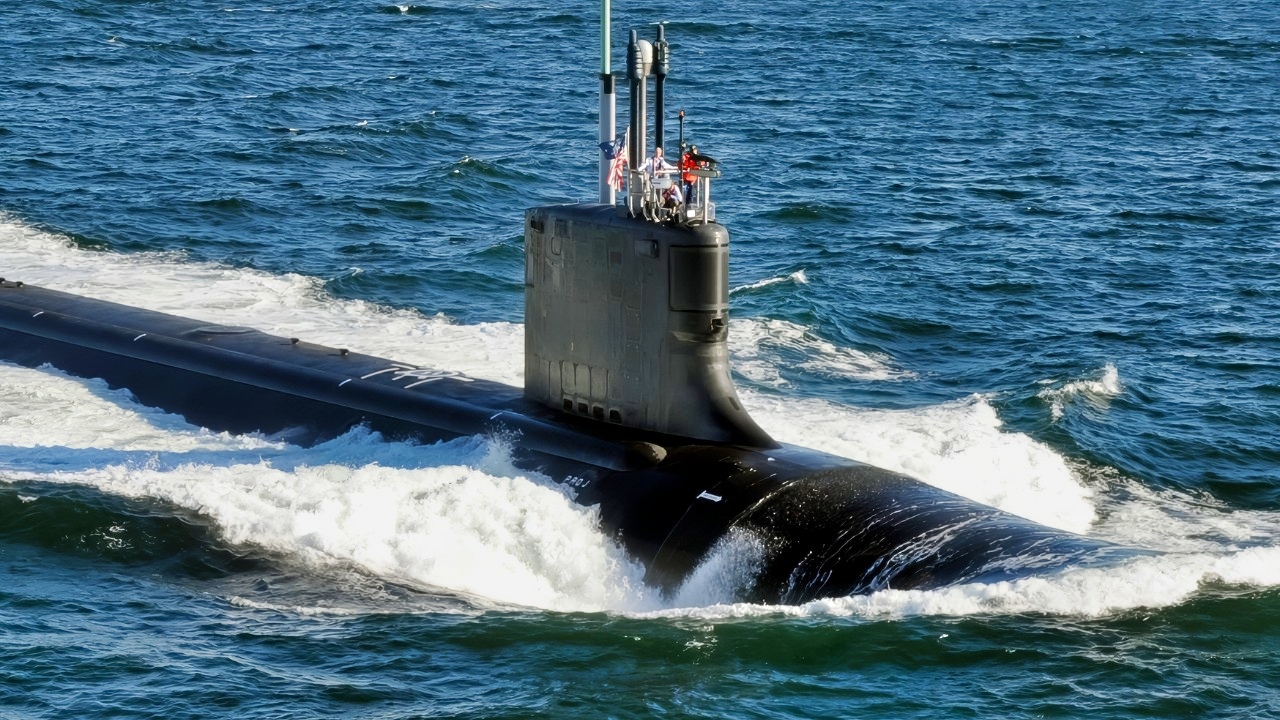
USS Missouri Virginia-Class Submarine. Image Credit: Creative Commons.
The Virginia-class Block VI fast attack submarine is a modern marvel.
The next-generation stealth boat brings much to the table.
This sub will dominate undersea warfare and bring the noise to land attacks, making the enemy duck their heads in fear. The Block VI Virginias will be able to dive so deep that they can hug the ocean floor, sneak around oceans, and bring their considerable firepower to bear while mitigating enemy anti-submarine tactics.
Hypersonic Missiles and Sea Drones Can Be Launched
The Block VI will be supplied with hypersonic weapons that will outfox adversarial surface-to-air missiles with ultra-rapid speed and maneuverability.
The Block VI is planned to deploy unmanned underwater vehicles (UUVs). These sea drones will enhance the Virginia Block VI’s situational awareness through better intelligence, surveillance, and reconnaissance data collection. The Barracuda sea drones can also conduct mine countermeasures.
Banding Together a Complete Submarine Strike Group
The great thing about Block VIs in recon mode is that they are interoperable with the Navy’s existing undersea communication systems, which connect the Navy’s various boats, including SSGNs and SSBNs, with other ships’ listening posts and shore control locations around the world.

An artist rendering of the future U.S. Navy Columbia-class ballistic missile submarines. The 12 submarines of the Columbia-class will replace the Ohio-class submarines which are reaching their maximum extended service life. It is planned that the construction of USS Columbia (SSBN-826) will begin in in fiscal year 2021, with delivery in fiscal year 2028, and being on patrol in 2031.
The Block Vs Are Already Excellent
How much better will the Block VI Virginia boats be compared to the Block Vs? The Block V is already an advanced sub with the best in fly-by-wire navigation, fiber-optic cables, and its own innovations in fire-control systems and improved weapons.
More Tomahawk Strike Power
What’s great about the Block Vs is the Virginia Payload Module onboard. This is an 80-foot section installed in the middle of the submarine to launch 28 more Tomahawk cruise missiles. There will now be 40 of these weapons instead of 12.
What Sea Drones Can Do
While the Block V can launch sea drones from its missile tubes, the Block VIs will take underwater unmanned craft to a new level. The newer sea drones on the Block VIs can do more than collect intel; they will also create additional opportunities to attack enemy submarines and warships. The UUVs have advanced greatly since the Block Vs were devised.
Block VIs, since they will be harder to identify and track, can perform better hunter-killer missions.
A group of Block VIs operating in wolf packs can use UUVs to create a protective shield around the subs. Then they can allow the enemy to discover the uncrewed submersibles and guide them into a trap or ambush. This is what makes the Block VIs so interesting. They can change the way that undersea warfare is fought.
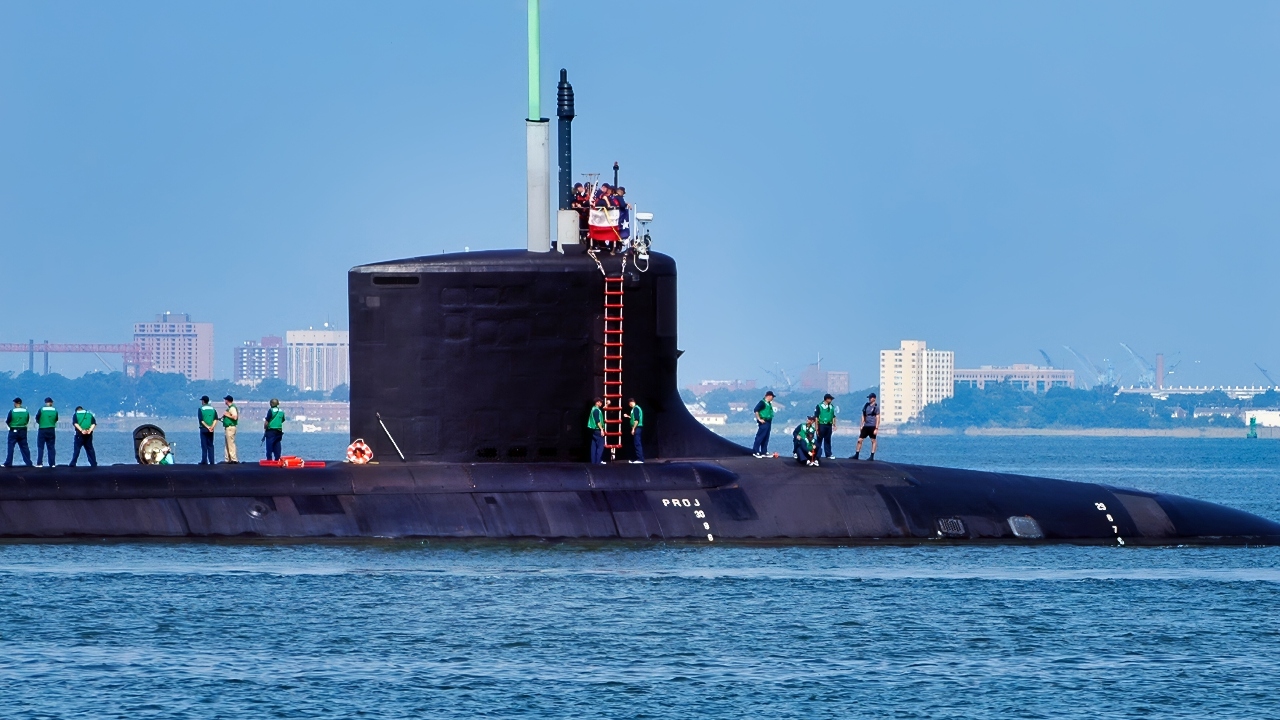
Norfolk, Va. (Aug. 22, 2006) – Sailors stationed aboard the Pre Commissioning Unit (PCU) Texas (SSN 775) stand topside as she gets underway from Naval Station Norfolk.
Getting Deep and Stealthy
The Block VI can also dive deep and hug the contours of the sea floor. This makes them difficult to detect, and once they sneak around enemy flotillas, they can launch hypersonic missiles and powerful torpedoes to wreak havoc on enemy shipping and ground targets.
Perfect for the Kinetic Missile Fight
The new Virginia-class will be the ultimate tool in the Navy’s arsenal to launch an overwhelming salvo of Tomahawk cruise missiles to attack enemy ports, command and control centers, surface-to-air missile systems, and ballistic missile production facilities.
The Virginia Block VIs will give the president multiple options to destroy adversarial targets without boots on the ground. The subs will be a direct White House asset for a deterrence attack on land.
The UUVs Could Change Undersea Warfare
Also, Block VIs will change UUV capabilities. Instead of waiting for the uncrewed submersible to return to the submarine with its data package, the Block VIs will be able to download ISR data with wireless communication.
This allows the UUVs to do their job better and stay out to sea longer. This will boost their mission parameters, increase situational awareness, protect against sea mines, and help target enemy subs and warships.
Connectivity and Interoperability
Block VIs will also change the way subs communicate.
There will be better air, surface, and land communications nodes for real-time data exchange with land or air assets. This improves undersea warfare interconnectivity greatly. The subs will be able to exchange data with allies someday as well.
Creating a Protective Screen
The Block VIs will have high-fidelity acoustic sensors for sniffing out the enemy undersea. This gives the Navy even more pushback against enemy submarines that could challenge an aircraft carrier strike group. The Block VIs can sail out in front of a flotilla and use its sea drones to sniff out adversarial threats before they can attack a strike group.
Conventional Prompt Strike Will Be Ready to Rock
When it comes to hypersonic weapons, the Block VIs will be outfitted in style.
The Navy aims to deploy the new subs with Conventional Prompt Strike hypersonics by 2028.
These are all exciting developments for American undersea warfare.
The advances in communications, intelligence collection and analysis, the use of new drones with mine countermeasures, targeting tools, and real-time data exchange with other types of UUVs are irresistible.
The Block VIs cannot come soon enough.
They will be able to hug the contours of the seabed, hunt the enemy with wolfpack tactics, spring ambushes or traps, and deliver hypersonic weapons.
This will be an exciting time for undersea warfare practitioners, and the Navy is set up for success with the new Virginia-class Block VI subs.
About the Author: Brent M. Eastwood, PhD
Author of now over 3,500 articles on defense issues, Brent M. Eastwood, PhD, is the author of Don’t Turn Your Back On the World: A Conservative Foreign Policy and Humans, Machines, and Data: Future Trends in Warfare, plus two other books. Brent was the founder and CEO of a tech firm that predicted world events using artificial intelligence. He served as a legislative fellow for US Senator Tim Scott and advised the senator on defense and foreign policy issues. He has taught at American University, George Washington University, and George Mason University. Brent is a former US Army Infantry officer. He can be followed on X @BMEastwood.


