

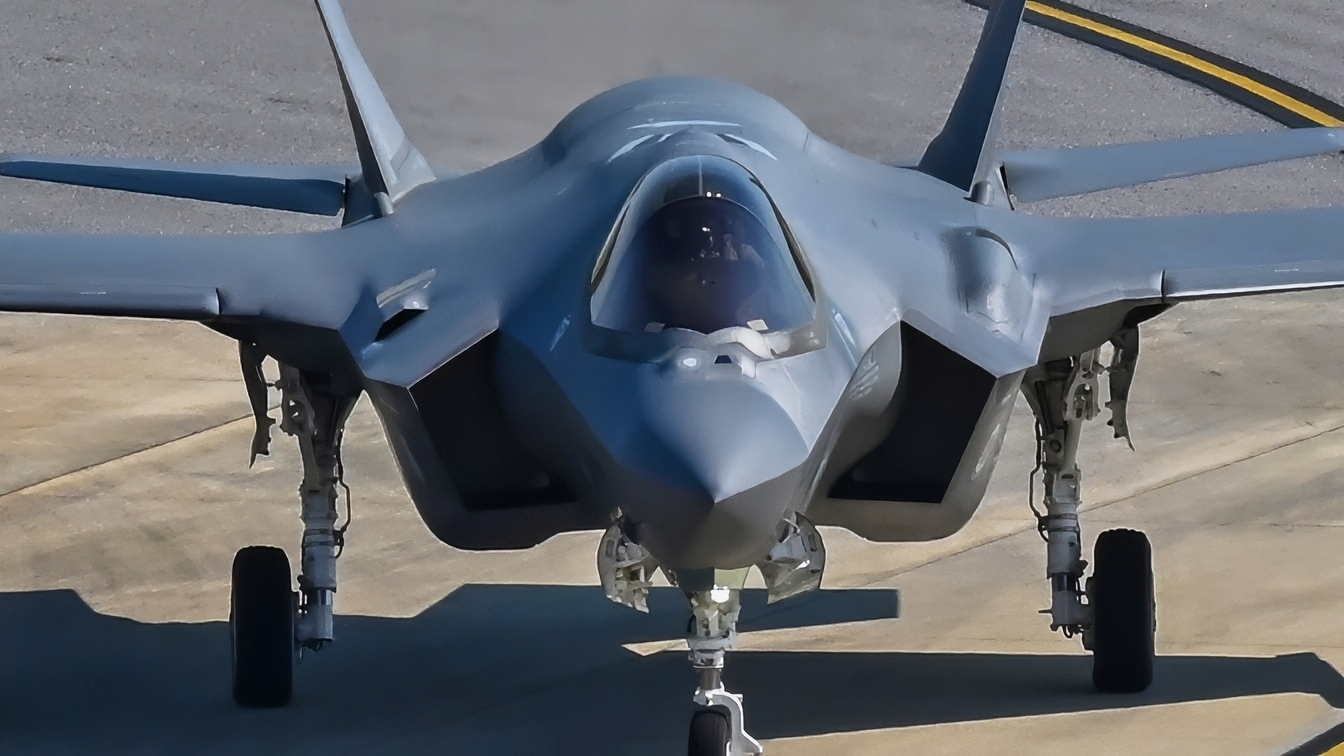
The F-35 Lightning II has no kill switch — but Washington still retains enormous leverage over every foreign operator. The Joint Program Office and Lockheed Martin have both confirmed no hidden kill switch exists; building one would be antithetical to the Joint Strike Fighter program’s global partnership model. What the U.S. does control: spare parts, the Operational Data Integrated Network software backbone that replaced ALIS, and the Mission Data Files.
The Forgotten F-35 ‘Kill Switch’
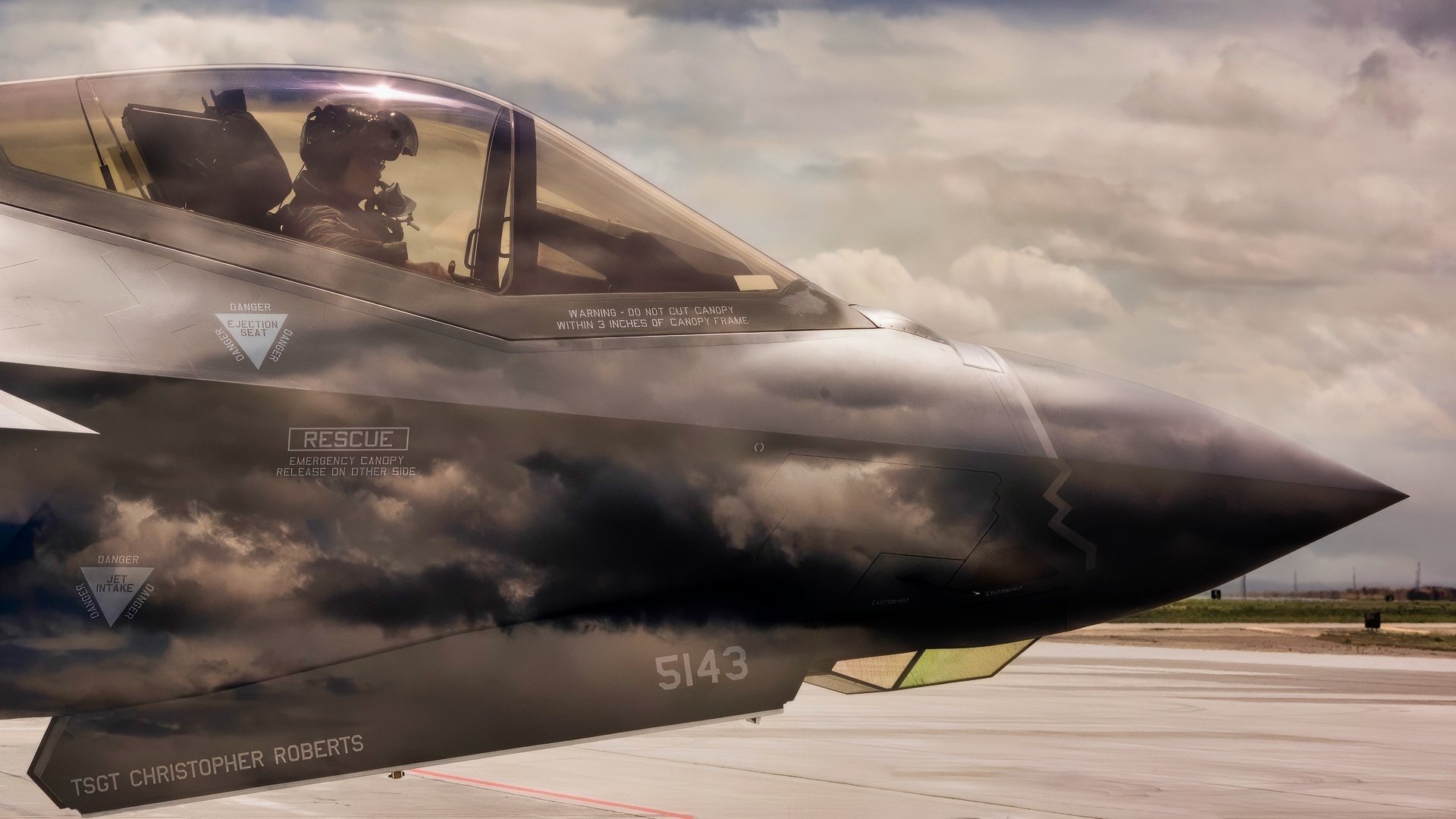
An F-35 Lightning II pilot from Hill Air Force Base, Utah, waits to taxi onto the runway June 20, 2019, at Mountain Home Air Force Base, Idaho. This double exposure photo was achieved in camera by combining two perspectives, a photo of the F-35 and photo of the sky, to create a singular image. (U.S. Air Force photo illustration by Airman 1st Class Andrew Kobialka)
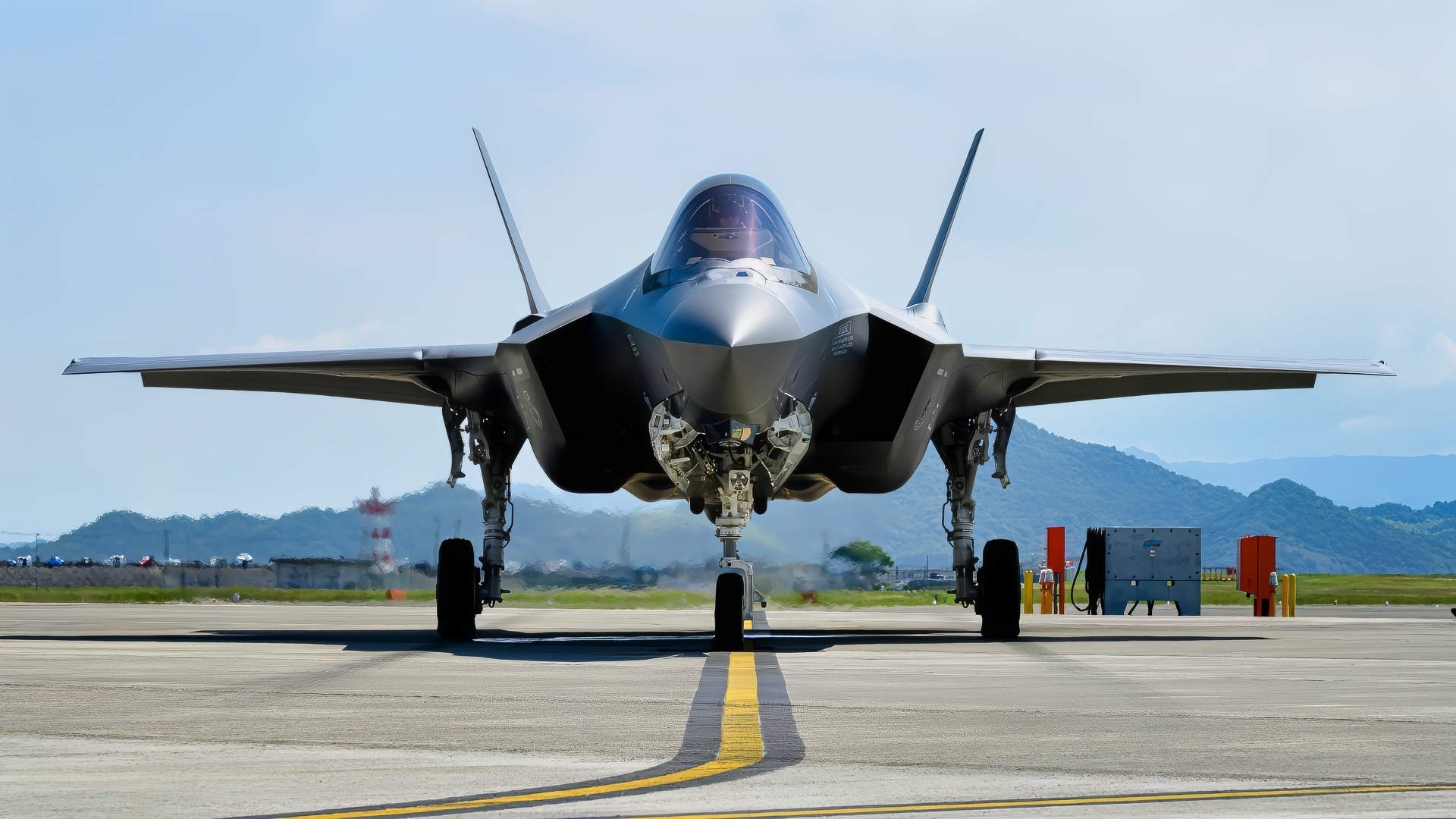
A U.S. Air Force F-35A Lightning II assigned to the 356th Expeditionary Fighter Squadron, 354th Air Expeditionary Wing, sits on the flightline during Agile Combat Employment training at Marine Corps Air Station Iwakuni, Japan, June 30, 2022. ACE is Pacific Air Forces’ model to project combat power via a network of distributed operating locations throughout the Indo-Pacific region. (U.S. Air Force photo by Senior Airman Jose Miguel T. Tamondong)

U.S. Air Force Maj. Melanie “Mach” Kluesner, pilot of the F-35A Demonstration Team, performs aerial maneuvers at the Sun ‘n Fun Airshow in Lakeland, Florida, April 1, 2025. The team travels across the country to demonstrate the unmatched capabilities of the F-35A Lightning II and highlight the skill of U.S. Air Force pilots. (U.S. Air Force photo by Senior Airman Nicholas Rupiper)
The F-35 Lightning II is one of the most advanced and formidable fighter jets currently in existence.
It offers unmatched stealth capabilities and is equipped with some of the most advanced avionics that the U.S. has ever put into a fighter.
However, the F-35 is also one of the most controversial aircraft.
While most criticisms of the aircraft focus on its high cost, many potential customers are wary of the extent of U.S. control over the aircraft, even on export models.
If relations between Washington and a foreign operator falter, the U.S. could simply refuse to update its software, rendering the foreign nation’s fleet extremely vulnerable.
This gives the U.S. incredible leverage over foreign buyers, leading some to wonder whether the aircraft’s impressive capabilities are truly worth the price.
Why the U.S. Cannot Turn Off Foreign F-35s
For some time, there was a myth spreading around that Washington intentionally hid a “kill switch” in the F-35’s code and that if necessary, the U.S. could activate this kill switch and effectively brick an entire nation’s fleet of F-35s. Not only is this myth false, but it would be incredibly impractical from the U.S. perspective.
If a kill switch, as many have described it, were actually discovered (and it would eventually be discovered), the U.S. would lose all its credibility as an international partner.
Every pending F-35 contract would be terminated immediately, and all current operators of the aircraft would scramble to find a replacement.
It would be a complete PR disaster for Washington and deal considerable damage to America’s reliability as a partner.
The idea of a kill switch in the F-35 is contrary to the purpose of the Joint Strike Fighter program to begin with. “There is no kill switch,” the Joint Program Office (JPO) for the F-35 program said in a statement.
“The program operates under well-established agreements that ensure all F-35 operators have the necessary capabilities to sustain and operate their aircraft effectively. The strength of the F-35 program lies in its global partnership, and we remain committed to providing all users with the full functionality and support they require.”
From the very beginning, the F-35 was designed to operate within allied air forces around the world. Putting a kill switch in the aircraft would be antithetical from both a business and ethical standpoint.
Leveraging Spare Parts: The Real ‘Kill Switch’
That being said, the U.S. still retains considerable control over the F-35’s export models.
This is partially due to practical concerns.
The F-35 is the most technologically advanced fighter jet ever produced by the U.S.
Its avionics are highly classified, and the airframe itself is built with some of the most sophisticated stealth techniques.
Naturally, some measures need to be put in place in case the aircraft were to fall into enemy hands.
While there is no kill switch that automatically turns off the aircraft or relinquishes control back to the U.S., Washington still possesses considerable leverage over foreign users and could cripple an international fleet in other ways.
First and foremost, the U.S. is the primary manufacturer of the F-35’s components and completely controls the distribution of spare parts.
If a foreign operator of the aircraft were to suddenly fall out of America’s good graces, the U.S. could restrict the sale of spare parts to that nation.
This would leave said nation without the means to maintain its fleet, inevitably leading to disrepair. An example of this occurred when Turkey bought Russian-made S-400 air defense systems.
Relations between the U.S. and Turkey deteriorated so drastically that the U.S. blocked Turkey from receiving F-16 Block 70 upgrades, thereby preventing Ankara from upgrading its F-16 fleet.

A Polish F-16 pilot awaits instructions from his crew chief after completion of a Baltic Air Policing sortie at Šiauliai Air Base, Lithuania, Aug. 30, 2017. The Polish air force recently relinquished control of the NATO Baltic Air Policing mission to the U.S. Air Force for the forty-fifth rotation of allied protection of the sovereign skies of the Baltic region since Baltic Air Policing operations began in 2004. (U.S. Air Force photo/ Tech. Sgt. Matthew Plew)
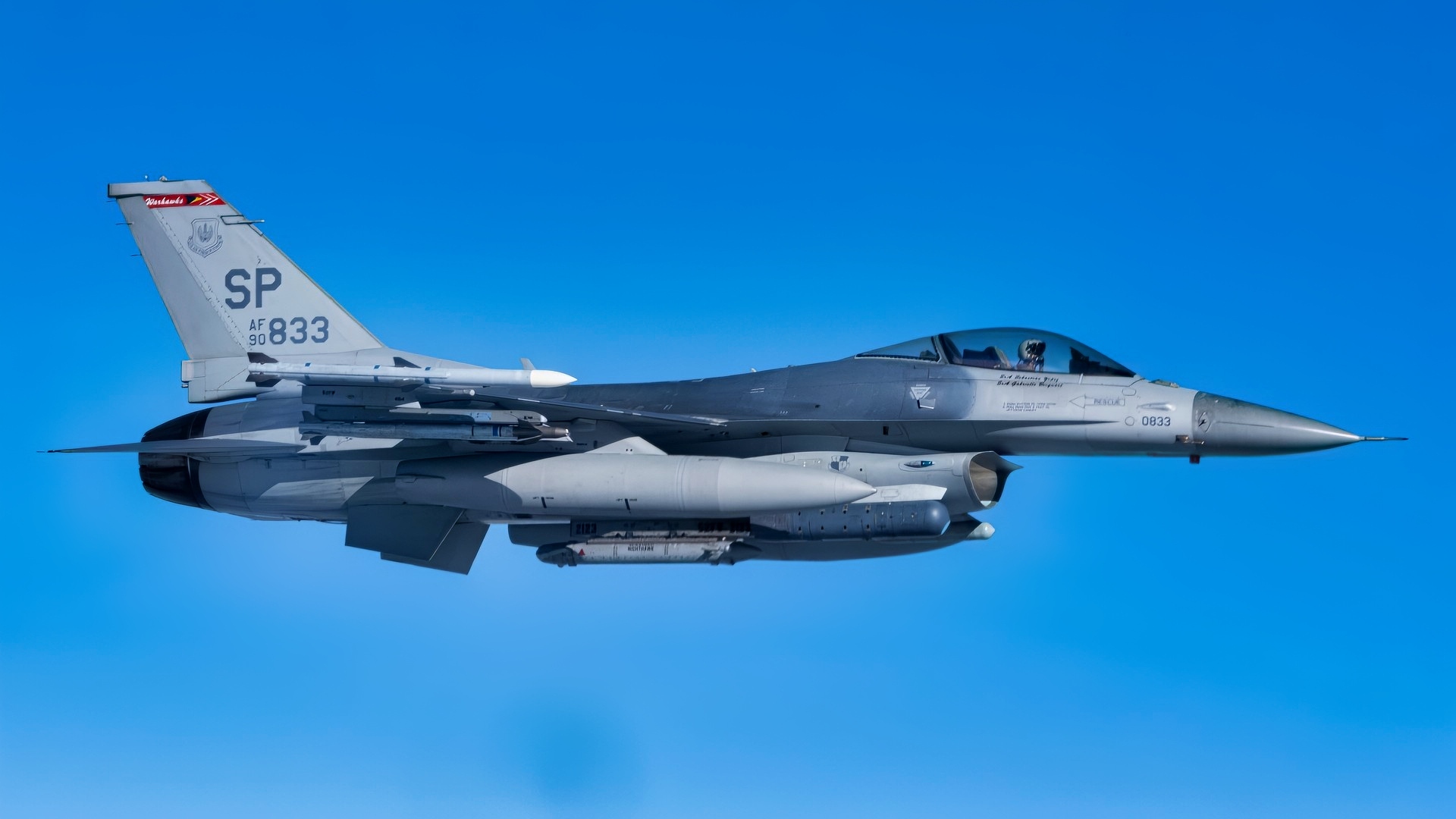
A U.S. Air Force F-16 Fighting Falcon from the 52nd Fighter Wing, Spangdahlem Air Base, Germany, flies during an Agile Combat Employment movement over Poland, Feb. 29, 2024. ACE is a military concept aimed to deny adversaries the advantage of predictability, while concurrently enhancing U.S. Air Forces in Europe’s capacity to respond swiftly to emerging threats. (U.S. Air Force photo by Airman 1st Class Christopher Campbell)
The embargo was eventually lifted, but Turkey’s access to spare parts was cut off for years.
In the same way, cutting off the F-35 would not immediately ground the aircraft, but rather, it would slowly degrade the fleet until the aircraft is no longer safe to fly.
Software Upgrades: Crippling the F-35’s Digital Backbone
What is more important than spare parts, however, is the software aboard the F-35.
The Operational Data Integrated Network (ODIN) currently forms the digital backbone of the F-35. The system was designed to replace the less reliable ALIS logistics system as the aircraft’s main software architecture. Alongside ODIN, the aircraft relies on the Mission Data File, which enables critical functions such as target IDs, communications management, and more. These systems are, of course, all provided and updated by the United States and are vital to the F-35’s maintenance of its combat capabilities.
If the U.S. wanted to, it could prevent foreign operators from updating the software on their F-35s.
This would not render the aircraft inoperable, but certain updates are necessary to keep it up to date with the latest threats. “Without these software updates,” Stacie Pettyjohn, the director of the defense program at the Center for a New American Security, said, “F-35s could fly, but would be much more likely to be shot down by enemy air defenses. Also, without U.S. maintainers and spare parts, it would be difficult to keep the aircraft flying for long, as it is an incredibly complex weapons system.”
What Other Option is There?
With all this in mind, it is no wonder that some nations are skeptical of the F-35.
While the U.S. cannot disable a foreign nation’s aircraft, it can ensure that the aircraft never receives maintenance parts or software upgrades, thereby allowing it to deteriorate over time.

GCAP Fighter. Image Credit: Creative Commons.
However, for a Western nation in search of a fifth-generation aircraft, where else is there to look?
The F-35 provides advanced capabilities that no other nation can match. Some European nations are currently investing in domestic sixth-generation alternatives such as the FCAS and the GCAP, but neither is expected to be operational until the 2040s at the earliest.

FCAS Fighter Mock Up. Image Credit: Creative Commons.
Until then, the F-35 retains a monopoly, at least in the West, on the fifth-generation market, leaving allied nations to decide for themselves whether its impressive capabilities are worth the price.
MORE – The A-12 Avenger II Was the Flying Dorito Stealth Bomber Mistake
About the Author: Isaac Seitz
Isaac Seitz, a Defense Columnist, graduated from Patrick Henry College’s Strategic Intelligence and National Security program. He has also studied Russian at Middlebury Language Schools and has worked as an intelligence Analyst in the private sector.


