


A $14 billion U.S. arms sale to Taiwan — one of the largest in the island’s history — remains in limbo for a fifth month as President Donald Trump considers using it as a negotiating chip with China. Congress approved the package in January 2026. Trump told reporters this week he will speak with Taiwan President William Lai Ching-te by phone — which would be the first direct U.S.-Taiwan presidential call since 1979, when Washington cut formal ties under the One China policy. The package includes Patriot PAC-3 MSE interceptors, the National Advanced Surface-to-Air Missile System with AMRAAM-ER missiles, HIMARS rocket artillery, and Javelin and TOW anti-tank weapons. Trump described the deal as in abeyance and depends on China.
Donald Trump and the Taiwan Leverage Move
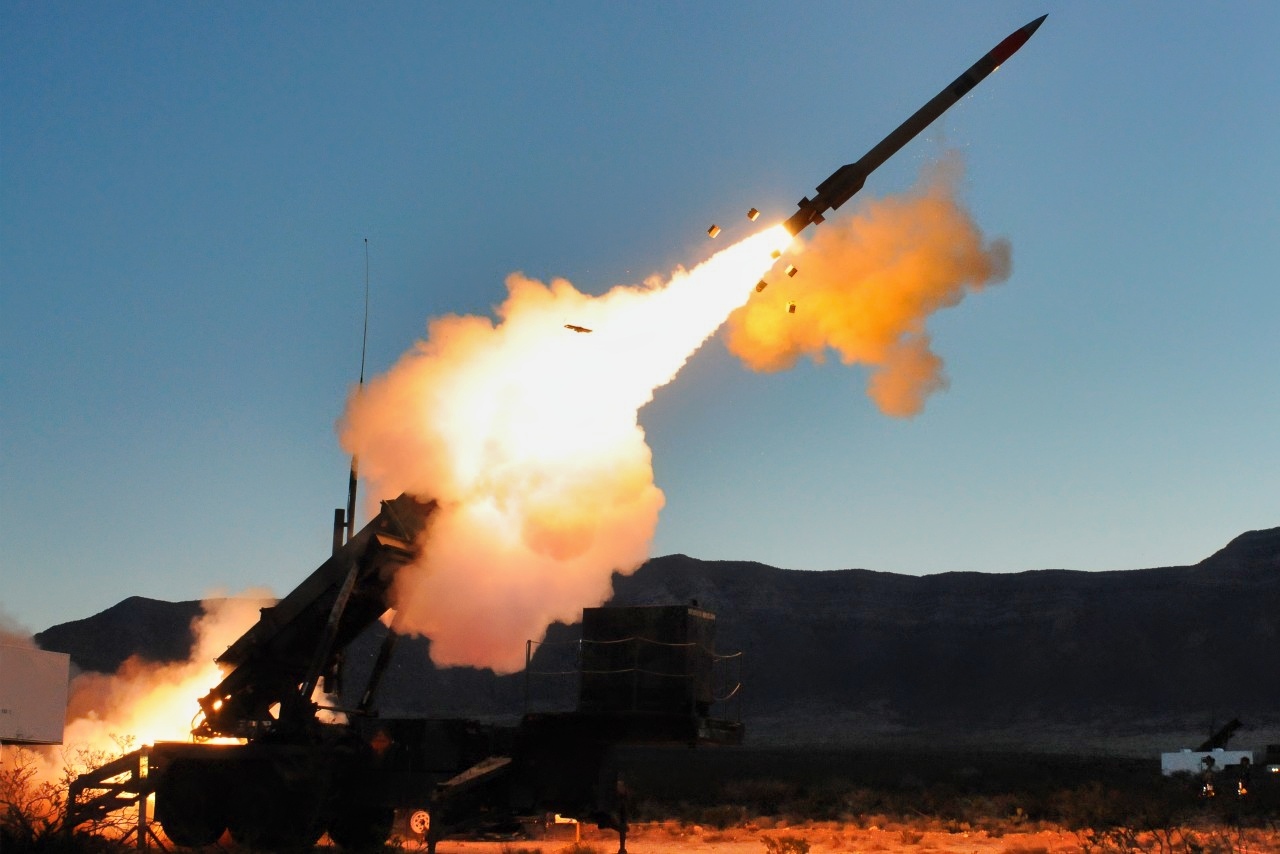
The PAC-3 MSE is a highly sought-after air defense munition due to its advanced capabilities and versatility. As a next-generation interceptor, it offers improved range, speed, and maneuverability, making it an effective counter to a wide range of threats, including tactical ballistic missiles, cruise missiles, and aircraft. (Official U.S. Army photo)
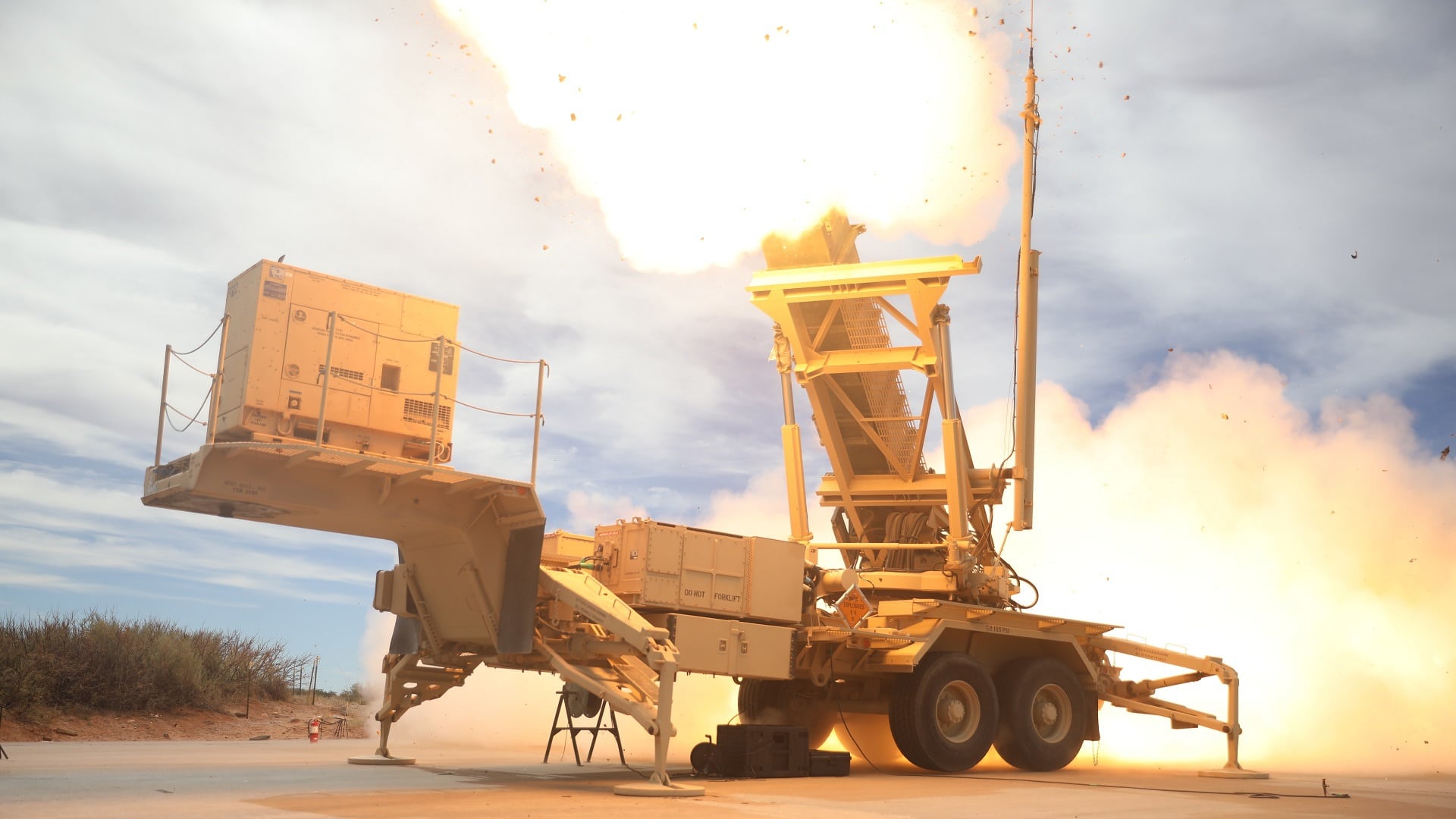
Patriot Missile. Image Credit: Creative Commons.
A major $14 billion US arms sale to the Republic of China (ROC) on Taiwan, one of the largest ever in the history of the independent self-governing island, remains in mid-air for its 5th month.
The indecisiveness stems from US President Donald Trump’s reported continued consideration of using it as a “negotiating chip” with the People’s Republic of China (PRC) on the Mainland.
Trump visited the PRC capital Beijing for the first time in almost a decade on 14-15 May, where he held two days’ worth of talks with Chinese Communist Party (CCP) General Secretary Xi Jinping. Xi is often referred to as the Chinese “president,” although that office confers very little executive authority on its occupant.
The real power in the PRC lies with whoever heads the CCP, who is usually also the Chairman of the Central Military Commission (CMC). The label “president” in the PRC is sometimes described as a “made-for-export title” so that Xi is addressed at international events in the same manner as other heads of state.
Trump has since lauded his relationship with “President” Xi as “amazing”, following his two-day summit last week.
Historic Phone Connection
Trump has also said he will speak with ROC President William Lai Ching-te by phone about the arms sale. If he actually does ring the leader of the island nation, it would be a major departure from the self-imposed diplomatic guardrails that Washington has maintained with Taipei for decades.
The US and Taiwanese presidents have not spoken directly to one another since 1979. That was the year Washington cut its formal ties with the ROC as part of officially recognizing the CCP government in Beijing – the beginning of the “One China” policy.
Beijing claims that the ROC is part of its territory and consistently threatens to take the island by force with a military invasion. Washington has supported the independent nation, and the occupant of the Oval Office is bound by acts of Congress to provide it with all possible means of self-defense.
All US presidents in recent decades have taken a balanced approach to relations with “both Chinas”, but the only diplomatic relations are maintained with Beijing. The ROC maintains a de facto embassy in Washington and consulates in 12 other US cities, while the US still operates a diplomatic post in Taipei, the American Institute in Taiwan (AIT), and another facility in Kaohsiung, neither of which is formally recognized as an embassy.
In 2016, while he was still president-elect and had not yet been sworn in, Trump took a phone call from the ROC’s then-president, Tsai Ing-wen, prompting angry denunciations from Beijing. President Lai, who took office in 2024, is currently conducting one of the largest build-ups in years to strengthen the island’s military.
When Trump was asked on Wednesday if he planned to speak to Lai ahead of making a decision on the US arms sale, he said: “I’ll speak to him. I speak to everybody, we’ll work on that, the Taiwan problem.”
A Long List of New Systems
This arms sale has been held up for months despite US Congressional approval having been passed in January 2026. It is largely focused on boosting the ROC’s air and missile defenses amid steadily increasing tensions with Beijing.
The systems in the package are advanced platforms designed to counter aircraft, ballistic missiles, cruise missiles, and drones.
These are all weapons that are key items in the list of those systems supporting the ROC’s “porcupine” strategy. That battle plan calls for making any invasion by the People’s Liberation Army prohibitively costly in casualties and in the loss of its own aircraft and naval vessels.
The package for the ROC includes more of the Patriot PAC-3 (including the MSE variant) interceptor missiles. These are advanced hit-to-kill systems to defend against incoming ballistic and cruise missiles.
Then there is the shorter-range National Advanced Surface-to-Air Missile System (NASAMS): a medium-range air defense system that uses ground-launched AIM-120 Advanced Medium-Range Air-to-Air Missile – Extended Range (AMRAAM-ER) missiles and related equipment, which is also effective against aircraft, drones, and cruise missiles. The system is jointly produced by the US and Norway’s Konigsberg.
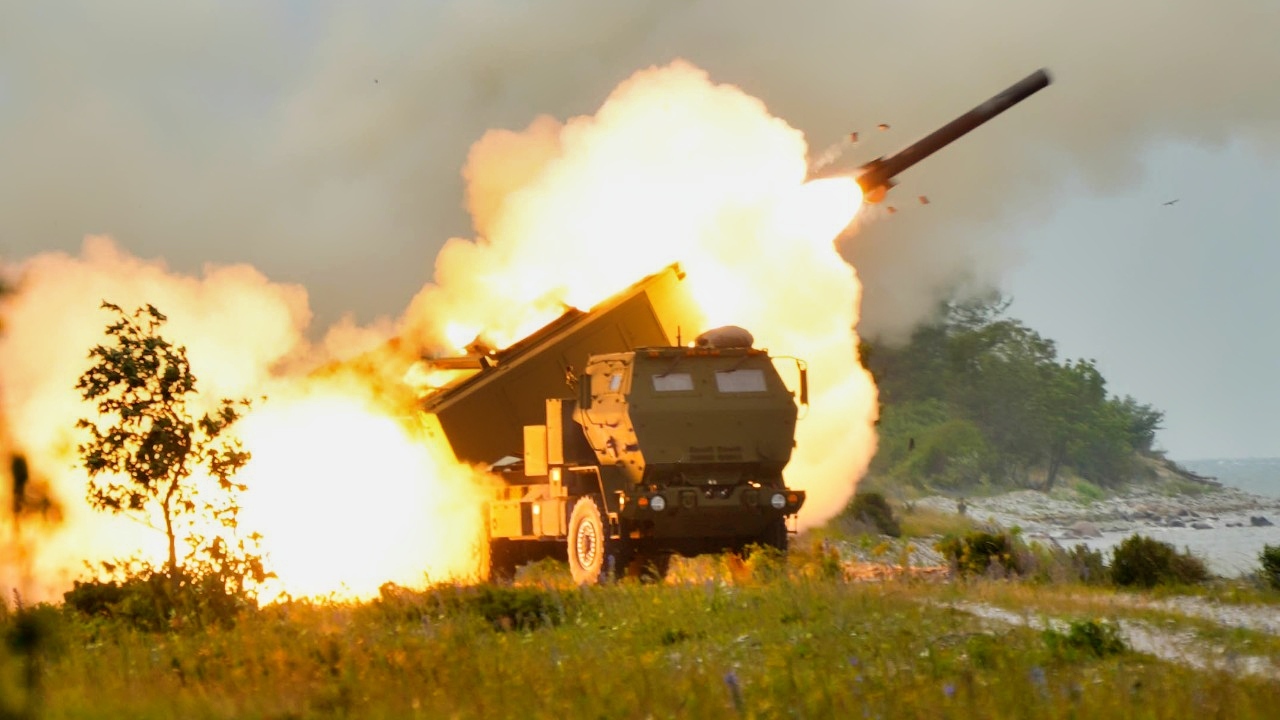
An Estonian Defense Forces M142 High Mobility Artillery Rocket System (HIMARS) fires a training rocket during a live-fire exercise in Undva, Estonia, July 11, 2025. U.S. Army elements from Bravo Battery, 1st Battalion, 14th Field Artillery Regiment, 75th Field Artillery Brigade, supporting Task Force Voit, assisted in the training process. The task force was originally formed in 2023 to support the Estonian Defense Forces in the creation of a HIMARS unit. Task Force Voit works closely with the Estonian Armed Forces, sharing critical defense strategies, training, and military readiness support. The presence of U.S. troops in the region serves as a cornerstone of NATO’s commitment to security in the Baltic region. The task force provides combat-credible forces to V Corps, America’s only forward-deployed corps in Europe. (U.S. Army photo by Staff Sgt. Rose Di Trolio)
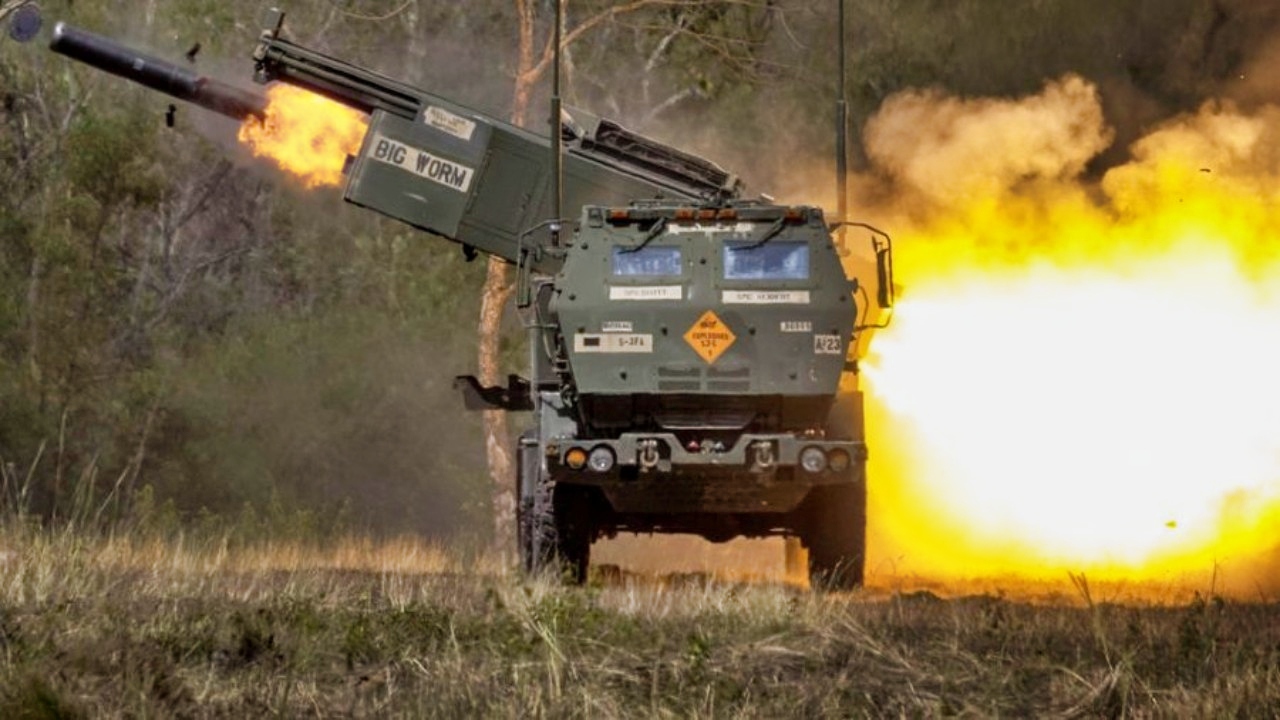
HIMARS. Image Credit: U.S. Government.

Tennessee Army National Guard Soldiers with Alpha Battery, 1-181st Field Artillery Regiment conduct a training exercise using the M142 High Mobility Artillery Rocket System (HIMARS) at Camp Shelby, Mississippi, June 9. The unit’s annual training enhances battalion readiness, focuses on mission-essential tasks and ensures Soldiers are proficient in critical skills. (U.S. Army National Guard photo by Sgt. Grayson Cavaliere)
Other drone and counter-drone technologies, HIMARS rocket artillery, and the Javelin and TOW anti-tank weapons are also included.
Trump has made no commitment yet on the $14 billion package, but has said that the sale is “in abeyance” and “depends on China.”
He also described the deal as “a very good negotiating chip for us, frankly,” but that he would consult ROC President Lai before rendering a final decision.
MORE – ‘A Combat Warplane’: The Dassault Rafale Fighter Doesn’t Care About the F-22 or F-35 Stealth Fighter
About the Author: Reuben F. Johnson
Reuben F. Johnson has thirty-six years of experience analyzing and reporting on foreign weapons systems, defense technologies, and international arms export policy. Johnson is the Director of Research at the Casimir Pulaski Foundation. He is also a survivor of the Russian invasion of Ukraine in February 2022. He worked for years in the American defense industry as a foreign technology analyst and later as a consultant for the U.S. Department of Defense, the Departments of the Navy and Air Force, and the governments of the United Kingdom and Australia. In 2022-2023, he won two awards in a row for his defense reporting. He holds a bachelor’s degree from DePauw University and a master’s degree from Miami University in Ohio, with a specialization in Soviet and Russian studies. He lives in Warsaw.


