

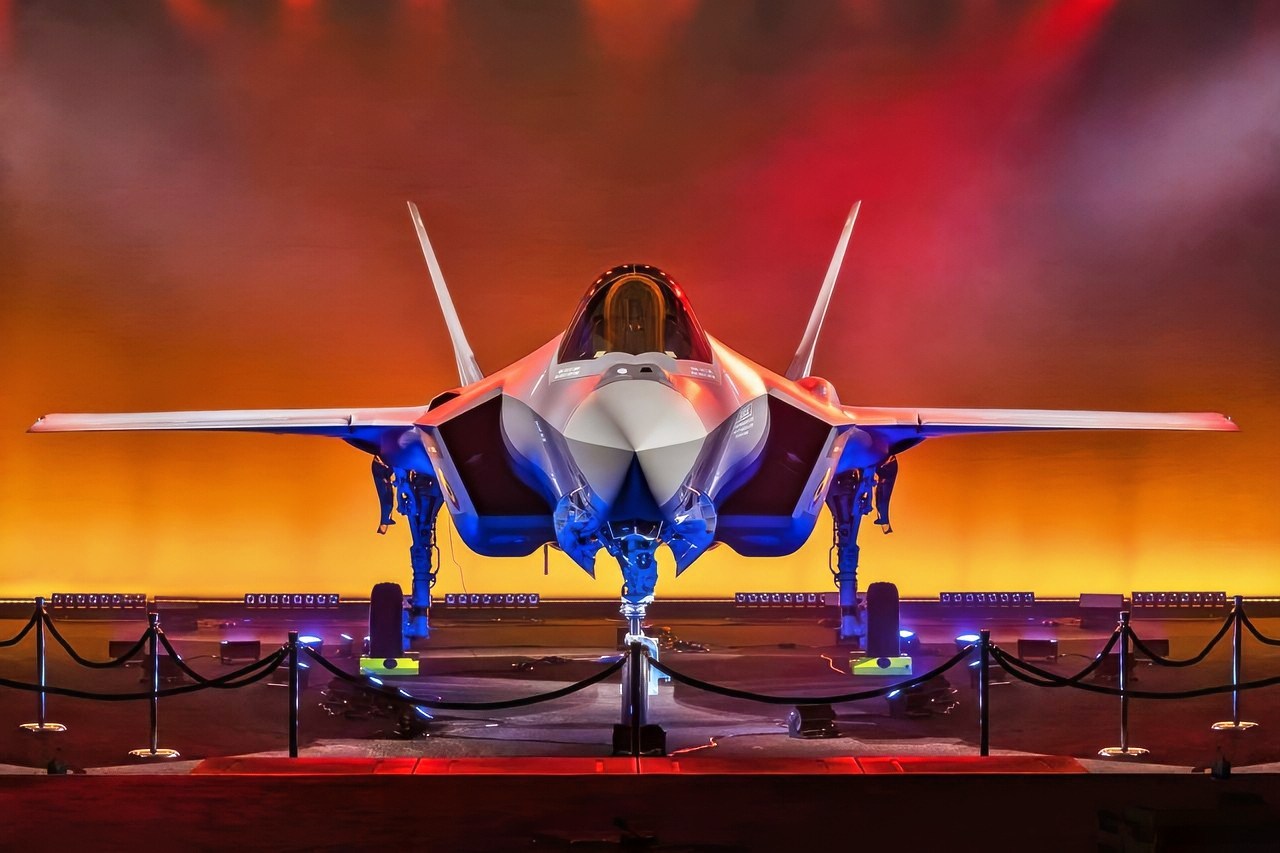
Key Points and Summary – As Washington weighs selling F-35s to Saudi Arabia, a revived debate is raging over whether America secretly holds a “kill switch” for its premier stealth jet.
-The Pentagon insists no such remote cutoff exists, stressing that partners get full operational capability.
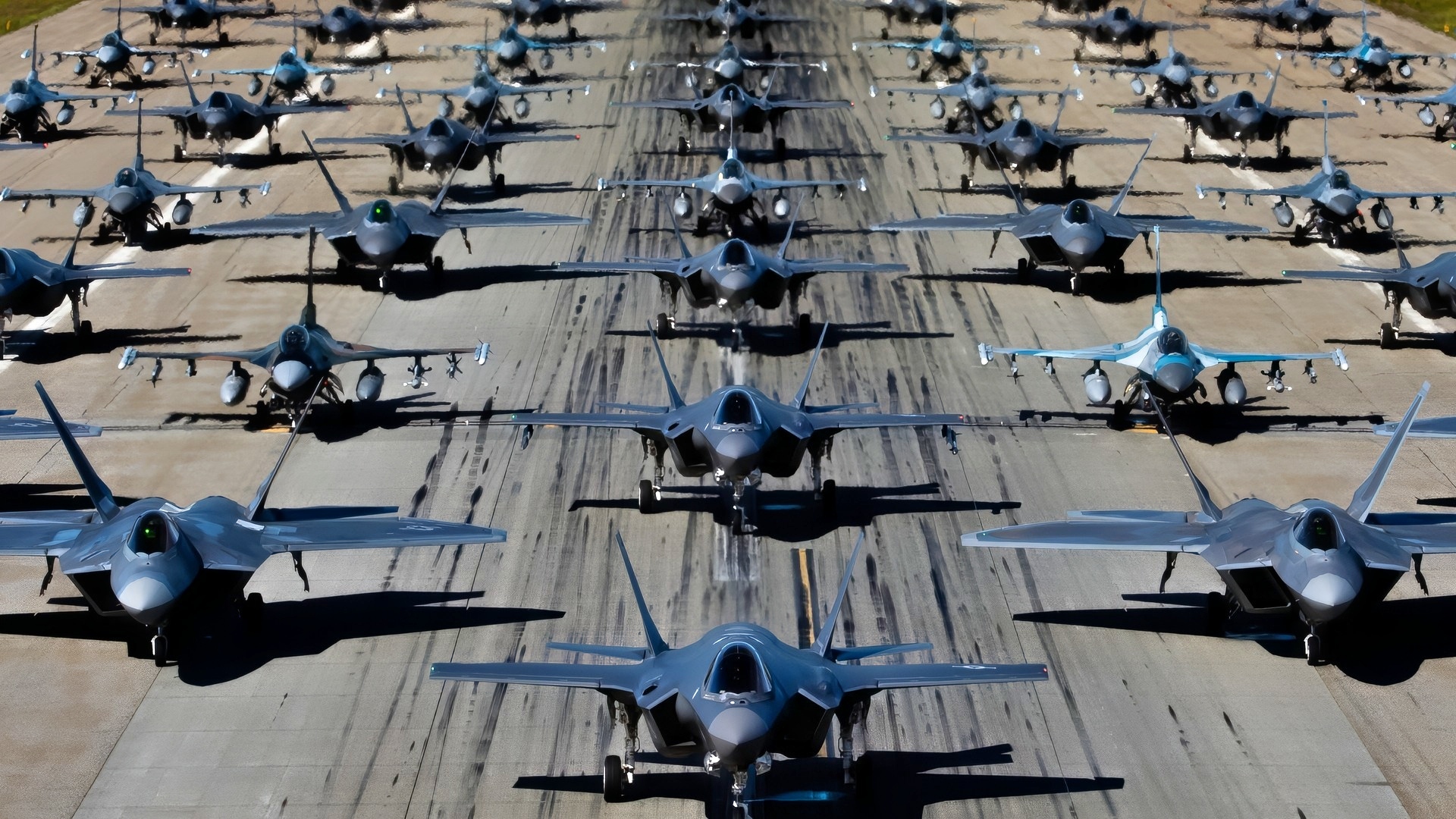
The 354th Fighter Wing conducts a 75-fighter jet formation at Eielson Air Force Base, Alaska, Aug. 12, 2022, in honor of the U.S. Air Force’s 75th Anniversary. This capabilities demonstration included F-35A Lightning II, F-16 Fighting Falcon and F-22 Raptor aircraft from across Pacific Air Forces. (U.S. Air Force photo by Senior Airman Gary Hilton)
-But Stephen Silver notes allies still worry after years of Trump-era unpredictability and sanctions politics.
-The real leverage isn’t a magic button—it’s software updates, tightly controlled logistics networks, and spare parts.
-If relations sour, the U.S. could simply withhold support, gradually crippling any foreign F-35 fleet without ever flipping a literal switch. That prospect makes some partners nervous.
Does the F-35 Have a Kill Switch?
Reports earlier this month stated that the US is considering selling F-35 fighter jets to Saudi Arabia, in what would be the first-ever sale of the jets to a country that is not a democracy. It would also be the first F-35 recipient in the Middle East, besides Israel.
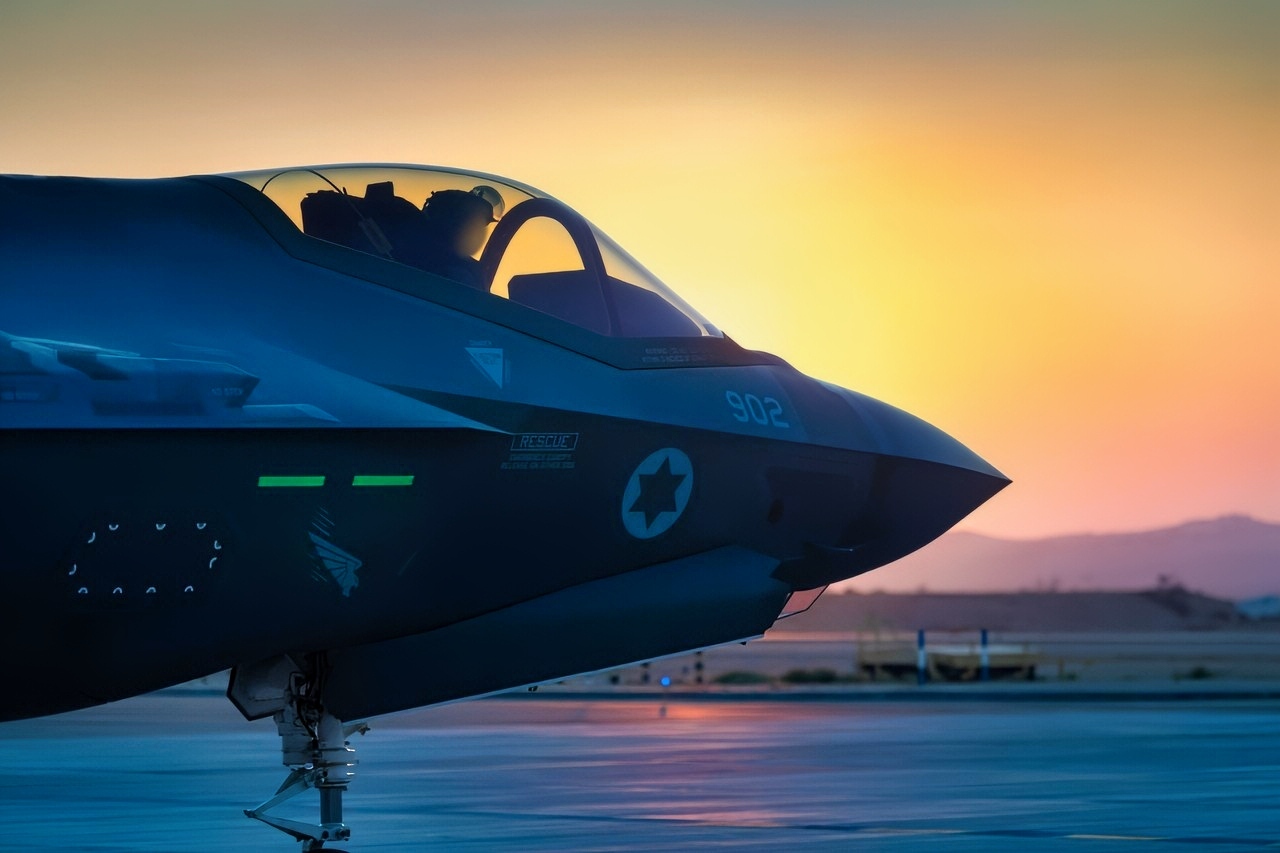
F-35I Adir Israel Stealth Fighter. Image Credit: IDF
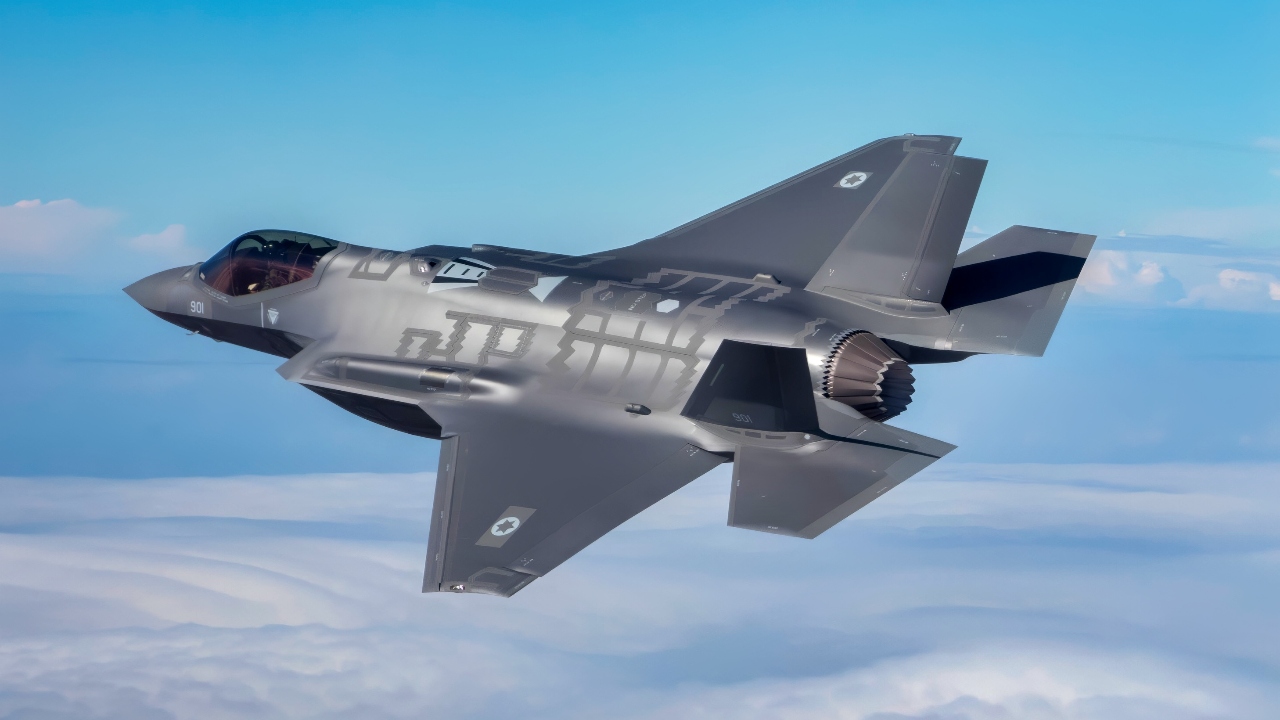
F-35I Fighter from Israel. Image Credit: Creative Commons.
Per Axios, Israel is calling for the U.S. to condition the sale of the jets to the Saudis on Saudi Arabia agreeing to normalize relations with Israel.
The report comes as Saudi Crown Prince Mohammed bin Salman (MBS) is set to arrive in the US and meet with the president at the White House on Tuesday, marking the crown prince’s first visit to the United States since 2018, during President Donald Trump’s first term in office. Trump made his first foreign visit of his second term as president to Saudi Arabia earlier this year.
Trump confirmed to reporters over the weekend that the US is considering the sale of F-35s to the Saudis.
“Unlike the supply of F-35s to Turkey that we strongly oppose, we are less concerned about such a weapons system in Saudi Arabia if it’s part of a regional security cooperation as part of the Abraham Accords, like we have with the United Arab Emirates,” an Israeli official told Axios.
Newsweek reported last month that talks for the sale of F-35s to Turkey have “stalled,” with the Turks agreeing to buy 20 Eurofighter Typhoon jets. Turkey is a democracy—despite concerns about backsliding—and a NATO member, while Saudi Arabia is neither. The US was in talks at one point to sell F-35s to the United Arab Emirates, but those also fell through.
The Saudi deal, if it happens, would potentially jeopardize Israel’s qualitative military edge (QME), as it’s long been a US policy to ensure Israel keeps such an edge.
The possibility of F-35s being sold to the Saudis raises questions about the extent of US control over such jets. And that includes the question of the mythical F-35 “kill switch.”
There is No Kill Switch
The Pentagon has long been clear that the F-35 does not have a kill switch. Most recently, according to Breaking Defense, the Joint Program Office (JPO) for the F-35 program issued an official statement in March.
“There is no kill switch,” the JPO stated in its March 2023 report. “The program operates under well-established agreements that ensure all F-35 operators have the necessary capabilities to sustain and operate their aircraft effectively. The strength of the F-35 program lies in its global partnership, and we remain committed to providing all users with the full functionality and support they require.”
Lockheed Martin posted the statement to its social media accounts. Switzerland also denied the existence of a kill switch.
Why They’re Concerned
According to Breaking Defense, there’s a reason why that statement was necessary: “real concerns abroad about American stewardship of the program amid tensions with historical allies.”
It’s a very Trump-era concern, as historically good relations between the US and traditional allies have become frayed, whether due to tariffs or bellicose statements by the US president.
According to a report in The Independent, fears arose in March, also that month, following the White House’s announcement to suspend aid to Ukraine.
Joachim Schranzhofer, head of communications at the German arms company Hensoldt, told Bild this spring that the alleged F-35 kill switch was “more than just a rumour.”
“If we have to fear that the USA could do with future German F-35s what they are currently doing with Ukraine, we could consider terminating the contract,” President of the Munich Security Conference Foundation Wolfgang Ischinger told Bild.
That report, and others, have stated that while the US cannot remotely take control of the jets themselves, it can neglect to upgrade the software.
Defense News, in April, looked at the concerns.
“Since US President Donald Trump took office in January, concerns have grown in Europe about the extent to which Washington could exercise control over F-35 fleets globally. Such worries spring from a new degree of unpredictability of an ally whose weapons exports have underwritten much of the West’s deterrence architecture for decades,” the report said.
The Spare Parts?
A report in March from The Geopolitics site examined the potential “real” kill switch in the F-35: not the jet itself or the software, but rather the spare parts.
“Though the F-35 doesn’t have a physical kill switch, the aircraft has a major kryptonite that can be used against allies,” the report said.
“Buying an F-35 is a lot like buying an iPhone or a Tesla,” Geopolitics added. “When those machines break, it’s hard to repair them without going back to the manufacturer. That’s by design. So too with the F-35. A country or military isn’t just buying a jet; it’s buying a whole bunch of software systems and logistical supply chains.”
Therefore, when parts of the F-35 break or need repairs, they need help from American contractors. And that gives the U.S. leverage over its allies.
The War Zone had more on that question.
“The stark reality is that a dedicated kill switch is not needed to keep foreign F-35s from being able to perform what they were designed to do. Just cutting off support to the jets would accomplish the same result, albeit maybe not instantly, but soon enough,” TWZ reported.
Therefore, if the US sold F-35s to the Saudis and fell out with that country at some point, they could subsequently refuse to grant them support, repairs, and spare parts. This isn’t necessarily a likely scenario, but it is theoretically possible.
“Without access to American-controlled maintenance and logistics chains, as well as computer networks, any F-35 fleet would quickly start to become unusable, and any jets that remain flying for a truncated period of time would only be able to do so with massively degraded capabilities,” TWZ added.
About the Author: Stephen Silver
Stephen Silver is an award-winning journalist, essayist, and film critic, and contributor to the Philadelphia Inquirer, the Jewish Telegraphic Agency, Broad Street Review, and Splice Today. The co-founder of the Philadelphia Film Critics Circle, Stephen lives in suburban Philadelphia with his wife and two sons. For over a decade, Stephen has authored thousands of articles that focus on politics, national security, technology, and the economy. Follow him on X (formerly Twitter) at @StephenSilver, and subscribe to his Substack newsletter.
More Military
Could America Have Lost the Revolutionary War?
The Marines Don’t Have Tanks Anymore
The Essex-Class Aircraft Carriers Have An Embarrassing Message for the U.S. Navy
‘New’ Mach 4 MiG-41 6th Generation Stealth Fighter Has Warning for U.S. Air Force
Boeing’s F-47 NGAD 6th Generation Stealth Fighter Is No ‘Mission Impossible’


