

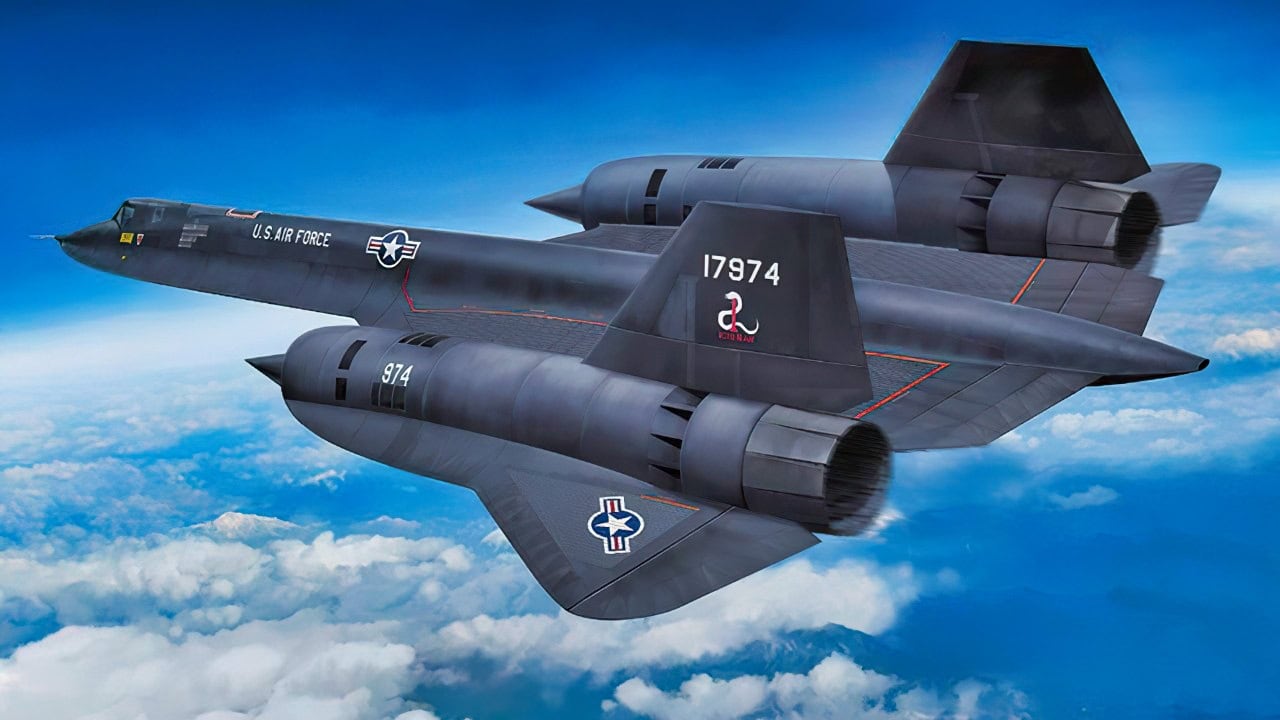
The Lockheed SR-71 Blackbird intentionally leaked JP-7 fuel onto the ground. The airframe was designed to seal its own fuel tanks only when hot — at Mach 3, thermal expansion from air friction caused the aircraft to grow several inches in length, tightening panels and joints and closing the gaps that let fuel seep out at ambient temperature. The aircraft took off with a partial fuel load and rendezvoused with a tanker shortly after takeoff. Approximately 85% of the SR-71’s structure was titanium, chosen because aluminum would soften above 500 degrees Fahrenheit. Two Pratt & Whitney J58 engines ran as turbojets at low speed and transitioned to a hybrid ramjet mode above Mach 3.
The SR-71 Blackbird Is the Legend No One Can Deny

SR-71 Blackbird National Security Journal Photo by Dr. Brent M. Eastwood.
SR-71 Blackbird National Security Journal Photo Collection.
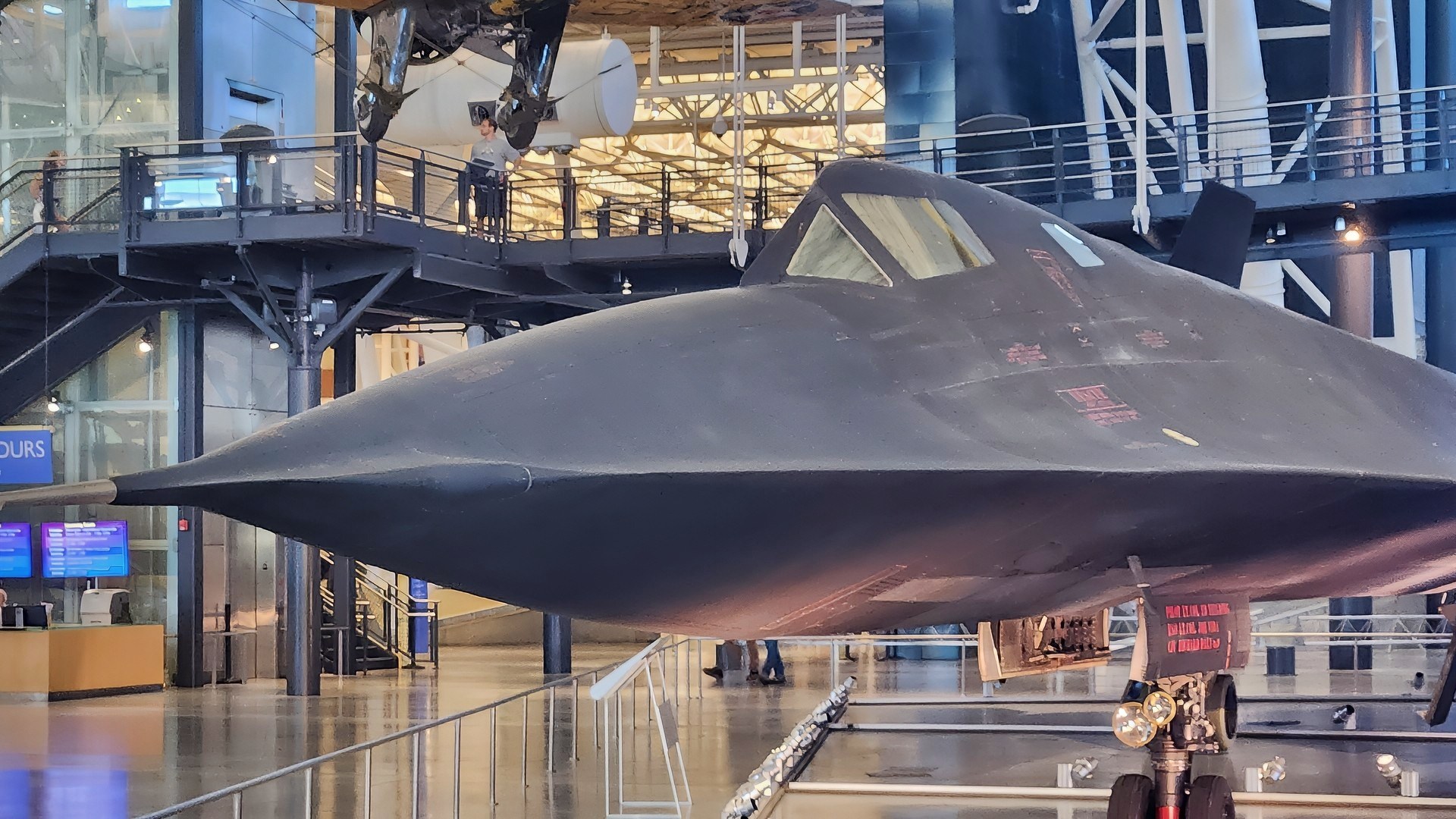
The SR-71 Blackbird is an iconic Cold War-era aircraft.
Designed by Lockheed’s infamous Skunk Works division, the aircraft was intended to replace the slower U-2 spy plane and reach Mach 3 speeds.
To reach such high speeds, however, the engineers at Lockheed had to implement some insane techniques to enable the aircraft to maintain sustained supersonic flight.
From the engine frame down to the fuel tanks, every aspect of the Blackbird had to be meticulously designed in order to ensure the best flight performance.
An Aircraft That Leaks Fuel Intentionally?
One detail about the SR-71 that often surprises people is that the aircraft frequently leaked JP-7 fuel while sitting on the ground. This might seem like a flaw or oversight, but it is actually a direct result of the aircraft’s design requirements.
The root cause of this lies in a phenomenon called thermal expansion.
When the SR-71 flies at Mach 3, the intense heat generated by friction causes the aircraft’s structure to expand. The Blackbird can grow several inches in length during flight, and its panels, seams, and joints tighten as they heat up. This expansion is not incidental but purely the result of physics, and the aircraft was designed to operate optimally under those high-temperature conditions.
Because the structure is intended to fit tightly when heated and expanded, it is necessarily looser when cold on the ground. At ambient temperatures, small gaps exist between panels and within the fuel system.
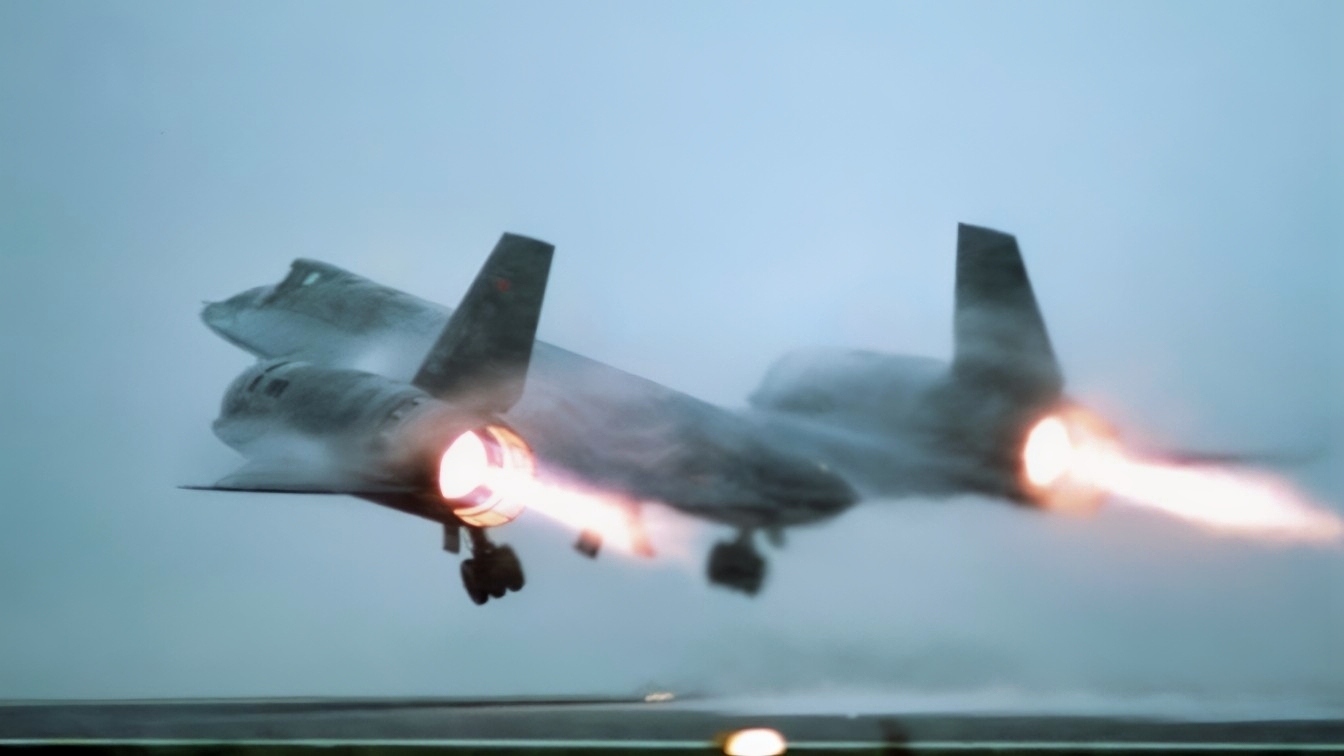
SR-71 Blackbird During the Cold War. Image Credit: Creative Commons.
These gaps allow fuel to seep out, leading to the fuel leaks often observed when the aircraft is parked. Rather than indicating poor construction, this behavior reflects a deliberate compromise.
The engineers at Skunk Works accepted that the aircraft would not be perfectly sealed at low temperatures, in order to ensure it would perform reliably at extreme speeds and temperatures.
The Genius Engineering of the SR-72 Blackbird
Unlike many aircraft that use separate, self-contained fuel tanks, the SR-71’s fuel system is integrated into its structure. The wings and fuselage themselves form the tanks, and these areas are sealed using specialized sealants.
These sealants are most effective when the aircraft is hot, as the heat causes them to expand and fill any gaps. When the aircraft is cold, however, the sealant contracts, reducing its effectiveness and allowing small amounts of fuel to escape.
Once the aircraft takes off and accelerates to high speed, the rising temperatures cause the structure and sealant to expand, sealing the tanks and stopping the leaks.
But wait! One might say, doesn’t that mean that the Blackbird would take off for a flight mission without a full fuel tank? The answer to that question is yes, the aircraft never has a full fuel tank on the ground.
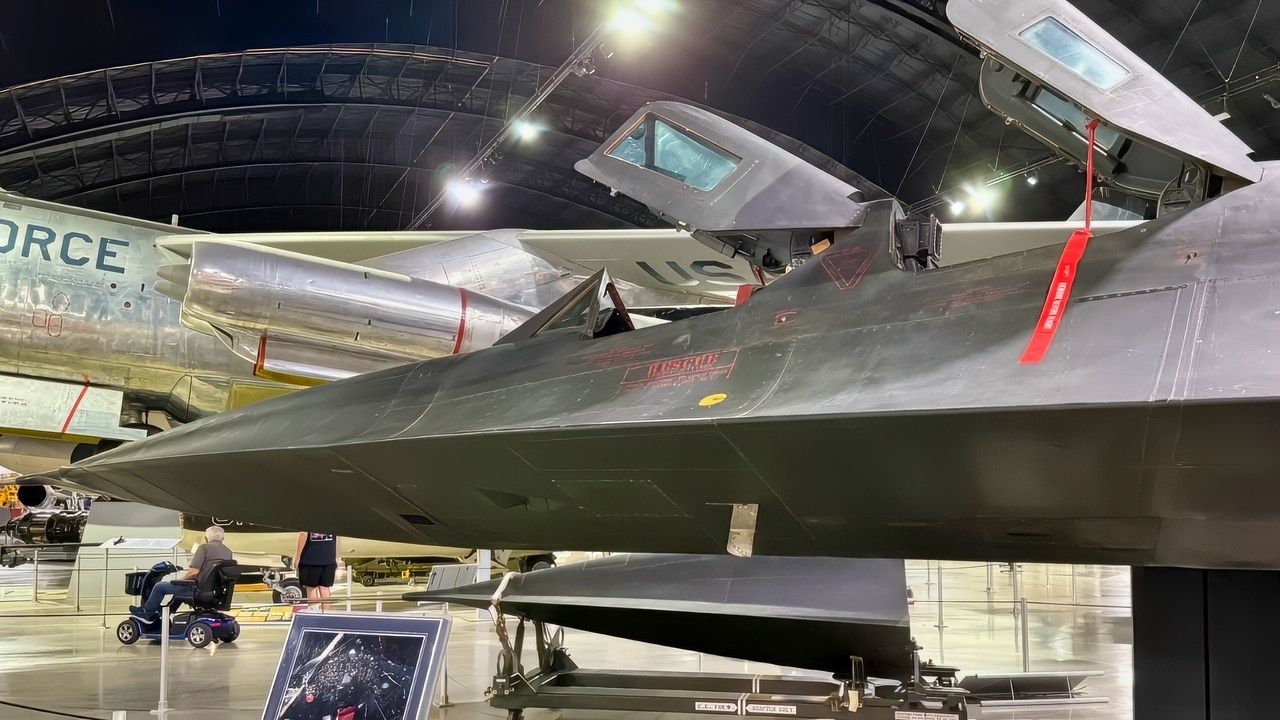
SR-71 Blackbird at USAF Museum July 2025. Image Credit: National Security Journal.
However, Lockheed and the Air Force developed workarounds for this problem.
Typically, the SR-71 would not be fully fueled before takeoff. Instead, it would depart with a partial fuel load and then rendezvous with a tanker aircraft shortly after takeoff. By the time aerial refueling was completed, the aircraft had already begun to warm up and expand, reducing fuel leakage and ensuring that the tanks could hold a full load efficiently.
The Aircraft That Can Never Be Replicated
Every aspect of the SR-71 was meticulously designed in order to maximize its flight performance. Approximately 85 percent of the aircraft’s structure was made from titanium, chosen for its strength and ability to withstand high temperatures.
At Mach 3, air friction heats the aircraft’s skin to extreme levels, often exceeding 500 degrees Fahrenheit in certain areas.
Conventional materials like aluminum would soften and lose structural integrity under such conditions, but titanium retains its strength even at elevated temperatures. However, working with titanium in the 1960s posed huge challenges.

SR-71 Blackbird. Image Credit: Creative Commons.
It was difficult to machine, required specialized tools, and demanded entirely new manufacturing techniques, all of which added complexity to the aircraft’s design and production.
The SR-71’s aerodynamic design was equally remarkable. Its long, sleek fuselage, paired with distinctive chines along the sides, contributed to both lift and directional stability at high speeds.
These Chines also had the added benefit of reducing radar visibility, giving the SR-71 some early stealth-like qualities.
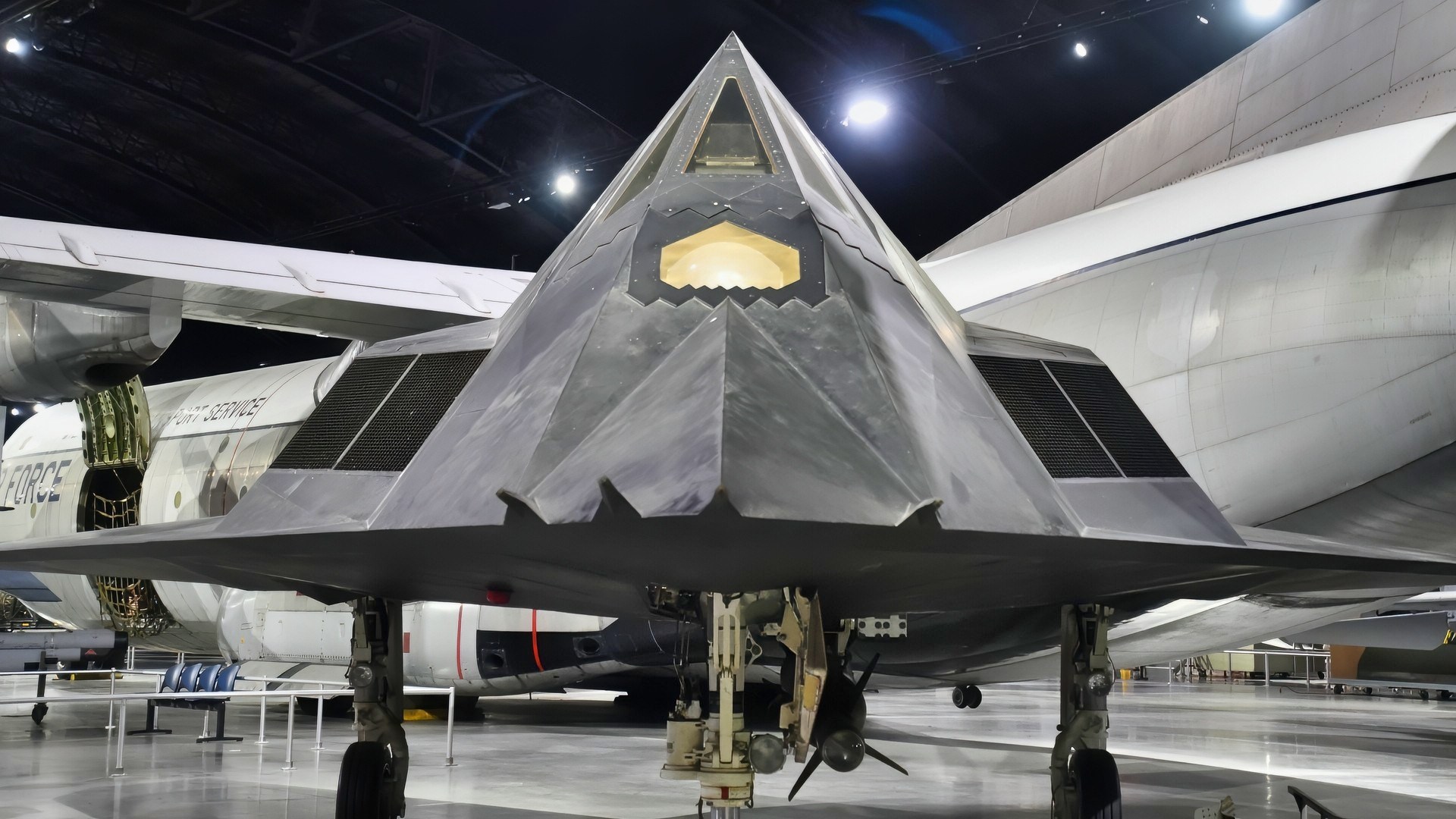
F-117A Nighthawk Stealth Fighter in Museum. Image Credit: Creative Commons.
Although not invisible to radar, it was harder to detect and track than many contemporary aircraft.
The design integrated the fuselage and wings in a way that improved efficiency and performance across a wide speed range, particularly at the extreme end where the aircraft spent most of its missions.
How the Blackbird Reached Mach 3+
Powering the SR-71 were two Pratt & Whitney J58 engines, which were unlike typical jet engines. At lower speeds, these engines operated as turbojets, but as speed increased, they transitioned into a hybrid mode resembling ramjet operation.
At high Mach numbers, a significant portion of the airflow bypassed the engine core, thereby contributing directly to thrust. This system allowed the SR-71 to maintain sustained speeds above Mach 3.
The engines also produced enormous heat, which required specialized fuel and systems to manage. The aircraft used JP-7 fuel, a type of jet fuel developed specifically for the SR-71. JP-7 had a very high flash point, making it much less volatile than standard jet fuel and suitable for the high-temperature environment in which the aircraft operated.
About the Author: Isaac Seitz
Isaac Seitz, a Defense Columnist, graduated from Patrick Henry College’s Strategic Intelligence and National Security program. He has also studied Russian at Middlebury Language Schools and has worked as an intelligence Analyst in the private sector.


