


Key Points and Summary: China holds approximately 1.4 billion barrels of oil in its Strategic Petroleum Reserve — the largest in the world. The U.S. SPR is now below 375 million barrels and is dropping by 10 to 18 million barrels per week, according to various analyses. Most experts estimate the SPR needs to hold 500 to 700 million barrels to remain effective in mitigating short-term energy disruptions in a country the size of the United States.
-Gerald Ford created the SPR in 1975 after the 1973-74 Arab oil embargo.
-The last shipment of oil from the Strait of Hormuz bound for the U.S. landed in mid-April. Senior National Security Editor Brandon Weichert argues that shortages could begin around July 4.
The Great Gasoline Crisis of 2026?
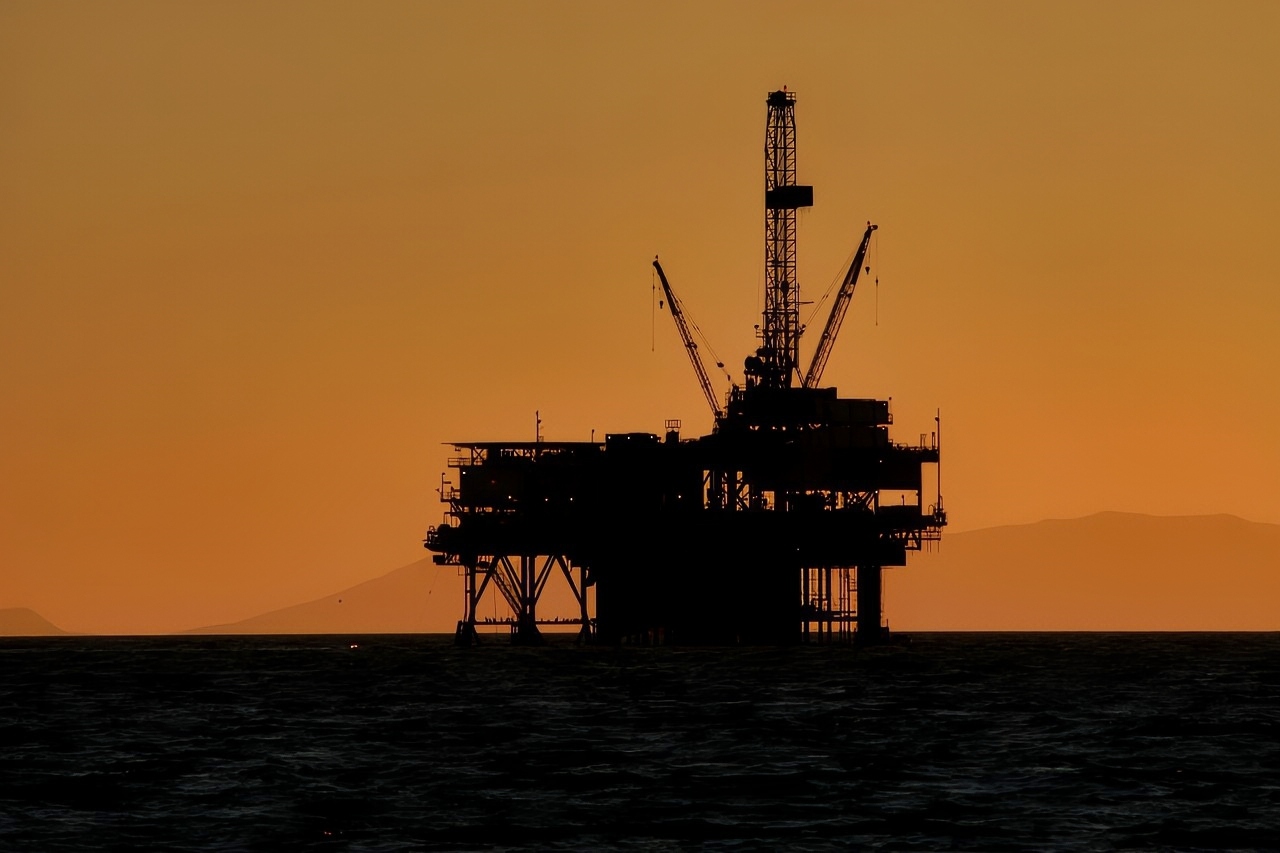
Oil Platform. Image Credit: Creative Commons.
America’s Strategic Petroleum Reserve (SPR) is the second-largest in the world, behind the massive Chinese SPR, which holds around 1.4 billion barrels. The United States’ SPR was around 400 million barrels.
The Americans have long been drawing down their own, not to ameliorate an energy crisis but to help politicians keep oil prices low. China has been slow to do so.
Former President Joe Biden did this infamously in 2022 to “address the market supply disruption caused by Russia’s full-scale invasion of Ukraine” and “help lower energy costs” for Americans (meaning Biden was trying to reduce the price at the pump for most Americans a month before the 2022 Midterm elections).
President Donald Trump is doing the same thing with the SPR during the 2026 Midterms.
Unlike when Biden did it, though, there is an actual energy crisis shaping up globally.
However, it is entirely a crisis of America’s, specifically President Donald Trump’s, own making.
When he ran for reelection in 2024, President Trump vowed to restore the precariously declining US Strategic Petroleum Reserve that his predecessor, Joe Biden, had irresponsibly drained.

Generic Oil Tanker Image. Image Credit: Creative Commons.
In fact, most presidents since the SPR’s creation have irresponsibly drained the reserve for short-term political gain.
That’s not what the SPR was for. It was a wartime reserve.
Why the SPR Was Created in the First Place
The SPR was created in 1975 by President Gerald R. Ford. Back then, the country had just experienced the agonizing 1973-74 Arab oil embargo, which caused massive energy shortages and economic shockwaves across the United States. The idea was that the US government should keep a sizable amount of oil in reserve, to be released only under similar emergency conditions, such as those related to a natural disaster or war.
Most experts estimate that, for the SPR to be effective in mitigating short-term energy disruptions in a country as large as the United States, roughly 500-700 million barrels of oil should be held in the SPR. This number would allow the SPR to maintain its structural integrity while handling market shocks and fulfilling international obligations. An SPR containing 500-700 million barrels allows the US to pull 4.4 million barrels per day for 90 days without rapid depletion.
Sadly, the SPR has sat well below these optimal numbers for years. Now, with Trump’s poorly executed Iran War, the US stands to lose its SPR before the really painful disruptions resulting from this ongoing conflict hit us.
The Strait of Hormuz Crisis Is Already Here
Because of that ill-advised war, Iran has successfully closed down the Strait of Hormuz, through which 20 percent of the world’s oil passes and 18 percent of the world’s natural gas moves. One-third of the world’s agricultural supplies, notably fertilizer and other important commodities, go through the Strait of Hormuz. The war with Iran has effectively stopped the flow of these essential supplies for months.
The Trump administration has no solution to this crisis.

Navy Aircraft Carrier At Sea. Image Credit: Creative Commons.
Their only real attempt at resolving the Strait of Hormuz closure was to enact an American counter-blockade of the Strait. That wasn’t a solution, though. It just compounded the problems for the world that depends on daily, unimpeded access to the Strait of Hormuz.
Contrary to what the United States government and the press would have you believe, the US economy is far more exposed to this slowly unfolding catastrophe.
America Is Burning Through Its Oil Stockpile
Hence, why the Trump administration is feverishly drawing down between 10 million and 17.8 million barrels per week from America’s SPR (depending on which analysis you prefer). In any event, these numbers represent the largest weekly drawdowns since the SPR came into existence. That brought the overall stockpile down to around 375 million barrels.
Oh, and don’t forget that the United States is also selling parts of its SPR to foreigners to help them endure the oil shocks caused by Trump’s war. Again, the SPR was intended specifically for Americans in the United States during a time of crisis.
Meanwhile, energy analysts and prominent oil industry leaders in the United States are warning that we are reaching “tank bottom” on America’s declining reserves.
The last shipment of oil from the Strait of Hormuz bound for the United States landed here around mid-April. If the war continues, specifically if the Strait of Hormuz remains locked down, the United States will start to see shortages around the weekend of July Fourth, ironically, the 250th anniversary of the founding of the United States.
How’s that for an anniversary present?
America’s Energy Independence Is a Myth
At its core, the United States has all the energy beneath the North American soil and surrounding waters it could want.

The world’s largest aircraft carrier, USS Gerald R. Ford (CVN 78), sails in the Atlantic Ocean, July 4, 2025. Gerald R. Ford, a first-in-class aircraft carrier and deployed flagship of Carrier Strike Group Twelve, incorporates modern technology, innovative shipbuilding designs, and best practices from legacy aircraft
carriers to increase the U.S. Navy’s capacity to underpin American security and economic prosperity, deter adversaries, and project power on a global scale through sustained operations at sea. (U.S. Navy photo by Mass Communication Specialist 2nd Class Tajh Payne)
It’s just that the oil and natural gas industry has not maximized domestic production. The US has not built a new oil refinery since the late 1970s. The lack of new refineries in the United States since the 1970s can be explained in part by onerous environmental regulations and corporate risk aversion.
But the more interesting story is the kind of crude oil that America produces. The US exports massive amounts of its own oil, known as “light shale oil,” because its older American refineries are not optimized to process it. So, the US must import heavier crude from neighboring Canada, nearby Venezuela, and even the Middle East. Before the Iran War, in fact, the United States–even though it sits atop bountiful sources of raw energy–was still a net oil importer.
Energy analyst Chris Martenson made a stunning statement to the popular podcaster Mario Nawfal: the only reason the US recently became a net oil exporter was that it began selling its dwindling strategic reserves globally. Martenson frames this as “America going into the principal balance in our bank account.”
The Economic Consequences Could Be Devastating
The Trump administration is sacrificing long-term strategic stability for short-term market stabilization. But that’s the equivalent of putting a Band-Aid on a bullet wound. It might slow some of the bleeding, but it doesn’t stop it. And once that Band-Aid falls off (and it will), the blood starts gushing out once more, and the patient will die due to blood loss.
What’s more, the market is barely stabilizing from the excessive amounts of oil Trump pulled from the SPR. For instance, oil spiked to more than $101 per barrel, bringing gas prices at the pump in the United States to nearly $5 per gallon.
Once the Trump administration drains the SPR sufficiently, with the war still on–and the Strait of Hormuz still closed–these temporary measures will stop working. Prices will go stratospheric, the economy will contract, inflation will spike, and the Federal Reserve will likely raise interest rates. It’s a textbook catastrophe facing the American people.
What Happens When the SPR Runs Out?
When the SPR runs out of oil, setting aside the painful price at the pump for us ordinary people, the diesel fuel shortages become dangerous for the whole country. That’s because our agriculture, mining, and even military logistics all rely upon diesel fuel. There’s no buffer anymore to stabilize panic over rising oil prices.
We’re talking about the price of oil per barrel on the market going to $200 per barrel or higher.
We’re also talking, in this scenario, about physical shortages leading to gas lines. Rolling blackouts will occur, as the United States’ energy grid must prioritize how to allocate dwindling energy supplies. Trucking slowdowns, leading to food disruptions. Airline disruptions and likely a collapse of the tourism industry (which will prove fatal for states like Florida).
If the situation persists, the political and social fabric of the United States would become undone.
America cannot Print Its Way Out of an Energy Crisis
Because this impending energy crisis, resulting from the inconclusiveness of the Iran War, would be physical, American financial and political elites would find their toolbox for responding to such a crisis limited. This crisis would not be another 2008 financial crisis or pandemic crisis.
Elites ended those crises by printing money, expanding debt, and engaging in what many saw as media manipulation. In this crisis, one cannot simply print oil and natural gas into existence. You can’t paper over a massive energy crisis in the United States with liquidity injections. You can only endure.
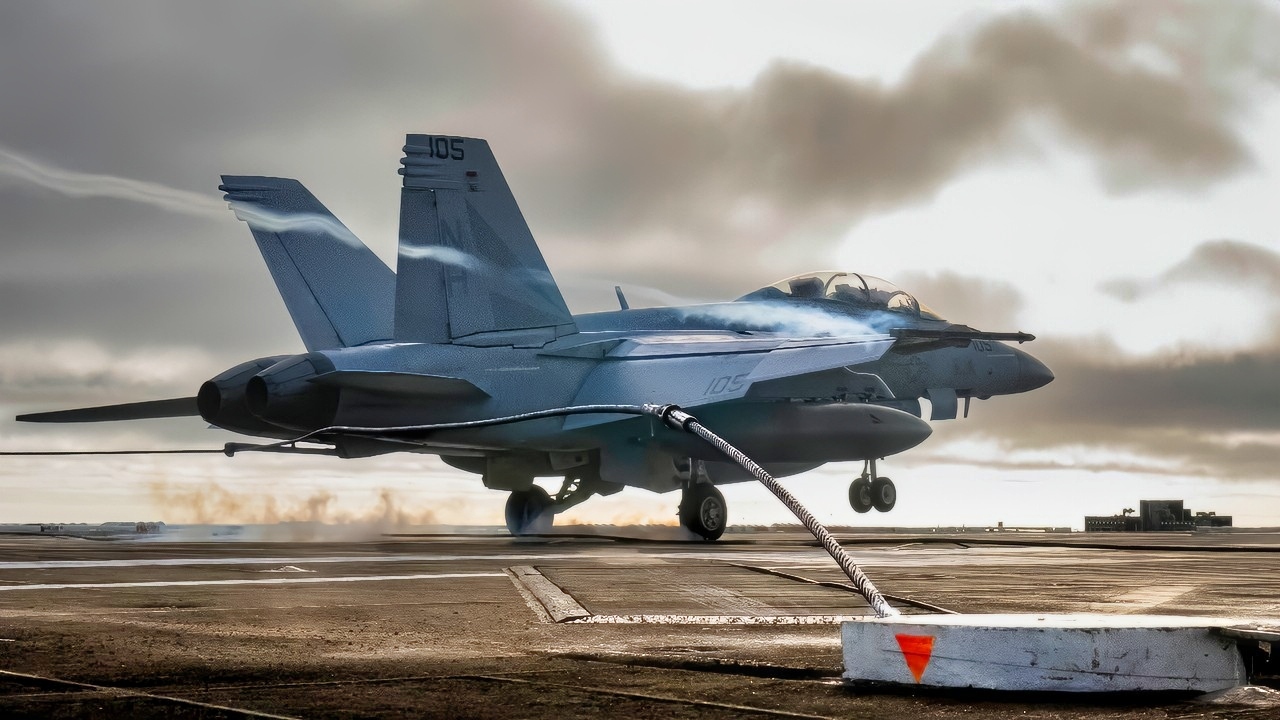
A U.S. Navy F/A-18F Super Hornet, assigned to the “Black Knights” of Strike Fighter Squadron (VFA) 154, lands on the flight deck of Nimitz-class aircraft carrier USS Theodore Roosevelt (CVN 71), July 24, 2025. Theodore Roosevelt, flagship of Carrier Strike Group (CSG) 9, is underway conducting exercises to bolster strike group readiness and capability in the U.S. 3rd Fleet area of operations. (U.S. Navy photo by Mass Communication Specialist 3rd Class Aaron Haro Gonzalez)
And America’s threshold for endurance is low (and depleting rapidly before our eyes).
China & Russia Are Better Positioned for the Crisis Ahead
As America depletes its SPR and has no viable replacements, US rivals in Moscow and Beijing are increasingly sitting pretty. Russia has immense domestic energy production that it sells globally, and it has continued to do so even under Western sanctions since 2014.
Meanwhile, China, as noted above, sits atop the world’s largest SPR, and Beijing has not tapped into that supply to the extent Americans have drained theirs. With the world entering the age of scarcity (after enjoying the era of abundance), those nations with the greatest stockpiles of essentials, the states that can outlast the resource scarcity of their rivals, will dictate the future.
The Iran War Could Mark the End of American Superpower Status
What’s coming to America if the Iran War persists is not just an inconvenient energy crisis like what occurred in the 1970s. It’s the trigger for a fundamental reorganization of a society that has become addicted to cheap energy, readily available resources, and abundance.
Unless the White House can end the war now and reopen the Strait of Hormuz immediately, the collapse of the United States as a global superpower is assured.
About the Author: Brandon J. Weichert
Brandon J. Weichert is Senior National Security Editor. Recently, Weichert became the editor of the “NatSec Guy” section at Emerald. TV. He was previously the senior national security editor at The National Interest. Weichert hosts The National Security Hour on iHeartRadio, where he discusses national security policy every Wednesday at 8 p.m. Eastern. He hosts a companion show on Rumble entitled “National Security Talk.” Weichert consults regularly with various government institutions and private organizations on geopolitical issues. His writings have appeared in numerous publications, among them Popular Mechanics, National Review, MSN, and The American Spectator. And his books include Winning Space: How America Remains a Superpower, Biohacked: China’s Race to Control Life, and The Shadow War: Iran’s Quest for Supremacy. Weichert’s newest book, A Disaster of Our Own Making: How the West Lost Ukraine, is available for purchase at any bookstore. Follow him via Twitter/X @WeTheBrandon. The opinions expressed in this article are those of the author.


