

Ukraine’s armed forces retook 116 square kilometers of Russian-occupied territory in April 2026 — the largest monthly rollback since Ukraine’s August 2024 incursion into Russia’s Kursk Oblast, according to the Institute for the Study of War. UK Senior Military Advisor Colonel Joby Rimmer told the Organization for Security and Cooperation in Europe on April 30 that Russia’s average monthly casualties in early 2026 exceeded 30,000. Finnish President Alexander Stubb said the combat loss ratio is now 7 to 8 Russian soldiers dying for every one Ukrainian. Russia’s average daily territorial gain has dropped to 2.9 square kilometers — slower than the Allies’ advance at the Battle of the Somme in WWI.
The Ukraine War Tide Might Be Turning

Su-34 Fullback. Creator: Vitaly V. Kuzmin. Credit: Vitaly V. Kuzmin
According to reports from the Washington, DC-based think-tank The Institute for the Study of War (ISW), Russia’s military has seen Ukraine’s armed forces reclaim 116 square kilometers of occupied territory in the month of April 2026 alone.
This is Ukraine’s largest monthly rollback or net gain of territory since August 2024.
The ISW attributes the reversal to Ukrainian counterattacks, mid-range strikes, communications disruptions, and seasonal mud conditions. The loss also underscores a broader slowdown in Russia’s offensive momentum.
Most estimates are that Russia will lose the initiative entirely by summer 2026.
The institute also confirmed that the territory Moscow’s forces lost control of is the largest territorial loss since Ukraine’s August 2024 incursion into Russia’s Kursk Oblast. This turn of events by Russian President Vladimir Putin’s military has come after months of progressively stalling offensive operations and an increasingly Ukrainian capability to conduct high-precision strikes on the front lines that have turned most terrain into “no-go” zones.
This reversal follows months of declining gains on the ground, culminating in a total shutdown of a successful Russian offensive in April, and the beginning of losing more territory than they might gain at any point along the front line.
Ukrainian forces have also destroyed considerable amounts of Russian vehicles and military equipment in this same time frame.

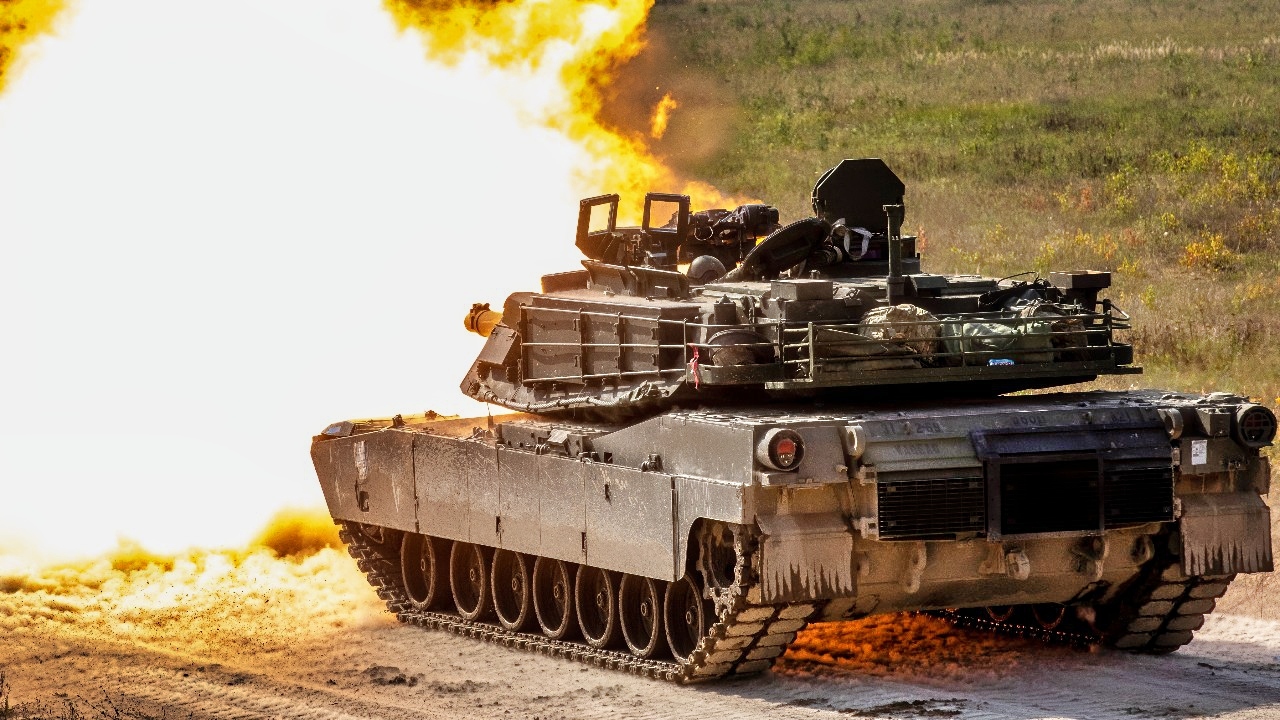
Ukraine Tanks. Image Credit: Creative Commons.
In a 30 April address to the Organization for Security and Cooperation in Europe (OSCE), the UK Senior Military Advisor, Colonel Joby Rimmer, stated that, if one looks at the war in Ukraine and employs evidence-based military analysis, the preponderance of the evidence indicates that Russia’s war in Ukraine is unsustainable. He describes the losses in human life and in financial terms as “catastrophic.”
“In 2026, Russian losses remain exceptionally high. Even during winter, when operations were partially constrained, average monthly casualties in early 2026 exceeded 30,000, only slightly below the 2025 monthly average of around 35,000,” his address reads.
In the last week, in a separate recent address by the Finnish President Alexander Stubb, he points out that “at the beginning of the year the combat losses ratio was 1 to 5. That means five Russian soldiers were dying for every one Ukrainian. Now it is seven or eight Russians dying for every one Ukrainian serviceman.”
Almost No Gains
These massive personnel losses and Russia’s worsening fiscal conditions have yielded only very limited military gains. What this shows is needed in assessing European security, said Rimmer, is “reinforcing the need for facts, not propaganda.”
Total Russian losses are 1.3 million thus far and are continuing to rise.
There is also a stark comparison between the operations of the Soviet military in WWII and how Moscow’s armed forces have performed in the Ukraine conflict. The Red Army marched against Nazi Germany’s military, which was the most powerful in all of Europe at the time, and pushed them back all the way to Berlin – around 1,800km. In contrast, even Moscow’s deepest forays into Ukraine extend only tens of kilometers.
Even in the Donetsk region of Ukraine, which was originally invaded in 2014, Russia’s furthermost advance is 60 kilometers – less than 6 kilometers per year. The pace of their advances into Ukraine averages 70 meters per day, which is slower than the Allied forces’ pace at the Battle of the Somme in WWI.
The ISW analysis cites several factors as reasons for such minimal Russian gains in the past and for last month’s on-the-ground losses. One is that Ukraine’s ground forces have become proficient in organizing sustained counterattacks that do not give Moscow the chance to re-form, re-group, and re-constitute units that are becoming depleted.
Loss of Initiative
Another is that Ukraine has been hitting Russian logistics and command hubs with very accurate drone and missile attacks.
Thirdly, Russia’s military lost much of its ability to coordinate its movements and to take advantage of any temporary weaknesses in Ukraine or other battlefield missteps when the Kremlin shut down access to the Telegram platform and its illegal Starlink terminals were disabled.
Adding in another element, Russia has seen most of its highly trained and specialized elite units decimated – these being the Spetsnaz special forces units and marines. This has now forced them to rely heavily on very poorly trained conscripts and mercenaries, many of whom come from third countries.
This has caused the Russians to lose any control of the initiative in Ukraine. These communications and manpower issues, combined with climatic factors, have also conspired to make large-scale Russian operations almost impossible.
From November 2025 to April 2026, Russian forces captured 1,443 square kilometers, compared with 2,368 square kilometers in the same period a year earlier. Average daily gains dropped from 9.76 square kilometers in early 2025 to just 2.9 in early 2026.
At different points, the Russians have shifted to infiltration tactics in highly contested areas, but these have yielded very little in the way of permanent territorial gains and are largely symbolic.
About the Author: Reuben F. Johnson
Reuben F. Johnson has thirty-six years of experience analyzing and reporting on foreign weapons systems, defense technologies, and international arms export policy. Johnson is the Director of Research at the Casimir Pulaski Foundation. He is also a survivor of the Russian invasion of Ukraine in February 2022. He worked for years in the American defense industry as a foreign technology analyst and later as a consultant for the U.S. Department of Defense, the Departments of the Navy and Air Force, and the governments of the United Kingdom and Australia. In 2022-2023, he won two awards in a row for his defense reporting. He holds a bachelor’s degree from DePauw University and a master’s degree from Miami University in Ohio, with a specialization in Soviet and Russian studies. He lives in Warsaw.


