


Captain John Monroe Hawk Smith was the executive officer of the U.S. Navy’s TOPGUN program — and one of the most lethal air-to-air aviators in the Navy across a 30-year career. In one storied TOPGUN engagement, Hawk flew a smaller, older Northrop F-5 Tiger so close beside a second F-5 that two Block 90 F-14 Tomcats with the powerful AWG-9 radar and television unit could paint only a single target. Hawk then dove for the deck, where the AWG-9’s Pulse-Doppler mode could not pick him up. The desert lizard paint scheme blended into the sand. He killed both Tomcats from the rear at the merge — beating his students with an aircraft cheaper, older and slower than theirs.
The F-14 Tomcat Was No Perfect Fighter
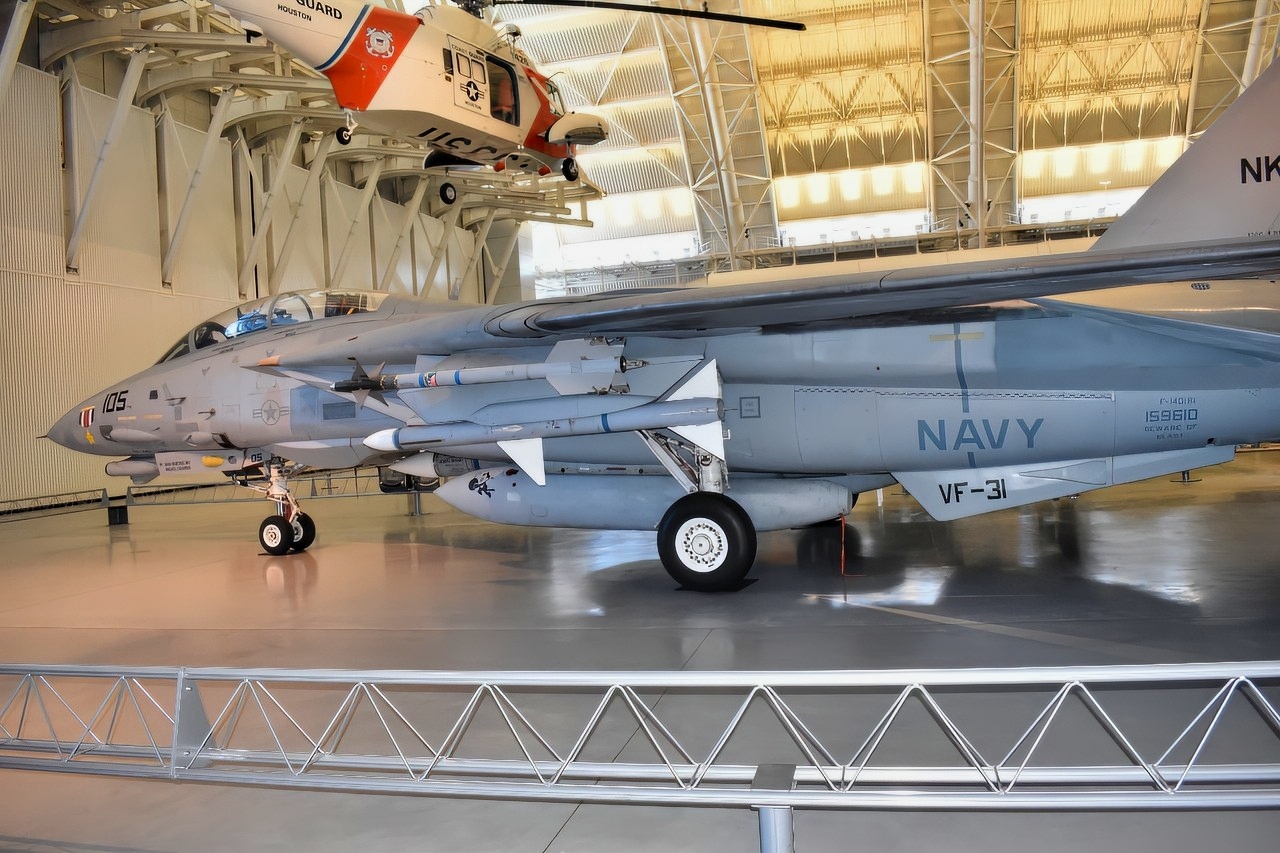
F-14 Tomcat at Steven F. Udvar-Hazy Center. Image by Brent M. Eastwood for National Security Journal.
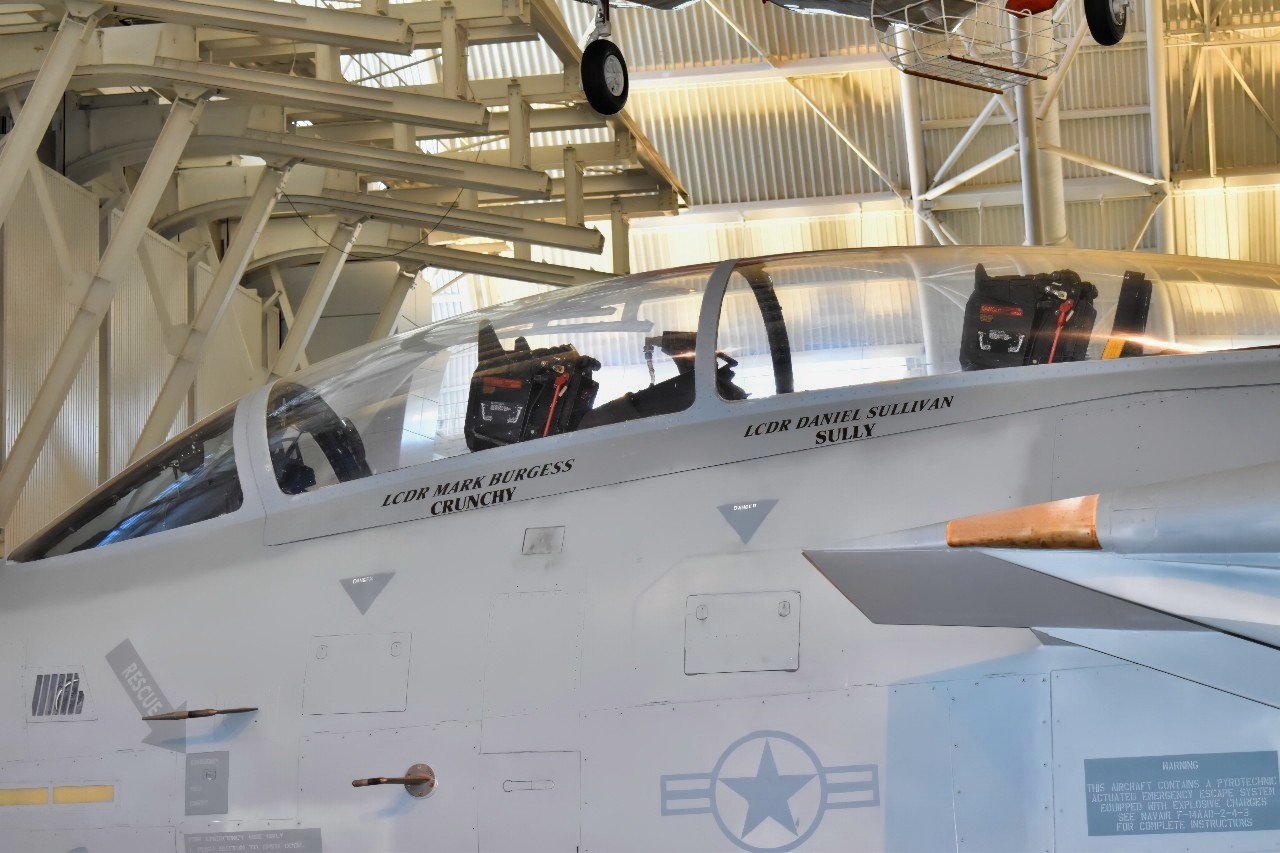
F-14 Cockpit at F-14 Tomcat at Steven F. Udvar-Hazy Center. Image taken on September 5, 2025, by National Security Journal.
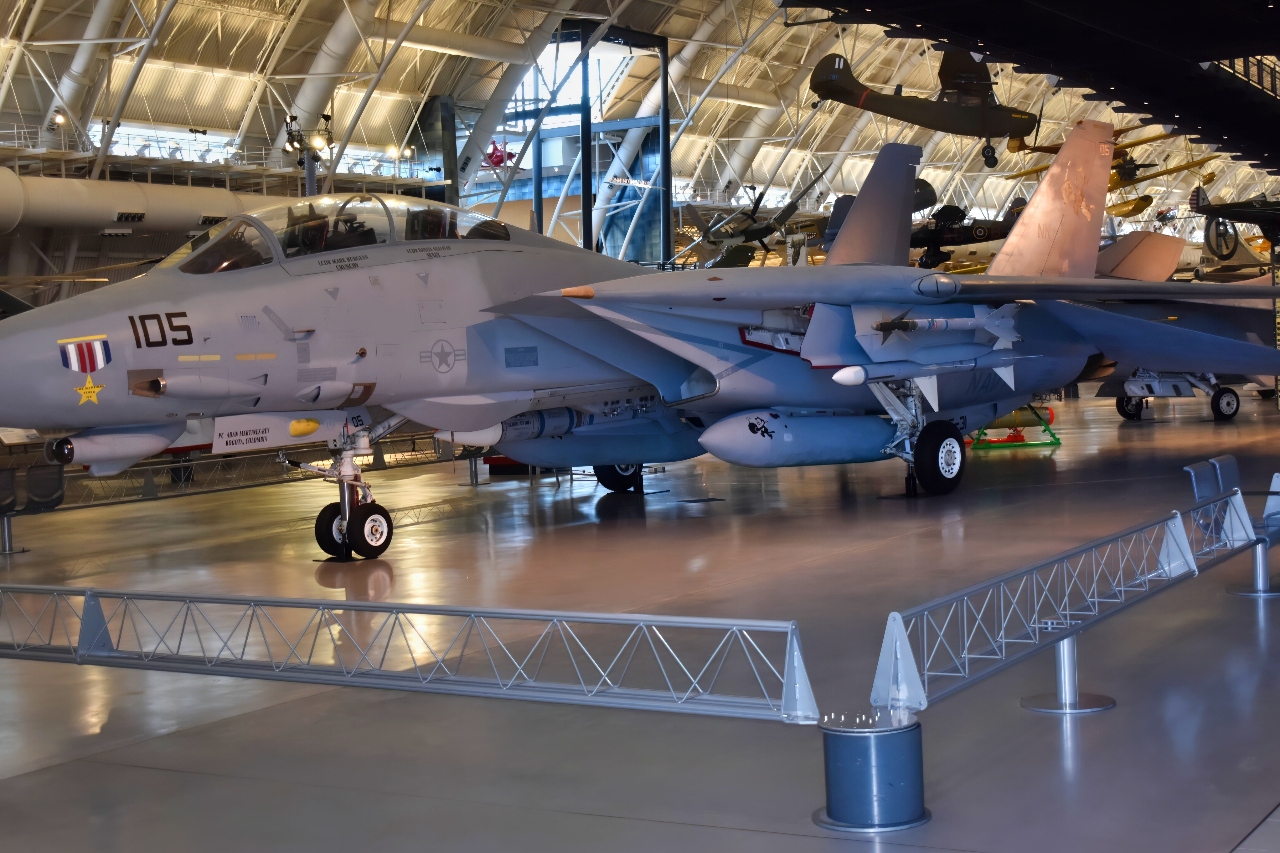
F-14D Tomcat. Image Taken By National Security Journal.
The Navy’s Top Gun aviators are some of the best pilots on Earth.
Amongst the Top Gun naval aviators, Captain John Monroe Smith, USN, call sign “Hawk,” was a legend. That is some pretty heady praise.
In one of the many stories about him on the Aviation Geek Club website, he’s described as thus: “Hawk was a legend in the fighter community. During his thirty-year career, he forged a reputation as a skilled and lethal aviator in air-to-air combat, a natural tactician, and a consummate leader. To many, he was one of the most essential pathfinders in the modernization of naval air warfare.”
Flying The Heck Out Of An F-5 At Top Gun
In this one particular piece by Navy Captain (ret) Donald Auten, he described Hawk, who was the XO of the Navy Top Gun program, as having just landed from a training flight in his F-5.
One of the Top Gun students, Joe “Hoser” Satrapa, was talking huge smack to Hawk about some upcoming flights.
“Yeah, I heard them whining about the restrictions, but hey, they enter the fight, we’re gonna kill ’em. Now that you’re here, we’re gonna kill you too! Wait ’til we nail you with our ‘Booker T. Washington shuffle.’ You won’t even see what hitchya!” Satrapa boomed.

F-5 Tiger II Fighter. Image Credit: Creative Commons.

F-5E Tiger II Fighter. Image Credit: Creative Commons.
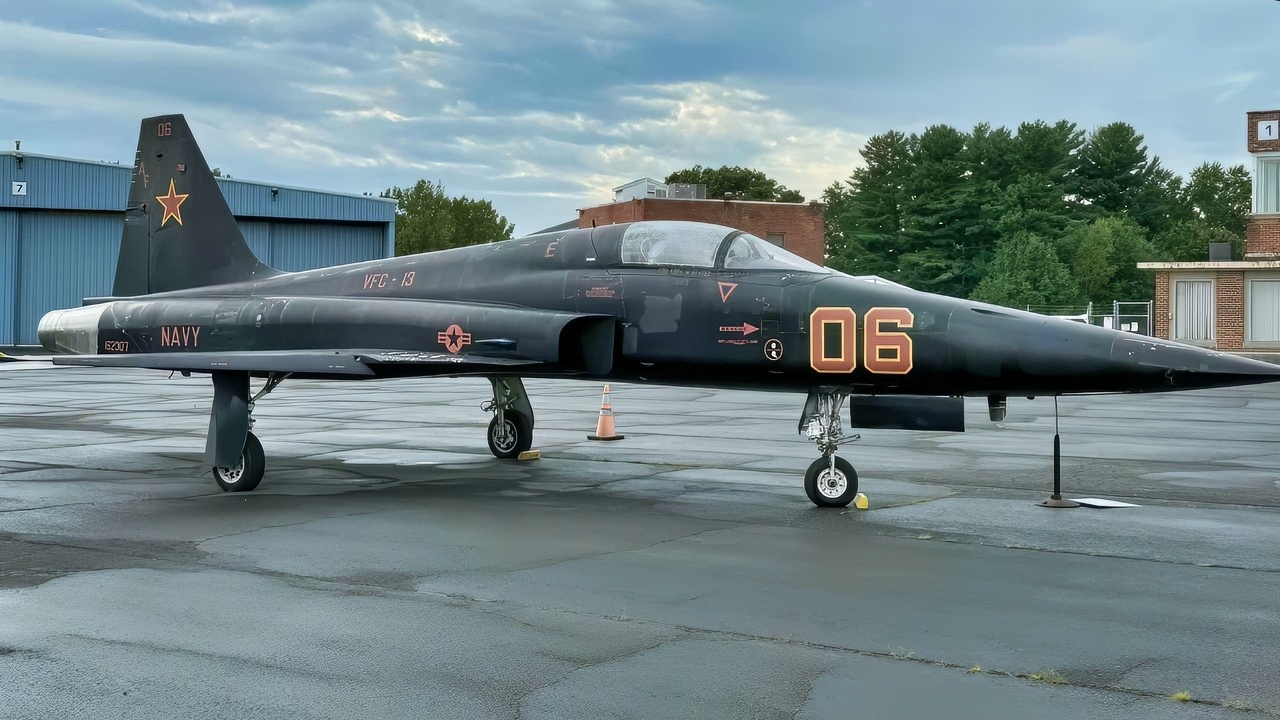
F-5 Fighter Photo by National Security Journal. Image Taken by Jack Buckby on August 24, 2025.
Hawk, however, wasn’t having any of it. “Hoser, you can bring on your ‘Booker T. Washington shuffle.’ Hell, Hoser, you can try your ‘T’ Berry shuffle or anything else that makes ya happy, but when you’re done screwin’ around, I’m gonna blow your *** away!”
Satrapa’s cockiness was perhaps warranted; the Block 90 F-14 Tomcats they were flying had set them up in a very advantageous position with their powerful AWG-9 radar and new television unit, which allowed them to gain the advantage before the F-5s could merge with them.
But Hawk had a plan in store for them.
Two Versus Two
Hawk and Jack “Magic” Lewis would be flying with the sun in their eyes, but to them, it didn’t matter, because he had a plan.
Click. “ TOPGUN two is on station, ready to play!”
“Roger, Hawk,” Hoser responded.
“We’ve got ninety degrees to go on the turn in.”
Hawk fell in behind and closely beside Magic. He knew that even the powerful AWG-9 radar couldn’t distinguish the two F-5s; to the Tomcats, they had only aggressor aircraft on the scope.
“Vandy one, the bogey is now twenty-three miles, twenty-five thousand two hundred feet, still at three hundred knots. I still only paint a single target.”
“Same here,” Ratso (Hoser’s RIO) acknowledged. “Only a single also. I’m still in search mode; looking low now.”
Diving For The Deck Away From Radar Coverage
Hawk knew that if he flew low, the Pulse-Doppler mode the Tomcats’ radar was operating in wouldn’t pick him up. After crossing at 8,000 feet, he pulled a 4G turn and headed toward the unsuspecting Tomcats.
They were still only picking up a single aircraft on their radar. At a closing speed of 750 knots, the two sides were only a mile from the merge. Hawk stayed low, and his lizard paint scheme against the desert floor blended perfectly with the sun-scorched sand and sagebrush.
Climbing, he kicked in his afterburners to get up to and behind Hoser. “Atoll Lima on Hoser!” Hawk announced. He had taken an infrared missile shot on the closest F-14, dead six o’clock and just inside a mile.
He had no idea which of the two Tomcats Hoser was in, but it was important that Hoser thought he was shot.
The F-5 Closed From Behind
Hoser still didn’t know where Hawk was and said he was traveling at 600 knots, believing that his airspeed would save him.
“How does six hundred and fifty knots sound, Hoser!” Hawk fired back.
“Yep, he’s back there, Hoser,” Hill Billy the second RIO confirmed.
A Missile, And Trying For A Gun “Kill”
After each side did some slick maneuvering and pulling some high-G turns, neither one getting an advantage, but as they were diving, nose down, the two pilots were approaching the hard deck, which they couldn’t deviate from, according to the Rules of Engagement (ROE).
As Hoser was close to getting into firing position, Hawk broke him the bad news.
“Hard deck, Hoser. Let’s knock it off!”
“Roger, knock it off!”
Auten wrote a book on Captain John Monroe “Hawk” Smith and his Navy career, “Roger Ball!” that is available on Amazon.
About the Author: Steve Balestrieri
Steve Balestrieri is a National Security Columnist. He served as a US Army Special Forces NCO and Warrant Officer. In addition to writing on defense, he covers the NFL for PatsFans.com and is a member of the Pro Football Writers of America (PFWA). His work was regularly featured in many military publications.


megiddo
May 23, 2026 at 4:09 pm
This article brings up the case of china pilot Li Chao, who singlehandedly took on two f-22 raptor jets and radar locked both of them.
Sometime in 2024, two f-22s entered Chinese airspace and Li was directed to intercept them.
(The US pilots thought they were invisible, not knowing Chinese satellites were watching them all the time.)
Li caught one of them Head-on, and as the other f-22 attempted to target Li’s formidable j-16 fighter, Li barrel-rolled over him, and then radar locked both jets after exiting his maneuver.
The f-22s were totally shocked and taken aback after the really nasty surprise, and immediately disengaged from the encounter.