


The F-14D Tomcat was the most capable fleet defense fighter the U.S. Navy ever flew off a carrier deck. Grumman’s proposal to make it dramatically better was called the Super Tomcat 21 — and it was, by most credible assessments of what Cold War aerospace engineering could produce, the carrier fighter the Navy probably should have built.
The Super Tomcat 21 Would Have Been Amazing: She Never Flew Anywhere
It would have supercruised at Mach 1.3 without afterburner. It would have carried more fuel, more weapons, and a longer-range radar than any other naval fighter in the world. It would have been built on a proven airframe using mostly off-the-shelf technology, at substantially lower program risk than any clean-sheet competitor.
Grumman pitched the idea to the Navy in the early 1990s, after the cancellation of the A-12 Avenger II stealth attack aircraft and the Naval Advanced Tactical Fighter program had left the U.S. Navy without a clear long-term carrier fighter plan.

YF-23 at Western Museum of Flight. Image Credit: Harry J. Kazianis/National Security Journal.
The Navy chose the F/A-18E/F Super Hornet instead.
The Super Tomcat 21 was never built. Twenty-five years later, with the F/A-XX still three months from contract decision and Chinese long-range anti-ship weapons forcing American carrier strike groups to stand further off contested coastlines than at any point in modern naval history, the decision to walk away from the ST21 looks increasingly like one of the biggest unforced errors in U.S. naval aviation procurement.
Here is what the program was, why the Navy wanted it, and why it never got built.
Why The Navy Needed Something Like The Super Tomcat 21
By the early 1990s, the U.S. Navy’s carrier fighter modernization plan had fallen apart in stages.
The original plan called for the Navy to procure a carrier-capable derivative of the Air Force’s Advanced Tactical Fighter — a navalized F-22 essentially, designated the Naval Advanced Tactical Fighter (NATF). That program was killed by the end of the Cold War. The collapse of the Soviet Union eroded the political case for a high-end stealth air superiority fighter at sea, and the unit cost projections for a navalized F-22 were running well past what the post-Cold War Navy could afford.
The fallback was the A-12 Avenger II — a stealthy, flying-wing carrier-based attack aircraft intended to replace the aging A-6 Intruder. The A-12 program collapsed in January 1991 under cost overruns, weight growth, and technical delays.

A-6 Intruder National Security Journal Photo. Taken on September 18, 2025.
By the end of 1991, the Navy had neither a new fighter program nor a new attack program. The A-6 Intruder was scheduled for retirement. The F-14A was aging out. The F-14D was already capped at 55 total airframes after Defense Secretary Dick Cheney cut production in 1989. The carrier air wing faced a substantial capability gap, and nobody had a coherent plan to fill it.
That gap was the Super Tomcat 21’s market opportunity.
What Grumman Actually Proposed
Grumman’s first pitch was modest. The Quick Strike upgrade would have added a LANTIRN-style infrared navigation and targeting pod, ground-attack modes for the F-14D’s existing APG-71 radar, and more hardpoints for standoff weapons, including the AGM-84E SLAM and AGM-88 HARM.
The Quick Strike was meant as an interim solution to give the existing F-14 fleet the precision strike capability that the canceled A-12 Avenger II was supposed to deliver. Per the Aviation Photojournal variant history, Congress did not consider the Quick Strike a sufficient upgrade to justify the program cost.
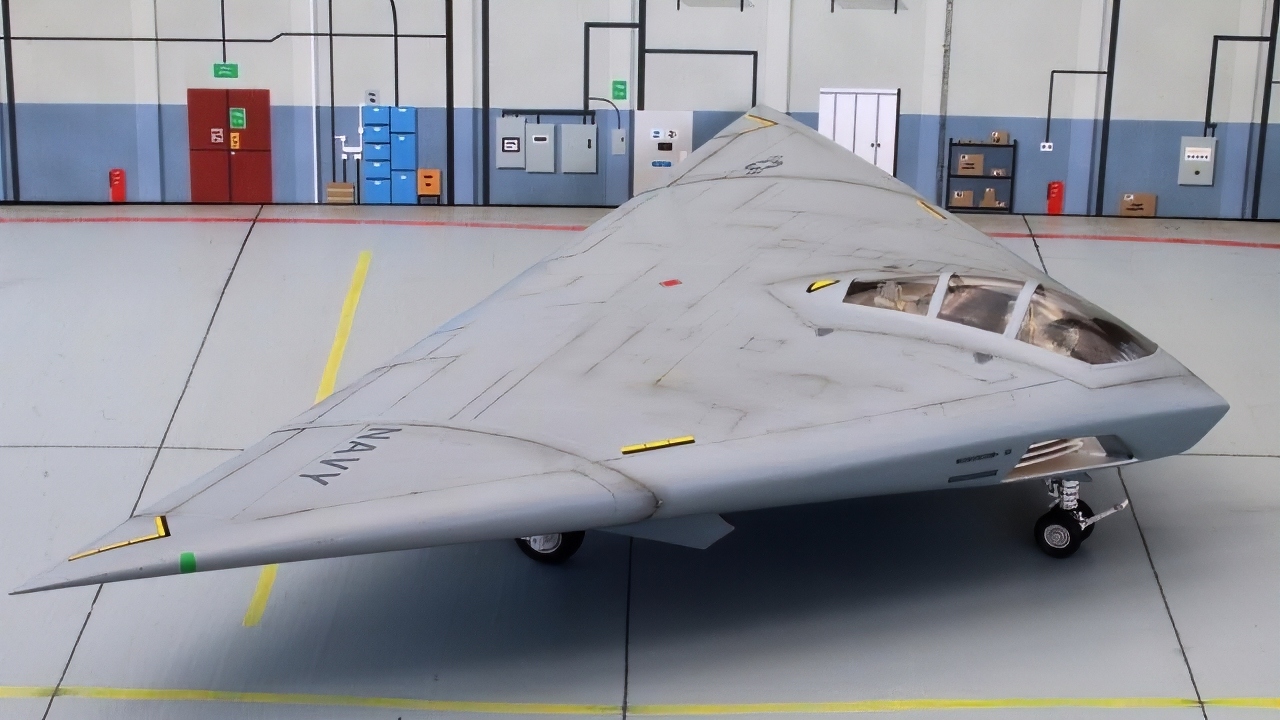
A-12 Avenger II Flying Dorito. Image Credit: Creative Commons.
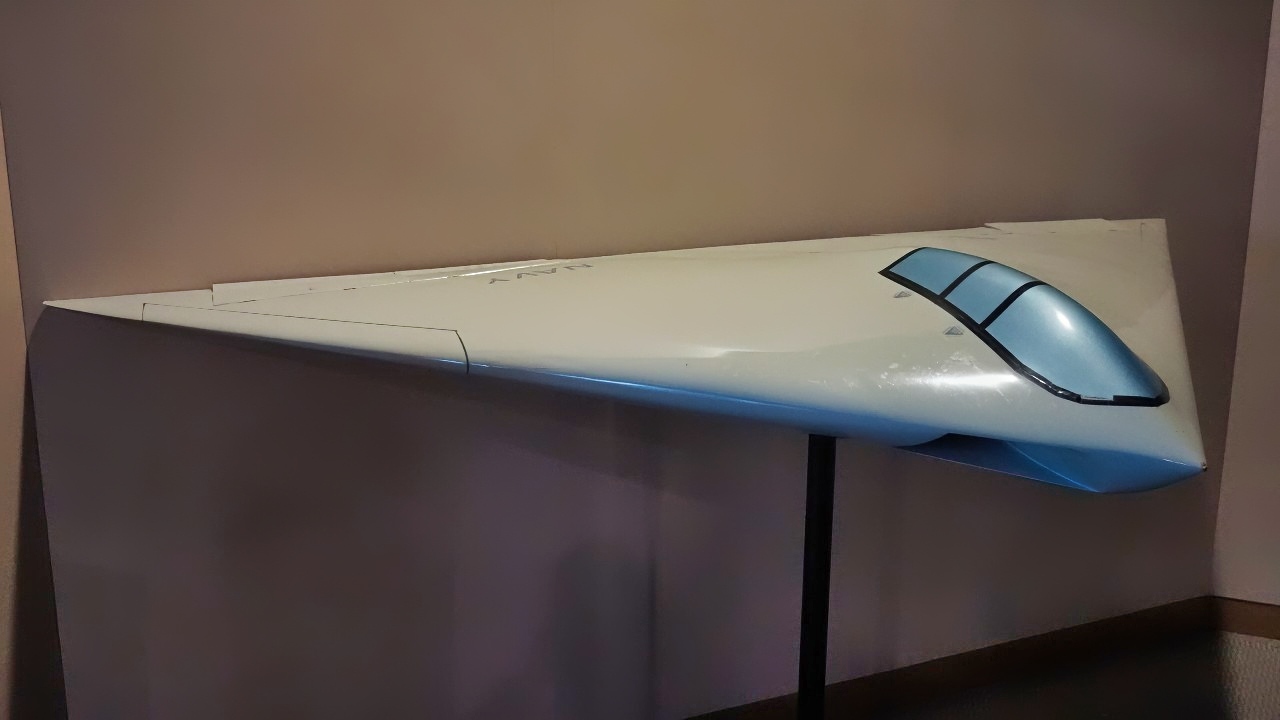
A-12 Avenger II Model. Image Credit: Creative Commons.
Grumman went bigger. The Super Tomcat 21 — “Super Tomcat for the 21st Century” — was a deep modernization built on the F-14D airframe but reworked across nearly every major system.
The headline upgrade was propulsion. The ST21 would have replaced the F110-GE-400 engines on the F-14D with new F110-GE-429s producing approximately 30,000 pounds of thrust each with afterburner. Per Simple Flying’s detailed analysis of why the program never happened, the new engines would have enabled supercruise at Mach 1.3 without afterburner — a capability very few aircraft can match even today, and one no other naval fighter on the planet possessed at the time.
The wing design was reworked to support the new performance regime. Enlarged leading-edge gloves would have added internal fuel capacity. Modified control surfaces would have improved takeoff performance and lowered landing approach speeds, easing carrier operations. Aerodynamic refinements were targeted at improving handling at supersonic speeds without compromising the F-14’s low-speed maneuverability.
The avionics package was a generational leap over even the F-14D. The ST21 was to receive an upgraded AN/APG-71 radar with substantially improved capability, plus forward-looking infrared sensors for enhanced targeting. A digital glass cockpit beyond what the F-14D already offered. Advanced electronic warfare suites. Satellite datalink capabilities for network-centric operations — a concept that was just emerging in the early 1990s and that the ST21 would have been one of the first American fighters designed to fully exploit.
Per the Aircraft Wiki variant history, the proposed Attack Super Tomcat 21 (AST-21) variant would have added an active electronically scanned array radar derived from the canceled A-12 program.
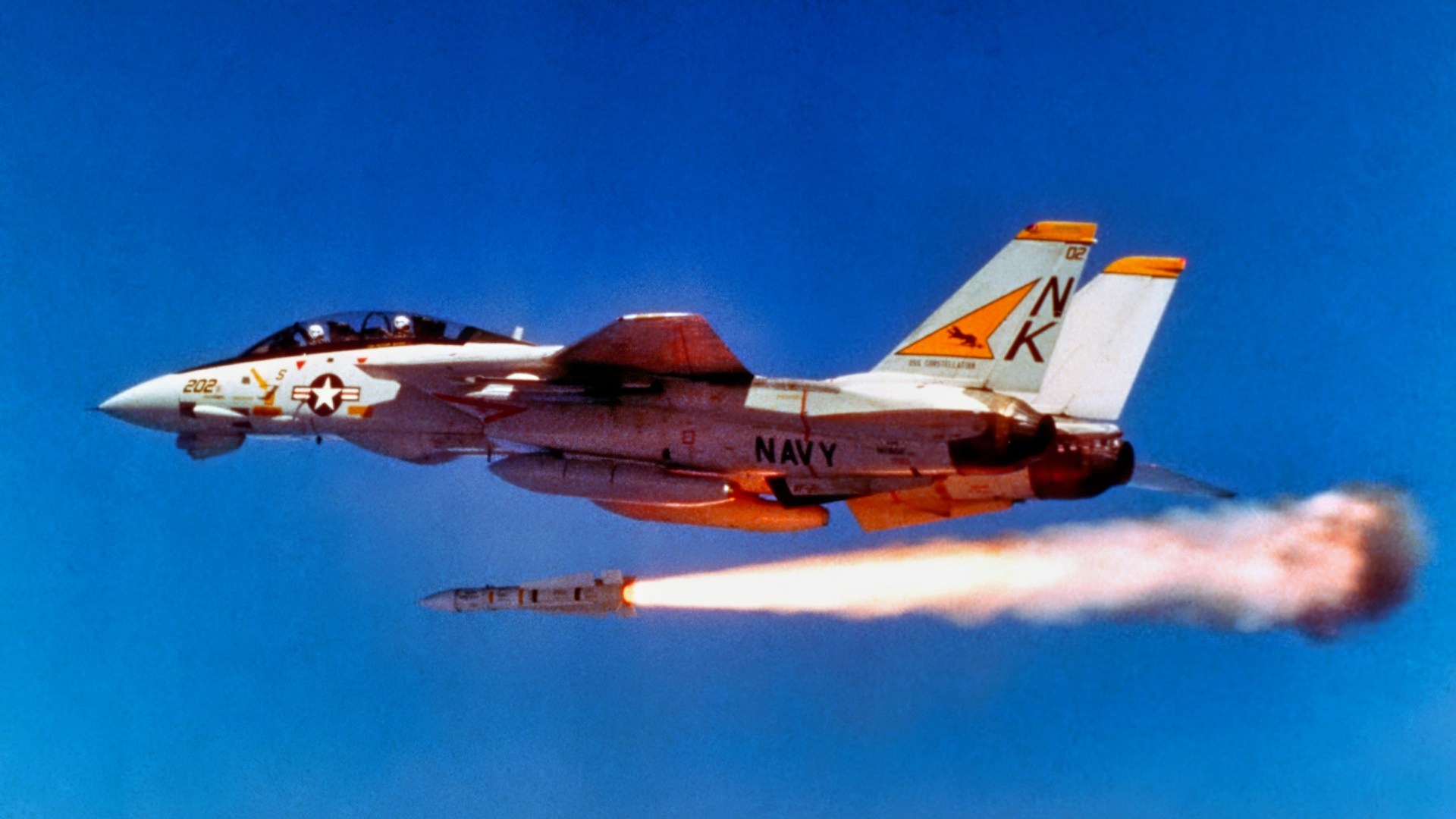
F-14 Tomcat Firing a Missile. Image Credit: Creative Commons.

Naval Air Station Oceana, Va. (Sept. 25, 2004) – An F-14D Tomcat assigned to the “Black Lions” of Fighter Squadron Two One Three (VF-213), conducts a high-speed pass at the conclusion of the tactical air power demonstration at the 2004 “In Pursuit of Liberty,” Naval Air Station Oceana Air Show. The demonstration showcased multiple F-14 Tomcats and F/A-18 Hornets displaying various maneuvers and simulated bomb and staffing passes in front of the crowd. The air show, held Sept. 24-26, showcased civilian and military aircraft from the Nation’s armed forces, which provided many flight demonstrations and static displays. U.S. Navy photo by Photographer’s Mate 2nd Class Daniel J. McLain (RELEASED)
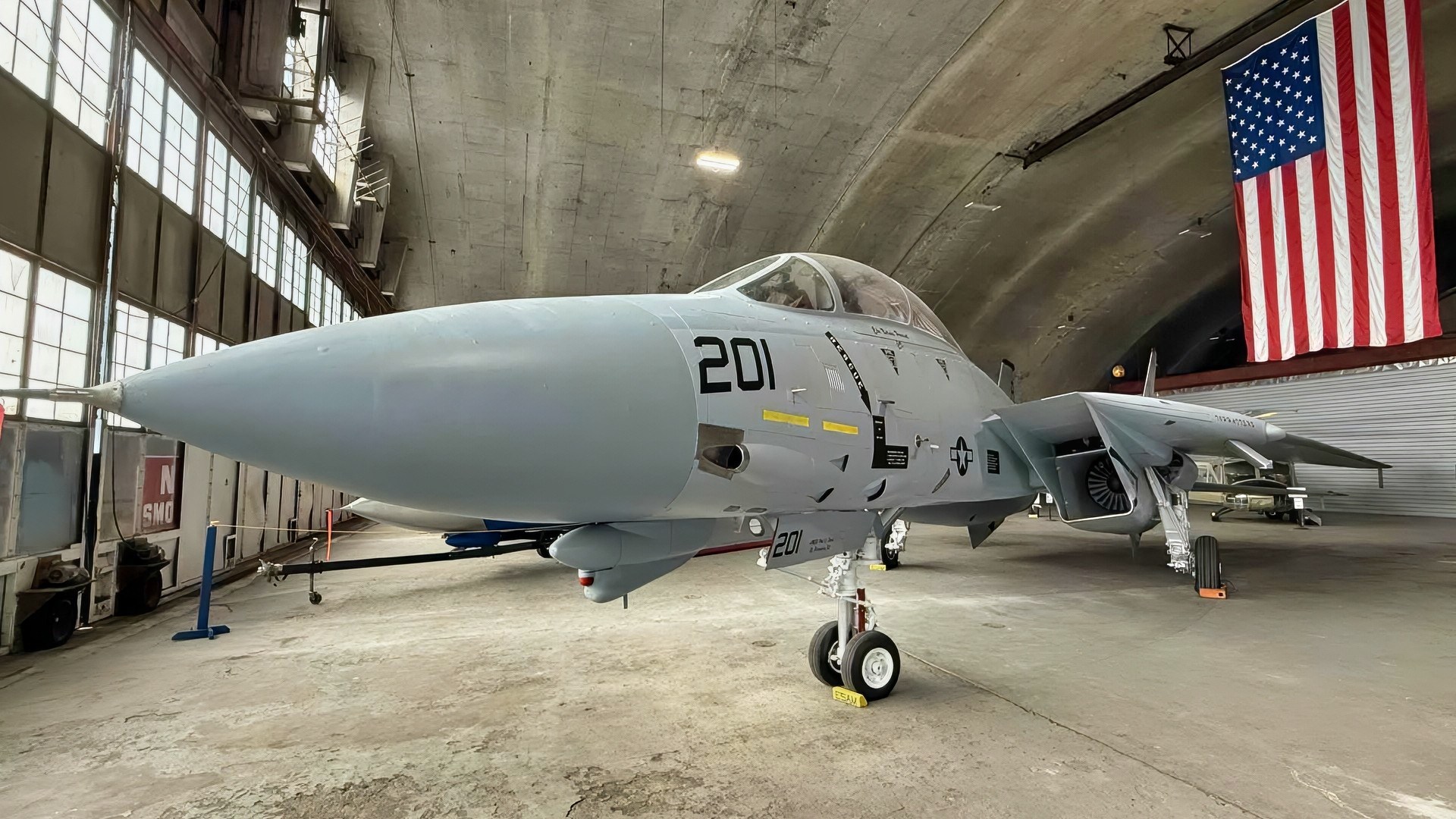
F-14 Tomcat in Hangar National Security Journal Photo.
The weapons fit included precision-guided munitions — JDAMs, laser-guided bombs, the AGM-84E SLAM, the AGM-88 HARM — alongside the existing AIM-54 Phoenix long-range air-to-air missiles and the new AIM-120 AMRAAM. The ST21 would have been a true multi-role fighter, capable of long-range fleet defense, precision strike, reconnaissance, and forward air control across a single airframe.
The proposed schedule was aggressive. Per the Aviation Geek Club analysis citing former Navy test pilot Kevin Mason, the ST21 “would have been faster, accelerated faster, carried more, had longer range and loiter time, and more bring-back of unexpended ordnance” than the F/A-18E/F Super Hornet that ultimately replaced it.
A further variant, the ASF-14 (Advanced Strike Fighter-14), was proposed as Grumman’s replacement for the NATF concept. The ASF-14 would have been a substantially redesigned aircraft incorporating technology from the ATF and Advanced Tactical Aircraft programs, including new engines and thrust vectoring. The proposed capability set was impressive, but the development cost approached that of a clean-sheet design, and the projected performance was not dramatically better than the ST21 itself.
What The ST21 Would Have Done
The strategic argument for the Super Tomcat 21 came down to range, payload, and time on station — three factors the F/A-18 Super Hornet has never fully matched and that have become increasingly important as Chinese anti-ship capability has matured.
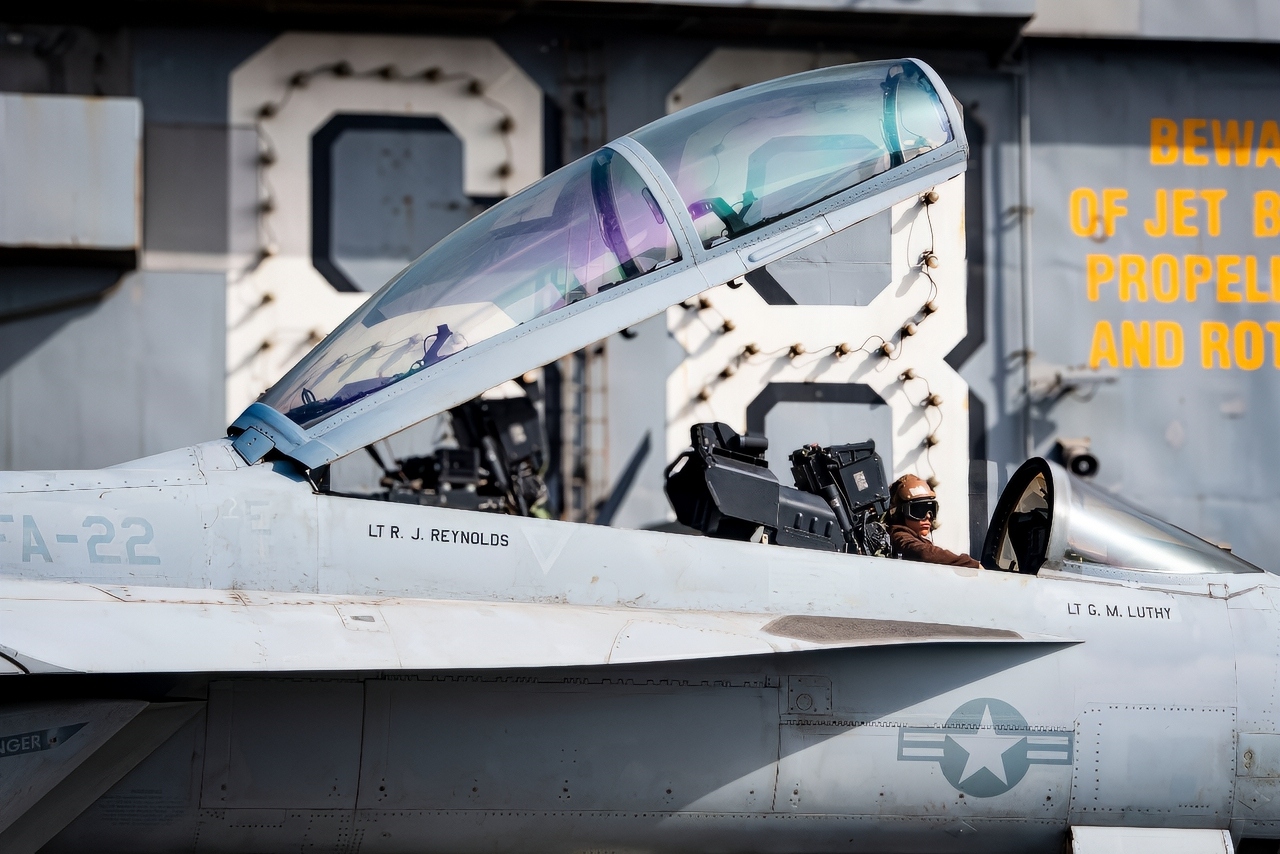
U.S. CENTRAL COMMAND AREA OF RESPONSIBILITY (July 22, 2025) An F/A-18F Super Hornet, attached to Strike Fighter Squadron (VFA) 22, taxis across the flight deck of the Nimitz-class aircraft carrier USS Nimitz (CVN 68) in the U.S. Central Command area of responsibility. (Official U.S. Navy photo)
A Super Tomcat 21 operating from a carrier deck 700 nautical miles from an enemy coast could have engaged the enemy coast with precision-guided munitions, maintained a combat air patrol against enemy fighters, and returned to the carrier with fuel and weapons margins. The Super Hornet, with a substantially shorter combat radius, cannot do that at the same distance. The F-35C adds stealth but does not match the Tomcat’s payload or unrefueled range.
Per the Defense Watch’s specifications profile on the F-14D family, the F-14D itself was already optimized for long-range fleet defense interception. The ST21 would have extended that capability into the strike mission set while keeping the long-range air-to-air engagement envelope intact. In an era where Chinese long-range anti-ship missiles — the YJ-21, the DF-21D, the DF-26 — are designed to threaten American carriers at ranges well beyond the F/A-18’s combat radius, the ST21’s projected combat radius is the capability the Navy has most obviously lost since the F-14’s retirement in 2006.
The two-crew configuration is the other genuine advantage that the ST21 would have retained. Per the AirFighters technical assessment of the F-14D platform, the two-crew workload distribution proved especially valuable during the F-14’s late-career precision strike missions in Operations Enduring Freedom and Iraqi Freedom — the pilot flying the aircraft, handling threats and refueling, while the Radar Intercept Officer managed sensors, weapons, and ground coordination.
The Super Hornet’s single-pilot configuration (in the F/A-18E) or two-crew configuration (in the F/A-18F) does not produce the same workload margin in extended strike missions.
Super Tomcat 21: Why It Never Happened
Five reasons explain why the Super Tomcat 21 program died.
The first was cost.
The early 1990s defense budget was contracting rapidly as the post-Cold War “peace dividend” reduced procurement budgets across every service. Per the Defense Feeds retrospective on F-14 retirement, the Navy’s calculus prioritized affordability and reliability over high-end performance.
The F/A-18 Super Hornet program offered a lower per-aircraft cost than the ST21, plus commonality with the existing F/A-18A/B/C/D fleet that the Navy already knew how to operate and maintain.
The second was maintenance complexity.
The original F-14’s variable-sweep wings were maintenance-intensive — substantial inspection and component-replacement requirements after every flight, plus structural stress accumulation that drove airframe life-cycle costs above what comparable fixed-wing fighters required.
Per Aircraft Wiki’s discussion of the F-14’s late-career maintenance burden, the platform required substantially more maintenance hours per flight hour than the Super Hornet. The ST21 inherited that complexity. The Super Hornet did not.
The third was the Iran problem.
Iran’s Imperial Air Force had taken delivery of 79 F-14As before the 1979 revolution. After the revolution, the Islamic Republic of Iran Air Force inherited the fleet and operated F-14s through the Iran-Iraq War and across subsequent decades.
Spare parts for any U.S. Navy F-14 fleet inevitably leaked into the Iranian supply chain through illicit procurement networks. Per the Naval Wiki retrospective on F-14 retirement, the U.S. government concluded by the mid-2000s that ending the F-14 program entirely — including destroying retired airframes rather than allowing them into surplus markets — was the most effective way to block Iranian access to F-14 spares. Continuing F-14 production through an ST21 program would have substantially complicated that policy.
The fourth was the stealth pivot.
By the mid-1990s, the Pentagon’s institutional consensus had shifted toward stealth as an essential characteristic of future tactical aircraft. The Joint Strike Fighter program — which became the F-35 — was launched in 1993 specifically to deliver a multi-service stealth fighter.
The ST21 was not stealthy. The proposed AESA radar and electronic warfare improvements would have helped, but the airframe itself retained the radar cross-section of the original F-14. In an environment where leadership was betting on stealth as the dominant 21st-century air combat characteristic, the ST21’s non-stealth airframe was a structural disadvantage.
The fifth was the procurement politics.
McDonnell Douglas — the prime contractor on the F/A-18 — had substantial congressional and Navy institutional support behind the Super Hornet program. Grumman was navigating a difficult corporate transition (the company was acquired by Northrop in 1994, creating Northrop Grumman) and lacked the same political infrastructure to push the ST21 through a competitive procurement environment. The Super Hornet had the institutional momentum. The ST21 did not.
The combination of these five factors produced the outcome. The Navy chose the F/A-18E/F Super Hornet. Production began in the late 1990s. Initial operational capability followed in 2001. The Super Hornet has been the workhorse of American carrier aviation for the past 25 years.

Aviation Boatswain’s Mate (Equipment) 3rd Class Mark Ruiz, assigned to Air Department aboard the world’s largest aircraft carrier, USS Gerald R. Ford (CVN 78), prepares a Carrier Air Wing 8 F/A-18E Super Hornet attached to Strike Fighter Squadron 37 for launch on the flight deck, Aug. 1, 2025. Gerald R. Ford, a first-in-class aircraft carrier and deployed flagship of Carrier Strike Group Twelve, is on a scheduled deployment in the U.S. 6th Fleet area of operations to support the warfighting effectiveness, lethality and readiness of U.S. Naval Forces Europe-Africa, and defend U.S., Allied and partner interests in the region. (U.S. Navy photo by Mass Communication Specialist 2nd Class Mariano Lopez)
The Verdict
Per the Tyler Rogoway interview with retired Navy test pilot Mike Rabens at The War Zone, the Super Tomcat 21 represented the “big platform” approach to carrier aviation — a fighter that could carry more weapons, stay out longer, and reach further than the alternative. Rabens framed the Navy’s 1991 choice as between a big-platform and an efficiency-focused approach. The Navy chose efficiency.
That choice made sense in 1991. The Cold War was over. China was not yet a peer competitor. Long-range anti-ship missiles were not yet the threat they would become two decades later. The Super Hornet offered better maintenance characteristics, lower per-unit cost, and a clear evolutionary path through the Block II and Block III upgrades that have kept the platform combat-relevant into the 2020s.
It also made sense to retire the F-14 family entirely in 2006 rather than continue producing a derivative that would have leaked spares into Iran’s F-14 fleet. Per the Prairie Aviation Museum’s retirement context, the U.S. Navy systematically destroyed retired F-14 airframes precisely to prevent that pipeline from continuing.
What does not look good in retrospect is the strategic implication. American carrier fighters today struggle with range against Chinese A2/AD threats. The F-35C is stealthy but short-legged. The Super Hornet is reliable but cannot reach contested airspace at the distances modern Chinese anti-ship weapons impose. The F/A-XX sixth-generation fighter — scheduled for contract award in August 2026 — is being designed in substantial part to recover the long-range carrier-based fighter capability the Navy walked away from in the early 1990s.

F-14 Tomcat Formation. Image Credit: Creative Commons.

F-14 Tomcat. Image Credit: Creative Commons.
The Super Tomcat 21 would not have solved every problem. Stealth would still have pushed it toward retirement eventually. The maintenance complexity would have continued to drive costs above the Super Hornet baseline. The Iran spares problem would have remained.
But the ST21 would have given the Navy something it has been missing for a generation: a long-range, heavy-payload, two-crew carrier fighter with the legs to reach contested airspace at distances that current platforms cannot. That is the gap the Navy is now paying to fill with F/A-XX.
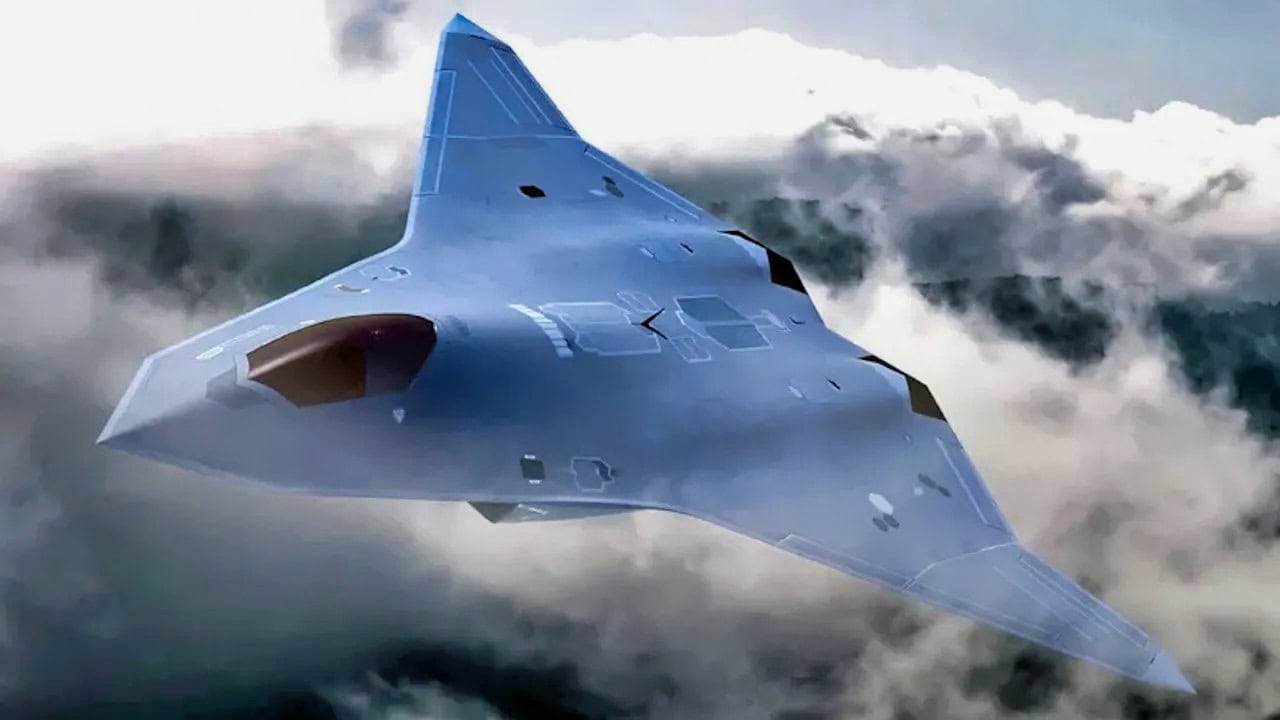
F/A-XX Fighter Mockup. Image Credit: Creative Commons.
A program that died in the early 1990s for sensible budget reasons looks, three decades later, like a capability the Navy genuinely needed and has never adequately replaced.
The Super Tomcat 21 was never built. The carrier air wing has been working around its absence ever since.
About the Author: Harry J. Kazianis
Harry J. Kazianis (@Grecianformula) was the former Senior Director of National Security Affairs at the Center for the National Interest (CFTNI), a foreign policy think tank founded by Richard Nixon based in Washington, DC. Harry has over a decade of experience in think tanks and national security publishing. His ideas have been published in the NY Times, The Washington Post, The Wall Street Journal, CNN, and many other outlets worldwide. He has held positions at CSIS, the Heritage Foundation, the University of Nottingham, and several other institutions related to national security research and studies. He is the former Executive Editor of the National Interest and the Diplomat. He holds a Master’s degree focusing on international affairs from Harvard University.


