

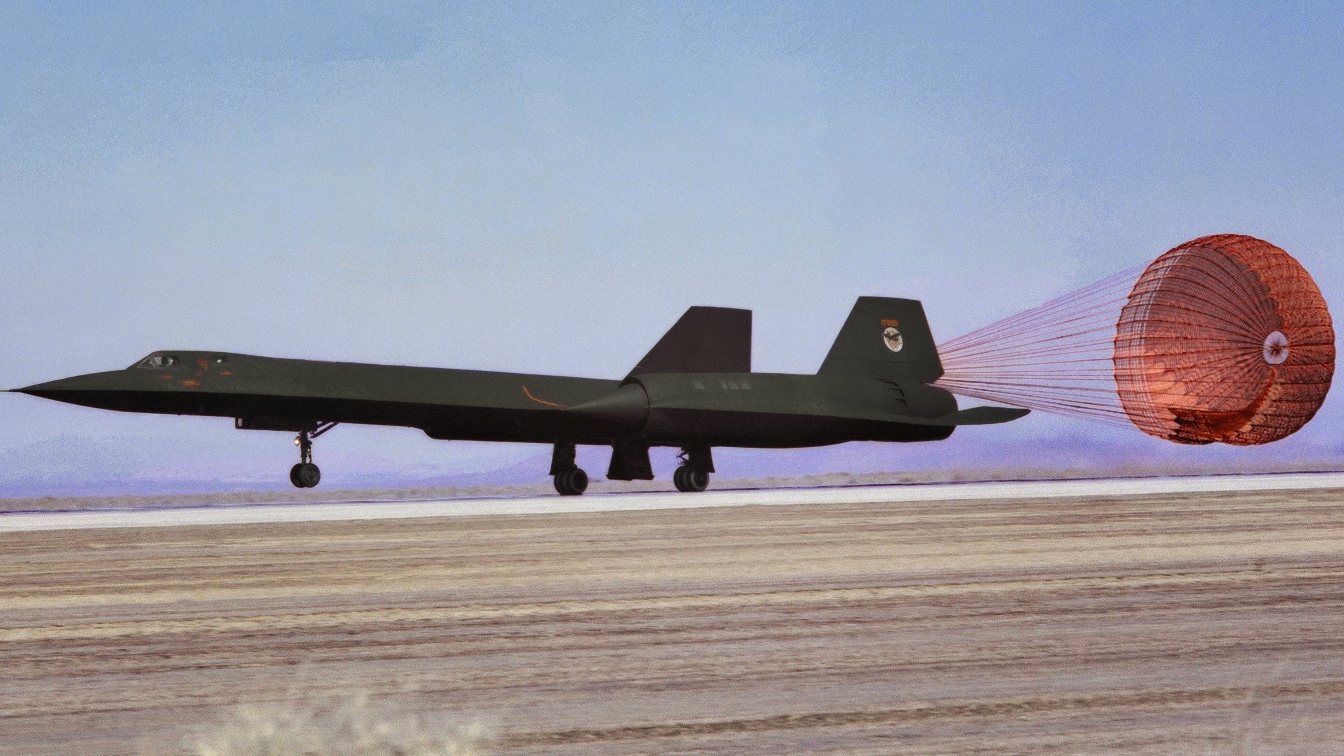
Since the early 2010s, I have dragged my wife to just about every SR-71 Blackbird museum exhibit within driving distance, or sent my staff to take photos if they were close by, many of which are in this article. When you look at the Blackbird, it’s hard to think this Mach 3 marvel is anything less than perfect. But problems did happen, quite a bit. For example, on January 25, 1966. Edwards Air Force Base, California. Two men climbed into Lockheed SR-71A Blackbird tail number 64-17952 at 11:20 in the morning for a flight test that should have ended uneventfully.
It did not.
The Day An SR-71 Disintegrated At Mach 3.2 — And The Test Pilot Who Lived To Tell The Story
Three hours later, Lockheed test pilot Bill Weaver was lying in a remote field on a New Mexico ranch, still in his pressure suit, looking up at an antelope that was looking back at him. Twelve miles away, Reconnaissance Systems Officer Jim Zwayer was dead from a broken neck. The aircraft they had been flying — the most advanced piece of aerospace engineering the United States had ever built, capable of speeds beyond Mach 3 and altitudes above 80,000 feet — had disintegrated around them in a series of structural failures so violent that both crew members were physically torn from the airframe before they could pull their ejection handles.
The Mission That Pushed The Envelope
The flight was a systems evaluation test designed to investigate procedures for reducing trim drag and improving high-Mach cruise performance.
The mission profile required the aircraft to fly with its center of gravity located further aft than normal — a deliberate degradation of the Blackbird’s longitudinal stability that was meant to validate whether the configuration could deliver meaningful performance gains.
After takeoff from Edwards, Weaver and Zwayer refueled from a KC-135 tanker, accelerated to Mach 3.2, and climbed to 78,000 feet for their initial cruise altitude. Several minutes into the cruise, the automatic system controlling the right engine’s inlet malfunctioned.
Weaver moved the inlet to manual control — a routine response that, by itself, was not an emergency. The aircraft was still flying. The crew was still in control.
The real danger came next. As Weaver entered a programmed 35-degree bank to the right, the right engine inlet suffered a severe unstart.
What An Inlet Unstart Actually Did
The SR-71’s J58 turbo-ramjet engines depended on a precisely positioned shock wave inside each engine’s intake — the shockwave compressed and slowed the incoming Mach 3 airflow before it reached the compressor face. Roughly 80 percent of the engine’s thrust at cruise speed came from the inlet shock structure itself, not from the engine’s mechanical components.
An unstart occurred when the shock wave was forced out of the front of the inlet. The aircraft would experience an instantaneous loss of engine thrust on the affected side. The good engine on the opposite side continued to produce full thrust. The asymmetric forces produced a violent yaw, a sharp pitch-up, and a rolling motion that the pilot had to fight immediately.
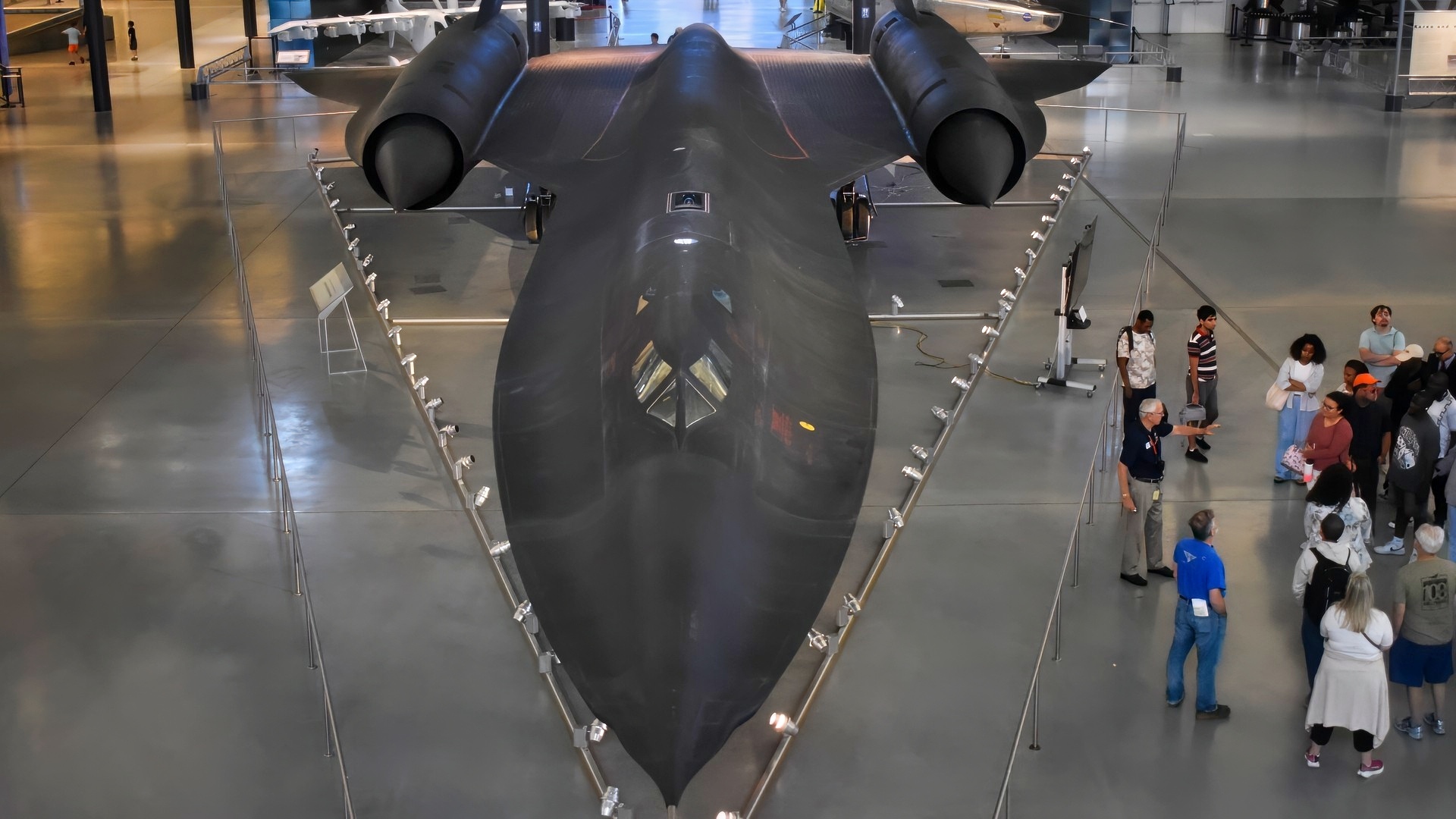
SR-71 Photo Taken September 26, 2025. Image Credit: National Security Journal.
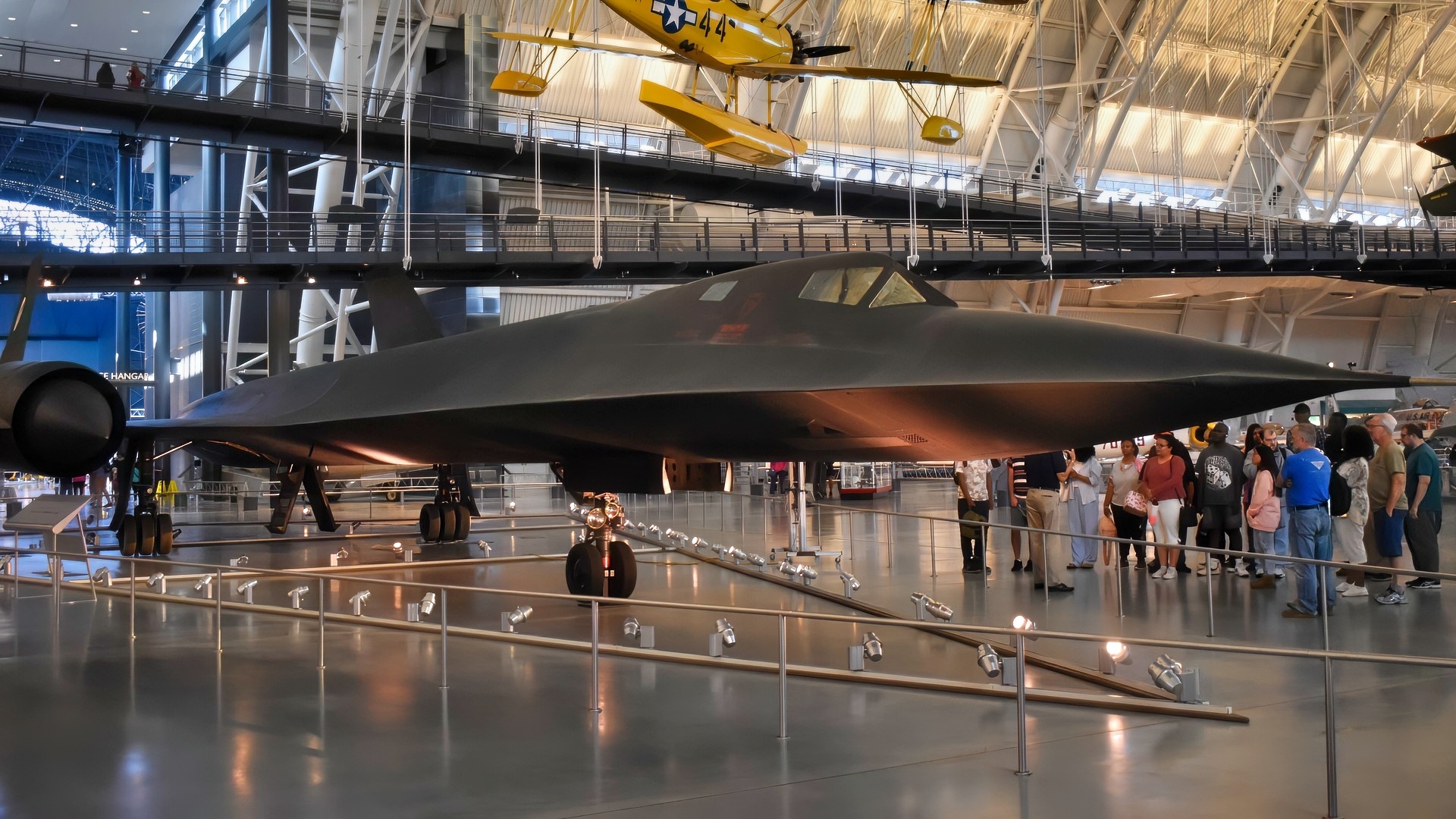
SR-71 Blackbird NSJ Photo. Image Credit: Dr. Brent J. Eastwood.
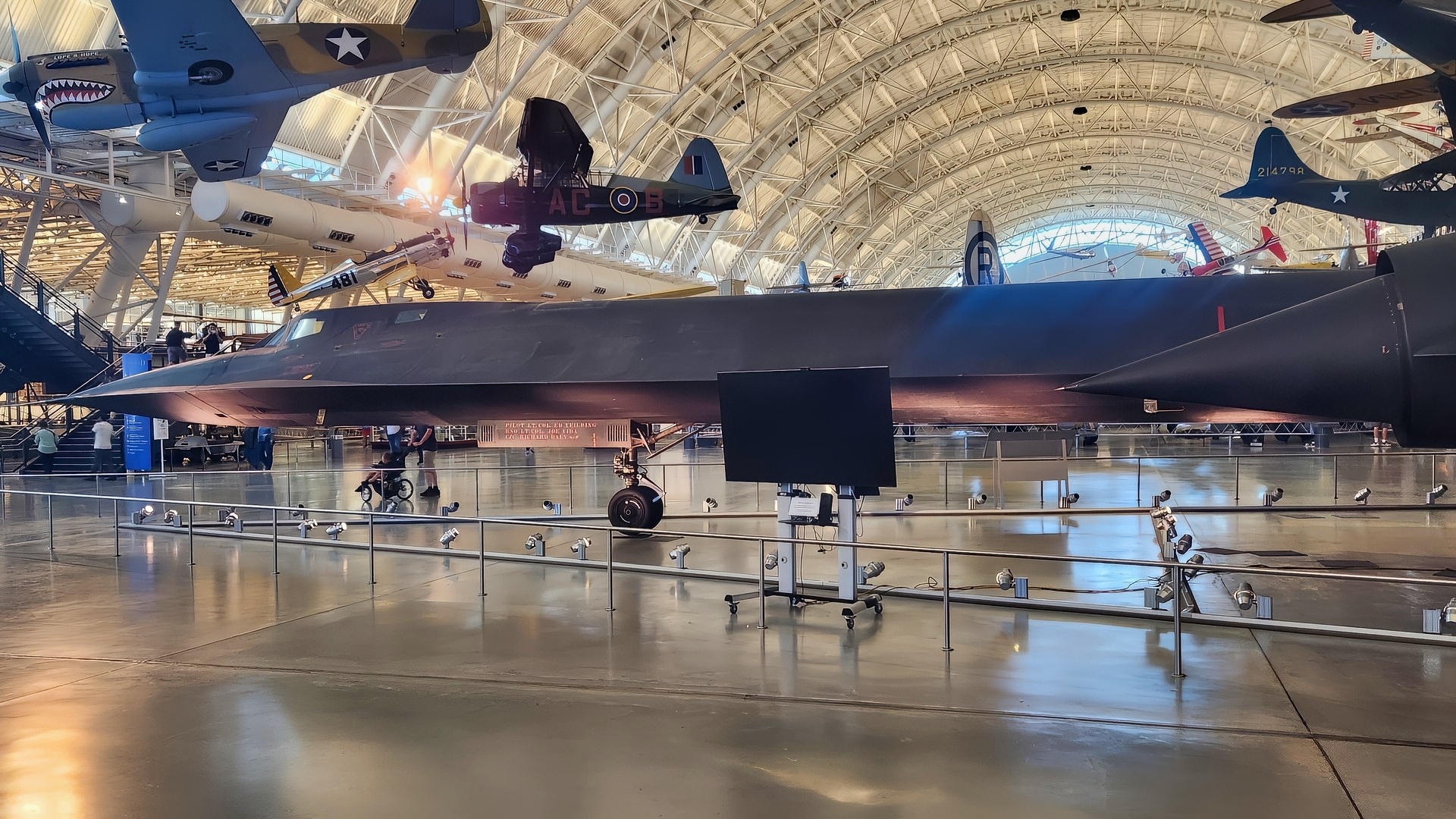
Amazing SR-71 Blackbird September 2025. Image Credit: National Security Journal/Dr. Brent M. Eastwood.
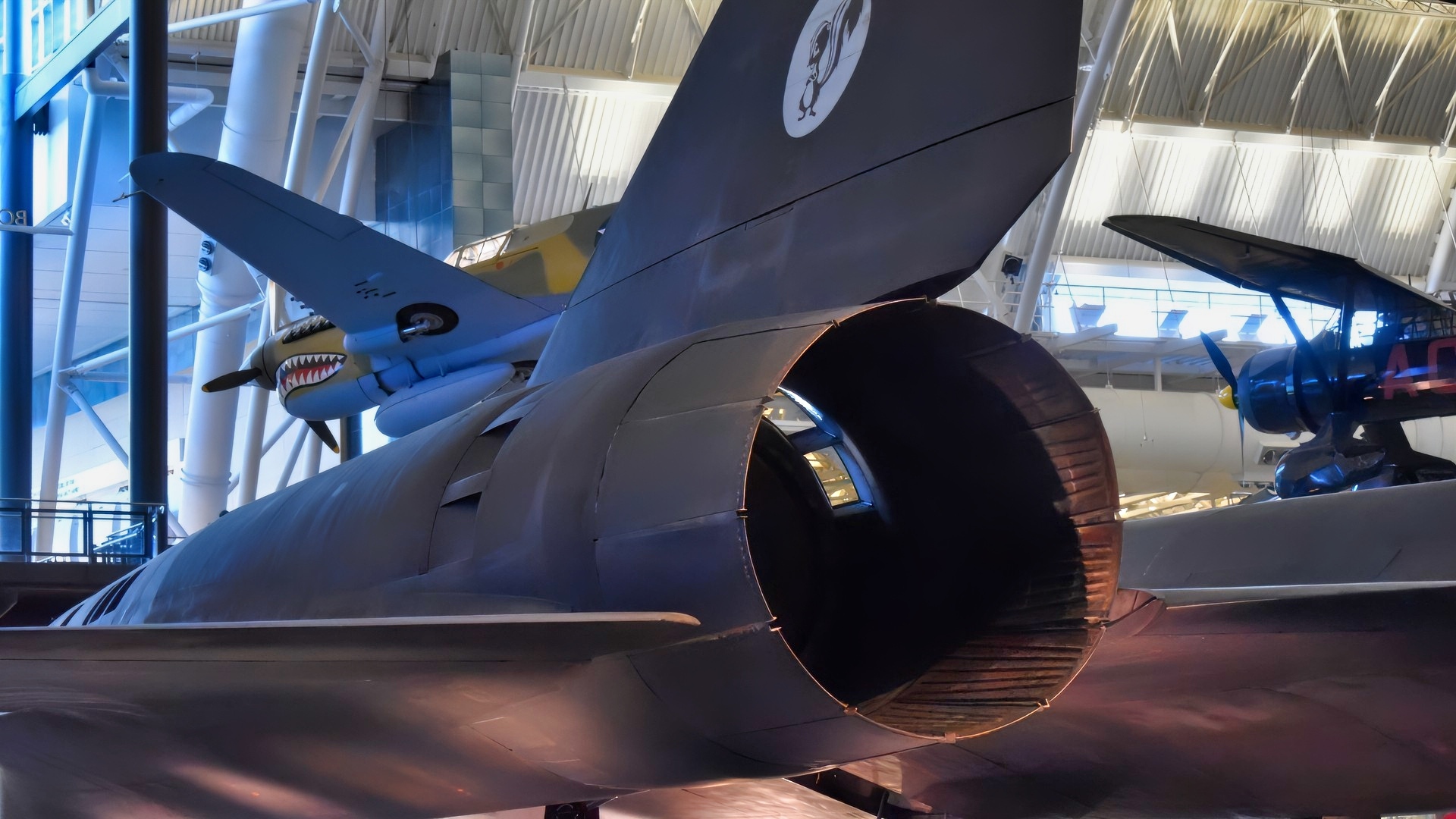
SR-71 Blackbird Rear Image. Credit: Taken on September 26, 2025 by National Security Journal.
A device called the cross-tie system was designed to minimize the rolling and yawing effects when one inlet is unstarted. The cross-tie also automatically restarted the good engine to balance the asymmetric thrust. The system worked properly under most conditions, and unstarts were generally survivable if the shock wave could be quickly recaptured.
January 25, 1966, was not a normal day. The aircraft was operating at the aft center-of-gravity configuration that had been the entire point of the test flight — the same configuration that had reduced the Blackbird’s longitudinal stability. Combined with the right engine unstart in the middle of a 35-degree bank, the cumulative forces exceeded the flight control authority.
Weaver jammed the control stick as far left and forward as it would go. He attempted to tell Zwayer to stay with the aircraft until they could reach a lower speed and altitude where ejection might be survivable. The radio was unintelligible — the g-forces had garbled his words. Then both men blacked out.
The aircraft then literally disintegrated around them.
The Free Fall From 78,000 Feet
Weaver regained consciousness in mid-air, still in his pressure suit, with his oxygen and emergency parachute systems automatically deploying as he descended. The pressure suit was the single piece of equipment that kept him alive — at 78,000 feet, the atmosphere is too thin to sustain consciousness, let alone life, and the suit’s automatic parachute opening system deployed at a lower altitude without any conscious action on Weaver’s part.
The pilot landed in a remote field on the New Mexico ranch of Albert Mitchell Jr., who happened to own a personal helicopter and was home that afternoon. Mitchell saw the descent, drove out to find Weaver still sitting in his parachute harness, and flew him to a small ranch town hospital. Weaver placed a collect call to Edwards Air Force Base shortly after — his way of letting the program know he had survived.

SR-71 Blackbird Spy Plane Back in 2022. Image Credit: National Security Journal/Harry J. Kazianis.
Zwayer’s parachute deployed automatically as well. But the breakup forces had broken his neck during the disintegration sequence. He was already dead when his body reached the ground approximately ten miles from where Weaver landed. The flight test reconnaissance specialist who had been Weaver’s RSO during the mission did not survive the moment the airframe came apart at altitude.
The Investigation And The Fix
Lockheed and Air Force investigators reconstructed the accident over the following weeks. The nose section of the aircraft had broken off aft of the rear cockpit and crashed approximately 10 miles from the main wreckage. Debris was scattered across an area roughly 15 miles long and 10 miles wide.
The investigation produced three immediate program changes.
Testing at center-of-gravity positions aft of normal limits was discontinued — the trim-drag optimization the mission had been trying to validate would instead be pursued through aerodynamic refinements. The inlet control system was upgraded with improved logic to reduce the probability of unstarts during aggressive maneuvering. And the automatic flight control system received enhancements designed to maintain control authority across a wider envelope of inlet-related failures.
The most significant long-term fix came nearly two decades later. In August 1980, Honeywell began converting the SR-71’s analog Automatic Flight and Inlet Control System into the Digital Automatic Flight and Inlet Control System — a triple-channel, multi-rate digital control system that replaced the original 1960s analog computers. The DAFICS conversion was driven by aging analog hardware and the need to keep the SR-71 airframe operational through the year 2000, and it virtually eliminated inlet unstarts compared to the original analog control system.
DAFICS introduced what some sources described as “sympathetic” unstarts — when one engine inlet lost its shock, the opposite inlet would deliberately unstart as well, eliminating the asymmetric thrust that had caused the violent yaw that led to the 1966 disintegration.
The fix did not prevent every Blackbird loss across the program’s operational life. A dozen SR-71s were destroyed in accidents between 1964 and 1989, and the program ended its operational career with several more crew fatalities. But the specific failure mode that killed Jim Zwayer was largely engineered out of the platform.
What Bill Weaver Did Next
Two weeks after surviving the breakup of 64-17952, Bill Weaver was flying another SR-71. He continued as a Lockheed test pilot for the rest of his career, eventually retiring after 30 years with the company. He died in 2021 at age 93.
The SR-71 remains the fastest air-breathing manned aircraft ever to fly operationally. It set speed and altitude records that have not been broken in the more than three decades since the Blackbird was officially retired. The aircraft was, by any reasonable measure, one of the greatest engineering achievements in American aerospace history.
It was also a machine operating at the edge of what was physically possible in the 1960s — a machine whose failure modes were not always survivable, whose limitations were not always understood, and whose pilots accepted the risk that any flight could be the one where the engineering margins gave out.
Bill Weaver survived January 25, 1966. Jim Zwayer did not.
The Blackbird program learned from both outcomes, and the aircraft that emerged from that learning flew for another 23 years.
About the Author: Harry J. Kazianis
Harry J. Kazianis (@Grecianformula) was the former Senior Director of National Security Affairs at the Center for the National Interest (CFTNI), a foreign policy think tank founded by Richard Nixon based in Washington, DC. Harry has over a decade of experience in think tanks and national security publishing. His ideas have been published in the NY Times, The Washington Post, The Wall Street Journal, CNN, and many other outlets worldwide. He has held positions at CSIS, the Heritage Foundation, the University of Nottingham, and several other institutions related to national security research and studies. He is the former Executive Editor of the National Interest and the Diplomat. He holds a Master’s degree focusing on international affairs from Harvard University.


