
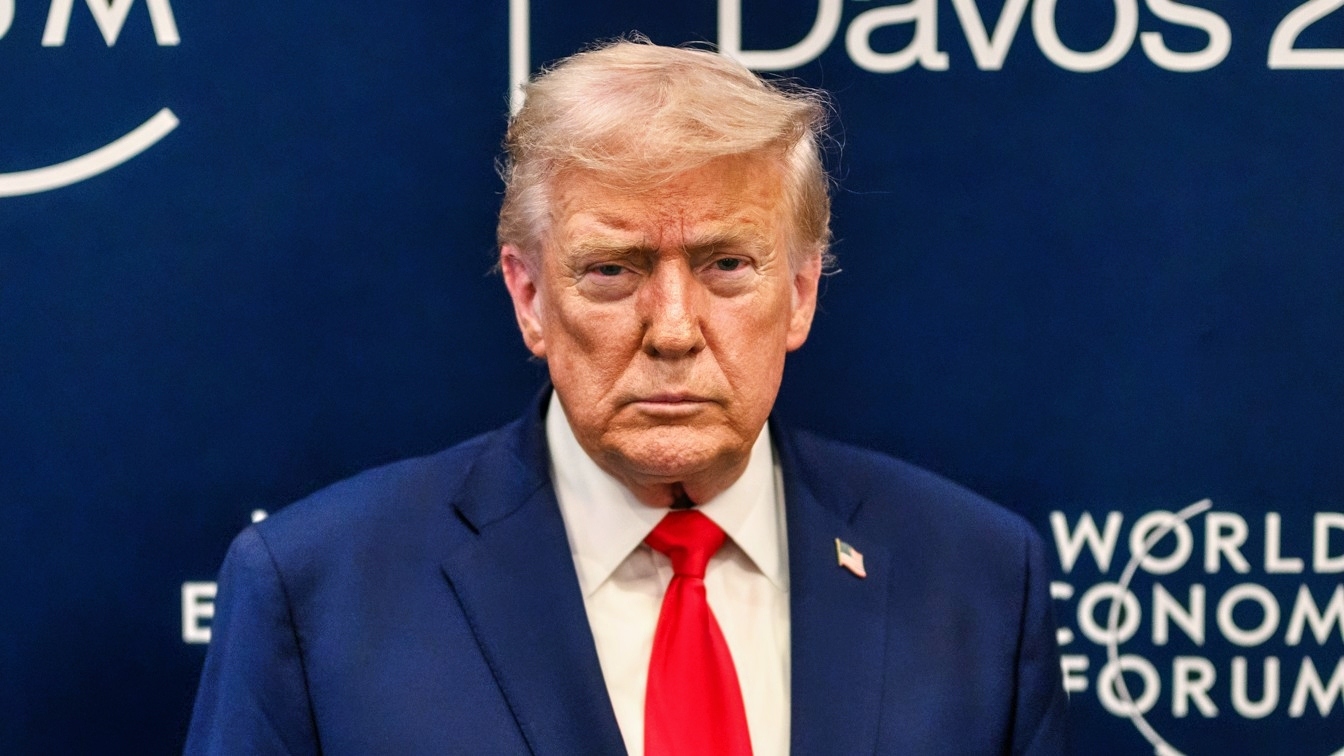
Trump Says He Wants Iran Negotiations To Continue: U.S. President Donald Trump said on Friday, July 10, that he intends to return to negotiations with Iran, and revealed that the latest round of U.S. strikes was part of an effort to bring Tehran back in line. Speaking after American forces concluded a major wave of airstrikes that hit around 90 Iranian military targets, Trump suggested that Washington’s immediate objective had been achieved: not regime change, but forcing Tehran back to the negotiating table after it launched a series of strikes against commercial ships in the Strait of Hormuz.
The latest strikes and comments from the president come after the collapse of June’s memorandum of understanding (MOU) ceasefire, which had established a 60-day window for negotiations over Iran’s nuclear program and sanctions relief – among other pressing matters.

President Donald Trump delivers the Commencement address at the graduation ceremony for the University of Alabama, Thursday, May 1, 2025, at Coleman Coliseum in Tuscaloosa, Alabama. (Official White House Photo by Daniel Torok)

Trump Speaking Outside White House. Image Credit: The White House.
Trump Wants Negotiations
Writing on Truth Social, the president said that Tehran had approached Washington about restarting talks, despite the latest exchange of strikes.
“The Islamic Republic of Iran has asked us to continue ‘talks.’ We have agreed to do so, but the United States has stated to them, in no uncertain terms, that the Cease Fire is OVER!” Trump said.
The announcement, at first glance, appears to be markedly different from the president’s comments during the NATO summit in Ankara on Wednesday. After Iran began launching drone attacks against commercial vessels in the Strait of Hormuz, Trump told reporters that the June ceasefire agreement was effectively finished, prompting analysts and observers to assume that Washington was preparing to finish the job.
“I don’t like them at all. And frankly, I think we wasted a lot of time with them, I think we should just do our business,” Trump said in Ankara.
And when asked specifically about the MOU, the president said it was dead.
“To me, I think it’s over. I don’t want to deal with them anymore. They’re scum,” the president said.
Reports from Monday, July 6, also suggested that the president was still weighing a dramatic escalation, even as he left the door open to diplomacy. Following indirect talks with Iran, the president warned that Washington was “either going to make a deal” or “finish the job.”
“It won’t be tough to finish the job,” Trump said.
Given his own words, it’s clear why analysts believed that the president was on the verge of following through on his prior threats to end an “entire civilization” in Iran, finish the job, and ensure that the regime ceases to exist and can therefore never pursue a nuclear weapon. But Trump’s comments on Friday suggest that it may have all been bluster all along, and that the most recent strikes – despite being far more severe than the previous round – were really just an effort to prove Trump was serious.
Why Trump Wants Diplomacy
While President Trump has tried to make it clear that he is ready and willing to end the “entire civilization” of Iran with massive strikes on its bridges and other infrastructure, he has also made it clear that he does not want to cause a major economic crisis with a prolonged conflict. Speaking at the G7 summit in France on June 17, shortly after the MOU was signed, the president said he had deliberately avoided a wider war with Iran for fear of triggering an economic crisis reminiscent of the Great Depression under President Herbert Hoover.
“I didn’t want to see economic catastrophe. If you kept this going, that could have happened,” Trump told reporters. “I don’t want to be Herbert Hoover.”
Hoover, the 31st president of the United States, presided over the onset of the Great Depression after the 1929 Wall Street crash. Although historians still debate the extent of Hoover’s responsibility for the crisis, his presidency is now synonymous with widespread unemployment and business failures throughout the country that led to the deepest economic downturn in American history.
What Trump Was Worried About
Trump’s concern was not simply about fighting another war in the Middle East. A protracted war in the Middle East might well be a scar on his legacy as president, but it does not hurt him in practice as he will soon be permanently out of office. Trump’s real worry is that continued conflict in the region could lead to long-lasting disruption in the Strait of Hormuz. Even if Trump were to destroy the Iranian regime, mining in the Strait of Hormuz by Iran-backed terror groups and proxies could continue to disrupt passage for years to come.
If Trump secures a deal with Iran, however, it’s possible that traffic through the Strait of Hormuz will continue to move through the critical waterway as it did before – albeit with a weakened regime. It’s a big decision for Trump, and one that will impact the future of the global economy – but now, after months of conflict, the president may be forced to face the possibility that this was all just a bad idea.
About the Author: Jack Buckby
Jack Buckby is a British researcher and analyst specializing in defense and national security, based in New York. His work focuses on military capability, procurement, and strategic competition, producing and editing analysis for policy and defense audiences. He brings extensive editorial experience, with a career output spanning over 1,000 articles at 19FortyFive and National Security Journal, and has previously authored books and papers on extremism and deradicalization.


