


China wants to destabilize the world system. That’s what all of us who’ve worked in Washington, D.C., for any extended period over the last ten years have believed. Indeed, they are a strategic competitor to the United States and the world system it leads.
Yet, since the start of the Iran War, the People’s Republic of China (PRC) has worked overtime to be the stabilizing force in the world system–whereas the United States increasingly appears to be undermining any semblance of stability and fanning the flames of global chaos.
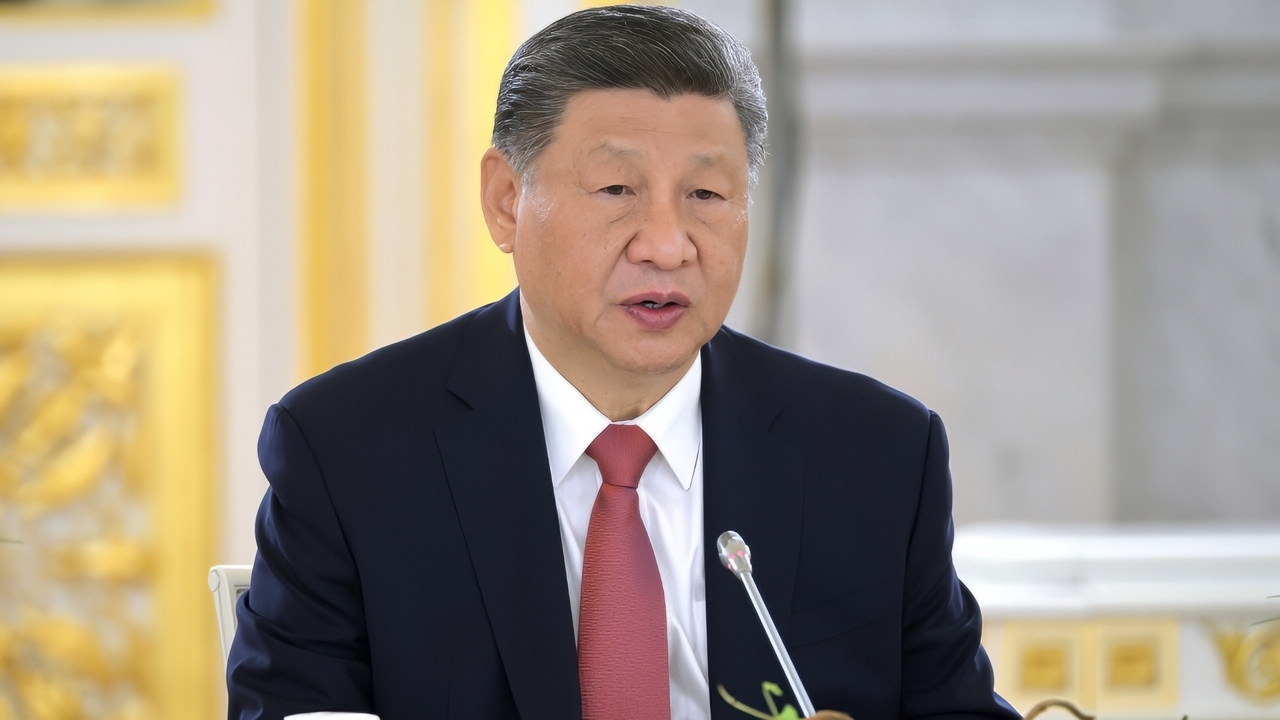
China’s Xi Jinping. Image Credit: Creative Commons.
China’s Strategic Petroleum Reserve Buys the World Time
In the Middle East, after the Islamic Republic of Iran shut down the Strait of Hormuz (SoH), and the Americans retaliated by imposing their own counter-blockade outside the SoH, China decided to turn inward. Rather than continue relying on imported oil, the Chinese leadership opted to draw on oil they’d accumulated in their Strategic Petroleum Reserve (SPR).
This decision by Beijing has allowed the world to enjoy relative relief in gas prices, even as 20 percent of the world’s oil and 18 percent of the world’s natural gas flow through the SoH have stopped.
China’s reliance on its 1.4 billion-barrel oil reserves since the war in the Middle East began has spared the world considerable financial heartache.
Of course, the longer the war lasts and the more depleted China’s reserves become, the less they can rely on them.
At some point, China’s largesse will end, and if the war doesn’t end soon, with the flows of energy through the SoH restored, we will all start paying higher prices rapidly.
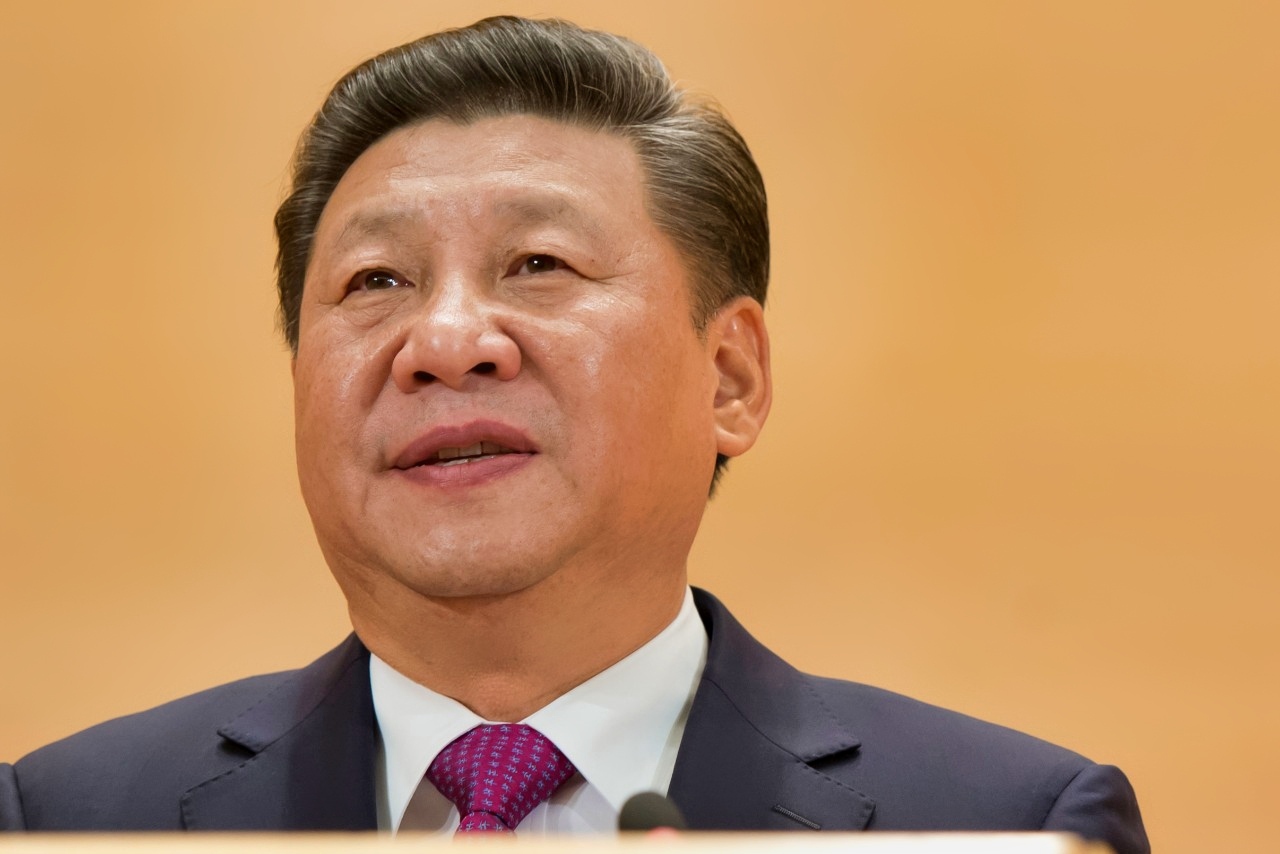
Xi Jinping President of the People’s Republic of China speak’s at a United Nations Office at Geneva. 18 january 2017. UN Photo / Jean-Marc Ferré
Beijing’s Quiet Intervention in Ukraine
On the other front of the ongoing global war, Ukraine, Politico reports that China privately–and forcefully–dissuaded Russian President Vladimir Putin from using nuclear weapons in his ongoing war in Ukraine.
Per a story recounted to Ukrainian President Volodymyr Zelenskyy at the recent NATO conference, several European officials told the Ukrainian leader that Beijing had “responded very seriously, harshly, and unequivocally” to discussions that Russia was about to use nuclear weapons against Ukraine.
If true, and multiple sources have confirmed that this did occur, then the Western perception of China’s role in the Ukraine War has been inaccurate.
While Beijing is certainly glad to see the United States and NATO bogged down in a proxy war against Russia, Beijing prefers stability along its periphery.
That’s because China’s primary source of power is its economy–and its economy is heavily dependent on trade. The wars in the Middle East and Europe risk, on some level, disrupting trade flows in those two primary regions of the global economy.
China’s Nuclear Red Line
It also showcases China’s true view of nuclear weapons. For years, the Communist Party of China (CPC) has refused to share its official stance on nuclear weapons.
Yet, consistently, Chinese leaders have made public declarations cautioning against the use of nukes. And in the specific case of Russia, the world’s largest nuclear weapons state, China clearly does not want Moscow employing those weapons because they firmly understand the knock-on effects.
Not only would a nuclear Ukraine War completely disrupt whatever global trade flows Beijing relies upon for its economic growth, but it would also set off a chain of events that’d lead to nuclear escalation.
At the same time, China has supported Russia both diplomatically and economically in its war with Ukraine. But clearly, the “friendship without limits” that Russia’s Vladimir Putin believes exists between himself and China’s President Xi Jinping does indeed have limits.
Nukes are the red line. That red line is bright. The fact that Moscow did not discard the opposition from Beijing on their potential use of nuclear weapons is further indication that China holds considerable sway over Russia, too.
Balancing Revisionism with Stability
It also highlights the complex geopolitical game that China is playing. On the one side, Beijing badly wants to stabilize the global trading system so it can continue enriching itself by dominating the world’s industries.
On the other hand, the Chinese want to empower large countries, such as Russia, to form a reliable counterbalance to America’s perceived hegemony (which Beijing believes is waning).
China will tolerate prolonged conventional conflict. It will not, however, allow a conflict that fundamentally overturns the global nuclear order or jeopardizes its own economic and geopolitical interests.
In both the Iran War and the Ukraine War, China has surprised many observers, including me, with its decisions to avoid escalation and pursue a more responsible policy that balances its desire to overturn the existing US-led order with its need for stable global trade and to avoid a true world war.
If Washington were smart, it’d wake up to this reality, slow down what it’s doing on the world stage, pivot, and create a new modus vivendi between itself and China that similarly prioritizes stability (at least until America can better insulate itself from the ravages of global war).
About the Author: Brandon J. Weichert
Brandon J. Weichert is Senior National Security Editor. He also manages The Weichert Brief on Substack. Weichert also hosts “National Security Talk” on Rumble. He is the author of four bestselling national security books, the most recent of which is A Disaster of Our Own Making: How the West Lost Ukraine (Encounter Books). Follow him via Twitter/X @WeTheBrandon


Dr. Hujjathullah M.H.Babu Sahib
July 10, 2026 at 9:58 pm
A rather fairly written piece. But it comes a little unstuck when it insists in turn on the PRC seeking to destabilize the world order ;to balance between the emerging major powers ;and, simultaneously, recommends seeking a modus vivendi with it. Furthermore, how does it pursue “strategic competition” while deep into a revisionism that rebalances the major powers as the PRC courts global trade stability ? In short, red-lining nukes, green-laneing trade while ambering global stability even as it dips into its strategic reserves ! How does these gell with its alleged spawning of global debt-traps ?