

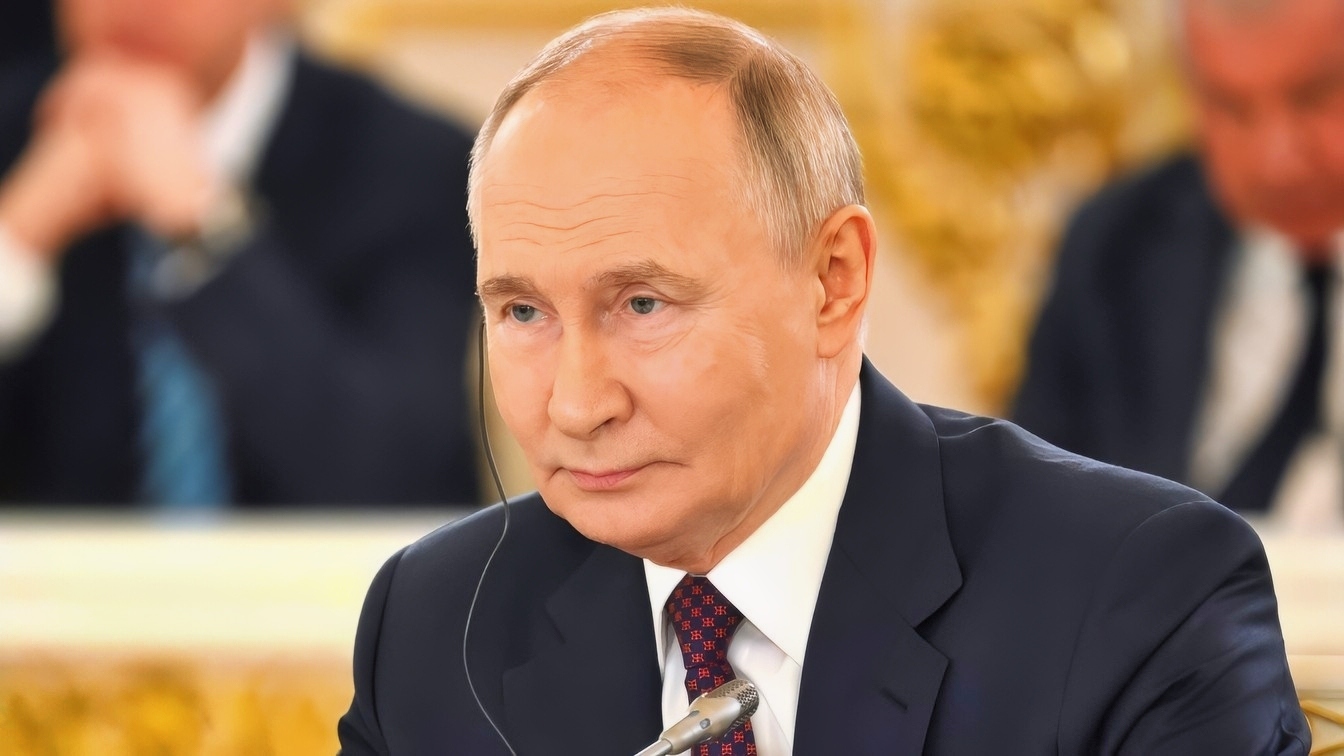
Reports today state that Russian President Vladimir Putin will close Moscow and most of the airspace of European Russia to all private planes and helicopters. The closure comes from his fear of both Ukraine’s long-range drone strikes and increasing rumors of possible assassination plots against him internally.
The boundaries of this restricted area extend over most of central Russia. It begins at the border with Belarus in the west, extends north to the St. Petersburg flight zone, runs east towards the Urals, and then, in the south, joins another already restricted no-fly area near the conflict zone. Flights in that southern area have already been banned for the past four years.

Tu-22M3 Russian Bomber. Image Credit: Creative Commons.
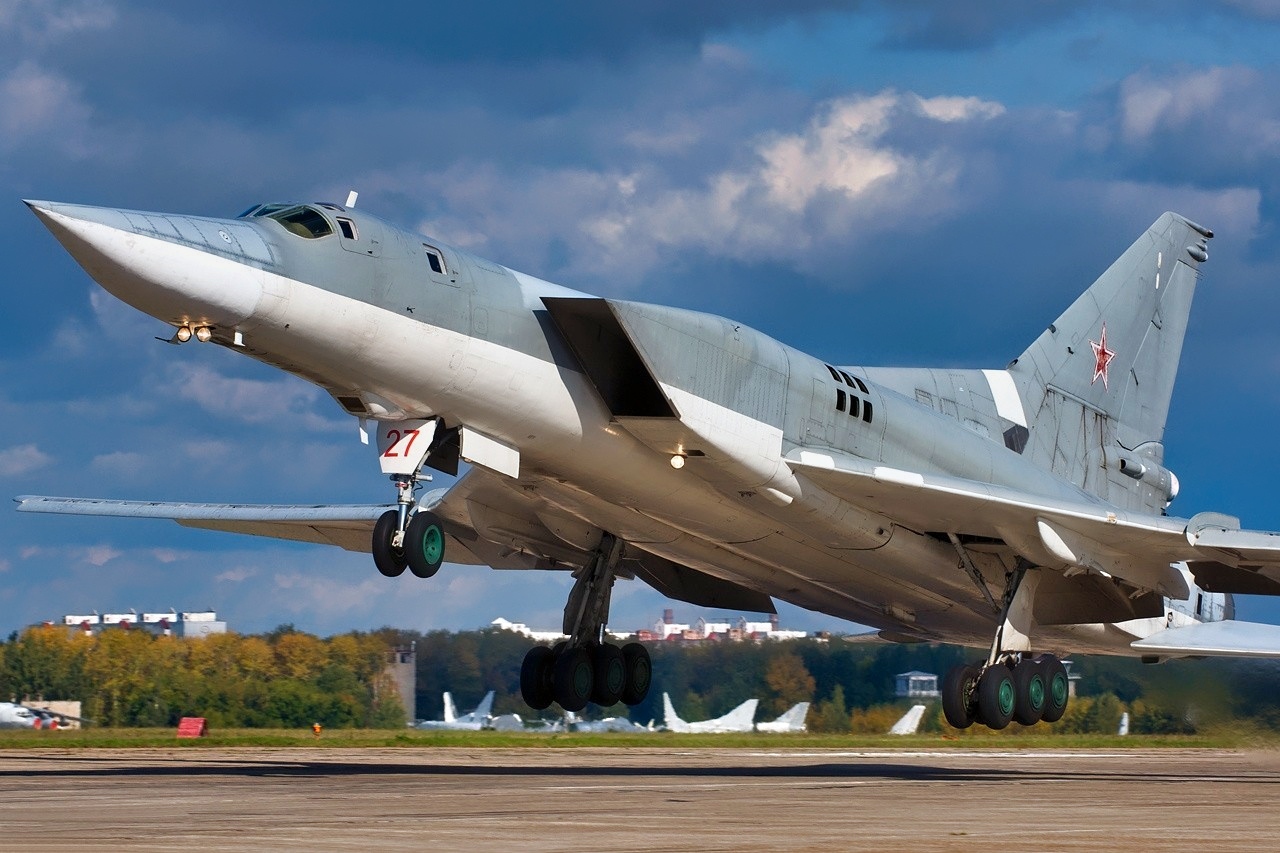
Tu-22M Backfire Bomber from Russia. Image Credit: Creative Commons.
The total area slated for closure is four times the size of the United Kingdom’s airspace. It also extends up to an altitude of 16,700 feet (5,100 meters).
If the reports are accurate, the ban will take effect in early June, but scheduled airline passenger flights, charter services, and commercial air cargo carriers remain unaffected and will operate as per regular procedures.
Medical evacuation services, air ambulances, aviation-chemical operations, monitoring flights for pipelines and power lines, and flights serving under state contracts will also be permitted to continue operating.
Russia’s network of direct international flights is also expected to contract sharply during the summer 2026 travel season. This is largely a consequence of the country continuing to feel the impact of sanctions, Ukraine drone strikes, fuel supply problems, and the continuing conflict in the Middle East
According to recent reports, Russian travelers will be able to fly nonstop to no more than 32 countries this summer.
The Increase in Air Strikes on Moscow
Independent pilot organizations like AOPA (Aircraft Owners and Pilots Association) reported on 25 May that this expansive airspace closure will effectively allow Russia’s military to treat any unauthorized, low-level flights as hostile and can legally shoot something down with little to no warning. As such, the Russian air defense services are hoping this will simplify their efforts to take down Ukrainian long-range drones.
AOPA also stated that an official NOTAM (Notice to Airmen) detailing the restrictions and operational procedures is expected to be issued by Russia’s Transport Ministry in the coming days.
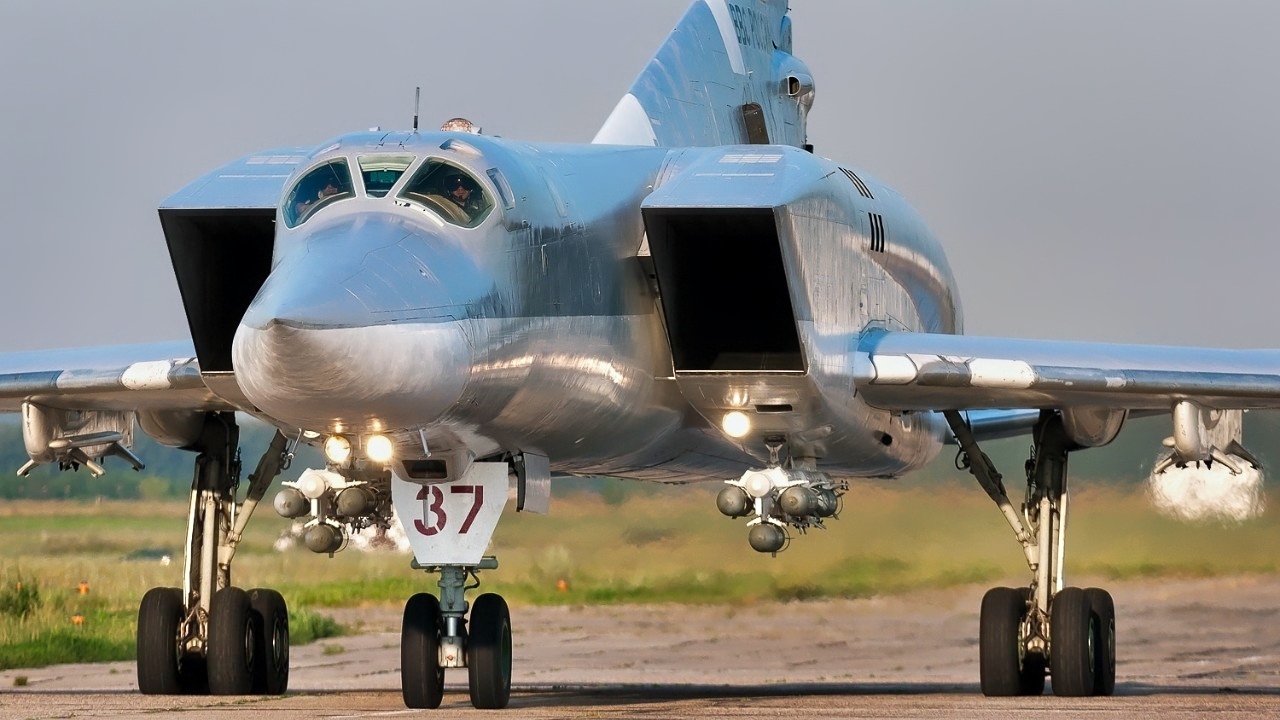
Russia Tu-22M Bomber. Image Credit: Creative Commons.
This news comes as the fears from Ukraine’s ability to increasingly conduct long-range drones – some of which are literally unmanned planes packed with explosives – to strike Moscow. It is also only about a week after Russia experienced one of the largest drone attacks since the start of the full-scale war.
In this attack, several hundred Ukrainian strike drones were targeted against facilities linked to the defense industry, fuel logistics, and microelectronics production across multiple Russian regions. Nearly 600 drones were reportedly involved in this single operation alone, targeting sites around Moscow as well as strategic industrial facilities deep inside Russia.
Tellingly, the reports from Russian media and open-source monitoring groups – some of which either are required to or voluntarily engage in some self-censorship – were unusually detailed in showing the numerous sites associated with Russia’s military-industrial complex and fuel infrastructure were hit during the attack.
A Potential Armed Insurrection
A report that was leaked from a European intelligence service earlier in May purports to show a Putin who is becoming increasingly paranoid about assassination plots against him.
This paranoia kicked into a higher gear in December 2025 when Lieutenant General Fanil Sarvarov was killed in a car bombing inside the city limits of Moscow.
According to that same report, the targeted killing caused Putin to call an impromptu and what was described as a “tense meeting” inside the Kremlin, chaired by the Russian president himself. Clearly, he was shaken by the event, which is one of the reasons that he has been seen less frequently in public since and has taken to spending more time in underground secure bunkers, according to some reports.
Half a year later, prospects for the continued rule of the former KGB Lt. Col. have not improved. Threats to his power have escalated beyond just a potential drone attack to the point where an anti-Putin underground movement has vowed to overthrow him by force.

Tu-160M Bomber Air Force. Image Credit: Creative Commons.
This group, known as Black Spark, claims to be organizing a clandestine anti-regime network inside Russia. The membership is said to comprise “middle-class” professionals, leading business figures, anti-war activists, and resistance fighters with combat experience.
The man behind the group is Igor Volobuev, a Kremlin-linked banking vice-president who defected to Ukraine after Putin’s invasion and then joined the armed struggle against Russia.
Black Spark’s manifesto openly calls for armed resistance against Moscow and issued a manifesto stating, “Putin’s terror killed our belief in dialogue. We realised that under a dictatorship, justice is forced to stand with Molotov cocktails. The empire itself — Russia’s greatest curse — must collapse.”
About the Author: Reuben F. Johnson
Reuben F. Johnson has thirty-six years of experience analyzing and reporting on foreign weapons systems, defense technologies, and international arms export policy. Johnson is the Director of Research at the Casimir Pulaski Foundation. He is also a survivor of the Russian invasion of Ukraine in February 2022. He worked for years in the American defense industry as a foreign technology analyst and later as a consultant for the U.S. Department of Defense, the Departments of the Navy and Air Force, and the governments of the United Kingdom and Australia. In 2022-2023, he won two awards in a row for his defense reporting. He holds a bachelor’s degree from DePauw University and a master’s degree from Miami University in Ohio, specializing in Soviet and Russian studies. He lives in Warsaw.


