


Nine of the 18 countries participating in a Czech-led initiative to purchase ammunition for Ukraine have now withdrawn from the effort.
The number of countries has been falling since Prime Minister Andrej Babiš returned to office in December, having campaigned on a pledge not to make Czech citizens pay for Ukraine’s weapons.
Ukraine Has Artillery Shell Problems Now
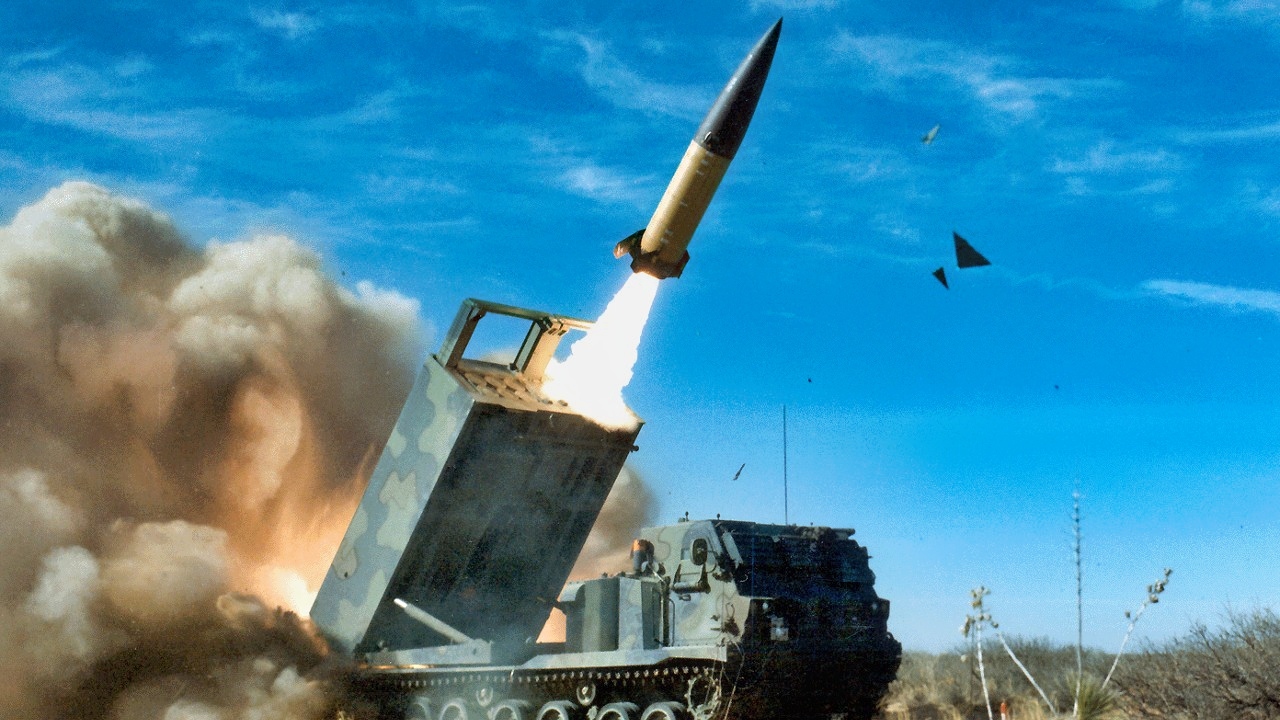
An ATACMS missile being launched from an M270 MLRS.
The Czech President, Petr Pavel, is himself a former NATO commander and explained that this trend is raising concerns about burden-sharing among the nine that are still involved in the initiative.
The overall viability of this project, which was initiated by the previous pro-EU Czech government, with Pavel’s vigorous advocacy.
“The initiative is still working, but the new difficulty is that only about nine member states are contributing financially,” Pavel told the Financial Times in an interview published on 26 May. “This initiative has been delivering up to 50 percent of all large calibre ammunition to the Ukrainians, so in this sense it cannot be replaced easily by anything else,” he said.
He also told the Financial Times that the initiative has successfully supplied Ukraine with artillery ammunition since its inception – and that it remains in operation despite the declining financial support from participating countries.
The Czech-led multinational cooperative effort has been credited with stabilizing Ukraine’s ammunition stockpiles during a phase of the war when ammunition supplies were pivotal.

The 1-148th Field Artillery Regiment is the latest unit in the Idaho Army National Guard to upgrade its combat capability as modernization efforts across the U.S. Army and Army National Guard take shape.
Since the program began, Czechia has delivered more than 3 million artillery shells.
This includes 1.5 million in 2024 and an additional 1.8 million in 2025.
Prague still has contracts in place as of today to deliver another 1 million or more rounds in 2026 – this, according to the Czech Ministry of Defense.
An Anti-Ukraine Coalition
Part of the platform that Babiš campaigned on was decidedly anti-Ukraine and included promises not to make Czech citizens pay for weapons sent to Kyiv.
His pledge was that the moratorium would begin after he assumed office as PM in December. He also governs along with other parties in a coalition, some of whom are skeptical of the wisdom of continuing to send military assistance to Kyiv.
The ammunition initiative began in 2024, and since that time, Prague has delivered millions of large-caliber artillery shells to Ukraine.
The program was a major lift to Ukraine’s efforts to defend against Russia’s invasion as this was a time in which Kyiv’s military was experiencing incredibly high consumption rates of artillery shells and in dire need of more suppliers, as its own stocks were shrinking by the day.
The increasing contentiousness surrounding this effort has prompted Pavel to request that the ammunition initiative be one of the agenda items at the NATO summit in Ankara in July. The entire program came perilously close to being canceled when Babiš took office – and was kept alive only by pressure from foreign allies.
Pavel’s office declined to name the countries that had withdrawn from the effort. A Western military official told the Financial Times that Germany and several Nordic countries are still involved in the effort, but the Czech government’s leadership is causing difficulties.
“Some countries now feel that it is strange to pay for something that is not even properly supported by the ruling politicians of the lead country,” that same military official explained.
Domestic Priorities
Babiš told the FT in a separate interview that his government was now prioritizing the limited public funds available to support Czech citizens over Ukraine’s ammunition needs.
He and his coalition partners are feeling some pressure as households are seeing rising energy bills due to the Iran conflict and are paying among the highest energy prices in Europe.
To them, this issue is a more critical item than continuing support for Ukraine’s war effort, so the other nations remaining in the program have to pay forward to continue the munitions supply to Ukraine. “We don’t have money, so we are receiving money from other countries and then we deliver [the ammunition],” he said.
During last year’s election campaign, Babiš had threatened to stop the ammunition initiative altogether. His position had been that the program lacked transparency in how the money was being spent. He was also concerned about how much the Prague-based Czechoslovak Group. CSG, which is one of Europe’s largest ammunition producers, was benefiting in the process.
CSG had been functioning as the Czech government’s main corporate partner in sourcing – as well as recommissioning – artillery shells from non-NATO countries funded by Ukraine’s western backers.
“At the moment, supply of approximately 1 million large-calibre ammunition pieces is predicted through all valid mechanisms with the ammunition initiative at the helm,” the MoD said in an emailed response to Reuters questions about the plans for the initiative this year. “This concerns ammunition that has already been contracted and will be supplied by the end of this year,” read the response.
The ammunition initiative was originally created to match foreign donor countries, such as Denmark, the Netherlands, Germany and others, together with Czech arms traders seeking supplies from around the world.
The smaller mechanisms are bilateral deals or direct Ukrainian purchases, said the ministry.
Part of the funding has also come from interest earned on frozen Russian assets held in Belgium, provided by the European Commission.
About the Author: Reuben F. Johnson
Reuben F. Johnson has thirty-six years of experience analyzing and reporting on foreign weapons systems, defense technologies, and international arms export policy. Johnson is the Director of Research at the Casimir Pulaski Foundation. He is also a survivor of the Russian invasion of Ukraine in February 2022. He worked for years in the American defense industry as a foreign technology analyst and later as a consultant for the U.S. Department of Defense, the Departments of the Navy and Air Force, and the governments of the United Kingdom and Australia. In 2022-2023, he won two awards in a row for his defense reporting. He holds a bachelor’s degree from DePauw University and a master’s degree from Miami University in Ohio, specializing in Soviet and Russian studies. He lives in Warsaw.


