

Summary and Key Points: Iran’s state-run media on May 27 unveiled a peace plan demanding that the U.S. Navy withdraw from the Persian Gulf before Tehran will reopen the Strait of Hormuz. Iran is also demanding war reparations and refusing to ship its enriched uranium out of the country. About 42 American aircraft have already been destroyed in the conflict, including aerial refueling tankers, drones, and an AWACS early-warning aircraft.
-Pakistan is mediating, but Russia would veto any UN attempt to break the deadlock because Putin views Iran as an ally. The standoff could harden into a frozen conflict lasting months or even years.

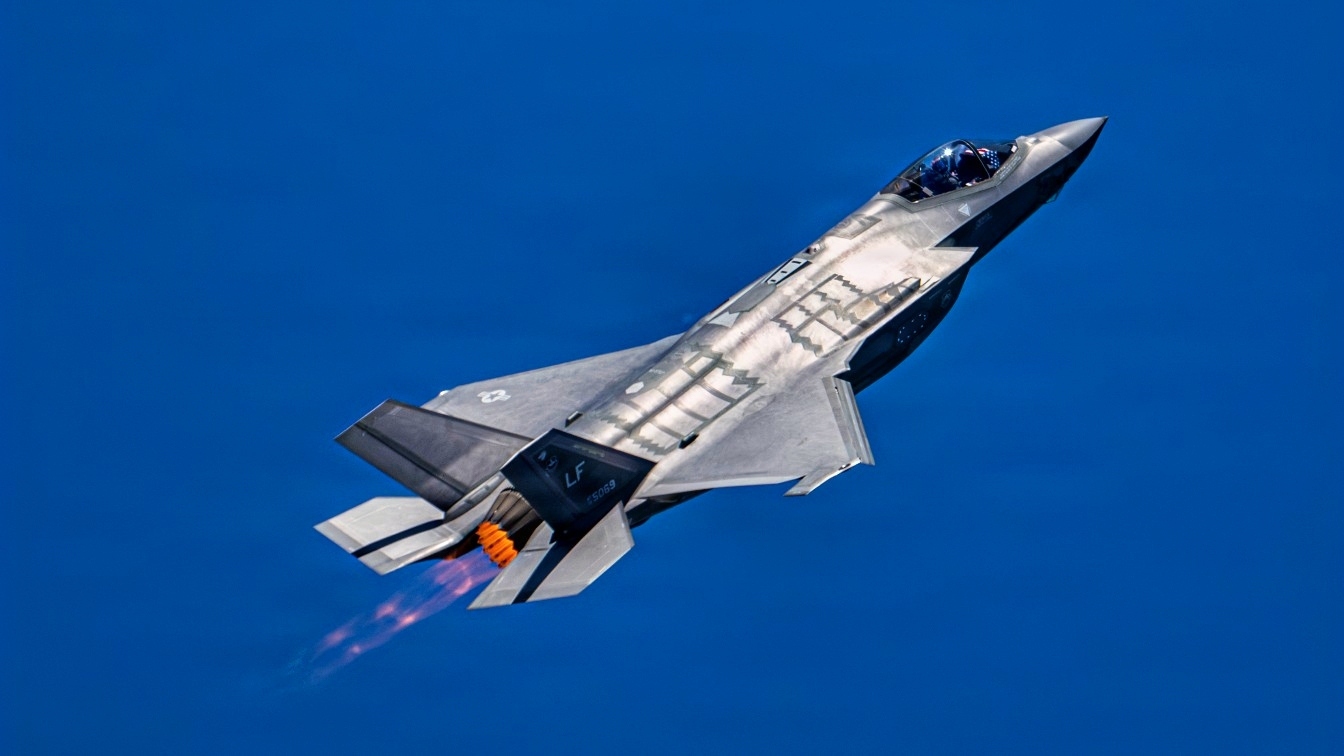
F-35 Beast Mode. Image Credit: Lockheed Martin.

F-35I Adir Stealth Fighter from Israel. Image Credit: Israeli Air Force.

F-35 Stealth Fighter in Red. Image Credit: Lockheed Martin.
Iran War: A Frozen Conflict?
We are told constantly that Iran and the United States are pursuing a diplomatic effort brokered by Pakistan to end the crisis in the Strait of Hormuz. Peace is always close at hand, President Donald Trump usually declares each day.
This means that the strait could be opened at any time. On May 27, Iranian state-run media unveiled a peace plan that would remove the U.S. Navy from the region in exchange for Tehran’s opening of the strait. That is a promising development, but it could still remain elusive due to Iran’s quest for nuclear weapons and its resistance to eliminating or shipping its enriched uranium out of the country.
No Diplomatic Solution
The outcome of these conflicting new reports is the time it will take for an overall peace plan to be adopted by both sides. What if the Iranian-American standoff lasts for the rest of this year? This could turn the situation into a frozen conflict, with the status quo becoming a fact of life.
Iran Can Play Hardball
Iran could keep its sea mines, swift boats, midget submarines, ballistic missiles, and drones at a high state of readiness.
Shipping companies that own vessels transporting cargo and oil would remain trapped in the strait. Energy prices would remain high. Inflation could take hold in Western countries, creating pain at the pump and wage stagnation. The overall quality of life in the United States and its allies could suffer due to a recession.
Iran’s Use of Psychological and Cognitive ‘Fear’ Warfare
Iran is also using fear tactics to deter the United States and its allies. This form of cognitive and psychological warfare by Tehran is easy to accomplish and inexpensive to execute. The fear of war resuming and lasting for several months is also an outgrowth of these deterrence tactics. The resulting Kinetic Missile Fight between the United States and Iran would be violent and deadly.
The Kinetic Missile Fight Could Happen Again
The Kinetic Missile Fight is the next dominant phase of modern warfare. Large-scale combat is driven by long-range missiles, drones, cruise missiles, and interceptors rather than by ground maneuver, aerial dogfighting, or armored warfare. The Kinetic Missile Fight could spark up again, and then a peace fire would be wrecked.
This threat of constant violence is what the Iranians would like to see in the Middle East. The Americans may have their hands tied. They want no casualties or loss of military hardware. Around 42 aircraft have already been destroyed, including several aerial refueling aircraft, drones, and an AWACS early-warning airplane.
Tenuous Cease Fire Not Yielding Full-time Peace
Trump keeps threatening that attacks on Iran will continue. The United States started what it called “defensive strikes” this week in an effort to show that it could make a cold war hot at a moment’s notice. Look for future short violations of the ceasefire that could create a situation in which no country has the upper hand.
Which Country Can Help Pakistan Mediate?
This stalemate would create a forever war. It is unclear whether Pakistan could help mediate this situation, and it may depend on U.S. Gulf War allies such as Saudi Arabia and the United Arab Emirates to help forge a full-fledged peace agreement to end the crisis in the Strait of Hormuz. But Iran is a Shia state and believes that Arab Sunnis are the enemy. It is unclear whether Gulf allies could create conditions for peace and mediate effectively.
What About Europe’s Role?
This leaves Europe as a partner in peace talks. So far, the Europeans have wanted no part in the American war against Iran, but they are anxious for the strait to reopen, as are countries in Asia, who are running out of oil reserves. China wants the ceasefire to hold, but Xi Jinping is not ready to take a more global role in peace-making.
This creates pressure on Pakistan. So far, the country has done an effective job at negotiating a ceasefire, yet the Iranians still control Hormuz. Trump considers himself the prime deal maker in the world, but he has yet to strike an agreement with Iran.
Iran Has More Cards to Play
A frozen conflict would have global ramifications. Tehran has threatened to charge a toll for ships transiting the strait and to levy fees on the use of subsea internet and data cables that are the lifeblood of the global economy.
It seems that the United States and Iran have entered a stalemate, with neither side willing to back off. Iran has its “fear strategy” that places asymmetric pressure on the Americans and their allies. Meanwhile, the United States has the best navy in the world to counter tactics in the Strait with swift boats and sea mines from Iran.
Does the United Nations Have a Role?
If there were a frozen conflict, some country or international organization would have to be inserted into the ceasefire period to keep the status quo. The United Nations would not have the sea assets to bring to the region. A plan for an international coalition would not be possible in the UN Security Council. Russia would be sure to veto any multinational action led by the UN since Vladimir Putin sees Iran as an ally.
Frozen Conflict in the Middle East: Keep the U.S. at a Disadvantage Strategically
Even if a peace deal is negotiated successfully soon, there would still be a need to monitor the situation so war would not spark again. This would be a new Cold War in the Middle East, and the Americans would have to use scarce naval and air assets to keep the peace in the strait. This would mean that if there were a war with Russia or China, the United States could not conduct a multi-front or multi-theater conflict due to its Middle East losses in airplanes, drones, plus ballistic and cruise missiles, not to mention air defense interceptors.
What is the Long-term Strategic Plan for the U.S.?
There seems to be no American contingency plan for an extended frozen conflict. Congress would have to cut loose billions of dollars a week to keep the status quo intact. Lawmakers may need to authorize military force to help oversee the frozen conflict, and the White House may not want to be limited by such a measure.
Indeed, there is a clear threat of a forever war. Both sides are far apart concerning Iran’s nuclear program and the control of the Strait of Hormuz. Iran also wants war reparations and the withdrawal of the U.S. Navy from the region. Unless there is an end to these roadblocks, the frozen conflict can last for months.
About the Author: Brent M. Eastwood, PhD
Author of now over 3,500 articles on defense issues, Brent M. Eastwood, PhD, is the author of Don’t Turn Your Back On the World: A Conservative Foreign Policy and Humans, Machines, and Data: Future Trends in Warfare, plus two other books. Brent was the founder and CEO of a tech firm that predicted world events using artificial intelligence. He served as a legislative fellow for US Senator Tim Scott and advised the senator on defense and foreign policy issues. He has taught at American University, George Washington University, and George Mason University. Brent is a former US Army Infantry officer. He can be followed on X @BMEastwood.


