


The U.S. Navy decommissioned all four Avenger-class mine countermeasures ships from Bahrain in September 2025 — USS Devastator, USS Dextrous, USS Gladiator, and USS Sentry — six months before Iran mined the Strait of Hormuz. Four additional Avengers remained at Sasebo, Japan. When the crisis hit, USS Chief and USS Pioneer departed Singapore on April 10, weeks after Iran had already mined the Strait. On April 11, CENTCOM sent the Arleigh Burke guided-missile destroyers USS Frank E. Petersen Jr. and USS Michael Murphy — neither designed for mine clearance, each worth more than $2 billion — into the Strait. RAND analyst Scott Savitz wrote that a handful of remaining mines have created a chokepoint that carries 25% of global seaborne oil.
The U.S. Navy’s Strait of Hormuz Mine Problem
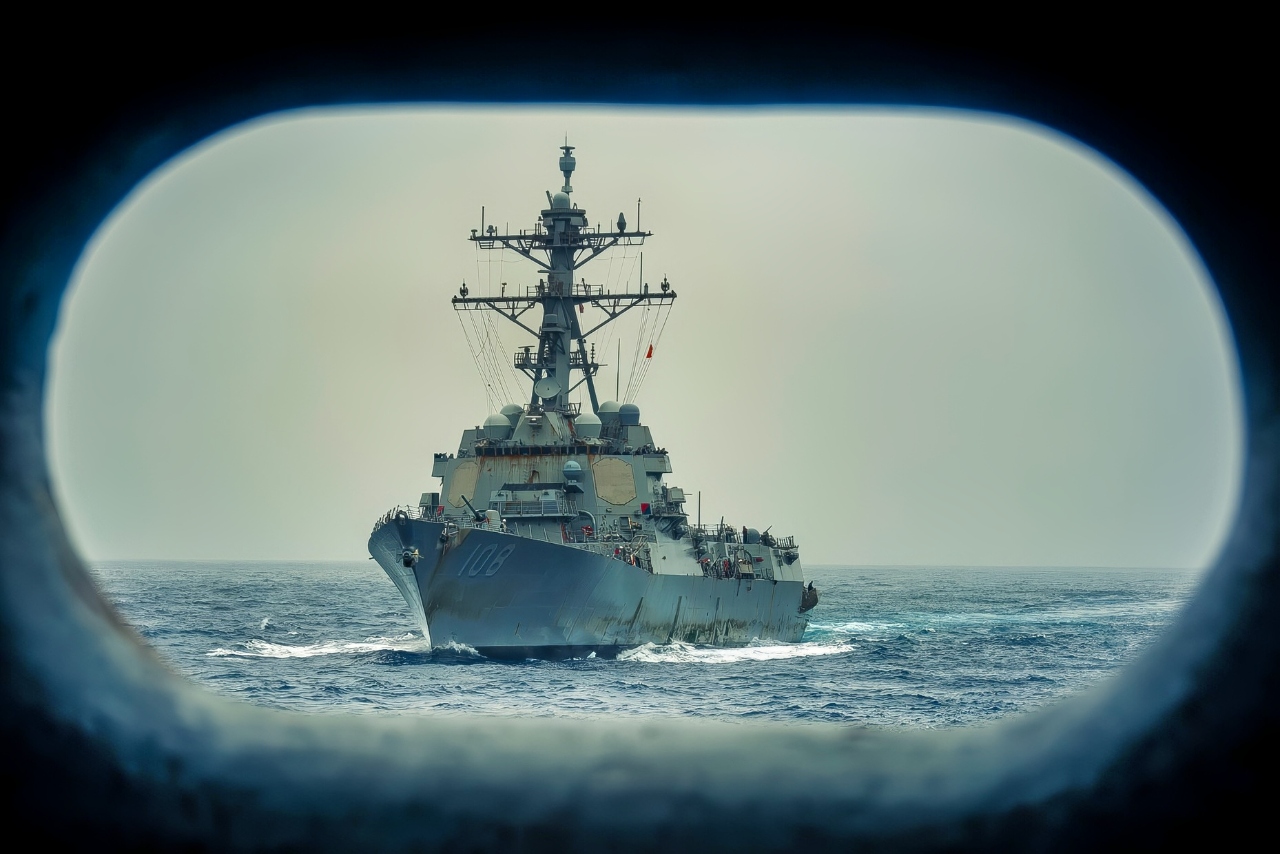
(August 1, 2025) The Arleigh Burke-class guided-missile destroyer USS Wayne E. Meyer (DDG 108) approaches the Nimitz-class aircraft carrier USS Nimitz (CVN 68) for a replenishment-at-sea in the U.S. Central Command area of responsibility. (Official U.S. Navy photo)
April 14, 1988. A contact mine blows a 15-by-25-foot hole below the waterline of the USS Samuel B. Roberts, wounds ten sailors, and nearly sinks the ship. Repairs take fourteen months and $96 million. The mine was Iranian, probably rolled off a dhow, and cost about as much as a decent used pickup.
Thirty-eight years is a long time to learn nothing.
After the U.S.-Israeli air campaign began on February 28, Iran mined the Strait of Hormuz. Airstrikes have since wiped out an estimated 90 percent of Tehran’s mine stockpile. RAND analyst Scott Savitz wrote last week that even a handful of mines remaining in the water has been enough to paralyze shipping through a chokepoint carrying roughly a quarter of global seaborne oil.
Washington’s response has been to argue about whether airstrikes went far enough and whether land invasion is the logical next step. You cannot invade your way out of a minefield, and the people making that argument have apparently forgotten how mine warfare works.
Iran does not need to sink ships. It needs to raise Lloyd’s war-risk insurance rates until commercial carriers refuse the route, and a credible mine threat — not an actual count of mines, just the plausible presence of them — does that.
Tehran has been pulling this lever for weeks at almost no cost.
In September 2025, the Navy decommissioned all four Avenger-class mine countermeasures ships based in Bahrain — USS Devastator, USS Dextrous, USS Gladiator, and USS Sentry — and sent them home. Four Avengers remained at Sasebo, Japan. When the crisis hit, two of them, USS Chief and USS Pioneer, were dispatched toward the Middle East — departing Singapore on April 10, weeks after Iran had already mined the Strait.
Meanwhile, CENTCOM used destroyers.
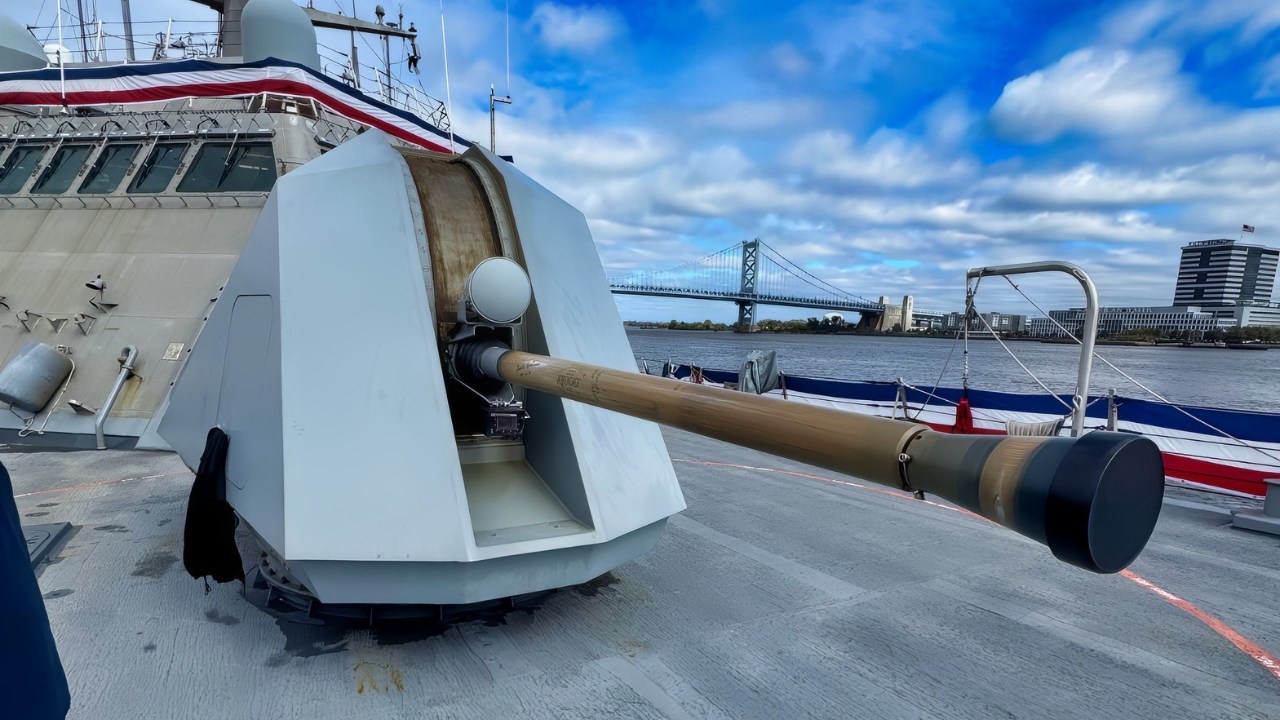
Littoral Combat Ship Deck Gun U.S. Navy. Image Taken by National Security Journal on October 14, 2025.
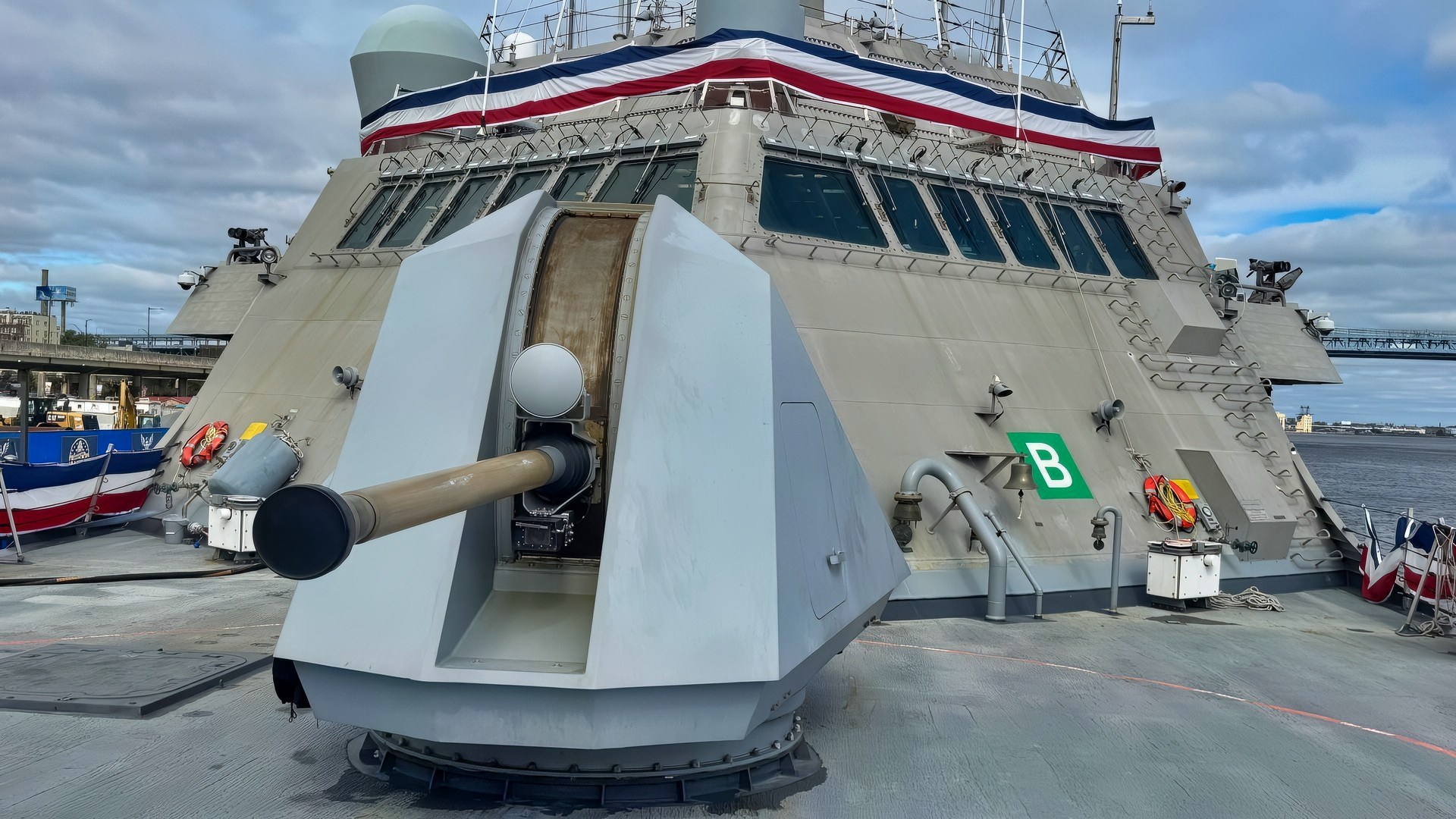
Littoral Combat Ship USS Cooperstown. Image Taken By National Security Journal October 14, 2025.

Littoral Combat Ship USS Cooperstown NSJ Photo Taken On October 14, 2025.
Their replacements in theater are Independence-class Littoral Combat Ships fitted with the Mine Countermeasures Mission Package: USS Canberra, USS Santa Barbara, and USS Tulsa, currently assigned to the Fifth Fleet. The MCM package took over a decade to develop, missed most of its deadlines, reached initial operational capability in 2023, and has never been demonstrated under real-world conditions. On April 11, CENTCOM sent USS Frank E. Petersen Jr. and USS Michael Murphy — Arleigh Burke guided-missile destroyers, neither designed for mine clearance, each worth north of $2 billion — into the Strait to “set conditions.” Read that as an admission: the Navy retired the specialized tools before it trusted the replacements.
The invasion argument sounds tidy on a map. Iran controls the northern coastline, so seize it.
But a mine laid three weeks ago by a fast boat at 2 a.m. does not need anyone to still be minding it. Iran could reportedly deploy hundreds of mines per sortie using small craft, frogmen, and shore-launched rocket systems that can seed a minefield from land without a vessel in the water.
Capturing Bandar Abbas tells you nothing about where a bottom-influence mine is resting in 30 feet of murky water in the shipping lane. Specialized sonar and EOD divers find it — an infantry battalion does not. Nor does an infantry battalion account for 90 million Iranians, mountain terrain that would have given Patton nightmares, and an IRGC that has been preparing for a coastal assault for four decades
. A land campaign would rank among the costliest operations the United States has conducted since Korea, after which the mines would still be in the water.
Before the war, Iran’s stockpile was estimated at between 2,000 and 6,000 mines. Ninety percent gone, and the remainder has shut down a chokepoint moving a quarter of global seaborne oil and a fifth of the world’s LNG. Mine warfare is cheap and fast to deploy and a nightmare to undo. Ground forces do not change that arithmetic.
The solution that never survives budget season is consistent, serious investment in mine countermeasures — a line item that has never beaten a carrier in a procurement fight. The MCM program drifted for a decade while Congress chased the F-35 and the next supercarrier, and the GAO flagged the delays, the cost overruns, and the capability shortfalls repeatedly without producing urgency downstream. The Avengers aged out, the LCS packages took their place untested, and the gap between retiring the proven tools and certifying the new ones landed squarely on a live crisis. Call it a coincidence if it helps.
The Samuel B. Roberts crew could have told you in 1988 why dedicated mine countermeasure ships belong permanently in theater. The Navy built the Avengers, stationed them in Bahrain, and kept them there for thirty years.
Then pulled them out six months early.
About the Author: Dr. Andrew Latham
Andrew Latham is a professor of international relations and political theory at Macalester College in Saint Paul, MN. You can follow him on X: @aakatham.


