

Summary and Key Points: Iran has effectively closed the Strait of Hormuz without firing a single shot. By threatening cargo ships with drones, missiles, sea mines, swift boats, and midget submarines, Tehran has created a fear-based blockade — global insurance companies are now raising premiums and refusing to pay claims, and shipping firms are avoiding the strait entirely. Iran is also demanding that Google, Microsoft, Meta, and Amazon pay licensing fees on their undersea internet cables, with exclusive repair rights given to Iranian firms.
The Strait of Hormuz Crisis Is Getting Worse

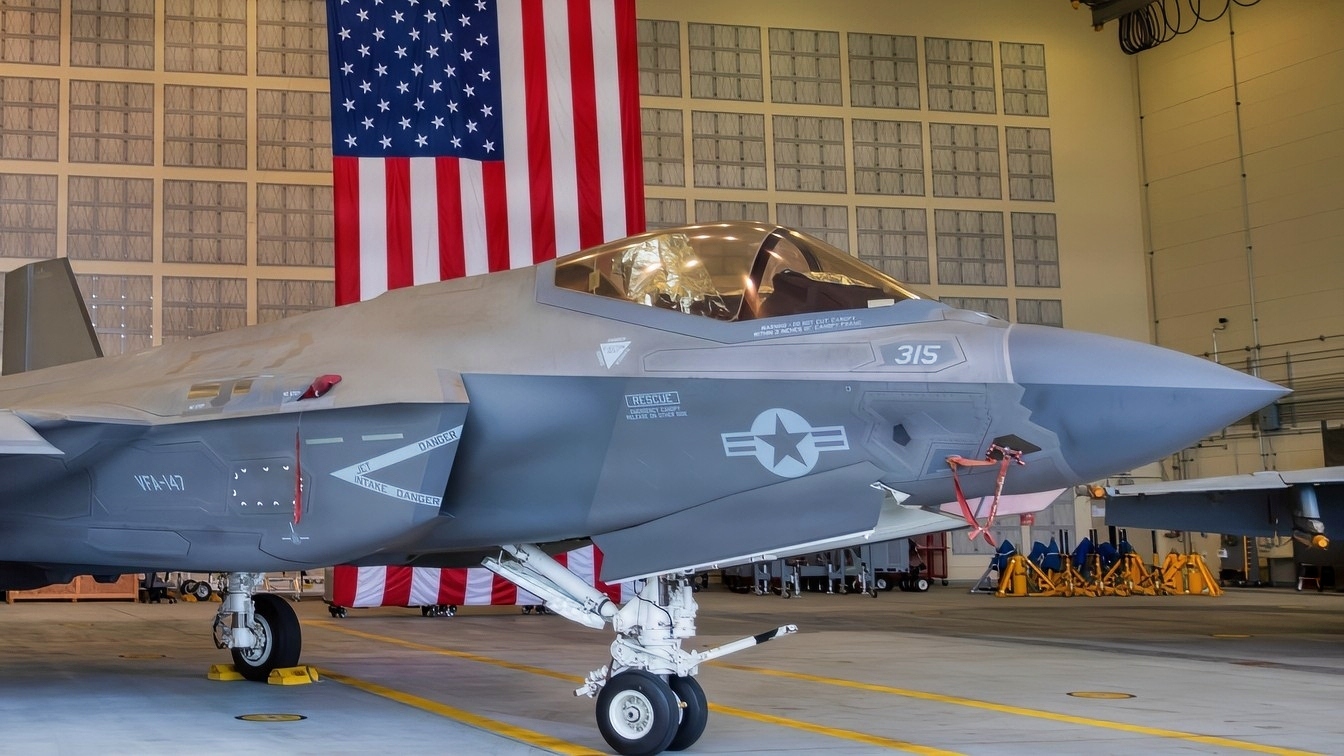
At sea (Mar. 1, 2007) – Capt. Craig “Animal” Williams (front) in a F/A 18C Hornet (front) and Capt. Richard “Rhett” Butler (back) in an F/A 18C Hornet look up for a photo as they fly over USS Ronald Reagan (CVN 76). Capt. Williams, a 22-year Naval Aviator who graduated from the United States Naval Academy, was relieved as Commander, Carrier Air Wing Fourteen (CVW-14) by 21-year Naval Aviator, Capt. Butler, a graduate of the University of Kentucky during an aerial change of command ceremony. The Ronald Reagan Carrier Strike Group is currently underway in the Pacific Ocean on a surge deployment in support of U.S. military operations in the Western Pacific. Official U.S. Navy photo by Lt. Cmdr. Tam Pham
(RELEASED)
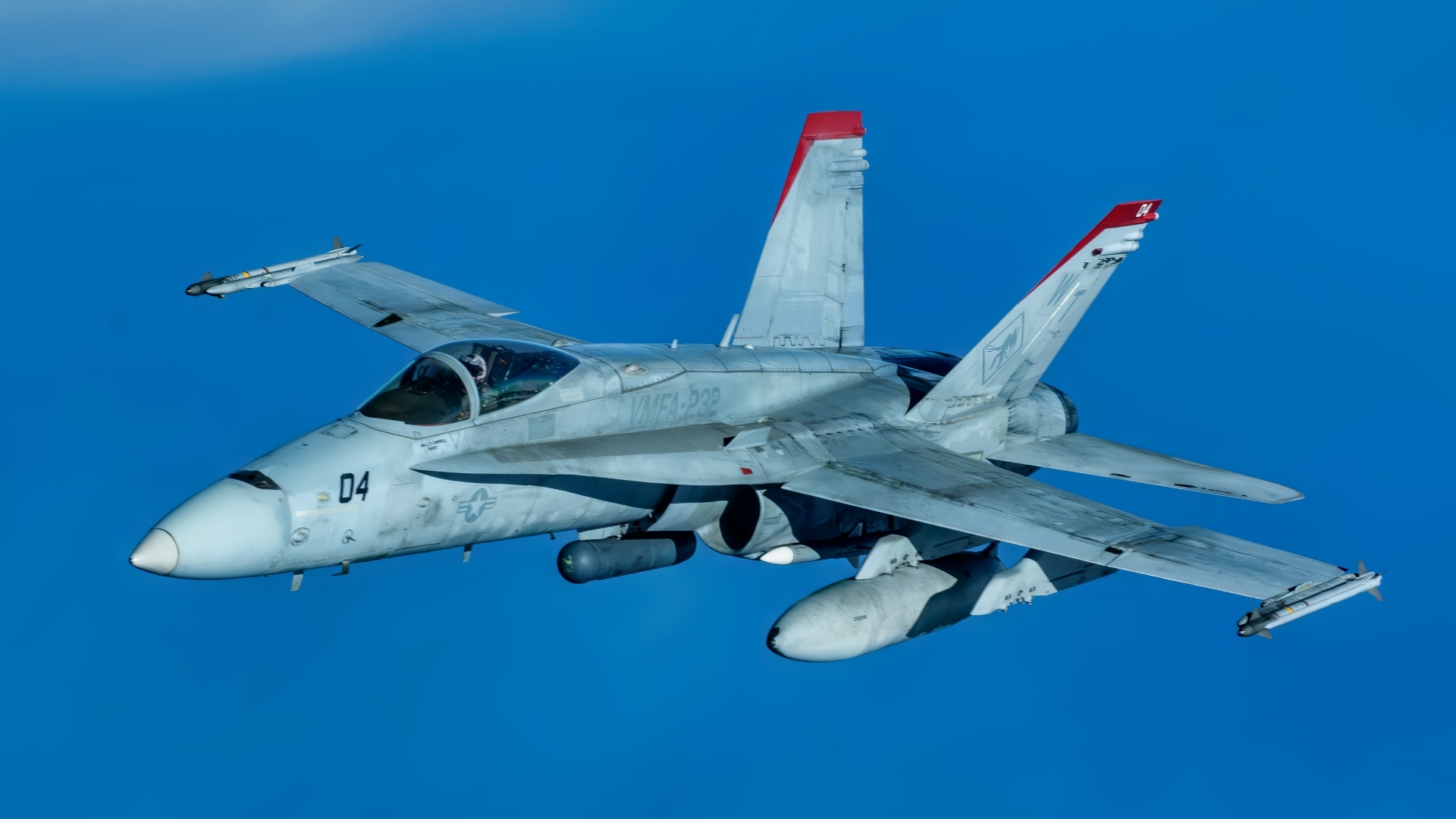
A U.S. Marine Corps F/A-18 Hornet pulls away from a U.S. Air Force KC-135 Stratotanker from Kadena Air Base after refueling over the Pacific Jan. 3, 2024. Conducting joint operations enhances the lethality and readiness of U.S. forces and its ability to project superior airpower to the Indo-Pacific region. (U.S. Air Force photo by Senior Airman Cedriue Oldaker)
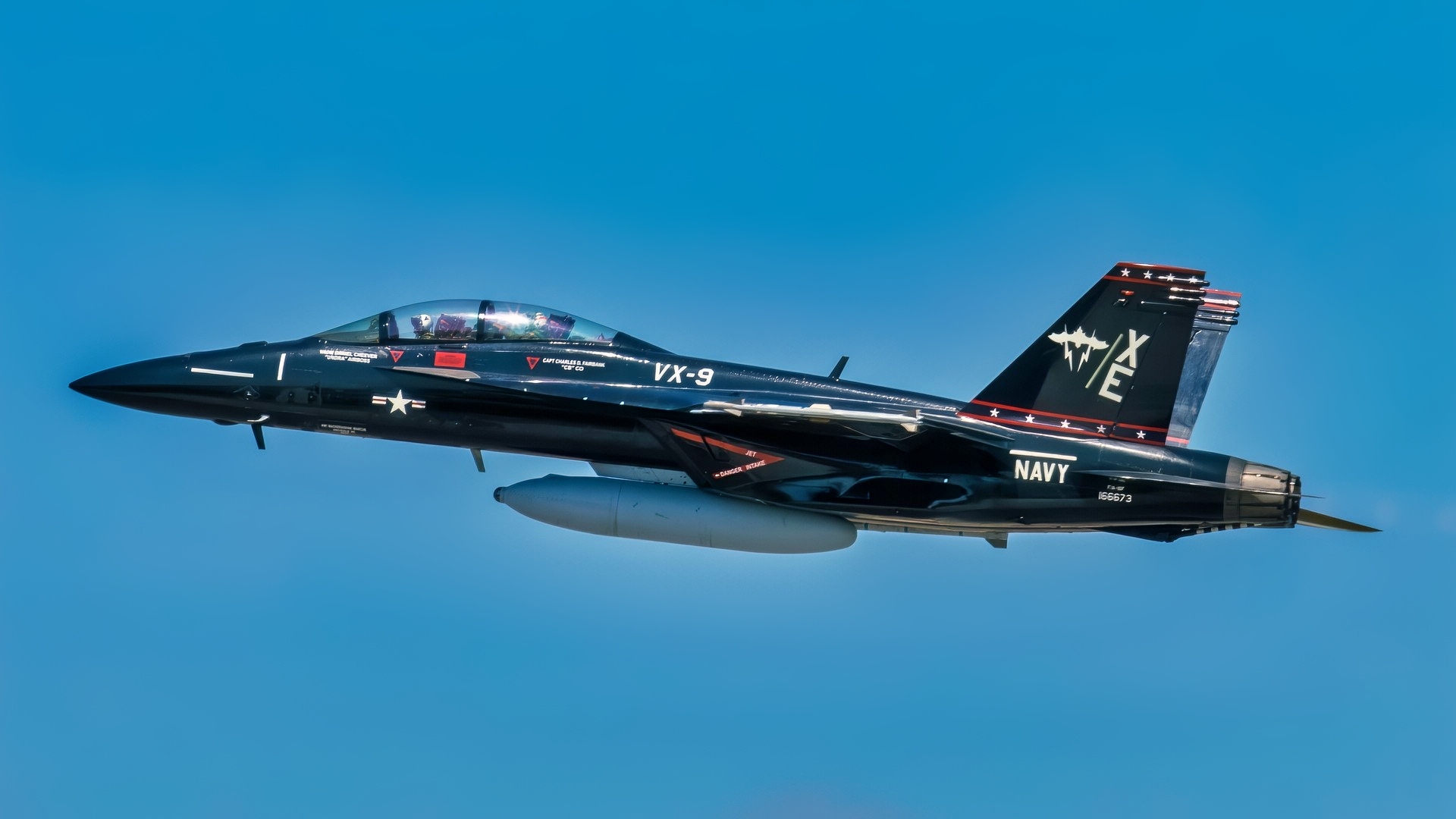
An F/A-18F Super Hornet attached to Air Test and Evaluation Squadron (VX) 9, the “Vampires,” takes off from Naval Air Station Point Mugu, California, September 11, 2025. Gray Flag 2025 is the naval aviation test community’s premier large force test event, providing unique venues for large scale integration of new capabilities across services and platform. Working with the Joint Force, industry, and our nation’s allies to ensure seamless integration and interoperability is key to ensuring warfighters have a decisive advantage in the field. (U.S. Navy photo by Mass Communication Specialist 2nd Class John T. Jarrett)
With the Strait of Hormuz being effectively closed, Iran has stumbled on an effective strategy. The Iranians have made fear their ally. Tehran does not have to order a ship attack; it just depends on the threat of violence to forge a path forward that stymies the United States and the West.
This is a “fear-based” blockade using drones, missiles, sea mines, and swift boats that show countries that run civilian cargo ships and oil tankers they can not operate as usual with such a high amount of risk. This a version of Iranian psychological and cognitive warfare. Tehran does not have to destroy a ship for its blockade strategy to be effective. Just the simple use of asymmetric weapons is enough to create a situation in which ship owners want no part in violence.
Fear is Creating Chaos
This results in high expenses and a lack of confidence in the allied shipping industry. No ship owner wants a destroyed vessel, so no one is liable to take any action to break the blockade. Take sea mines, for example. Iran is using these instruments of war to create an anti-access/ area denial gambit. Ships are stuck, with no real opportunity to maintain course to their final destination.
The Iranian Mosquito Fleet
Cargo ships and tankers are constantly harassed by the small but heavily armed swift boats. These sea craft are not only a nuisance, but they are a constant reminder that Iran is in charge of the strait. The swift boats are crafty, and the sailors on board are expert at running different types of tactics to keep ship captains guessing at what they will do next. No commander wants to be the first victim of a swift boat attack. They serve as a deterrent force and are inexpensive to operate.
Iran also has a strong force of reconnaissance and attack drones. There are unmanned surface vessels that could ram a ship and Iranian midget submarines that could launch a torpedo to damage or destroy a cargo ship or tanker.
Iran Is Playing the Long Game
Tehran knows that it can conduct these tactics indefinitely. They are exerting economic leverage over the rest of the world. Oil prices will remain high for the rest of the summer, keeping pressure on the United States and its allies to sustain economies that are already beset by inflation and stagnant wage growth.
Monetary Tolls on the Use of Subsea Communication Cables
Iran has also acquired a new strategy. They hope to control the undersea cable network in the strait. The cables carry internet traffic and financial data, the lifeblood of the global economy. Tehran wants countries that depend on subsea cables to pay some form of toll, or it could curtail internet traffic or eliminate it entirely.
Threats and Fear as Deterrence
This would sever the connections among the Middle East, North America, and Europe. It is unclear how much these tolls would cost or how the money would be collected. But Tehran is using the threats to continue its fear tactics. The Iranians only have to threaten the Americans and their allies, and this can cause financial markets to dive and keep countries guessing as to how serious the Iranians are about asymmetric and cognitive warfare.
“We will impose fees on internet cables,” Iranian military spokesperson Ebrahim Zolfaghari said on X recently. “Iran’s Revolutionary Guards media outlets said Tehran’s plan to extract revenue from the strait would require companies like Google, Microsoft, Meta, and Amazon to comply with Iranian law while submarine cable companies would be required to pay licensing fees for cable passage, with repair and maintenance rights given exclusively to Iranian firms,” according to CNN.
This could affect global internet connectivity and penalize countries that depend on the services of large technology companies. Iran only needs to threaten these actions to create a level of fear that could eventually paralyze internet usage.
Watch Out for Sea Mines
The use of sea mines is also palpable.
One aspect of the blockade due to threats of mines is that global maritime insurance companies are either raising premiums or refusing to pay claims if a ship were to be hit by a mine. This threat of mines is something Iran can also carry out with little effort. The sea mines are inexpensive and relatively easy to deploy. The U.S. Navy is very concerned and has destroyed Iranian mine-laying vessels in the past. But it takes only one hit from a mine for the continued blockage of the strait. If a ship were damaged or sunk, global financial markets would be in a tailspin, and the price of oil would spike.
The Potential of a Full-on Kinetic Missile Fight
There is also the fear of a full-fledged Kinetic Missile Fight in the Strait of Hormuz. In the Kinetic Missile Fight, a proliferation of cheap drones and precision missiles levels the playing field for smaller actors. This is a framework for thinking about 21st-century war as high-volume missile and drone duels where logistics, production rates, and defensive interceptors are decisive.
“As long as Iran has drones and missiles and Iran continues to fire them, I think many commercial shippers are going to think it’s just too dangerous, even with an escort to pass through the Strait,” according to Matthew Kroenig, senior director of the Scowcroft Center for Strategy and Security at the Atlantic Council, as reported by NPR.
Iran Will Scare Countries and Their Ships
Fear is thus an effective strategy in Iran’s war. Ships cannot move where they want to because of the threat of missiles, drones, mines, and swift boats. No shipping company wants to lose a vessel.
Insurance companies do not want to make a payout for a lost ship, and some are refusing to cover shipping firms. Tehran could conceivably make countries pay a toll for the continued use of subsea information technology cables that connect the world via the internet.
Iran can wage this fear war for many months. The use of psychological and cognitive principles of warfare has been effective already, and the Americans and their allies must resist these deterrent actions and try to mitigate the threats. Using fear is a winning strategy for Iran, and it remains to be seen whether the strait will ever open in the coming months.
About the Author: Dr. Brent M. Eastwood
Author of now over 3,500 articles on defense issues, Brent M. Eastwood, PhD, is the author of Don’t Turn Your Back On the World: A Conservative Foreign Policy and Humans, Machines, and Data: Future Trends in Warfare, plus two other books. Brent was the founder and CEO of a tech firm that predicted world events using artificial intelligence. He served as a legislative fellow for US Senator Tim Scott and advised the senator on defense and foreign policy issues. He has taught at American University, George Washington University, and George Mason University. Brent is a former US Army Infantry officer. He can be followed on X @BMEastwood.


Don & Robin Forcash
May 27, 2026 at 1:36 pm
Brent – The title is erred. Iran did not “close the strait of Hormuz without firing a shot”. Reuters has tracked this and reports 22 commercial vessels have been attacked by Iran off of their gulf coasts, of which 13 were specifically in the strait of Hormuz. Unfortunately, although I did not fact-check the other data in your article, that gross error or disingenuous reporting causes readers to question the credibility of that data and the author.