

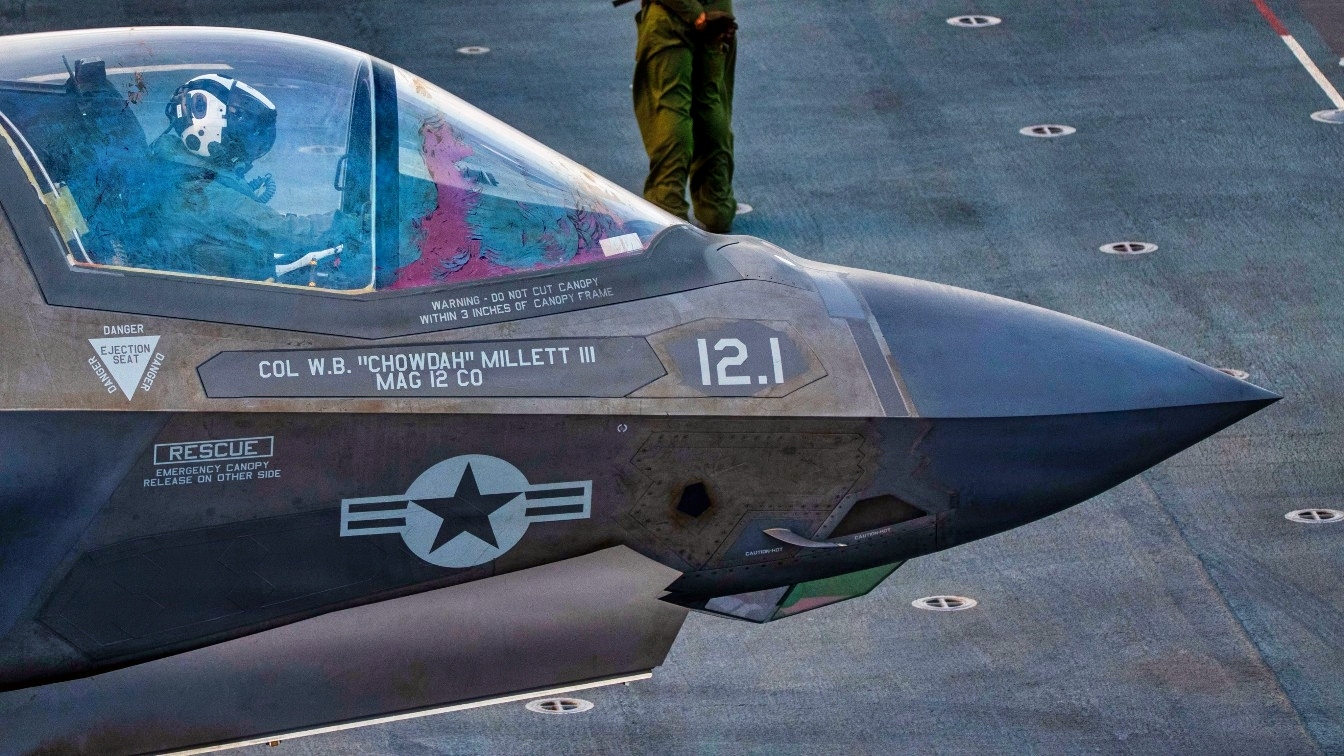
Summary and Key Points: Iran’s Islamic Revolutionary Guard Corps claims it has opened fire on an American F-35 stealth fighter, shot down an MQ-9 Reaper drone, and forced an RQ-4 intelligence aircraft to retreat from Iranian airspace — claims neither U.S. Central Command nor independent observers have confirmed.
-The announcements followed U.S. self-defense strikes on Bandar Abbas, a southern Iranian port city on the Strait of Hormuz, targeting Iranian missile launch sites and IRGC boats reportedly attempting to lay mines.

U.S. Air Force Capt. Kristin “Beo” Wolfe, F-35A Lightning II Demonstration Team commander and pilot, takes off from Selfridge Air National Guard base for the 2020 London SkyDrive Air Show in Canada Sep. 12, 2020, Harrison Township, Mich. The F-35 Demo Team flew alongside the F-16 Viper, the F-22 Raptor, the A-10 Thunderbolt II, and the Air Force Thunderbirds aerial demonstration teams in London, Ontario, Canada. (U.S. Air Force photo by Capt. Kip Sumner)
Iran Wants to Battle the F-35
Iran’s Revolutionary Guard Corps (IRGC) claim to have opened fire on an F-35 fighter jet and shot down an American MQ-9 reaper drone – as tensions surge despite the rumors of an impending peace deal.
The IRGC warned that it reserved the “legitimate and definite” right to retaliate against any alleged violations of the ceasefire by the United States.
The IRGC also claimed it opened fire on an RQ-4 intelligence-gathering drone, forcing the aircraft to retreat from Iranian airspace.
Neither the United States nor independent international observers have confirmed Iran’s claims regarding the downing of the MQ-9 Reaper drone or the reported engagement with the F-35 fighter jet.
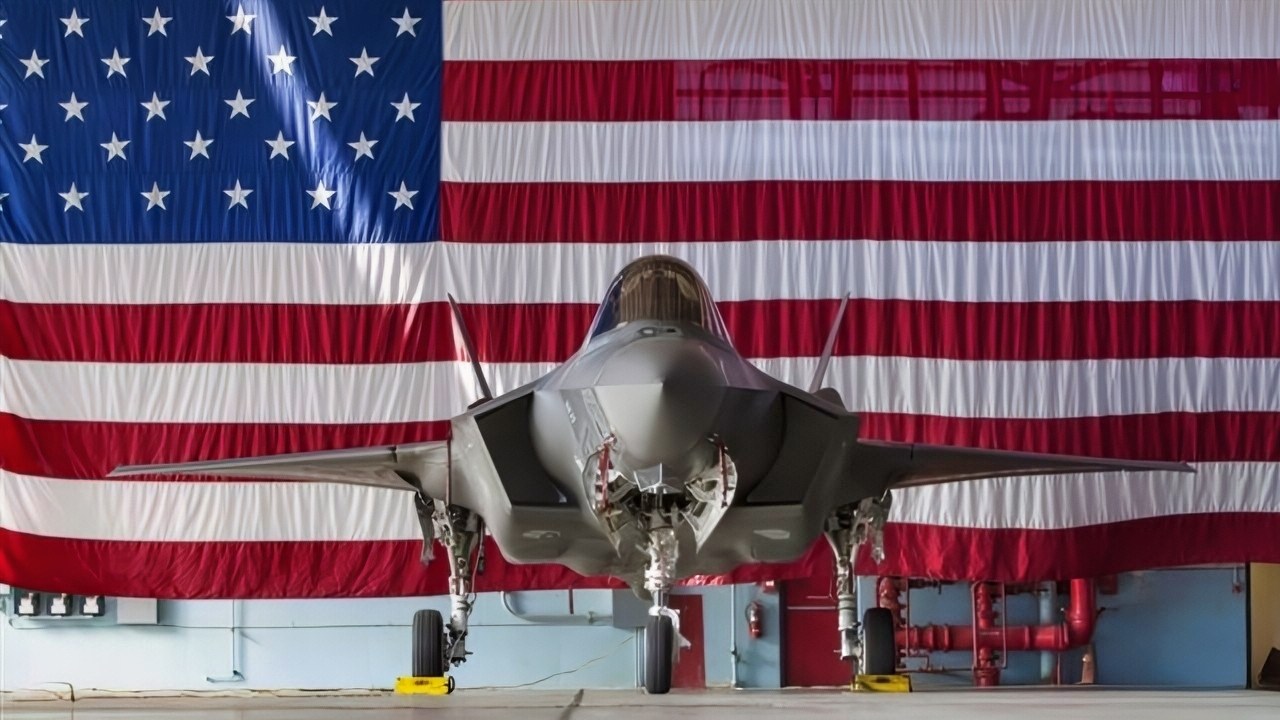
F-35 Fighter Image by Lockheed Martin
An F-35 in March
During an airstrike in March, an F-35 was hit and damaged by anti-aircraft fire, resulting in the aircraft being forced to make an emergency landing at a US airfield in the Middle East. The pilot was wounded in the encounter.
The F-35 was probably hit by an Iranian MANPADS, a short-range weapon used against aircraft flying low to the ground.
The stealth fighter’s design is primarily optimized to evade radar, but it can still be targeted by heat-seeking missiles and electro-optical (EO) tracking systems if it flies within visual or infrared range of a ground threat.
While any aircraft can be shot down if the circumstances allow, the F-35, operated by Israel and the United States, has been remarkably safe from Iranian anti-aircraft fire.
Capt. Tim Hawkins, a spokesperson for US Central Command, said the fifth-generation stealth jet was “flying a combat mission over Iran” when it was forced to make an emergency landing. Hawkins said the aircraft landed safely.
“The aircraft landed safely, and the pilot is in stable condition,” Hawkins added. “This incident is under investigation.”
US Conducts Self-Defense Strikes On IRGC
The Iranian claims came shortly after the U.S. military said late Monday it had launched “self-defense strikes” that included “missile launch sites and Iranian boats attempting to emplace mines.”

U.S. Air Force Maj. Melanie “Mach” Kluesner, pilot of the F-35A Demonstration Team, performs aerial maneuvers at the Sun ‘n Fun Airshow in Lakeland, Florida, April 1, 2025. The team travels across the country to demonstrate the unmatched capabilities of the F-35A Lightning II and highlight the skill of U.S. Air Force pilots. (U.S. Air Force photo by Senior Airman Nicholas Rupiper)
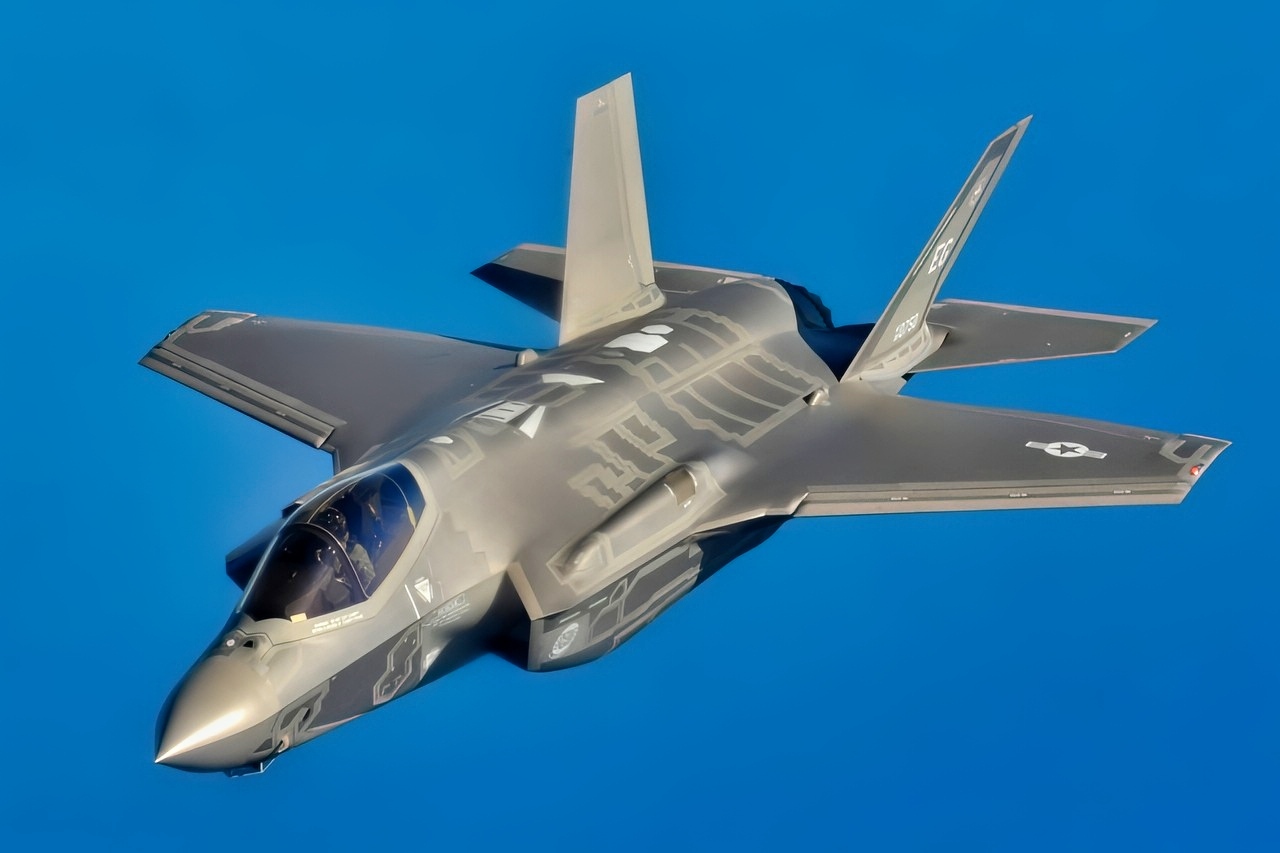
U.S. Air Force F-35A Lightning II Joint Strike Fighters from the 58th Fighter Squadron, 33rd Fighter Wing, Eglin AFB, Fla. perform an aerial refueling mission with a KC-135 Stratotanker from the 336th Air Refueling Squadron from March ARB, Calif., May 14, 2013 off the coast of Northwest Florida. The 33rd Fighter Wing is a joint graduate flying and maintenance training wing that trains Air Force, Marine, Navy and international partner operators and maintainers of the F-35 Lightning II. (U.S. Air Force photo by Master Sgt. Donald R. Allen/Released)
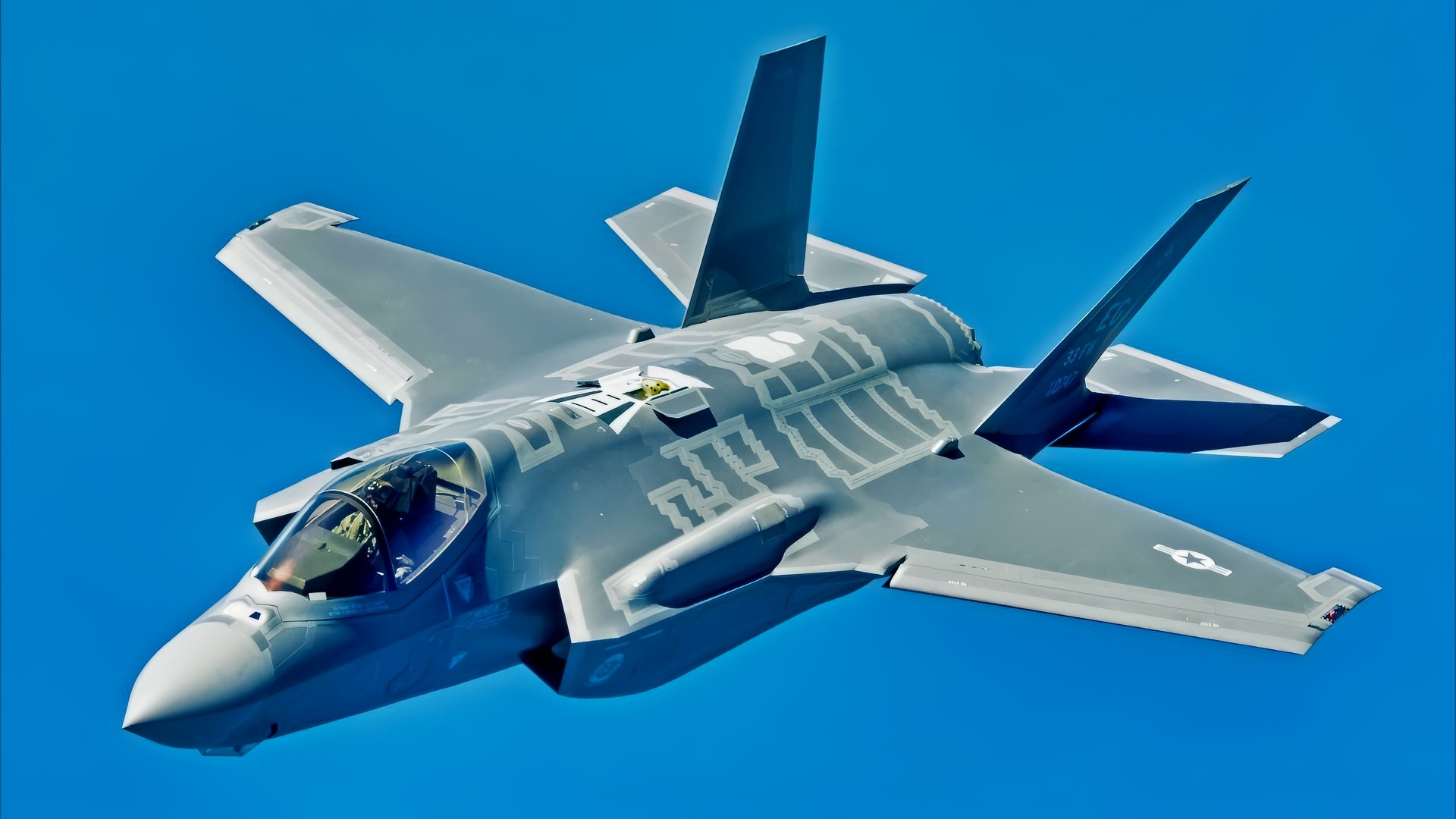
U.S. Air Force F-35A Lightning II Joint Strike Fighter pilots from the 58th Fighter Squadron, 33rd Fighter Wing, Eglin AFB, Fla., navigate their aircraft toward an Air Force Reserve KC-135 Stratotanker from the 336th Air Refueling Squadron, March ARB, Calif., May 16, 2013, off the coast of northwest Florida. The 33rd Fighter Wing is a joint graduate flying and maintenance training wing that trains Air Force, Marine, Navy and international partner operators and maintainers of the F-35 Lightning II. (U.S. Air Force photo by Master Sgt. John R. Nimmo, Sr./RELEASED)
They were launched against Bandar Abbas, a southern port city and home of an Iranian naval base that sits on the Strait of Hormuz, a defense official said.
“U.S. Central Command continues to defend our forces while using restraint during the ongoing ceasefire,” CENTCOM spokesman Captain Tim Hawkins added.
Further details were not available; however, the Iranian news website Tabnak, believed to be close to former Revolutionary Guard chief Mohsen Rezaei, identified four dead Guard troops it said had been killed in American strikes on boats.
Iranian state television separately reported blasts around Bandar Abbas, a city on the Strait of Hormuz home to a military port and a dual-use airport.
The F-35 Is Essentially Four Aircraft In One
The F-35 is the most advanced aircraft in the world, and it isn’t close to #2. Despite the continuing bad press, the Lightning II has more than proved its worth. Which is why 20 countries are flying it.
The American-built F-35 is, in essence, three different fighters, with each of the three variants—the F-35A, F-35B, and F-35C—designed for different operating environments and roles. And the F-35I Adir variant of the Israeli Air Force is arguably a fourth aircraft.
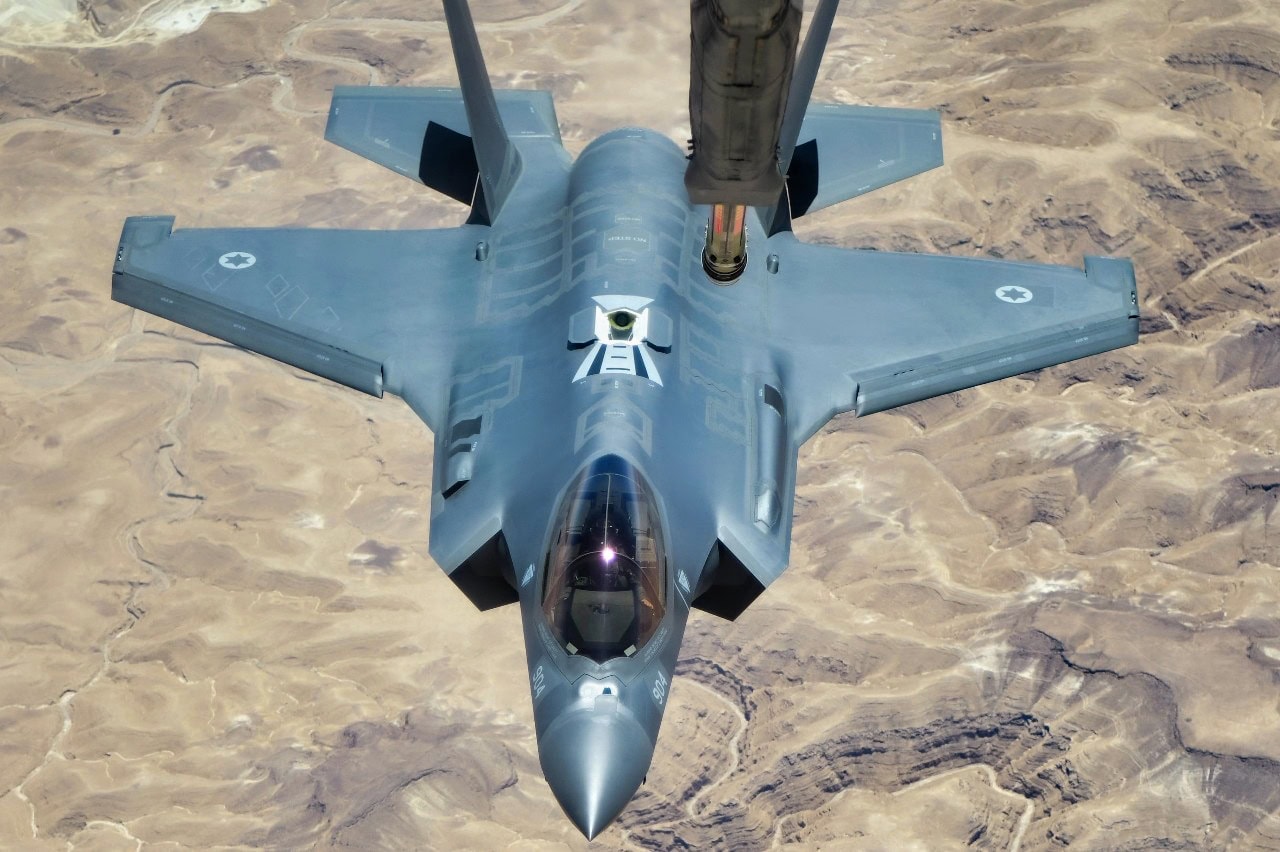
F-35I Adir. Image Credit: Creative Commons.

F-35I Adir. Image Credit: Creative Commons.

F-35I Adir. Image Credit: Creative Commons.
The F-35A is a conventional takeoff and landing (CTOL) jet for the Air Force, the F-35B is a short-takeoff/vertical-landing (STOVL) variant for the Marine Corps and international partners, and the F-35C is a carrier-based (CV) version for the Navy.
The Israeli variant, the F-35I Adir, “Mighty One,” was designed and has been heavily modified to suit Israel’s specific operational needs.
“Supreme Leader” Khamenei Claims Victory
Meanwhile, Iran’s Supreme Leader, Mojtaba Khamenei, also released a statement saying Middle East powers will no longer be “a shield” for US military bases, and the US will no longer have a “safe haven” in the region.
He claimed victories for the “axis of resistance”, including Lebanon, saying Iranian proxy forces have taught a lesson to the Americans and the “Zionist entity”. Khamenei also called on Islamic nations and other countries to share common interests.
Khamenei hasn’t been seen in public since being named Supreme Leader after his father was killed in an airstrike at the start of the current air campaign. He was reportedly injured in U.S. and Israeli strikes in Operation Epic Fury, and is taking extreme measures to avoid the strikes similar to the ones that killed his father.
He has operated through a series of couriers to keep his location a secret.
About the Author: Steve Balestrieri
Steve Balestrieri is a National Security Columnist. He served as a US Army Special Forces NCO and Warrant Officer. In addition to writing on defense, he covers the NFL for PatsFans.com and is a member of the Pro Football Writers of America (PFWA). His work was regularly featured in many military publications.


