

Summary and Key Points: Congress and the Pentagon are reviewing the Ford-class aircraft carrier program — including whether the CVN-80 and CVN-81 block buy actually delivered the promised savings before authorizing a future CVN-82 and CVN-83 block.
-The Ford-class supply chain involves over 2,000 specialized sub-vendors, and abruptly canceling the line would collapse the U.S. carrier industrial base. Designing, testing, and certifying a clean-sheet replacement would take 10 to 15 years before the first steel is cut.
The Ford-Class Aircraft Carrier Challenge Is Clear

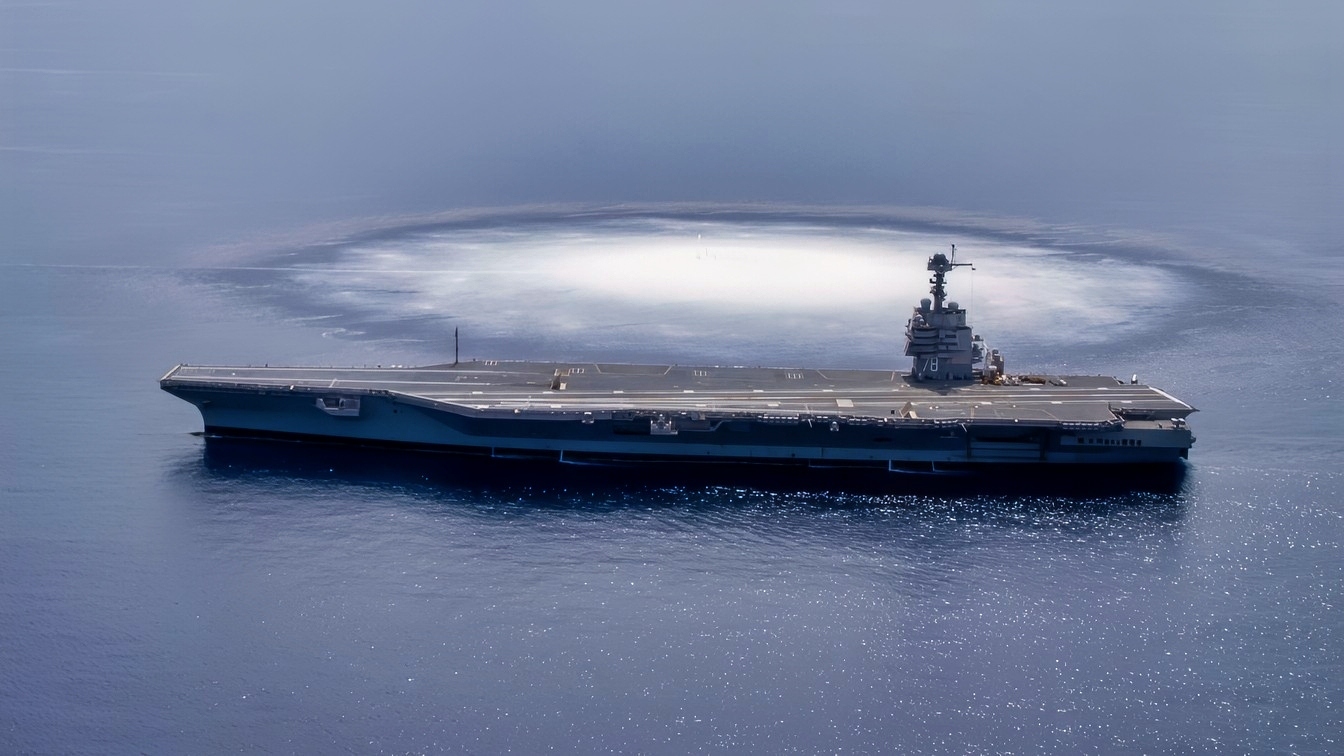
The world’s largest aircraft carrier USS Gerald R. Ford (CVN 78) steams in the Adriatic Sea, June 23, 2023. Gerald R. Ford is the U.S. Navy’s newest and most advanced aircraft carrier, representing a generational leap in the U.S. Navy’s capacity to project power on a global scale. The Gerald R. Ford Carrier Strike Group is on a scheduled deployment in the U.S. Naval Forces Europe area of operations, employed by U.S. Sixth Fleet to defend U.S., allied, and partner interests. (U.S. Navy photo by Mass Communication Specialist 2nd Class Jackson Adkins)
Congress and the Pentagon are reviewing the Ford-class carrier, specifically its industrial capacity, cost overruns, and the shifting realities of the Indo-Pacific.
The core of the review considers whether the block-buy strategy, used for the forthcoming CVN-80 and CVN-81, actually provides taxpayers with the advertised savings. The findings will be used to determine whether another block buy for CVN-82 and CVN-83 should be authorized in the future.
At the same time, Ford’s operational testing reports for the EMALS and Advanced Weapons Elevators are being considered to determine whether the design architecture should be frozen to prevent costly mid-construction design changes.
Meanwhile, the review is raising serious questions about the future of the Ford-class. Should the Navy buy an alternative? What is the future of US power projection?
Buying an Alternative
Buying an alternative to the Ford-class won’t likely work; the US is structurally locked into the Ford.
Building a clean-sheet alternative would potentially take decades to pull off, basically precluding the motion. Indeed, designing a completely new class of carrier, testing it, and achieving all the regulatory certifications—it would take at least 10 to 15 years before the first piece of steel was even cut.
Delays to carrier production would have industrial ramifications.
At present, carrier manufacturing relies heavily on a very fragile national supply chain of over 2,000 specialized sub-vendors. The people and companies making very specific valves and steels and plumbing components—all of the millions of parts that comprise a 1,000-foot-long supercarrier.
If the Navy were to abruptly cancel the Ford line to adopt a new design, the vendors that make the specialized Ford components would lose some or all of their revenue, which would force layoffs of skilled workers and, in many cases, the closure of the vendor itself.

The aircraft carrier USS Gerald R. Ford (CVN 78) completes the first scheduled explosive event of Full Ship Shock Trials while underway in the Atlantic Ocean, June 18, 2021. The U.S. Navy conducts shock trials of new ship designs using live explosives to confirm that our warships can continue to meet demanding mission requirements under harsh conditions they might encounter in battle. (U.S. Navy photo by Mass Communication Specialist 3rd Class Riley B. McDowell)
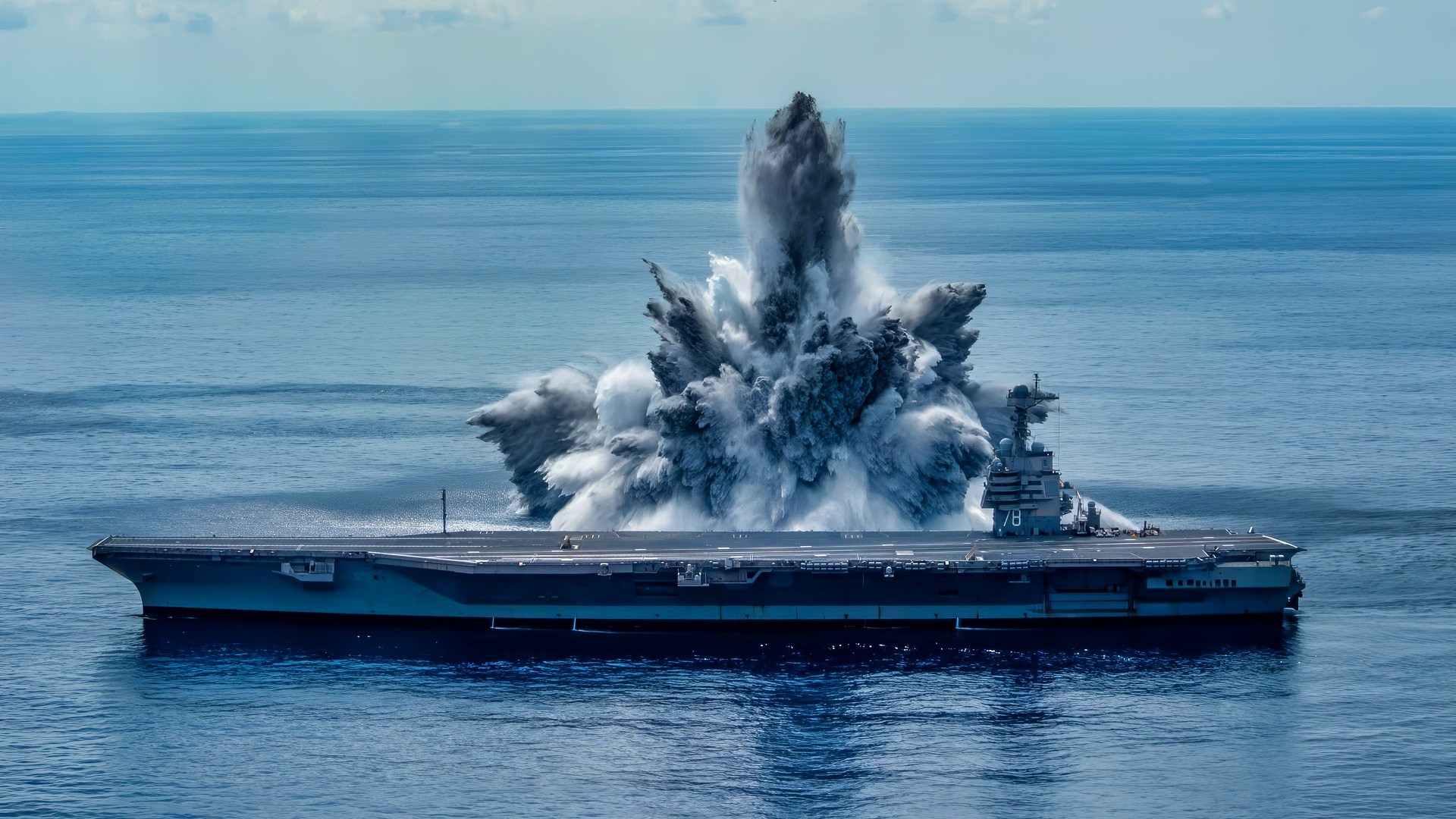
The aircraft carrier USS Gerald R. Ford (CVN 78) successfully completes the third and final scheduled explosive event of Full Ship Shock Trials while underway in the Atlantic Ocean, Aug. 8, 2021. The U.S. Navy conducts shock trials of new ship designs using live explosives to confirm that our warships can continue to meet demanding mission requirements under harsh conditions they might encounter in battle. (U.S. Navy photo by Mass Communication Specialist 3rd Class Novalee Manzella)
By the time the US was ready to start building its Ford alternative, in 15 years or so, the industrial base required to build the thing would have likely collapsed, and would need to be rebuilt from scratch, making the new program exponentially more expensive than the Ford, which already costs about $13 billion per unit, more than any other warship in human history.
Longer-Range Options
The US is looking into long-range options that would change what launches from carrier decks—thereby keeping the Ford relevant against China’s long-range anti-ship missile network.
As recent headlines have indicated, the Navy is pushing the integration of the MQ-25 Stingray unmanned aerial refueling tanker. This would change circumstances significantly, giving the Navy a way to refuel fighters mid-air and effectively doubling the combat strike radius of the carrier air wing to over 1,000 miles.
This effort mirrors Air Force efforts to field a next-generation of stealth tankers capable of operating within China’s A2/AD network.

A MQ-25 Stingray sits parked in Hangar 1 on Scott Air Force Base, Illinois, May 12, 2023. The MQ-25 Stingray will be the world’s first operational, carrier-based unmanned aircraft and provide aerial refueling and intelligence, surveillance and reconnaissance (ISR) capabilities that enhance capability and versatility for the Carrier Air Wing (CVW) and Carrier Strike Group (CSG). (U.S. Air Force photo by Staff Sgt. Solomon Cook)
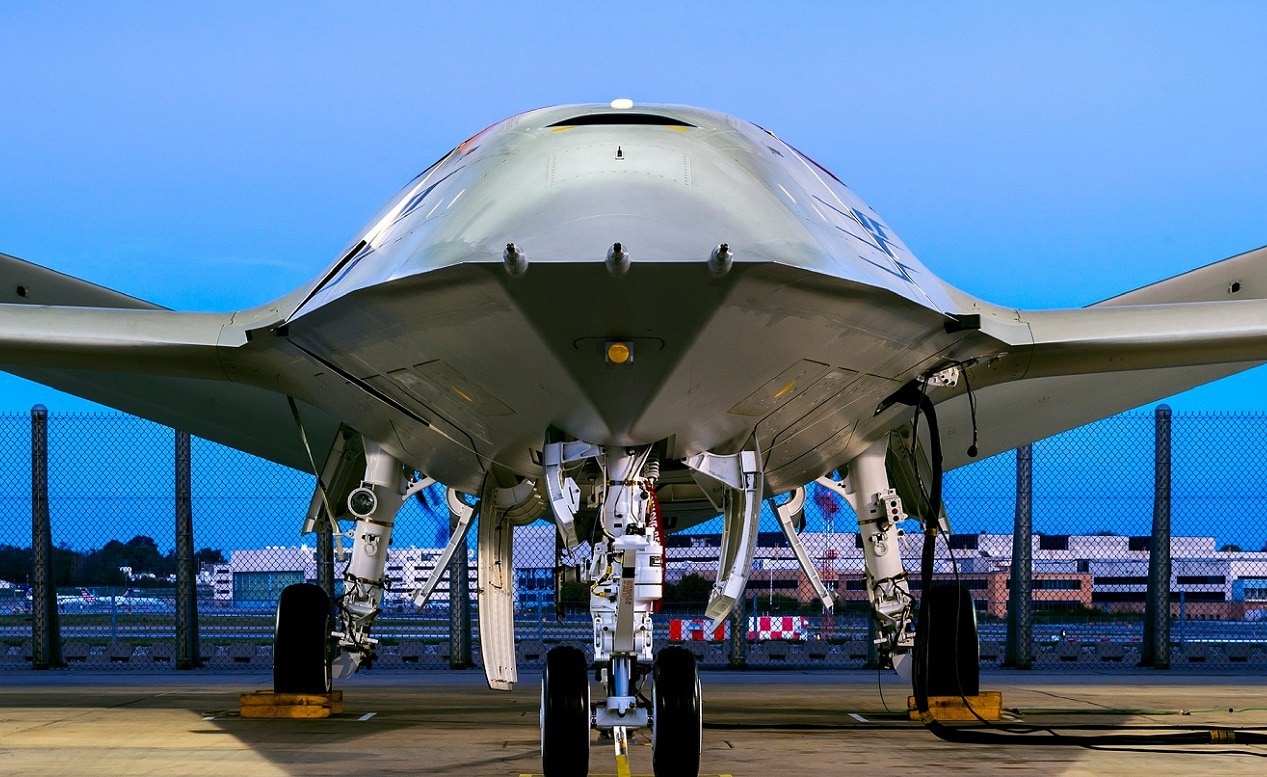
MQ-25. Image Credit: Creative Commons.
The MQ-25 effort is further along, however, and offers a near-term technological leap that would allow the Ford-class to launch lethal strikes while parking beyond the range of China’s land-based missiles.
Adjusting Grand Strategy
The ongoing review will need to confront the reality that the Navy is struggling to maintain its legally mandated 11-carrier fleet without pushing sailors and shipbuilders in an unsustainable way.
However, reducing the number of carrier hulls available is not compatible with America’s current grand strategy. Were the US hypothetically to pivot away from liberal internationalism, under which the US polices every ocean, at all times, toward offshore balancing and defensive realism, a smaller carrier fleet would become a possibility.
Under an offshore balancing framework, the US could potentially shrink its active supercarrier fleet to six or fewer hulls.
This would alleviate the tremendous pressure currently facing the Navy to maintain a forward-presence patrol in the Middle East and the Western Pacific. The remaining carrier fleet could be kept as a strategic deterrent, deployed only as a last resort.
Granted, this re-visioning of US grand strategy won’t happen, and isn’t really being discussed as a remedy to the ongoing carrier problem.
But it gets to the root of the problem: the US is pursuing goals with a strained carrier fleet that it may lack the resources to sustain indefinitely.
About the Author: Harrison Kass
Harrison Kass is a writer and attorney focused on national security, technology, and political culture. His work has appeared in City Journal, The Hill, Quillette, The Spectator, and The Cipher Brief. He holds a JD from the University of Oregon and a master’s in Global & Joint Program Studies from NYU. More at harrisonkass.com.


