

One of the first things I did when I moved to a new home just south of Orlando after leaving national security think tank-land in DC was to make as many contacts in the space community as I could. I have been fortunate to meet a number of past and present SpaceX employees, and I have to say they are some of the smartest and most fascinating people I have ever met. In fact, my uncle worked for NASA, helping design and maintain the Space Shuttle back in the 1980s and 1990s.
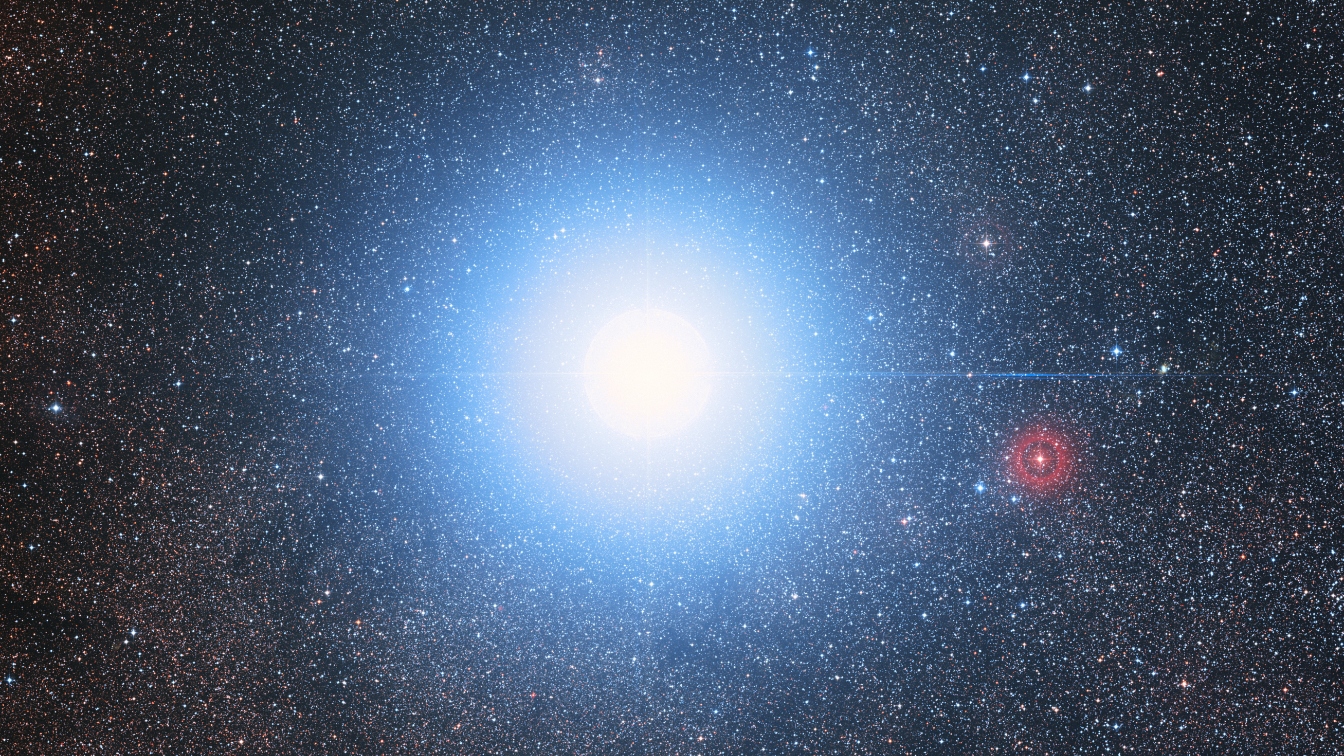
A former SpaceX engineer told me something at a dinner conversation last week that I have not been able to stop thinking about. “Yes, humanity could get a probe to Alpha Centauri in your lifetime. You’d better live a very long lifetime and stay healthy.”
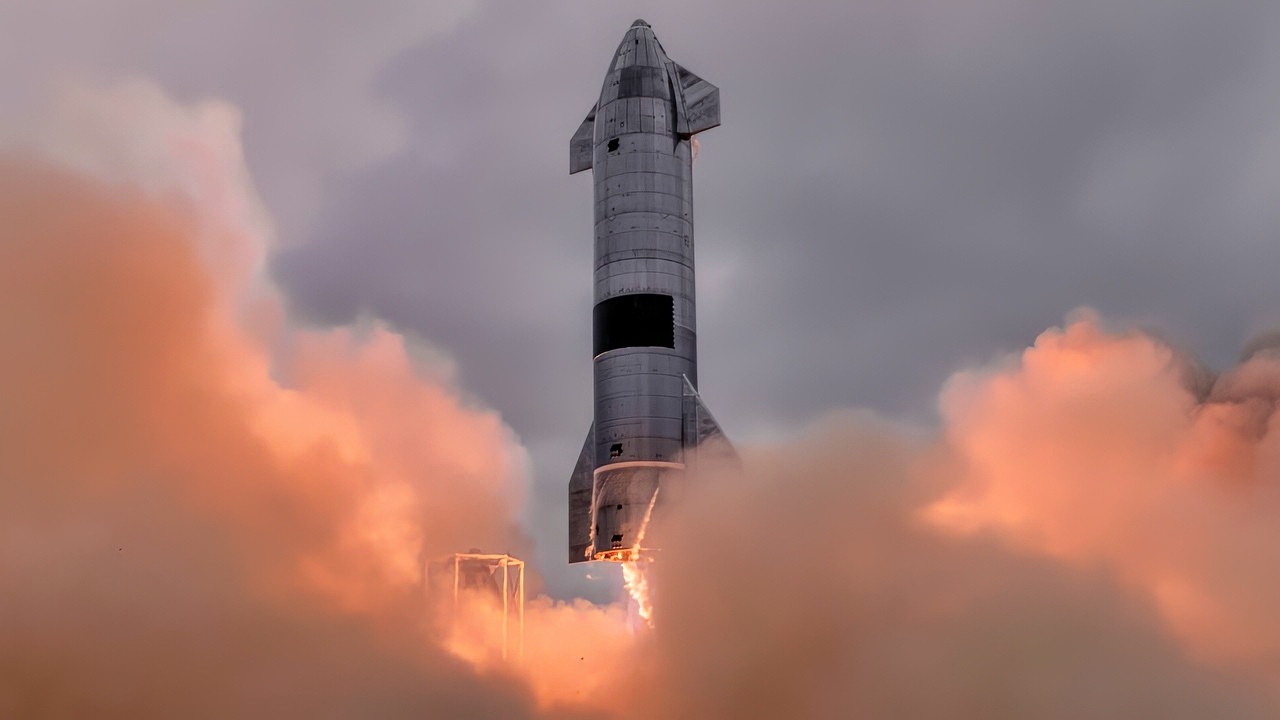
SpaceX Starship Launch. Image Credit: Creative Commons.
Time to Travel to the Stars
I am 46 years old. Statistical actuarial tables give me, on the high end of healthy aging, somewhere around another 40 to 45 years. The engineer’s framing was not flippant. He was making a calculated technical argument that the technology required to send a robotic probe to the nearest star system to ours — Alpha Centauri, 4.37 light-years away — exists in concept, has been studied in detail across the past decade, and could be operational within the timeline that matches my own remaining biological clock if humanity made the sustained investment that the engineering actually requires.
Man, my Star Wars and Star Trek childhood dreams, at least in some sense, may be possible. Well, not exactly.
What It Would Take and How Long to get to Alpha Centauri
The math is brutal. The nearest star system to Earth is approximately 25 trillion miles away. And we don’t have warp drive.
The fastest spacecraft humanity has ever built would take roughly 30,000 years to reach Alpha Centauri using conventional rocket propulsion.
Voyager 1, launched in 1977, is currently the most distant human-made object from Earth, and at its current speed, it would take more than 73,000 years to traverse the same distance.
The chemical rockets that took humans to the moon and the ion engines that propel modern interplanetary probes are completely insufficient for the interstellar gap. Getting a probe to within a single human lifetime requires a fundamentally different approach to propulsion than anything currently in operational use.
The most credible plan that exists for actually doing this is called Breakthrough Starshot. The project was founded in 2016 by Russian-Israeli billionaire Yuri Milner with $100 million in seed funding and a scientific advisory board that included Stephen Hawking, Mae Jemison, former NASA Ames director Pete Worden, and astronomers from Harvard, MIT, and Carnegie Mellon.
The plan is simple to describe and brutally hard to execute. Build a ground-based laser array on Earth that can generate 100 gigawatts of focused optical power, use that laser array to push gram-scale spacecraft attached to lightweight reflective sails, accelerate the spacecraft to 20 percent of the speed of light during a few minutes of laser firing, and let them coast the rest of the way to Alpha Centauri. Each spacecraft would weigh about as much as a paper clip, would carry a chip containing cameras, sensors, thrusters, and a battery, and would arrive at Alpha Centauri approximately 20 to 25 years after launch.

SpaceX Test Flight. Image Credit: Creative Commons.
The technical challenges are not theoretical. They are specific engineering problems that have been studied in detail. The sail itself has to be thin enough to be propelled by photon pressure but reflective enough to absorb 100 gigawatts of laser energy without vaporizing. The chip has to survive 60,000 g’s of acceleration during the laser firing — a force that would liquefy a human being and that exceeds the structural tolerance of almost any electronic component currently in production. The power source on the chip has to operate in deep space cold for two decades and still have enough energy left to transmit data back to Earth across 4.37 light-years using a transmitter that fits on a one-centimeter-wide silicon wafer. The chips need batteries small enough to fit on a one-gram payload but powerful enough to run for 20 years, in deep cold, while powering the cameras, the computers, and the communications transmitter that has to send a signal across more than four light-years of distance. No power source that meets all of those constraints currently exists.
A Project That Might Not Happen
The project has stalled. Breakthrough Starshot has spent only $4.5 million of the promised $100 million across nearly a decade and has not produced a working prototype of any of the key subsystems.
The 100-gigawatt ground-based laser array has not been built. The gram-scale chip has not been shown to withstand the required acceleration profile. The sail material problem has produced some preliminary success with silicon nitride sails just nanometers thick, but the integrated propulsion system has not been tested.
The geopolitical complications of building what would functionally be the most powerful directed-energy weapon in human history have not been negotiated. The project that was supposed to demonstrate by the early 2030s that humanity could reach the stars has instead shown that one billionaire’s fortune is insufficient to fund interstellar travel.
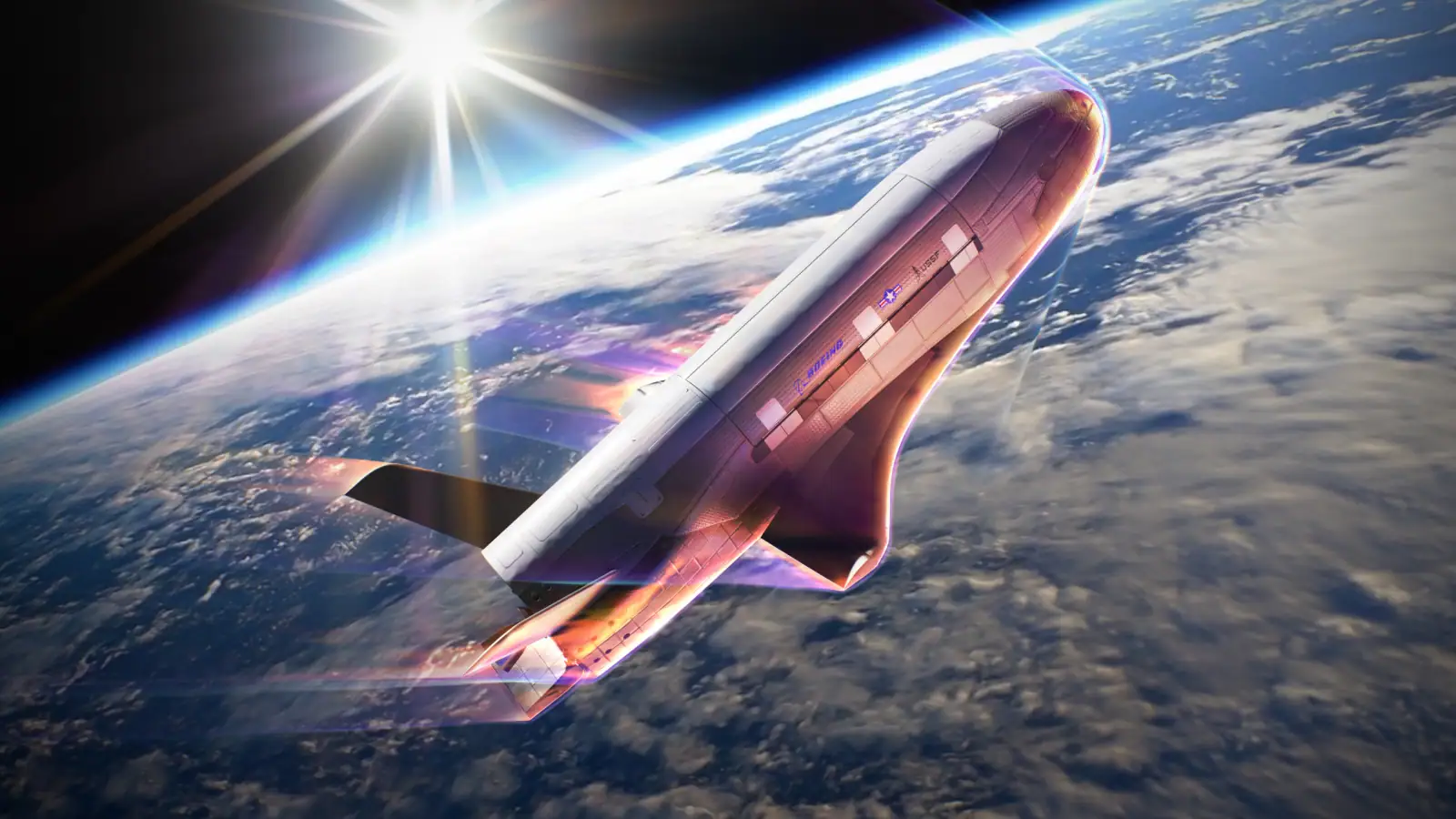
X-37B. Image Credit: Creative Commons.
This is the brutal reality that the former SpaceX engineer acknowledged when he framed the timeline against my biological clock. The technology is feasible. The engineering challenges are solvable. The required investment is on the order of $10 to $20 billion across two to three decades. Nobody is currently spending that money.
Why Go to the Stars Anyway? The Eternal Space Question
Why would we spend it?
The answer is the same answer humans have been giving since they first looked up at the night sky. We would spend it because Alpha Centauri contains a planet that may be the closest place to Earth in the known universe where life could plausibly exist.
That planet is called Proxima Centauri b.
It was discovered in 2016 by the European Southern Observatory using radial velocity measurements. The planet is approximately 1.07 times the mass of Earth, orbits its red dwarf star at 0.0485 astronomical units (a fraction of the distance between Mercury and the Sun), and completes a full orbit in 11.2 Earth days. Despite the orbital proximity to its star, the planet sits within what astronomers call the habitable zone because Proxima Centauri itself is a cool red dwarf substantially smaller and dimmer than our Sun. The temperatures on the planet’s surface are theoretically compatible with liquid water existing across some fraction of its surface area.
NASA scientists at the Center for Climate Simulation ran 18 separate climate simulation scenarios in 2024 and 2025 to model what Proxima Centauri b’s surface conditions might actually look like. Across nearly all of the simulated scenarios, the planet retained open ocean liquid water across at least part of its surface, even under aggressive assumptions about thin atmospheres and tidal locking with the host star. The James Webb Space Telescope conducted three long observation campaigns of the Alpha Centauri system in August 2024, February 2025, and April 2025, using coronagraph imaging to look directly at potential planetary candidates around Alpha Centauri A and B. The results are still being analyzed by the JWST team.
The Case Can Be Made
The motivation for sending a probe is not abstract. We have a candidate planet, four light-years away, that may host the chemical preconditions for life. We have telescopes that can characterize the atmospheric composition of that planet across the next decade. And we have, in concept, the propulsion technology required to visit that planet within a somewhat reasonable timeframe.
The engineer’s caveat about me staying healthy was not a joke. The proposed Breakthrough Starshot launch timeline assumes a 2040s launch followed by approximately 20 to 25 years of transit time. If that timeline holds, the data arrives at Earth from Alpha Centauri in the late 2060s. I would be in my late 80s. The data transmission itself would take an additional 4.37 years because the signal has to traverse the same distance the probe just covered. By the time the signal arrives, the planet’s potential biological signature — if one exists — would have been waiting for human discovery across the better part of a century.
Time to go get my physical.
About the Author: Harry J. Kazianis
Harry J. Kazianis (@Grecianformula) was the former Senior Director of National Security Affairs at the Center for the National Interest (CFTNI), a foreign policy think tank founded by Richard Nixon based in Washington, DC. Harry has over a decade of experience in think tanks and national security publishing. His ideas have been published in the NY Times, The Washington Post, The Wall Street Journal, CNN, and many other outlets worldwide. He has held positions at CSIS, the Heritage Foundation, the University of Nottingham, and several other institutions related to national security research and studies. He is the former Executive Editor of the National Interest and the Diplomat. He holds a Master’s degree focusing on international affairs from Harvard University.


