


Ukraine launched attack drones and Western-supplied cruise missiles at targets within Russian-occupied Crimea earlier this week, striking several administrative buildings and related infrastructure. The strikes may be part of Kyiv’s wider pressure campaign against entrenched Russian forces on the peninsula. Ukraine is making more progress on the battlefield than perhaps at any time since the 2023 counteroffensive — once again raising the prospect of a Ukrainian recapture of Crimea.
Recent Ukrainian Strikes on Russian-occupied Crimea

Storm Shadow Missile. Image Credit: Creative Commons.
The missile, also known as Scalp, is manufactured jointly by a Franco-British consortium. Air-launched and low-observable, the munitions have typically been fired by Ukrainian forces deep within the Russian rear, where targets have included ammunition dumps, fuel and supply depots, command and control posts, motorcade pools, and infrastructure like bridges and other critical nodes in the Russian war machine.
A video posted to social media recently showed the aftermath of strikes in Crimea, purportedly against the headquarters of Russia’s Black Sea Fleet, although previous reports have also claimed strikes against the fleet’s headquarters.
Cutting Off Crimea
Explosive-laden FPV drones flown by Ukrainian pilots may be prepping the terrain for a more concerted effort to retake Crimea sometime in the future. United24, an English-language Ukrainian news outlet, reports that Russian logistics nodes along the R-280 highway that links Mariupol–Berdyansk-Melitopol–Simferopol and Rostov, across the Russian border, southwest along the Ukrainian coast to Crimea.
Drone video, posted by Ukraine’s 412th Nemesis Brigade of the Unmanned Systems Forces, purportedly from the R-280 highway, shows fuel trucks exploding and drivers as well as passengers bailing from vehicles. The 412th Brigade said that, as a consequence of the strikes, Russian logistics lines have been forced to shift from paved highways to unpaved dirt roads, slowing the transport of war materiel and requiring longer routes.
Ukraine’s 412th Brigade is not the only part of the Ukrainian military that appears to be directing its efforts toward Russian logistics to Crimea. Azov, another Ukrainian group, posted footage to their Telegram channel, explaining that routes connecting Mariupol are no longer safe.
The Closest Ukraine Came to Retaking Ukraine
Occupied by Russia since 2014, the peninsula arguably came close to being retaken by Ukrainian forces from late 2022 through the middle of 2023, particularly amid Ukrainian battlefield momentum following the retaking of Kherson in November 2022.
Ukrainian forces drove the Russians out of northern Ukraine, broke large parts of the Russian Army arrayed around Kharkiv, and pushed Russian troops from Kherson across the Dnipro River.
But in the summer of 2023, the Ukrainian military became bogged down by deep Russian minefields, artillery kill zones, and layers of other defenses.
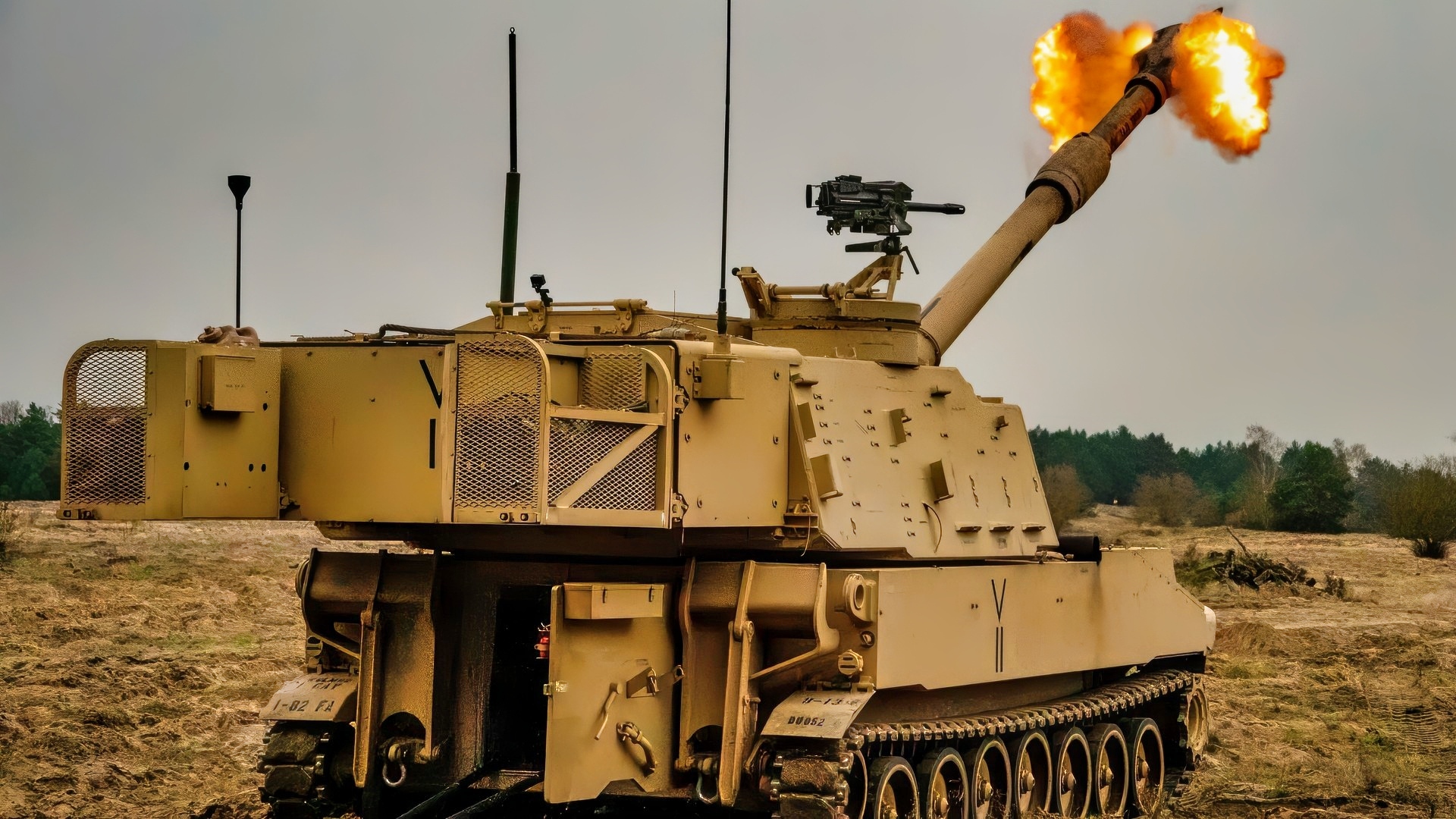
An M109 Paladin, assigned to 1st Battalion, 82nd Field Artillery Regiment, fires a round of high-explosive artillery during Dynamic Front on Forward Operating Site Torun, Poland, Nov. 19, 2024. Dynamic Front takes place from Nov. 4-24 in Finland, Estonia, Germany, Poland, and Romania, and demonstrates NATO’s ability to share fire missions, target information, and operational graphics from the Arctic to the Black Sea. It increases the lethality of the Alliance through long-range fires, builds unit readiness in a complex joint, multi-national environment, and leverages host nation capabilities to increase USAREUR-AF’s operational reach. Dynamic Front includes more than 1,800 U.S. and 3,700 multi-national service members from 28 Allied and partner nations. (U.S. Army photo by Spc. Julian Winston)
It quickly became apparent that severing the land bridge connecting Crimea to Russia would not be realized, and the Ukrainian counteroffensive rapidly lost steam.
Shortcomings in Russian Recruitment
In parallel to making the Russian position in Crimea increasingly untenable, Russia is in the midst of a slow-moving recruitment crisis. Though 35,000-odd recruits continue to sign up for military service per month, Ukraine’s dominance of the air appears to be holding the size of the Russian army in Ukraine steady — in other words, by some estimates, Russia is losing about 35,000 soldiers per month in Ukraine.
In a sign of how badly fresh recruits are needed to further Russia’s war aims in Ukraine, Russian President Vladimir Putin signed a decree into law, offering generous financial incentives to Russians who sign up.
Though not a sign-up bonus, the decree stipulates that debts up to 10 million rubles, or just under $140,000, would be canceled. Coverage is also extended to the wives of new recruits, provided that recruits must serve for at least one year before they are eligible for debt forgiveness.
Russia has typically offered increasingly sizable sign-up bonuses for recruits for its war in Ukraine, funded jointly by both the federal government and the regions. In some cases, signup bonuses amounted to nearly a decade’s worth of the Russian median wage, though those rates, seen last year, appear unsustainable as Russia feels the depressive effects of lower oil prices on its energy-driven economy.
But foreign fighters have also been one source of additional manpower for Russia, with at least 27,000 men from over 130 countries signing up to fight for the Kremlin, sourced from Central Asia, Africa, and parts of Latin America.
Retaking Crimea: Future Ukrainian Prospects
Despite the increase in strikes on Russian infrastructure in and around Crimea, retaking — and holding — the peninsula would be a very tall order. Geography favors the defender, and narrow chokepoints like the Perekop Isthmus, the narrow strip of land that connects Crimea to the Ukrainian mainland, are heavily defended by Russia, which has dug extensive fortifications.
Retaking Crimea would require significant additional Ukrainian manpower, a robust air element, engineering capabilities, and a great deal of ammunition to be successful.
The tide is swinging slowly toward Ukraine, but barring unforeseen and unexpected circumstances, it may be some time yet before Crimea is once again under Ukrainian control.
About the Author: Caleb Larson
Caleb Larson is an American multiformat journalist based in Berlin, Germany. His work covers the intersection of conflict and society, focusing on American foreign policy and European security. He has reported from Germany, Russia, and the United States. Most recently, he covered the war in Ukraine, reporting extensively on the war’s shifting battle lines from Donbas and writing on the war’s civilian and humanitarian toll. Previously, he worked as a Defense Reporter for POLITICO Europe. You can follow his latest work on X.


