


Ending the Iran War Increases Political Liability: Conventional wisdom suggests the Iran war is a political liability for President Donald Trump, as it will relieve political pressure on Republicans. Conventional wisdom, however, is wrong.
Certainly, the pressure is real as Americans suffer under inflation. As prices edged up at the gas pumps and grocery stores, pressure grew at the White House and among Republicans fearful of what popular discord might mean in mid-term elections. By almost any metric, prices are now higher than they were under President Joe Biden.

President Joe Biden speaks at the NAACP Convention, Tuesday, July 16, 2024, at the Mandalay Bay Resort and Casino in Las Vegas, Nevada. (Official White House Photo by Adam Schultz)
Donald Trump’s Iran Deal Looks Like a No-Win for America
High on regime change in Venezuela, Trump perhaps thought Iran might be another major triumph. Trump takes bold action and, whether moving the U.S. Embassy to Jerusalem, killing Qods Force Chief Qassem Soleimani, or brokering the Abraham Accords, his willingness to break diplomatic china has worked.
Not all gambles pay off, however, and diplomatic triumphs do not necessarily translate well to political success. Following the 1991 liberation of Kuwait, for example, President George H.W. Bush had an 89 percent approval rating; he still lost the 1992 election to Bill Clinton, who won 32 states and the District of Columbia.
At least after the initial days, the sheen of triumph wore off of Operation Epic Fury. While Trump succeeded in decapitating the regime leadership, he was unable to restore freedom of navigation once the Islamic Republic began targeting tanker traffic.
Gas prices have increased 40 percent since the war began. Voters, meanwhile, identify gas prices as potentially determining their vote. Reducing gas prices became an increasingly urgent goal.
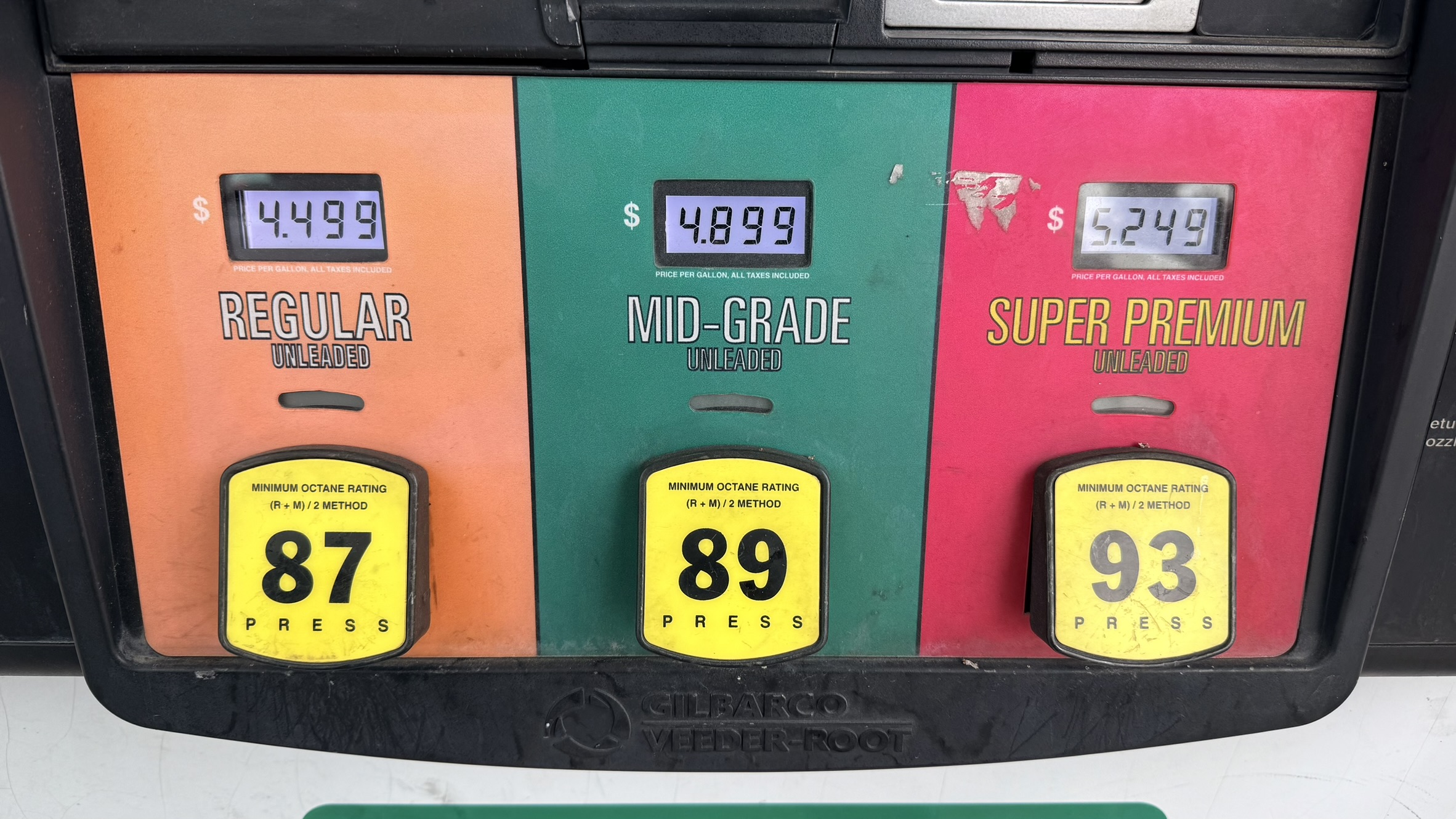
Gas Prices on May 9 outside of Orlando, Florida. Image Credit: Harry J. Kazianis for National Security Journal.
On June 15, 2026, Trump announced, “The Deal with the Islamic Republic of Iran is now complete…. Ships of the World, start your engines. Let the oil flow!” On June 19, the United States and Iran will hold a ceremony in Geneva to sign the Memorandum of Understanding.
While the full text of the Memorandum has yet to be released officially, descriptions and leaks suggest the Iranians have demanded—and U.S. negotiators acquiesced to—a pledge of non-interference in each other’s affairs. There is precedent for this, dating back to the 1981 Algiers Accords that led to the release of the American hostages, though the notion of what constitutes interference ossified and became more expansionist with time.
The IRGC Problem
Here is the problem. While the United States thinks about the Islamic Revolutionary Guard Corps (IRGC) in terms of its terrorism and attacks on shipping, the group has a domestic role as well. The Guard exists to defend the Islamic Revolution against both external and internal threats.
This is why, for example, over the space of two days in January 2026, the Revolutionary Guards, their paramilitary Basij, and other forces answering to them slaughtered upwards of 30,000 people. Now, as the regime concentrates on consolidating its role and power, it may seek to identify, detain, or perhaps execute anyone who came out into the streets to protest the regime.
In 1988, in Iraq, Saddam Hussein’s forces killed perhaps 182,000 Kurds in the Anfal campaign. Six years later, Hutu génocidaires killed four times as many in the space of just three months. With Trump pledging non-interference in domestic affairs, the Revolutionary Guards may believe they have a green light to slaughter far more.
Perhaps oil will flow for now. Extortionists seldom stop their extortion before bleeding their victims dry.
But, while the price of gas may decline slightly, Trump and those supporting the interim deal may soon have a far greater problem on their hands when videos and photos of executions start flooding the airwaves.
Trump’s deal may resolve one political liability but create a far more tragic one.
About the Author: Dr. Michael Rubin
Dr. Michael Rubin, a Director of Policy Analysis at the Middle East Forum, specializes in Iran, Turkey, and the Horn of Africa. His career includes time as a Pentagon official, with field experiences in Iran, Yemen, and Iraq, as well as engagements with the Taliban prior to 9/11. Mr. Rubin has also contributed to military education, teaching U.S. Navy and Marine units about regional conflicts and terrorism. His scholarly work includes several key publications, such as “Dancing with the Devil” and “Eternal Iran.” Rubin earned his Ph.D. and M.A. in history and a B.S. in biology from Yale University.


yor uncle bob
June 17, 2026 at 11:37 am
Trump has done something no other american president has been able to do.
Quarrel openly with netanyahu over iran.
Donald trump has the balls to stand up to benjamin netanyahu, who’s now on a grinding treadmill of war and slaughter. Against his neighbors. Thanks to AIPAC and the white house and state dept.
Past US presidents, especially democrat presidents like joe biden, has bent backwards to please netanyahu, thereby aiding him in his bloody middle eastern genocide campaigns.
Trump should know netanyahu and zelenskyy are cast from the same mold; depending hugely on US funds and US arms and US backing to wage bloody wars.
Time to STOP their bloody wars. No more wars.