


Russia is upping its attacks on Ukraine’s energy infrastructure ahead of the winter.
Kyiv’s state-owned Naftogaz Group said on Monday that its facilities had endured 13 strikes from drones and missiles in just one week.

U.S. Army soldiers assigned to Bravo ‘Bad Bet’ Company, 2nd Battalion, 12th Cavalry Regiment, 1st Armored Brigade Combat Team, 1st Cavalry Division, conduct Table V exercises with the M1A2 Abrams Tank at Bemowo Piskie Training Area, Poland, July 12, 2024. The purpose of the training is to ensure the Abrams were fully functional and fit to fight. The 1st Cavalry Division’s mission is to engage in multinational training and exercises across the continent, strengthening interoperability with NATO allies and regional security partners, which provides competent and ready forces to V Corps, America’s forward-deployed corps in Europe. (U.S. Army photo by Spc. Kali Ecton)
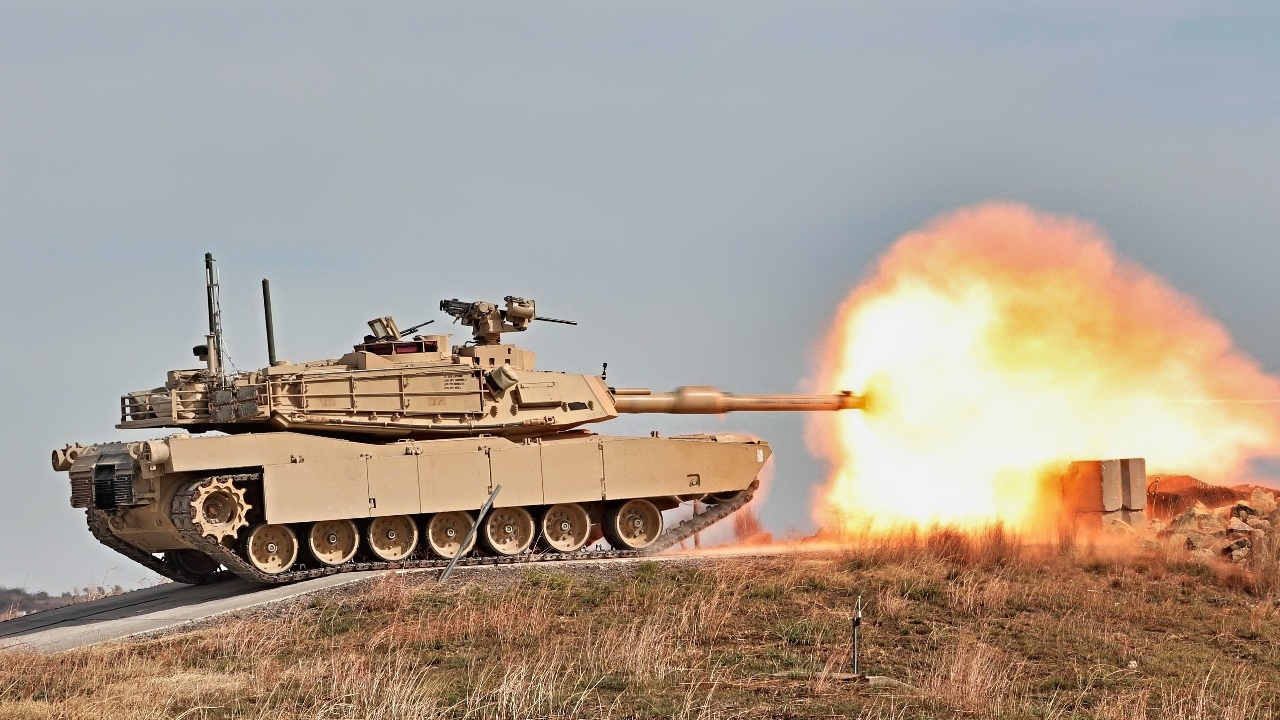
An M1A1 Abrams tank operated by Soldiers with the 2nd Battalion, 70th Armored Regiment, 2nd Armored Brigade Combat Team, 1st Infantry Division, fires over a barricade at the Douthit Gunnery Complex on Fort Riley, Kansas, Oct. 20, 2022. The tank crew was conducting gunnery qualification. (U.S. Army photo by Sgt. Jared Simmons)
The company said its production facilities and equipment sustained serious damage, forcing the suspension of operations at some locations.
Ukrainian State Energy Firm Attacked 100s of Times in 2026
Naftogaz said none of its employees were injured in the attacks and said its assets have been hit a whopping 293 times since the beginning of 2026, with the intensity of attacks more than doubling compared with previous years.
Vadym Skibitskyi, deputy chief of Ukraine’s Defense Intelligence, has accused Moscow of planning to increase attacks on energy infrastructure, the gas transportation system, heating networks, and water supplies, as well as defense-industry and military targets.
Skibitskyi told RBC-Ukraine that Russia has developed a drone specifically intended to damage electricity transmission towers. “For example, not long ago the Russians developed a drone designed to strike electricity pylons – power lines. Its wings contain an explosive element capable of cutting through metal.”
He also said gas production facilities in the Poltava and Kharkiv regions could come under attack again after being targeted earlier this year.
Ukraine’s biggest private energy company, DTEK, said a Russian drone attack on one of its mines in the Dnipropetrovsk region on Monday killed a 52-year-old worker. Another employee was injured, and the mine’s infrastructure suffered significant damage.
‘Virtually No Intact’ Nuclear Plants
Ukraine’s share of electricity generated from nuclear power plants swelled from 25% in 1990 to more than 52% in 2020.
The war’s impact on fossil fuel trade with Russia means nuclear power is now thought to supply around 70% of Ukraine’s electricity.
President Volodymyr Zelensky warned last week that the country had been left with “virtually no intact thermal power plants” after repeated strikes.
Reuters reported in January that the country’s three operating nuclear plants were providing as much as 80% of the electricity being consumed. Russia had already knocked out much of Ukraine’s thermal and hydroelectric capacity.
Transmission infrastructure is also highly vulnerable.
Large substations move power from nuclear plants into the wider grid, meaning strikes against them can disrupt supplies even without hitting the reactors themselves.
Reuters said substations away from nuclear plants had been attacked around 60 times during the full-scale invasion.
Naturally, Ukraine has been preparing for the threat for months.
Zelensky began stressing the need to protect energy facilities in the spring, while Kyiv has sought to strengthen infrastructure, build reserves and secure additional European support before the heating season.
Ukraine’s Dwindling Interceptor Stockpile
Ukraine continues to rely heavily on U.S.-made Patriot systems to intercept Russian ballistic missiles.
The Associated Press reported that Moscow has sought to exploit Kyiv’s severe shortage of Patriot interceptors as it expands its aerial campaign.
Ukraine, meanwhile, is sharply increasing its own long-range campaign inside Russia.
Kyiv has targeted oil refineries, logistics facilities, and military-industrial sites, while launching more than 800 long-range drones at Russia on Sunday, according to AP.
Civilian Casualties Already Climbing
If winter brings major fuel threats to Ukraine, civilians and industry will be at risk.
This is aside from the direct toll drone and missile attacks are likely to inflict.
The United Nations estimates that July was the worst month yet for Ukrainian civilian casualties in a single month since March 2022, with some 437 people killed and 2,610 injured.
In the first seven months of the year, 1,839 Ukrainian civilians were killed and 10,638 injured.
The statistics show a 44 percent increase in total casualties compared with the same period in 2025. This uptick is largely down to Russia increasing long-range strikes on Ukrainian territory, including urban areas.
Zelensky told CNN that if Washington “sells us 5%, we will go through the winter and save people’s lives. If they can sell us 10%, we will destroy all the Russians’ ballistic missiles. I have 1%.”
The U.S. conflict with Iran has strained supplies as the U.S. and the Gulf states are expending Patriot interceptors to tackle hundreds of Iranian missile and drone attacks.
About the Author: Georgia Gilholy
Georgia Gilholy is a journalist based in the United Kingdom who has been published in Newsweek, The Times of Israel, and the Spectator. Gilholy writes about international politics, culture, and education.


