
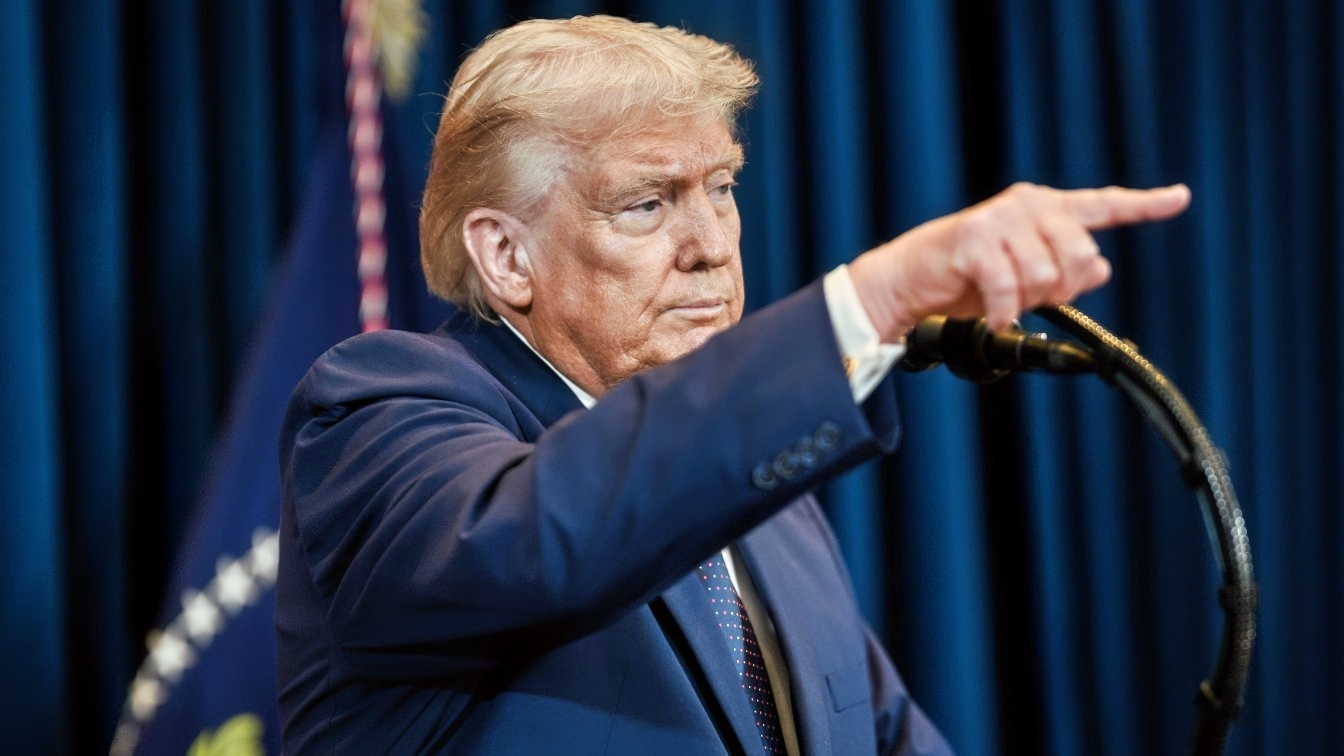
Ever since announcing the war in Iran, President Donald Trump has faced enormous opposition – not just from Democrats, but from Republicans, too.
While Trump loyalists unsurprisingly remained publicly and ferociously supportive of the president, the decision was not universally accepted within the Republican camp and even faced intense scrutiny from members of what would fairly be described as the far right of the party.
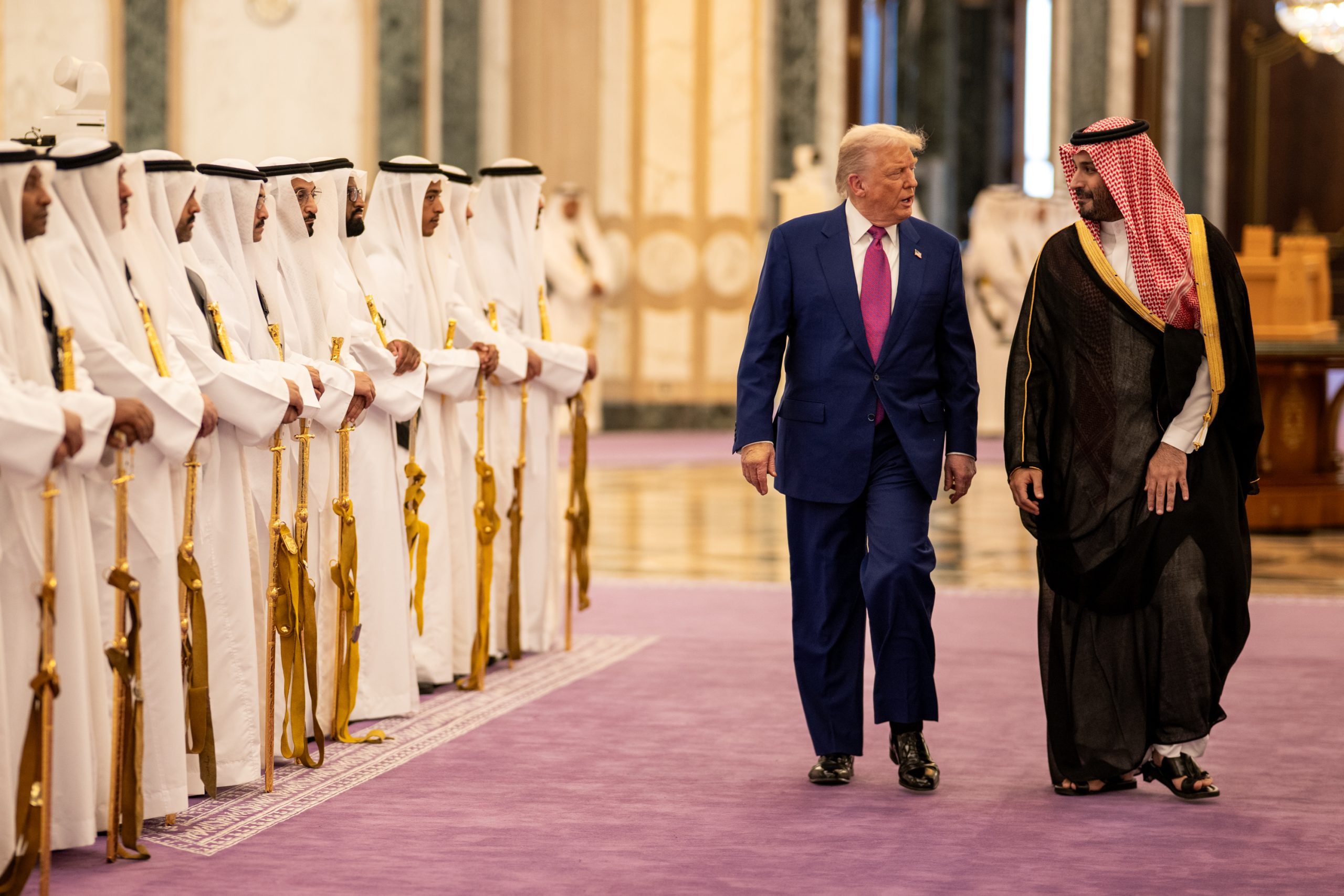
President Donald Trump participates in a welcome ceremony with Saudi Crown Prince Mohammed Bin Salman Al Saud at the Royal Court Palace in Riyadh, Saudi Arabia, Tuesday, May 13, 2025. (Official White House Photo by Daniel Torok)
Podcasters and media personalities slammed the president for allegedly reneging on his promise of “no new wars,” accusing him of launching a new “forever war” that could become comparable in scale and cost to Iraq and Afghanistan.
He was accused of doing Israel’s bidding by some, and of being utterly reckless by others.
But the president insisted, right from the very start, that his goal was to do exactly what he had been saying the U.S. government should have done since the 1980s: to ensure that the regime in Tehran never succeeds in obtaining a nuclear weapon.
Now, with the memorandum of understanding (MOU) between the United States and Iran signed, a document that explicitly states that Iran will not seek to obtain or build a nuclear weapon, the president is signaling victory.
But there are still 60 days to go until a full deal is meant to be signed, Iran is already signaling that it could withdraw its support of the MOU over Israeli strikes in Lebanon, and there is no guarantee that the apparent stability in the Strait of Hormuz will be permanent.
And, with the midterm elections coming up in November, the president will be watching carefully how every move he makes now is perceived by the American public, because if his party loses control of Congress later in the year, he will find himself effectively powerless for the final two years of his presidency.
Trump’s Approval Rating Reaches New Lows
Upon announcing the preliminary agreement with Iran, President Trump’s approval ratings spiked somewhat.
According to a Reuters/Ipsos poll released on June 15, the president’s approval rating now sits at 36%. It was a one-percentage-point increase over a poll released the week prior and was within a three-point margin of error.

President Donald J. Trump signs executive orders, Friday, May 9, 2025, in the Oval Office. (Official White House Photo by Molly Riley)
That means the president’s approval rating is largely the same, according to the survey of 1,537 people.
However, assuming his approval has risen marginally, it is almost certainly because the average price of gas finally fell below $4 per gallon for the first time in two months.
36% isn’t great.
During his first term, the president’s approval rating peaked at 49% in 2020.
Immediately upon assuming office for his second term, the president enjoyed widespread support, with an approval rating of 47% in January 2025.
Given that it’s not uncommon for an incumbent party to lose a midterm election, those are the kinds of numbers Trump would no doubt like to see going into November – and so far, he’s not even close.
That gives the president five months to turn things around, improve the economy, and settle a dispute that has so far proved just as difficult as the Russia-Ukraine conflict.
This Could Be Trump’s Playbook
The Iran war didn’t go the way the president had hoped, and if he now has a strategy to recover politically, it likely centers on convincing voters that the conflict was worthwhile and that the economy can begin to recover.
The White House has sixty days to negotiate a permanent agreement with Tehran, and it presents Trump with two possible paths. The first would be to secure a deal that largely reflects the administration’s original demands, including strict guarantees that Iran will not pursue nuclear weapons.
The second is making significant concessions to keep the negotiations alive and prevent renewed disruption to global energy markets – a tactic that many would argue the president has already employed just to reach this pre-deal stage.
The latter option, should he continue to pursue it, is politically risky. But the administration is unsurprisingly keen to maintain momentum.
Speaking in Evian, France, Trump warned that global oil reserves were running dangerously low, said they could be depleted entirely within four weeks, and called keeping the Strait of Hormuz open a necessary step. That’s true in the context of the midterms, but it’s also essential for preventing global economic collapse.
Trump may ultimately calculate that voters will forgive some of his concessions, too, if they deliver tangible near-term economic benefits and long-term security guarantees from Iran.
By November, he will likely argue that he prevented a wider war while also securing a fresh Iranian commitment not to build nuclear weapons.
He will also point to the degradation of Iranian missile stockpiles and claim that he has put Iran on the path toward normalization with the West.
At the same time, the president will hope that energy prices will continue to fall as Hormuz disruption comes to an end – but there is no guarantee that any of this will work, or that Israel’s commitment to continue fighting Hezbollah won’t blow up a deal before it is even made.
It’s hard to know what the president honestly believes, but it would be impossible to say that this war has been politically beneficial for him – not in the near term, not for the midterms, and potentially not even in the long term.
About the Author: Jack Buckby
Jack Buckby is a British researcher and analyst specializing in defense and national security, based in New York. His work focuses on military capability, procurement, and strategic competition, producing and editing analysis for policy and defense audiences. He brings extensive editorial experience, with a career output spanning over 1,000 articles at 19FortyFive and National Security Journal, and has previously authored books and papers on extremism and deradicalization.


