

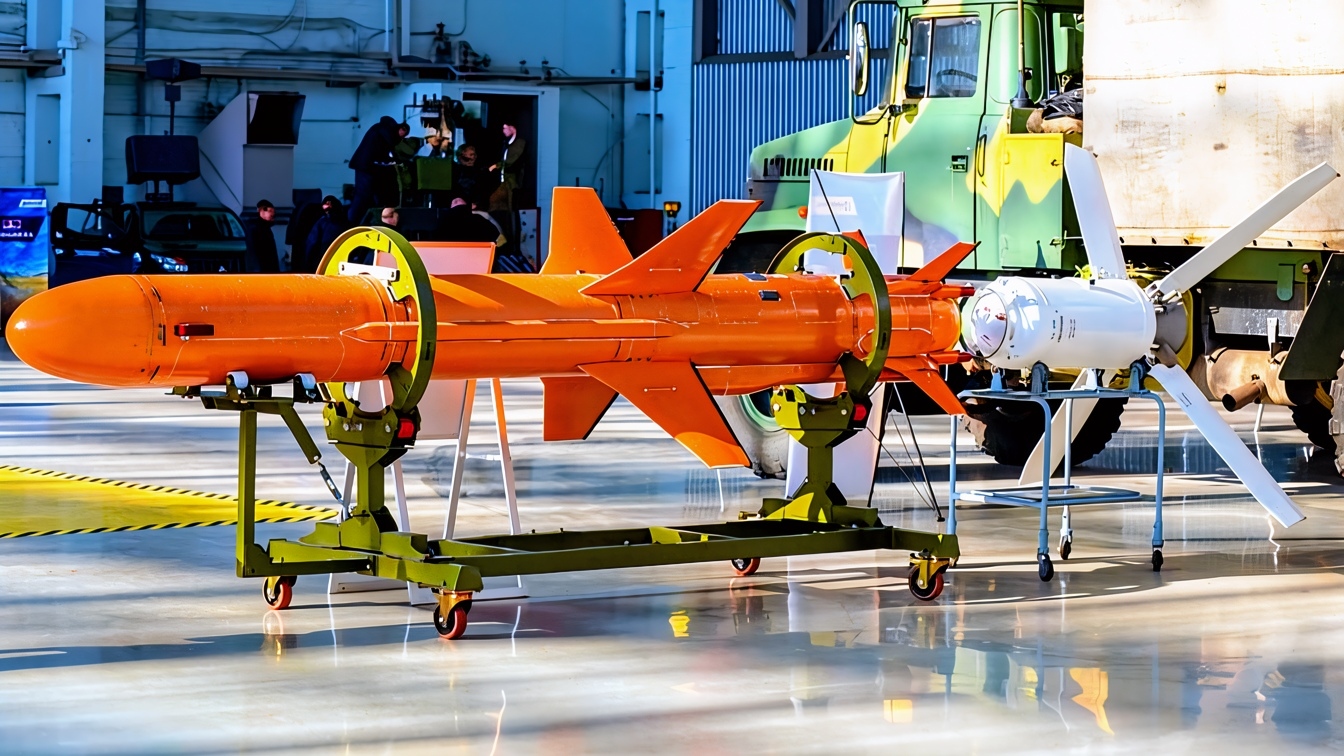
Warsaw, Poland – What Ukraine President Volodymyr Zelenskiy and his drone force commanders call their “middle-strike” campaign has become a series of merciless attacks on the main artery that provides supplies for both the population and the Russian military in Crimea. One swarm after another of wide-ranging drone aircraft is destroying hundreds of Russian fuel trucks, paralyzing truck and rail shipments of food, medicine, and other daily consumables.
This has put the Crimean Peninsula, an area roughly the size of the US state of Arizona, into what has become an almost total blockade. This campaign, which the Ukrainian military has called “Logistical Lockdown”, is the first time since 2022 that Ukraine has launched hundreds of mid-range drones on a daily basis.
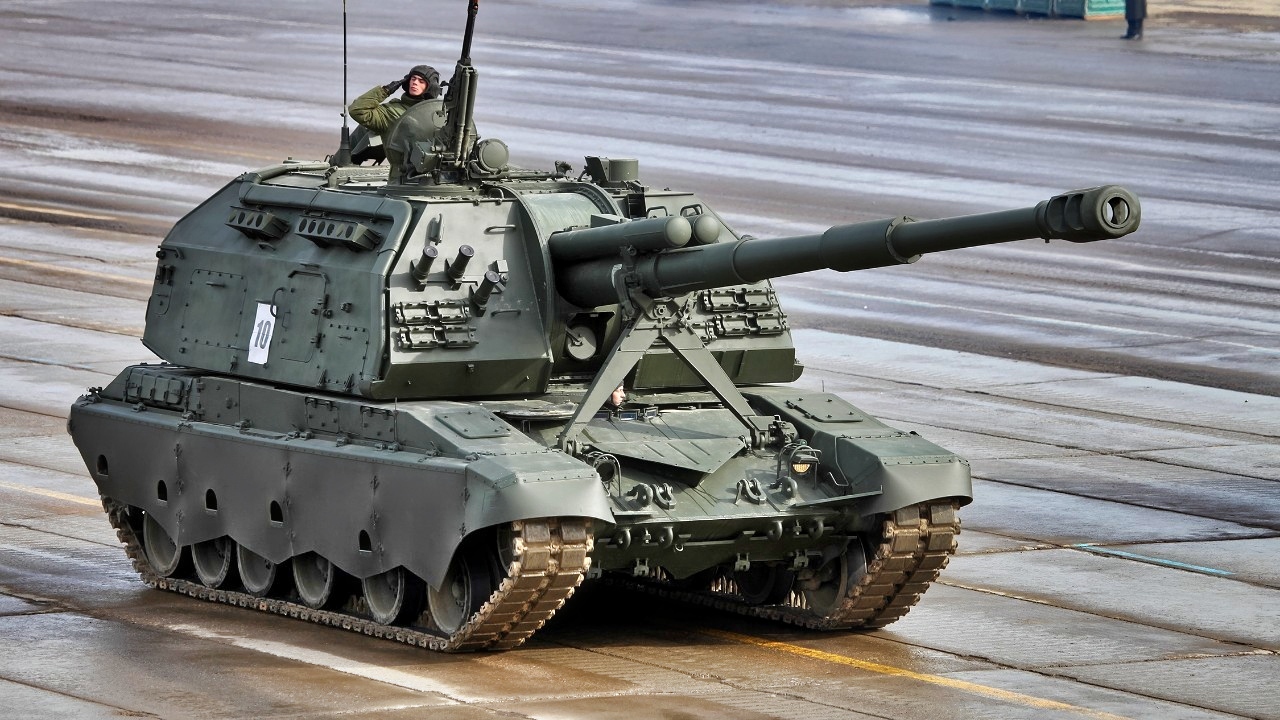
Msta-S Russian Army. Image Credit: Creative Commons.
They are striking logistics hubs, military patrols, as well as Russian units deployed across much of occupied southern Ukraine, that mistakenly thought they were adequately camouflaged.
These daily drone safaris that are looking for Russian military convoys and fuel trucks of all types traveling to or from Crimea have reduced cargo traffic to and from the peninsula to a trickle of what it once was. Vehicle flow to the occupied region that Russia first invaded and annexed in 2014 is down to 71 percent of what it was at the end of May.
It is not for nothing that this stretch of road is becoming known as another “highway of death.”
According to the Commander of Ukraine’s Drone Army, Robert “Madyar” Brovdi, the Commander of Russia’s Vostok group had banned military cargo traffic on the Mariupol–Berdiansk–Melitopol–Simferopol route starting on 7 June because Ukrainian drones had established fire control over the road.
Over a two-week period, cargo traffic on the route reportedly fell from 3,800 to 1,100 vehicles per day. Russian forces were also ordered to switch to bypass roads and alternative routes.
Russian Military Orders Now Appearing In Media
“In order to ensure the safe and timely transportation of material assets, prevent irrecoverable losses of personnel and motor vehicles, and fulfill the requirements of combat order of the Vostok Grouping No… dated June 6, 2026, the commander of the formation ORDERED:
“From June 7, 2026, until further special instructions, prohibit the use of the A-291 Tavrida and R-280 Novorossiya roads for the transportation of material assets.”
“Transportation of material assets in the interests of formations and military units shall be carried out along existing reserve routes, as well as possible bypass roads and detours.”

MSTA-S Russian Army. Image Credit: Creative Commons.
According to the cited Russian order that has been leaked and now appears in many outlets, Ukrainian forces are using these drone forces en masse against the R-280 Novorossiya highway, also described as the northern road route, and the A-291 Tavrida highway.
“The enemy is exercising fire control over the R-280 Novorossiya highways (Northern automobile route) and A-291 Tavrida. It systematically strikes motor vehicles transporting material assets in the interests of formations and military units, the Republic of Crimea, Zaporizhzhia, and Kherson regions,” the order reads.
The document says the restrictions were imposed on Russian units to protect them, their vehicles, and military cargo from further losses.
Running on Empty in Crimea
Recently, a Ukrainian publication ran a story about what an arduous process it is for residents of Crimea to purchase petrol for their private automobiles:
“One warm summer day, at around four o’clock in the afternoon, a resident of the Simferopol district in Crimea – whose name we’ll keep secret – joined the queue at a petrol station. There were a lot of cars ahead of him already, so he knew it would be a long wait. But he had no choice. He needed to set off on a trip the next day, and his fuel tank was almost empty, with barely enough petrol to make it home.”
“Over the next eight hours, he crawled his way towards the pump, meter by meter. He watched as some drivers turned up and cut in ahead because someone else had been saving a place for them while queueing themselves. He was equally irritated by others who were waiting despite still having at least half a tank full.”
“It’s not hard to imagine how he felt when the filling station ran out of petrol moments before his turn finally came. He had to spend the night in his car so as not to lose his place in the queue.”
This has now become an aspect of daily life for many people, not only in Crimea, but all over parts of Russia where Ukrainian drones rule the skies. The longer the Ukraine “Logistical Lockdown” goes on, the longer these queues at the petrol pump are likely to become.
But what is unlikely to last any longer than it does today is the Russian population’s patience.
About the Author: Reuben F. Johnson
Reuben F. Johnson has thirty-six years of experience analyzing and reporting on foreign weapons systems, defense technologies, and international arms export policy. Johnson is the Director of Research at the Casimir Pulaski Foundation. He is also a survivor of the Russian invasion of Ukraine in February 2022. He worked for years in the American defense industry as a foreign technology analyst and later as a consultant for the U.S. Department of Defense, the Departments of the Navy and Air Force, and the governments of the United Kingdom and Australia. In 2022-2023, he won two awards in a row for his defense reporting. He holds a bachelor’s degree from DePauw University and a master’s degree from Miami University in Ohio, specializing in Soviet and Russian studies. He lives in Warsaw.


