

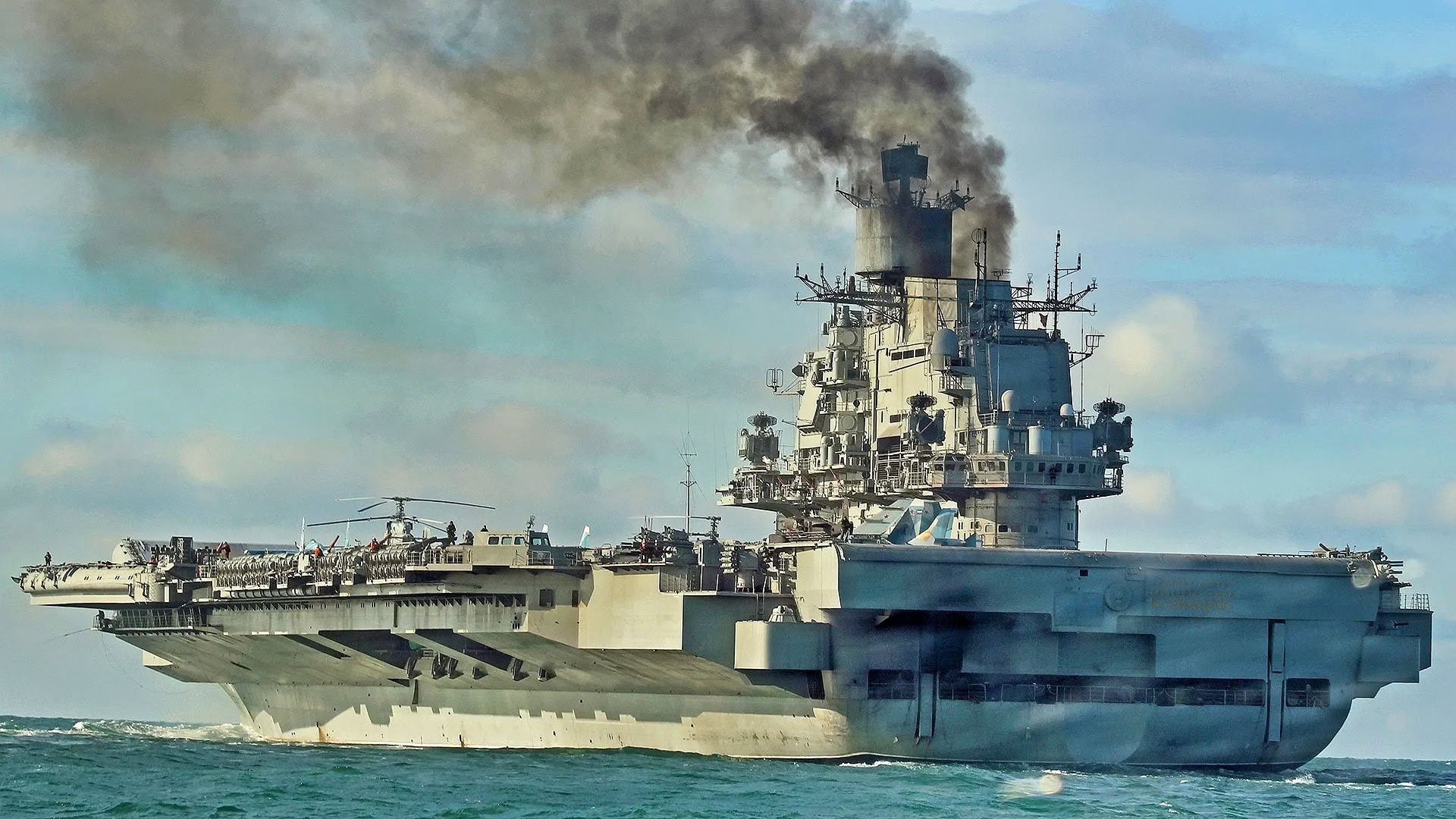
In what has been interpreted as the fear that the event could be targeted by Ukraine’s famous Flamingo FP-5 missiles, Russia’s Defense Ministry (MoD) is not planning to hold its main naval parade in St. Petersburg this year.
Fontanka, a news outlet based in Russia’s second city, reported the news on Tuesday, which it said came from an unnamed MoD source.
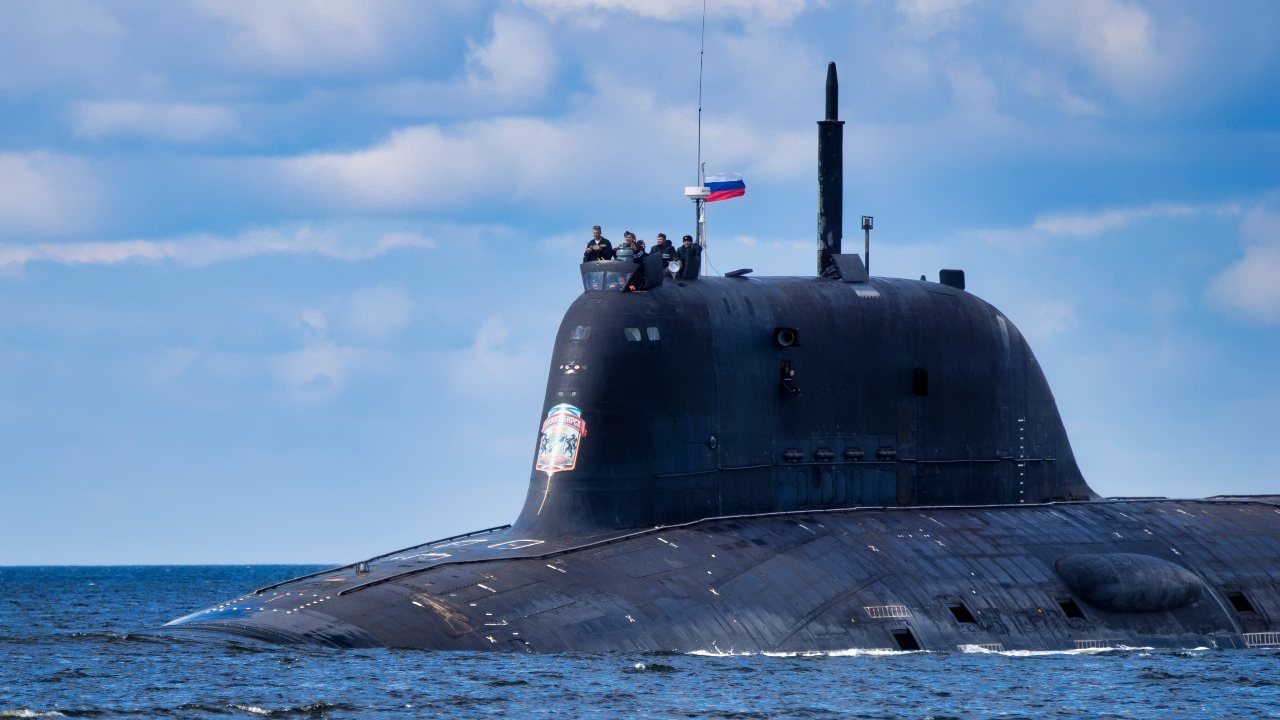
Yasen-Class Submarine Russian Navy. Image Credit: Creative Commons.
The parade has been held in St. Petersburg on Navy Day since 2017 and traditionally is observed on the last Sunday of July, which in 2026 falls on the 26th of the month.
This is the second year in a row, as in 2025, the parade was also canceled. As it was a year ago, this year’s binning of the parade is assumed to be a decision made due to what were, in 2025, called “security concerns.”
When the cancellation was announced in 2025, the Kremlin spokesman, Dmitry Peskov, told reporters that the parade would not take place as a result of the “general atmosphere.”
It was the first time in eight years that the entire event had been taken off the calendar of official celebrations for this holiday.
At the time, Peskov ambiguously referenced the “overall situation,” which appeared to be 2025’s euphemism for wartime considerations.
He also stated that “security considerations come first”, but without admitting that the parade itself could have been threatened.
Security of the event was less of a concern two years ago in 2024, when only the portion of the parade held at the island naval base of Kronstadt was canceled.
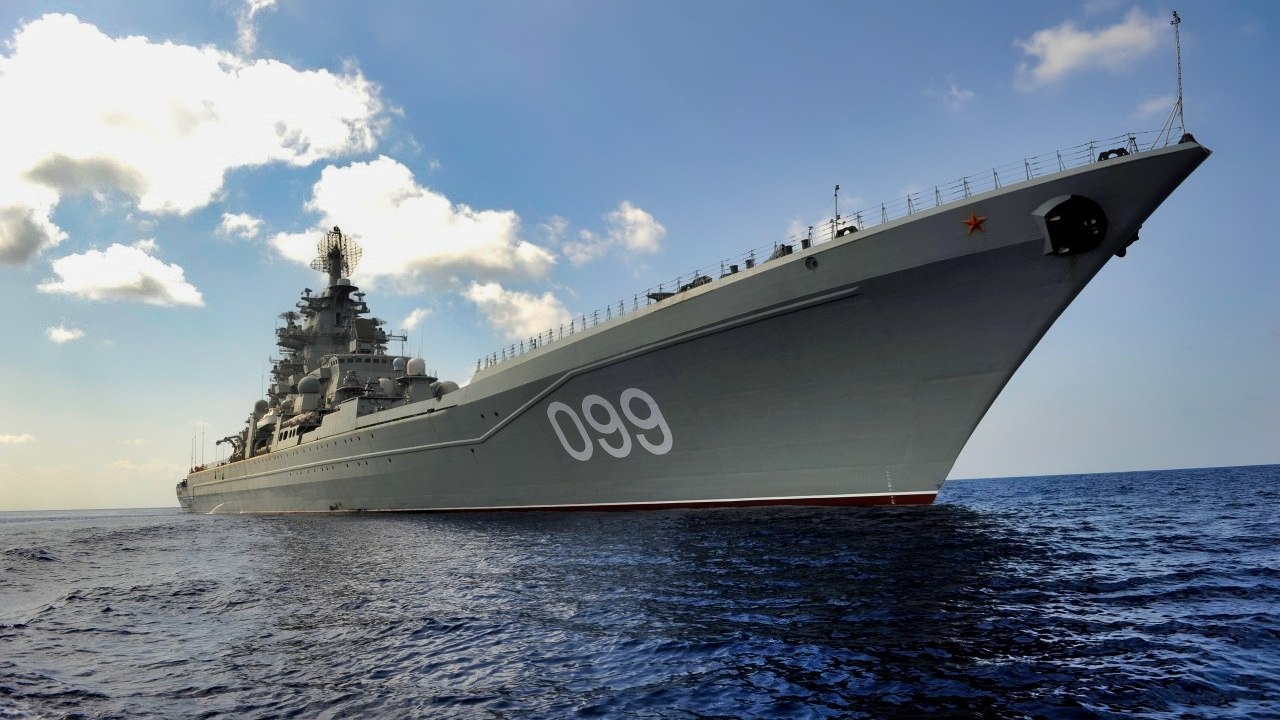
Kirov-Class Battlecruiser Russian Navy. Image Credit: Creative Commons.
However, the St. Petersburg portion did take place as usual.
News services reported that in 2024, Russian security services issued a warning of a planned attack on the naval vessels participating in the parade, which is why the Kronstadt celebration was called off.
However, in that year, Ukraine’s drone forces were assessed by Moscow as not having enough of these attack platforms with long-range performance in sufficient quantity.
Now Is Not The Time
“You understand — now is not the time for that,” a source in the Russian Navy (VMF) told Fontanka regarding this year’s cancellation. That decision appears to have been made well in advance of the parade, as no presidential decree authorizing it had been published as of 15 June 15, as Fontanka pointed out.
In addition to the Kremlin making no official announcement endorsing the parade, other sources who spoke to the news outlet said that no orders to begin preparations had been issued either.
Most of those sources who spoke to National Security Journal stated the obvious, which is that the Kremlin could not risk a repeat of the humiliation that Russian President Vladimir Putin suffered earlier this month at the hands of Ukrainian drone strikes, and that this is the actual motivation for the event not being held for the second year in a row.
That humiliation occurred when delegates arrived at one of the former KGB Lt. Col.’s most important vanity projects, the 3-6 June St. Petersburg International Economic Forum.
Those attending observed the sun being partially blocked out by plumes of black smoke in the sky above, caused by Ukrainian drone strikes only a few miles away.
For the past two decades, this forum has been one of the main pulpits for Putin to impress foreign dignitaries and to demonstrate how he has masterfully led Russia to a position of strength.
The posh annual event has become such a vehicle for endorsing the Kremlin dictator that it is commonly referred to as “Putin’s Davos.”
But this year’s spectacle of black smoke visible across the horizon has telegraphed just how weak Russia has become under his tutelage.
Demolishing a Myth
A few hours after these attacks in the St. Petersburg area, Ukrainian President Volodymyr Zelenskiy confirmed that Ukrainian drones had struck several facilities in Russia, including the oil terminal and the naval base itself in Kronstadt.
“The Ukrainian plan of long-range sanctions is being implemented exactly as it is needed to bring peace closer,” Zelenskiy wrote on his social media platforms.
The phrase “long-range sanctions” has been used on many occasions by Zelenskiy as shorthand for these long-distance strikes on installations in Russia – strikes that are hundreds of kilometers from the Ukraine border.
Putin has put no small amount of effort into creating his image as an indomitable strongman who is always in control and, since his invasion of Ukraine in February 2022, supremely confident that Russia is winning the war.
Hitting St. Petersburg during the forum – at a time when all of Russia’s air defense forces should have been on high alert – and now canceling this parade to be held in the same city has gone a long way towards demolishing that myth.
About the Author: Reuben F. Johnson
Reuben F. Johnson has thirty-six years of experience analyzing and reporting on foreign weapons systems, defense technologies, and international arms export policy. Johnson is the Director of Research at the Casimir Pulaski Foundation. He is also a survivor of the Russian invasion of Ukraine in February 2022. He worked for years in the American defense industry as a foreign technology analyst and later as a consultant for the U.S. Department of Defense, the Departments of the Navy and Air Force, and the governments of the United Kingdom and Australia. In 2022-2023, he won two awards in a row for his defense reporting. He holds a bachelor’s degree from DePauw University and a master’s degree from Miami University in Ohio, specializing in Soviet and Russian studies. He lives in Warsaw.


