

Crimea is normally a Russian vacation destination during the summer months. Resorts along the Black Sea are generally packed as Russians flock to the beaches. But not in 2026.
The ongoing military conflict with Ukraine, severe fuel shortages in Crimea, and frequent drone strikes have caused massive booking cancellations and crippled the region’s tourism industry.

Ukraine War TOS-2. Image Credit: X Screenshot.
The Ukrainians are cutting the Russian supply line to the Crimean peninsula, which is proving increasingly less and less able to protect and feed itself, as the Russians’ attempts at resupply are choked by drone attacks.
This is leading to the Ukrainians cutting off and isolating Crimea from Russia, putting a bigger burden on the Russian military.
Ukraine has heavily targeted the “land bridge” supply lines, striking fuel convoys, military sites, and transport hubs.
This has created widespread panic and severe fuel shortages for residents and the many Russian tourists who flock to the Black Sea resorts every summer.
Many Russian military analysts now consider the land bridge to be nothing short of a “highway of death” for Russian logistics. In addition to the gas and oil attacks, Ukraine conducted coordinated strikes against the Osa air defense system, five coastal radar stations in Crimea, Russian command locations, UAV facilities, weapons shelters, and logistics vehicles across the peninsula.
Why Is Crimea Significant To The Russian Invasion
The operation to isolate and cut off Crimea from Russia is a large and complicated one, but a very necessary one if Ukraine wants to ultimately stop the invasion and win back its territory.
Since the very start of the full-scale invasion in 2022, Russia has used Crimea as a launchpad for offensive operations.
It is home to numerous military airfields, Russian bases, arsenals, and storage facilities for military equipment and weapons.
The port of Sevastopol was the location of and the headquarters of Russia’s Black Sea Fleet.
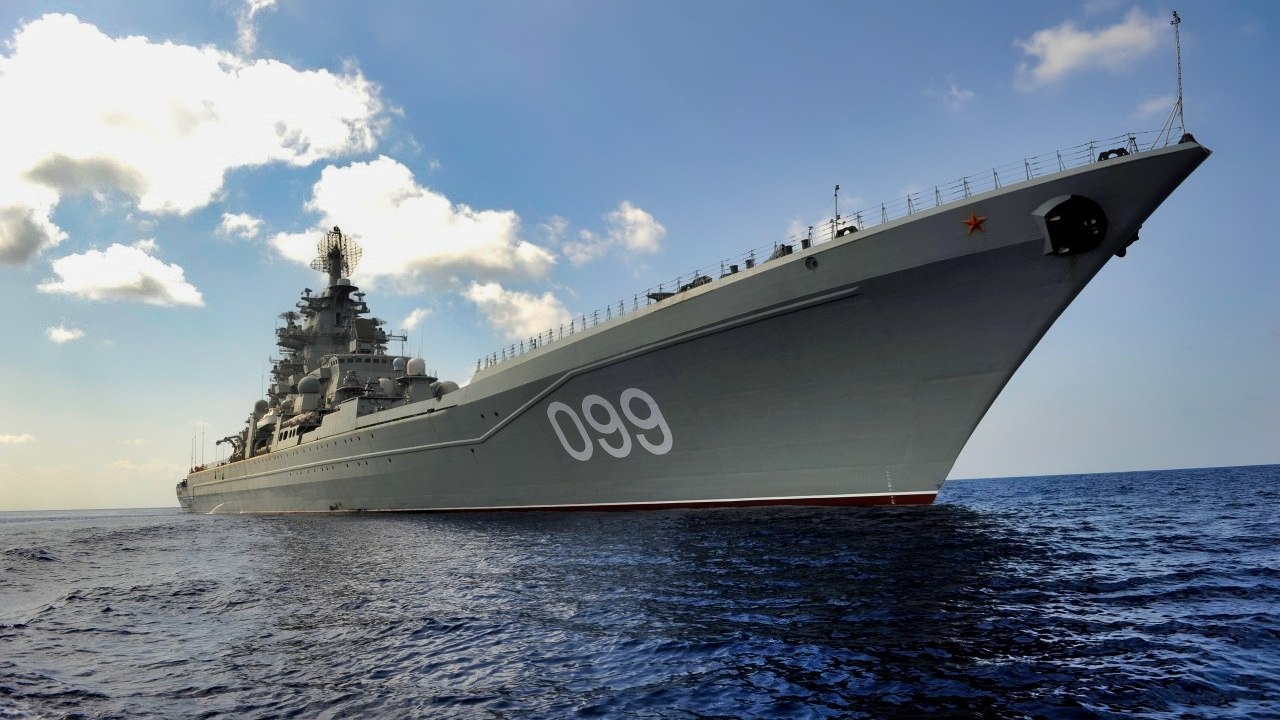
Kirov-Class Battlecruiser Russian Navy. Image Credit: Creative Commons.
Ukrainian drone and missile attacks, however, sank several warships and forced the remainder to relocate to Novorossiysk, Krasnodar Krai.
The Crimean Land Bridge enabled the transfer of significant quantities of military materiel.
Russia also based numerous ground-based missile launchers in Crimea.
By funneling manpower, equipment, and supplies through Crimea, it has largely supported Russia’s operations in southern and eastern Ukraine.
Cutting it off puts increasing pressure on Russia’s already stretched logistical chain and lengthens the supply routes to its troops.
Crimea’s Tourist Industry Is Suffering
The Russian-occupied and annexed Crimean peninsula has traditionally relied heavily on its tourism industry, and much of that has come from Russia, especially since Moscow annexed it.
Crimea now relies on 80 percent of its tourism from visitors who travel by car, making fuel availability a critical factor during the summer season.
But Ukraine’s drone attacks on Russian gas and oil industries have created critical fuel shortages that are hitting the tourism industry hard.
The Moscow Times is reporting that “tour operators, hotels and wineries are reporting a surge in booking cancellations as travelers reconsider plans to drive to the Black Sea resort region.”
Yelena Shtringel, director of TurEtno, a popular tour company, told RBC news that around 80 percent of previously booked June trips had been canceled, along with roughly half of reservations for July and August.
“There are a small number of new bookings, but they are for August and September,” she said.
The NYT’s piece said, “When Russia annexed the peninsula, Moscow’s pitch to Crimeans was that it would bring wealth to residents whose livelihoods often depend on tourism. Until now, Crimea had been largely insulated from the war, attracting millions of tourists every year, almost all from Russia.” Not any longer.
Ukraine Says This Is “Just The Beginning”
Ukrainian drone attacks are taking a tremendous toll on Russian gas and oil supplies as well as food and other supplies heading to the peninsula.
Fuel shortages have caused long lines at gas stations, and black market gas has caused prices to skyrocket more than four times the average price, as many Russians, in fear of the drone attacks, attempt to flee back to Russia.
The New York Times documented that social media pages are filled with videos of fuel trucks on fire after drone attacks and of lines of cars snaking around gas stations as deliveries have been disrupted.
“One photographer documented on Instagram how she spent eight hours in line at night to get gas.”
Drone operators from the 3rd Separate Special Purpose Regiment of Ukraine’s Special Operations Forces (SOF) established aerial control over a vital Russian land supply route to Crimea.
One Ukrainian commander said that drones attacking Russian supply trucks on the exposed highway were like “shooting partridges in an open field.”
By operating drones along the Melitopol–Chonhar corridor, they are systematically intercepting fuel tankers and destroying military hardware, isolating the peninsula.
“That’s just the beginning! There’s more to come!” Ukrainian commander Yuri Nastenko stated. “What will happen? I simply suggest everyone buy some popcorn. Sit down, watch, and enjoy,” he said.
In a related Facebook video showing exploding and burning trucks, the point was driven home.
Ukrainian Drones Hitting The Russian Bridges To Crimea
Last week, a drone attack severely damaged the Chonar bridge, resulting in only light vehicles (1.5 tons or less) being able to cross it. Now, larger vehicles, such as fuel tankers, buses, and other trucks, are forced to cross back and forth using a nearby pontoon bridge.
Further attacks on the bridge further damaged it, after which traffic through the Dzhankoi road checkpoint was suspended, according to Vladimir Saldo, the Russian-appointed head of the occupied part of Kherson region.
“Overnight strikes were also carried out on the bridge connecting Henichesk with the Arabat Spit. Traffic on it has been suspended,” he said.
Russian logistics are being forced to camouflage fuel trucks to resemble milk trucks so fuel convoys can travel on the embattled highways.
“It has reached the point where they are already constructing false superstructures over fuel trucks, disguising them as civilian cars,” Dmytro Pletenchuk of Ukraine’s Navy said.
“We have information that they have begun using vehicles intended for transporting food products – for example, milk tankers – to move fuel.”
Now, with the situation in Crimea affecting other regions, the Russians are hard-pressed to hold onto the occupied territories that were seized.
Combined with drone strikes inside of Russia itself, these drone attacks in Crimea are part of a broader campaign by Ukraine to critically degrade Russia’s southern supply corridors and weaken the Russian economy.
Russian military cargo traffic and freight volumes on key supply routes into Crimea plummeted by 71 percent over a two-week period, dropping from roughly 3,800 to just 1,100 vehicles per day.
Crimea is now a liability that Moscow cannot feed or protect.
Ukraine’s isolation of Crimea is making life especially difficult for Russia’s campaign in southern and eastern Ukraine.
It is making it increasingly more difficult to sustain operations and ultimately to hold onto their gains.
About the Author: Steve Balestrieri
Steve Balestrieri is a National Security Columnist. He served as a US Army Special Forces NCO and Warrant Officer. In addition to writing on defense, he covers the NFL for PatsFans.com and is a member of the Pro Football Writers of America (PFWA). His work was regularly featured in many military publications.


