

When President Donald Trump announced military operations against Iran in February, the intent was not just to knock out the country’s nuclear infrastructure, but to place extreme economic and political pressure on the regime.
Trump even urged the Iranian people to “rise up” against the regime, and use what he described as a once-in-a-generation opportunity to overcome an authoritarian government.

Iran’s Drones That Russia Is Using. Image Credit: Creative Commons.
Now, some four months later, the damage has not resulted in an official regime change – though many of the former leaders are dead. But the economy is suffering.
In terms of oil revenue, inflation, and the value of Iran’s currency, it is clear that economic pressure is mounting on the regime and the country as a whole.
It’s not clear yet whether that is enough to facilitate a domestic uprising, but it’s certainly unlikely that these numbers will force an irrational, ideologically driven regime to give in to the United States.
For the regime, delay tactics and posturing as a resilient and powerful military have served it well – and those tactics are likely going to be deployed as negotiations continue. But even so, the economic pressure is mounting by the day.
Oil Revenue Is Iran’s Economic Lifeline
No sector is more important to Iran than oil. It is the country’s economic lifeline, not just during the war but also before Trump announced the strikes.
Before February, Iran was exporting roughly 2 million barrels of crude oil per day, despite sanctions. Those shipments were largely sent to China through a combination of formal and informal, legal and illegal, channels.
Oil sales were Tehran’s most important source of foreign currency and, in turn, government revenue.
That changed when the recent conflict began.
U.S. military operations and the subsequent naval blockade that prevented ships from leaving Iranian ports meant that it wasn’t just Asian and European economies struggling to gain access to Gulf oil.
Iran could not ship its oil to its own customers.
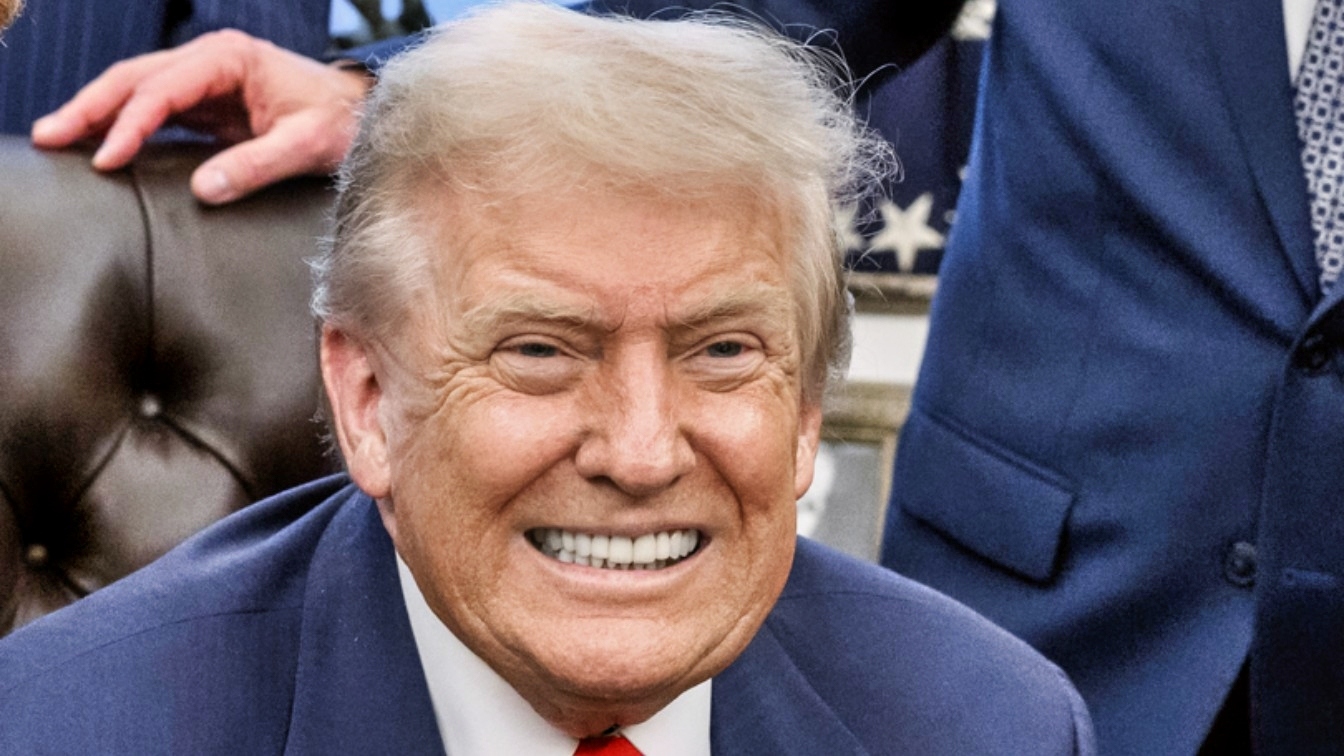
President Donald Trump signs the spending bill that ends the shutdown and reopens the U.S. Government Tuesday, February 3, 2026, in the Oval Office. (Official White House Photo by Joyce N. Boghosian)
And at the same time, insurance premiums rose, and tanker traffic at times came to a grinding halt.
The result was not just economic pain for Iran but for the whole world, with Brent crude at one point spiking to $120 per barrel as traders feared an extended crisis.
According to Kpler data, Iranian exports had collapsed to just 260,000 barrels per day in May.
On June 22, however, Washington reversed course as part of the negotiations process.
The U.S. Treasury said that it had issued a 60-day general license allowing the production, delivery, sale, and transportation of Iranian oil and other petroleum products until August 21.
The move was designed to encourage Tehran to continue negotiating toward a final peace agreement and permit ongoing international inspections of its nuclear facilities.
Inflation Risks Iran’s Economy
When the war began, Iran had one of the highest inflation rates in the world – but the conflict pushed prices to levels not seen since the Second World War.
Before the Iran War began in February, inflation was running above 50 percent annually, and food inflation had also reached 99 percent year-on-year, according to the Central Bank.
So it was a bad situation made worse by Trump’s strikes.
Oil export disruptions reduced the flow of foreign currency into the country, weakening the rial and making imports more expensive.
By May, the central bank had reported that annual inflation had climbed to levels not seen since 1942, with goods inflation reaching 113 percent.
For Iranian citizens, that means daily life gets harder.
Meat has become a luxury item in the country, and households are dramatically cutting back on food purchases.
There are also widespread complaints about the general cost of living, which is causing greater public anger toward the regime.
But in a country without a democratic process, that doesn’t matter to the regime until it risks an uprising.
Rial Comes Under Pressure
The third major indicator of Iran’s poor economic health is the value of its currency.
Long before the war, the rial was under pressure from sanctions and inflation, on top of years of general economic isolation. And the conflict has only accelerated that decline.
Because of the collapse of Iranian oil exports, fewer dollars entered the Iranian economy – and at the same time, businesses and Iranian citizens sought to protect their savings by moving into foreign currencies and gold. That puts even more pressure on the rial.
By May, the rial had fallen to record lows, trading on unofficial markets at more than 1.2 million rials to the U.S. dollar – whereas two years ago, it was trading closer to 500,000.
That’s the reason why imported goods are becoming increasingly expensive in Iran.
The weakening currency feeds into inflation, too, creating a vicious cycle that risks a total economic collapse unless something changes soon.
That, Washington hopes, will be enough to encourage Tehran to seek a negotiated peace deal.
About the Author: Jack Buckby
Jack Buckby is a British researcher and analyst specializing in defense and national security, based in New York. His work focuses on military capability, procurement, and strategic competition, producing and editing analysis for policy and defense audiences. He brings extensive editorial experience, with a career output spanning over 1,000 articles at 19FortyFive and National Security Journal, and has previously authored books and papers on extremism and deradicalization.


ZCKS
June 22, 2026 at 10:54 pm
Meat is getting to be a Luxury for anyone in the US that makes average income as well.
If I didn’t have my own cattle and hunt every year I likely wouldn’t be eating meat as often as I do.
And it isn’t the average farmer seeing more profit from the prices being what they are.
The mark up between the slaughter house, transport and what it finally is sold for is absurd these days.