

Warsaw, Poland – A new US weapon system that was designed specifically for the Ukraine war appears to have been used in a major strike this week on a vital Russian defense-industrial enterprise.
In August 2025, the Ukrainian war news site United24Media revealed that a special and new US low-cost weapon system was on the way to Ukraine.

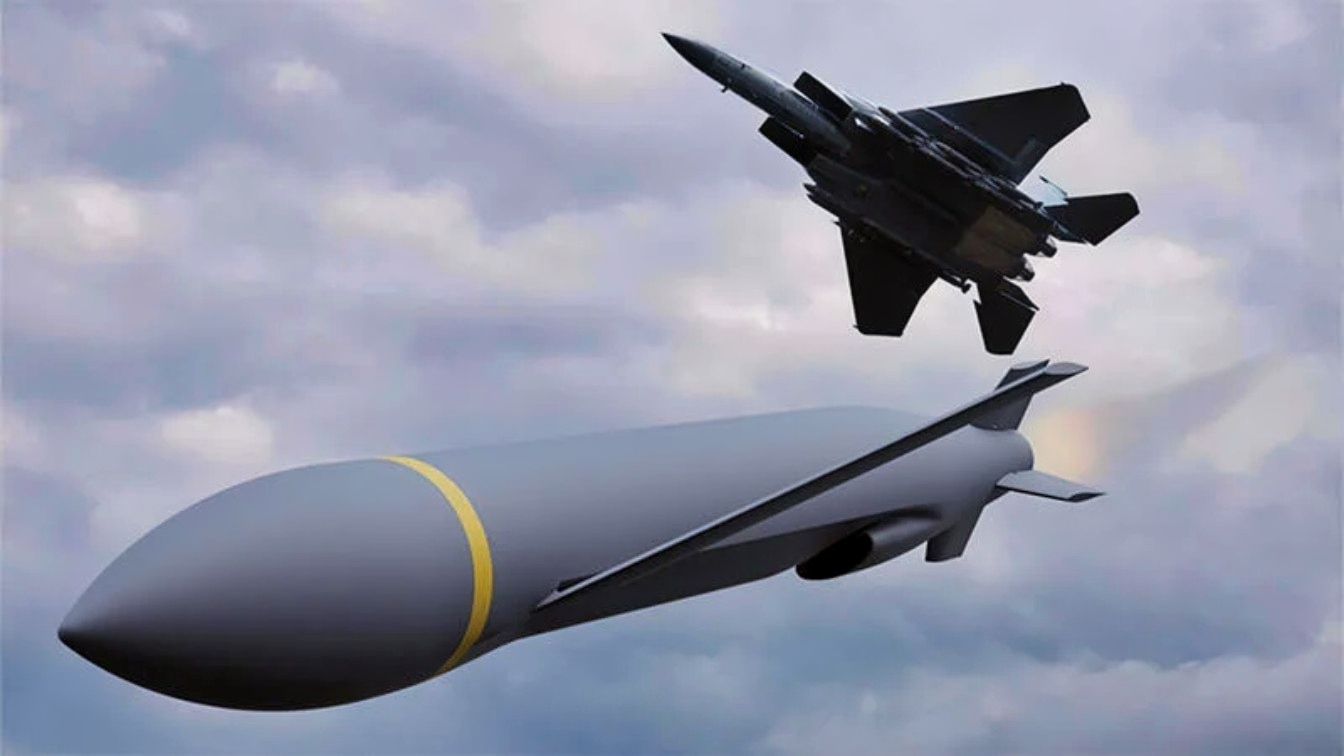
Storm Shadow Missile. Image Credit: Creative Commons.
It was soon to be a new “tool” that Kyiv’s military would have in its fight to expel an invading Russian army from its territory. The missile is now known by the designation AGM-188A and the acronym “Rusty Dagger.”
“With thousands of American long-range ERAM missiles on the way, Ukraine may soon strike depots, supply hubs, and the vital arteries of Russia’s war machine. In recent months, the Ukrainian Armed Forces have intensified strikes on railways—the Russian military’s primary transport lifeline. A large supply of ERAM missiles to Ukraine could paralyze this channel for moving cargo and weapons to the front,” reported the news site at the time.
Meet the ERAM
ERAM – the Extended-Range Attack Missile – was created in response to a US Air Force (USAF) requirement, driven by the challenges the service faces in the war in Ukraine.
A Ukrainian news site has now reported that – contrary to original reports that the strike on the Voronezh Semiconductor Devices Plant (VZPP) was carried out using the Anglo-French Storm Shadow cruise missile – it is the ERAM that may have been largely responsible for the damage done to this Russian facility.
According to the General Staff of the Armed Forces of Ukraine, the strike “was carried out using cruise missiles,” but the specific type was not disclosed at the time.
This has immediately sparked numerous theories and speculation about which weapon might have been used to destroy the facility.
A report in the American publication Forbes, published on 24 June, gives credit to the ERAM, stating that “while the strike was less spectacular than the attack on the Moscow Oil Refinery, it has a more direct impact on Russia’s missile production. The Voronezh plant manufactured guidance systems for weapons, including Kh-101 cruise missiles, which Russia uses in attacks on Ukraine.”
Accelerated Schedule
If the ERAM was the weapon used, it was put into service ahead of the schedule previously linked to the program. The usually authoritative US publication Aviation Week had previously reported that Ukraine would receive its first major batch of Extended-Range Attack Missiles (ERAM) only in October 2026.
The initial delivery was to be for 840 units, according to USAF documents that the publication had seen. However, a smaller delivery of only 10 missiles, described as a test batch, was scheduled for October 2025, some of which could theoretically have been used on this 23 June mission.
As testimony to the degree to which the ERAM requirement was influenced by the Ukraine war, the US Defense Security Cooperation Agency (DSCA) had previously confirmed to the US Congress that ERAM can be deployed from both the American-made F-16 fighters and the Ukrainian Air Force’s Soviet-era Mikoyan MiG-29s. The approval to certify the integration of the weapon on both US and Russian-design combat aircraft has come after another even more history-making decision from August 2025 that will authorize the purchase by Ukraine of up to 3,550 ERAM missiles.
The Ukrainian authorization to purchase these Rusty Dagger missiles is reported to cost $825 million. This is validation of the program’s chief criteria: a missile that can pose a greater threat than any drone system and is designed for “a large order at a low price.” This number would price the ERAM at approximately $246,000 per missile, meaning the weapon costs nearly 10 times less than Britain’s Storm Shadow cruise missile.
Fast-Track Development
Reports on the missile’s development are that the ERAM program was fast-tracked under a $225 million budget and completed its initial cycle in just over a year.
“This is a land-speed record almost unheard of in the history of development of any new USAF-backed weapon system,” said a US defense industry representative familiar with the program.
The USAF Armament Directorate originally contracted two companies – the Virginia-based CoAspire and the California-based Zone 5 Technologies- to design and produce the system.
Prototypes of the missile were tested on a US range and on what was described as “a MiG-series fighter” before moving to the next level and entering production.
The objective of the Rusty Dagger was to create a low-cost, long-range weapon for F-16 fighter jets.
The missile is expected to be used by the US armed forces at some point, but its primary intended customer was Ukraine from the inception of the effort. The weapon is being produced by California-based Zone 5, which was recently acquired by the Norwegian missile manufacturer Kongsberg.
About the Author: Reuben F. Johnson
Reuben F. Johnson has thirty-six years of experience analyzing and reporting on foreign weapons systems, defense technologies, and international arms export policy. Johnson is the Director of Research at the Casimir Pulaski Foundation. He is also a survivor of the Russian invasion of Ukraine in February 2022. He worked for years in the American defense industry as a foreign technology analyst and later as a consultant for the U.S. Department of Defense, the Departments of the Navy and Air Force, and the governments of the United Kingdom and Australia. In 2022-2023, he won two awards in a row for his defense reporting. He holds a bachelor’s degree from DePauw University and a master’s degree from Miami University in Ohio, specializing in Soviet and Russian studies. He lives in Warsaw.


AllahsHappyaHalalPorkEmporium
June 25, 2026 at 5:20 pm
Gotta keep those Ukranazis viable, right?
So, my dad fought to end the Nazi German war effort only to witness the US go all out to assist the world’s modern day Nazi machine, Ukranaziland! Nothing makes sense anymore!!!
OldGrouch
June 27, 2026 at 5:14 pm
Even RussoBots like you don’t believe your own crap. If your dad fought real Nazis, he would be rolling in his grave at how his sacrifice is being used to advance Russisn facisism against the Ukraine.