

When Russian President Putin said, “Russia is ready for peace talks, on the basis of the Istanbul agreements,” there wasn’t happiness with the announcement, not even any sense of relief.
Because the vast majority of analysts believe that his announcement was strictly a stalling tactic as he looks for an exit ramp out of the terrible situation of his own doing.

Tu-160M Bombers from Russia. Image Credit: Creative Commons.
The reason is that the second half of Putin’s announcement (based on the Istanbul agreements) guarantees that Ukraine will never agree to it.
What Are The Istanbul Agreements And Why They’re Significant
The Istanbul Agreements were written in the early spring of 2022, when Russia’s invasion was fresh, and it was attempting to encircle Kyiv. So, these starting negotiations favored Russia’s demands to the nth degree.
The Washington-based Institute for the Study of War (ISW) wrote in an analysis last year that the terms of the Istanbul Protocol draft would have left Ukraine helpless to defend itself against any future threat from Russia.
The agreements included, but were not limited to:
Ukraine’s permanent neutrality. Ukraine would be required to abandon its ambitions to join NATO and accept a permanent neutral, non-nuclear status. Russia insists that any agreement with Ukraine results in regime change and restrictions on NATO.
Ukraine would be restricted from owning any heavy weapons.
Ukrainian security guarantees are a fallacy. In exchange for neutrality, Ukraine would receive security guarantees from the UN Security Council, Russia, and China, but Russia demanded a veto over the West and NATO’s ability to assist Ukraine in the event of a future attack.
Ukraine would have to make massive territorial concessions. Ukraine would recognize Russian control and ownership over Crimea, and totally withdraw from the Donbas Oblast, where most of Ukraine’s heavy industry and mineral resources are located.
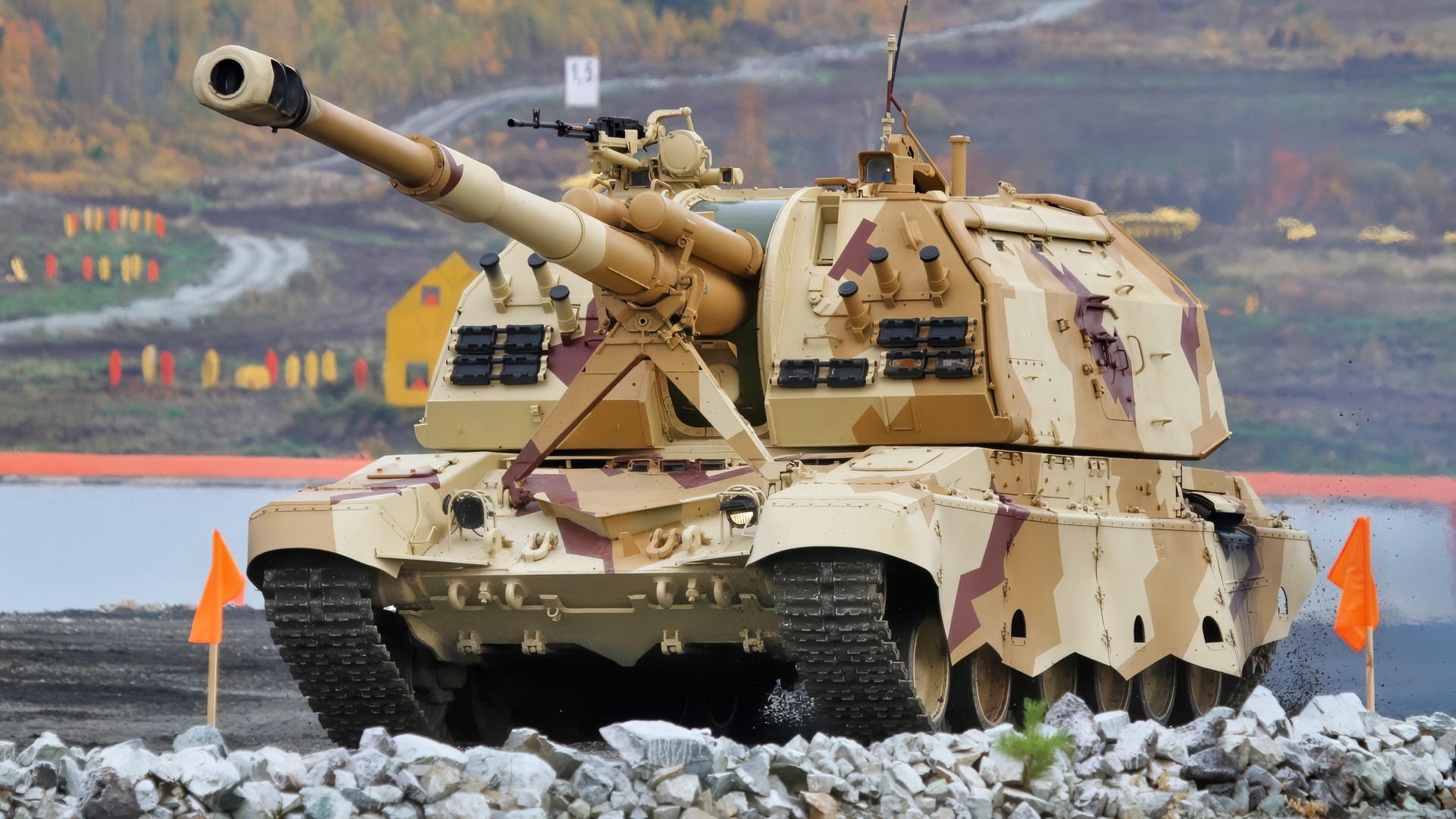
Russian Artillery. Image Credit: Creative Commons.
The Kremlin still harbors the demand that Kyiv De-Nazify and “stop repressions against the Russian language.” Russia would concede nothing.
Putin’s “Battlefield Realities” Are Completely Different Now
Those protocols are a totally unrealistic starting point for negotiations, and Kyiv would never agree to any of them now.
“This is Putin’s wish to bide his time looking for a way out of a difficult situation,” Nikolay Mitrokhin, a Moscow-born researcher with Germany’s Bremen University, said to Al Jazeera. “For the first time since the autumn of 2022, Ukraine has a chance to win the war,” he added.
The fact that the tides of the war have shifted is still lost on Putin and Moscow.
“The change occurred a long time ago,” Sergey Biziykin, an exiled opposition activist from the western city of Ryazan, said. “Because both adherents and opponents of the war were sure the victory would be swift. With time, it was the adherents who understood that Putin works no miracles, and things in Russia go back to the usual, to chaos and corruption”, he added.
“In Russia, the pain threshold is too high. People can be against the war but will suffer everything patiently and work for this war,” he said. “The active ones have long left.”Putin still clings to the theory that Ukraine is about to collapse.
Putin stated on Tuesday that future peace negotiations must take into account the current “battlefield realities,” a long-used Kremlin expression referring to Russian gains on the battlefield, which all available evidence suggests are largely nonexistent at this point.
Putin’s battlefield realities ignore the fact that Russia’s gains inside of Ukraine are shrinking and that his military is suffering more casualties (30,000 to 35,000 a month) than it can replace in its recruiting efforts, which are drying up.
Ukraine’s Ability To Take The War To Russia Is Reaping Benefits
Ukrainian drone and missile attacks are regularly targeting oil and gas infrastructure inside of Russia, hammering Russian supply convoys, and destroying the bridges between Russia and areas of occupied Ukraine.
There are gas shortages across the country, but especially in the occupied peninsula of Crimea. The economy is failing, and inflation may be much higher than Russia is reporting.
Public support for the war and Putin himself is waning. Independent surveys, including data from the Moscow-based Levada Center, show that roughly 57 to 62 percent of Russians favor peace talks, while only about 27 to 35 percent support continuing the war.
Airports are frequently being forced to close, and flights are delayed or canceled. Russia’s vastness, for centuries a source of strength against attacks, is now used against it.
The state-controlled and run national media are finding it harder and harder each day to generate any possible good news, while the skies over Moscow drizzle “oil-rain” as the refinery in the capital burned.
Why Negotiate Now? Because The Clock Is Ticking
The Russian military has failed to achieve one of its strategic objectives after four and a half years of war in Ukraine. They have suffered nearly 1.4 million casualties, they’ve been forced to use foreign troops from North Korea, and are trying to draw Belarus into the conflict.
The Russian military has deployed most of its troops from the far-flung reaches of Russia, including Dagestan, Tatarstan, Bashkortostan, Sakha, and other republics. They have borne the brunt of Russian failures in Ukraine.
And Putin must be keenly aware of what happened to Tsar Nicholas after Russia was defeated in World War I. It set Lenin up to depose the Tsar. It can work in reverse if the army continues to suffer defeat.
The West, rather than being fractured by this war, is now more committed than ever to help Ukraine rid itself of Russian invaders. And Putin may find himself deposed as well.
About the Author: Steve Balestrieri
Steve Balestrieri is a National Security Columnist. He served as a US Army Special Forces NCO and Warrant Officer. In addition to writing on defense, he covers the NFL for PatsFans.com and is a member of the Pro Football Writers of America (PFWA). His work was regularly featured in many military publications.


