

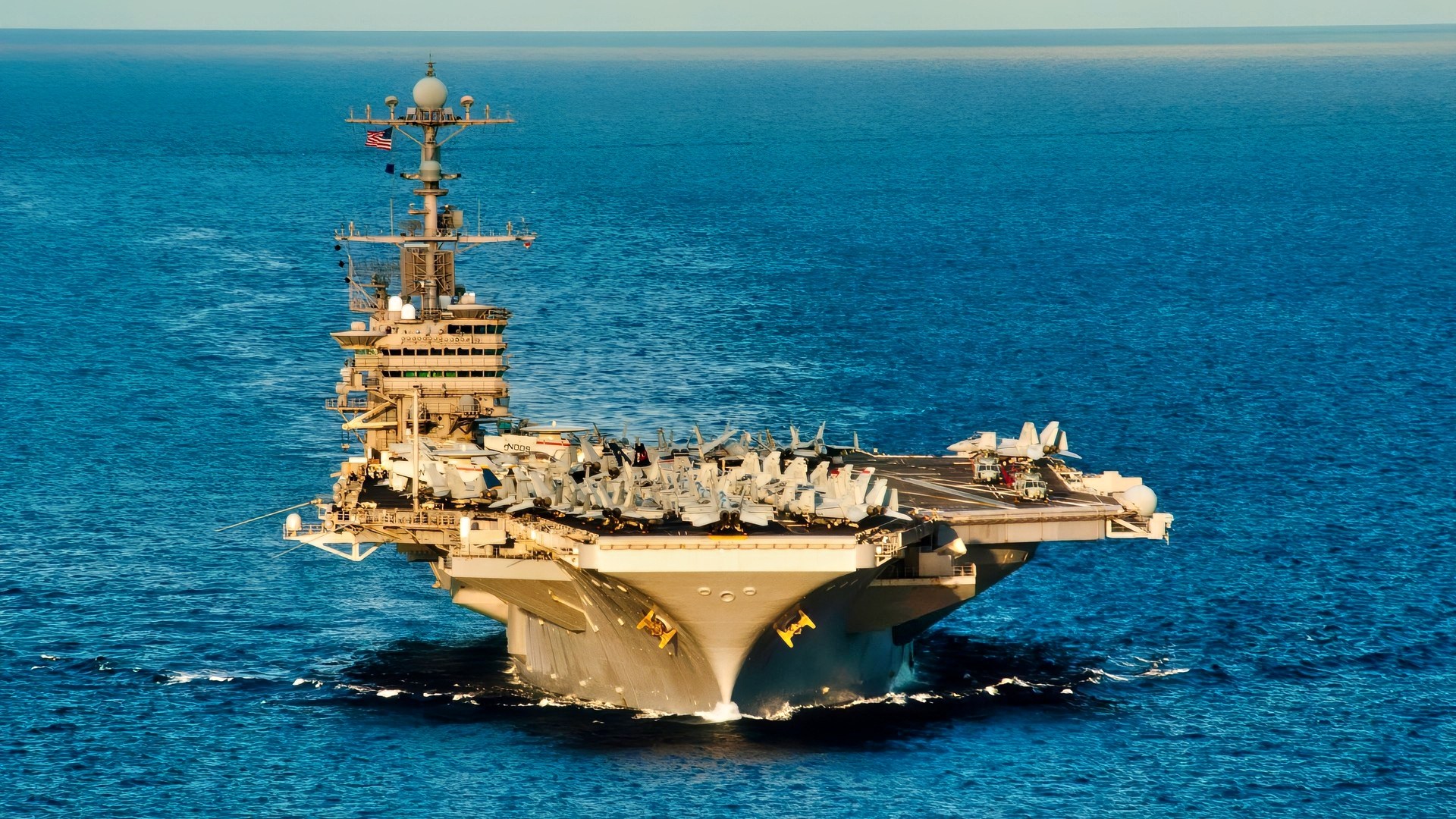
The Strait of Hormuz may never return to its pre-war status. The strategic waterway, through which more than 20 percent of oil and natural gas transit, is chock-full of sea mines.
Ships are languishing while awaiting permission to pass through the strait, and commercial traffic has been significantly affected.
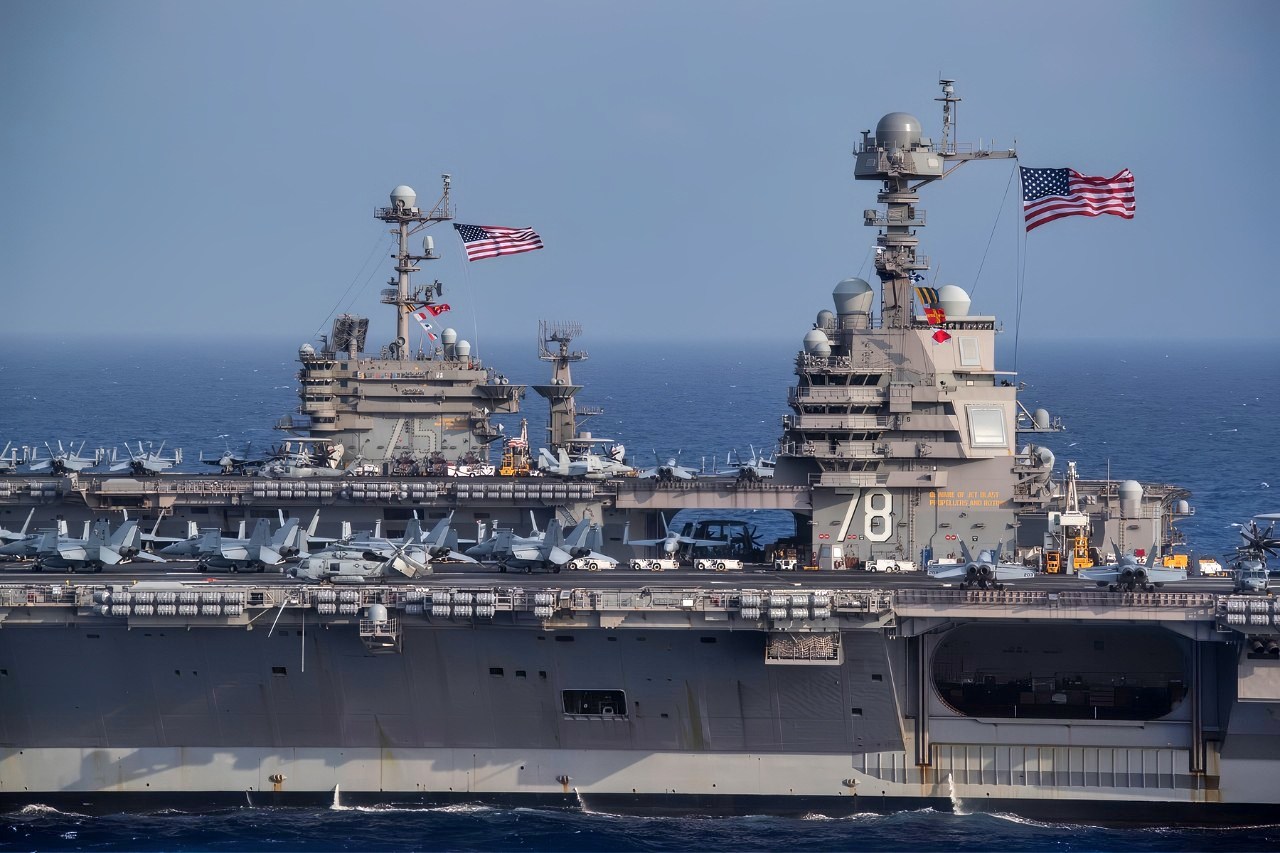
ATLANTIC OCEAN (June 4, 2020) The Ford-class aircraft carrier USS Gerald R. Ford (CVN 78) and the Nimitz-class aircraft carrier USS Harry S. Truman (CVN 75) transit the Atlantic Ocean, June 4, 2020.
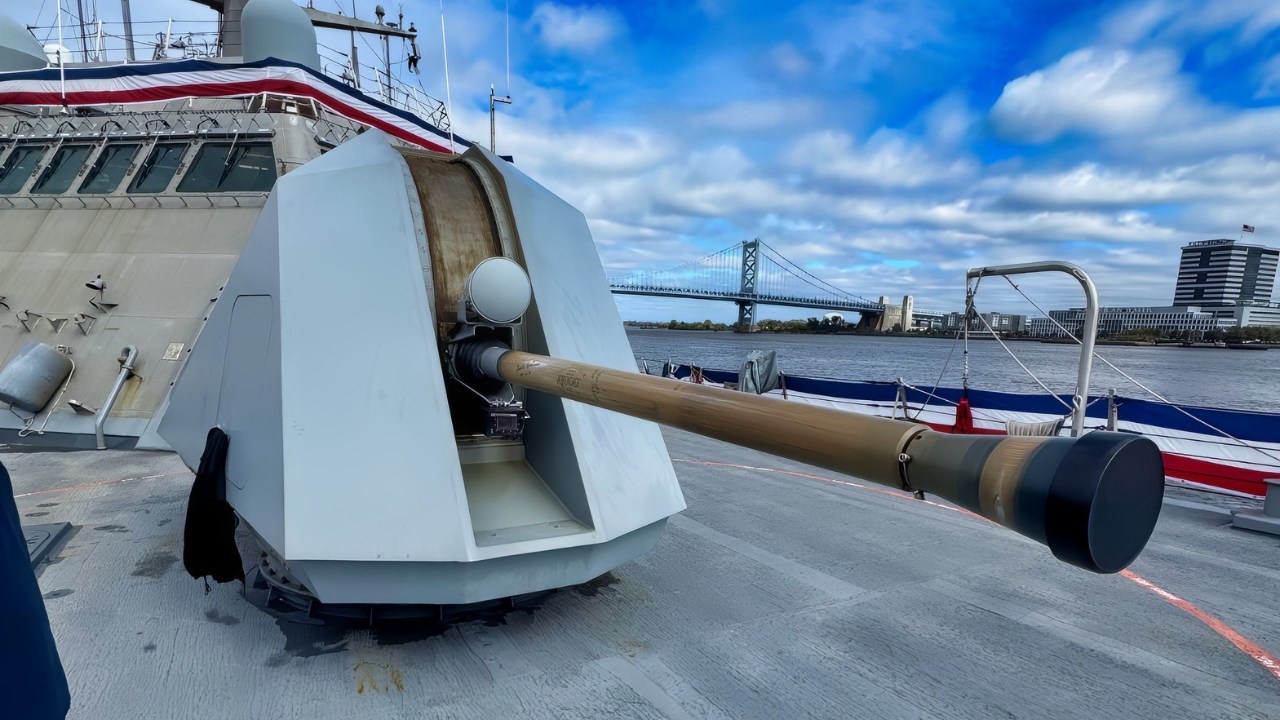
Littoral Combat Ship Deck Gun U.S. Navy. Image Taken by National Security Journal on October 14, 2025.
Trump Promised the Strait Would Remain Open
President Donald Trump has extolled the virtues of his peace framework and Memorandum of Understanding, which promised the full opening of the strait, but the Iranians have been stubborn and have vowed to treat the waterway as their own property, which could mean ships will have to pay a toll to sail through.
Waging War with Fuel Supply Shocks
This has unknown knock-on effects for global commerce. While crude prices have come down considerably, countries have drawn down their strategic oil reserves.
Gasoline costs in the United States have remained stubbornly high.
Cargo shipping has also been curtailed, and the volume of goods handled via the Strait of Hormuz transit has declined.
“We are no longer dealing with the traditional maritime arrangement in the Strait of Hormuz, which we are familiar with, the one that existed before the war,” Noam Raydan, a senior fellow at the Washington Institute think tank, told CBS News. “This new navigational order has been created by Iran, and what Iran is trying to do right now is ensure that it plays a central role in it.”
Iran Is Playing Its Cards Well
This has been a strategic master stroke for Iran. Tehran can keep the strait a no-go zone for as long as it wants. It is a huge bargaining chip for the country, and time is on the Iranians’ side.
They are looking to disrupt the oil trade until at least the midterm elections in the United States are held.
Plus, they can continue punishing countries in the European Union and American allies in East Asia that have seen oil prices multiply.
If You Don’t Pay War Reparations, Prepare for Tolls
What will Tehran do next about the strait? A toll that is charged to each ship passing through is inevitable.
Iran has endured stunning losses to its military and nuclear infrastructure. It originally declared that the United States should pay war reparations.
When the Americans refused, the Iranians decided to collect revenue at high prices for transit – surely to frustrate all commercial shipping companies and the countries they represent.
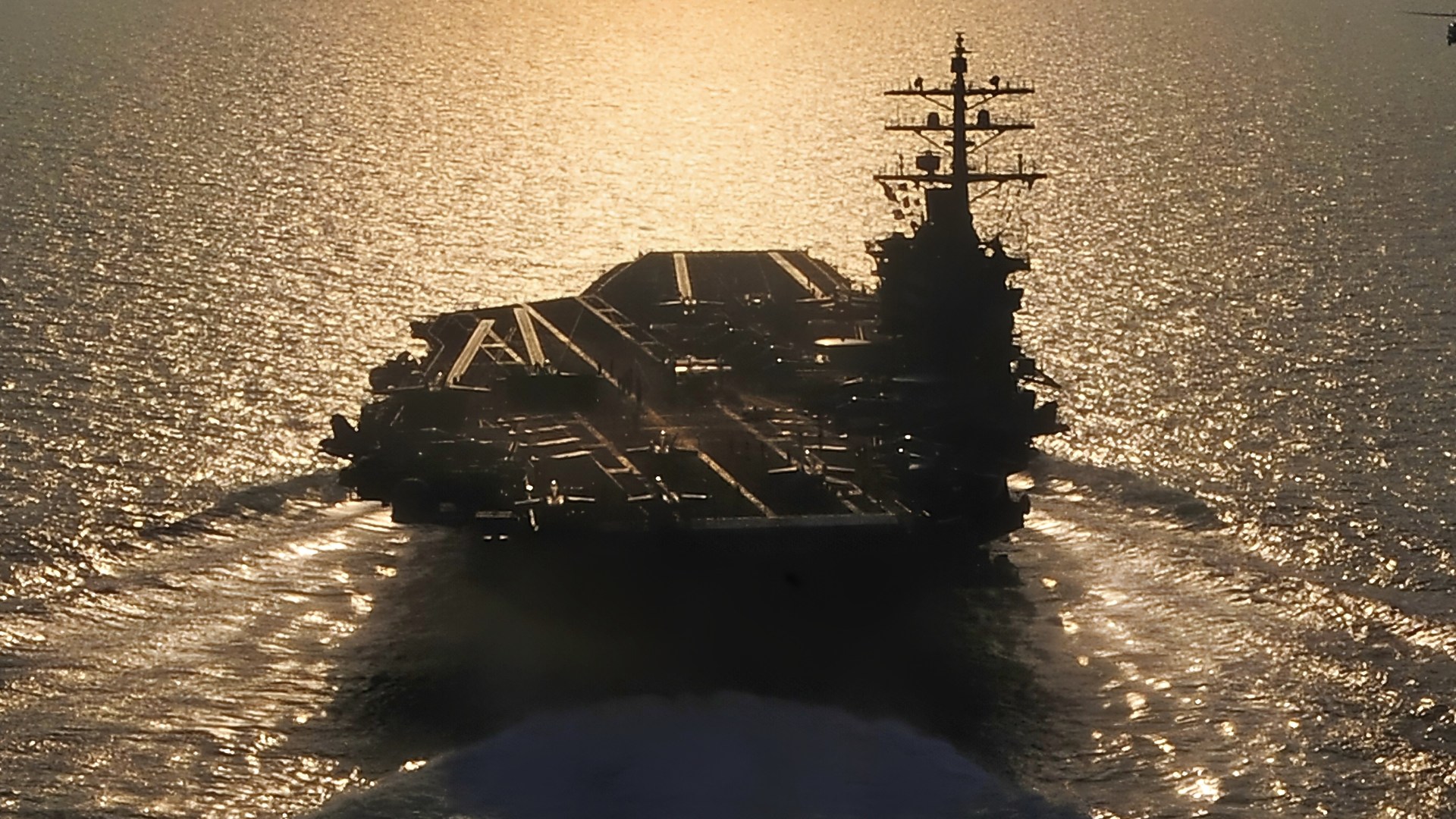
120710-N-RY232-571 MEDITERRANEAN SEA (July 10, 2012) – An SH-60F Seahawk from the Nightdippers of Helicopter Anti-Submarine Squadron (HS) 5 flies alongside Nimitz-class aircraft carrier USS Dwight D. Eisenhower (CVN 69), July 10. Dwight D. Eisenhower is on a regularly scheduled deployment in support of Maritime Security Operations (MSO) and Theater Security Cooperation (TSC) efforts in the U.S. 5th and 6th Fleet areas of responsibility. IKE deployed as part of Eisenhower Carrier Strike Group (CSG), which includes CSG 8, IKE, guided-missile cruiser USS Hue City (CG 66), guided-missile destroyer USS Farragut (DDG 99), guided-missile destroyer USS Winston S. Churchill (DDG 81), USS Jason Dunham (DDG 109), the seven squadrons of Carrier Air Wing (CVW) 7, and Destroyer Squadron 28. (U.S. Navy photo by Mass Communication Specialist 2nd Class Julia A. Casper/Released)
Oman, which also borders the strait, has admitted that there will be a price to be paid for navigating through the waterway.
This has many wondering if Iran and Oman will keep the policy in place indefinitely.
Canals Charge Fees
Fees for transiting certain critical sea routes have been in place for decades.
The Panama and Suez Canals charge each ship hundreds of thousands of dollars to cross.
These fees are baked into transportation charges for the importer and exporter.
What If the Strait of Malacca Had a Toll?
However, the strait is a natural body of water, not a man-made feature. What if Indonesia, Singapore, and Malaysia decided to impose a toll on ships passing through the busy Strait of Malacca in Southeast Asia?
This would be disastrous to international shipping too.
So, the toll charge for the Strait of Hormuz would set up a dangerous precedent. However, some countries have also imposed a toll for decades.
“Turkey charges service fees for ships transiting the Bosporus and Dardanelles Straits, which are natural chokepoints, under the 1936 Montreux Convention.
That law predates the much wider United Nations Convention on the Law of the Sea [UNCLOS], which took effect in 1994, giving ships the right of innocent passage through any country’s territorial waters without paying a fee,” according to CBS News.
These Tolls Could Lead to Higher Prices for Consumer Goods
This portends a new form of coastal economic warfare. Attack us, and we will choke off a natural waterway and place sea mines to allow only a trickle of ships to pass.
These actions affect nearly every shipping company that uses the Middle East for transportation, and that is not good for inflation.
Shipping firms are sure to add extra costs to their cargo, and that could mean higher prices for consumers.
What will Iran need to open the Strait of Hormuz freely?
However, America is not finished negotiating after the MOU has been signed. There are about six weeks of planned talks left.
The United States could lift financial sanctions against Iran in exchange for stopping the toll activity in the Strait of Hormuz.
The leverage and potential revenue are irresistible to Tehran.
The Americans may lose this negotiating point, allowing the Iranians and the Omanis to levy fees on each ship that passes through.
Ali Vaez, director of the Crisis Group think tank’s Iran Project, told CBS that “there is an inverse correlation between Iran’s ability to secure sanctions relief and its desire to look at the strait as a source of revenue.
The more the Trump administration ensures that Iran can get access to frozen funds and is able to repatriate revenue from its oil sales, the less Iran would need to make money through imposing fees for transiting the Strait of Hormuz,” he said.
No Toll, No Bargain
However, Iran is holding all the advantages in the strait. It is not likely they will bargain away Hormuz sovereignty and the toll revenue.
America will likely have to acquiesce to these demands, and the strait will never be the same.
It is best now to plan to cough up some spare change to make it through Hormuz, and this could add up to significant funds in the long term.
About the Author: Brent M. Eastwood, PhD
Author of now over 3,500 articles on defense issues, Brent M. Eastwood, PhD, is the author of Don’t Turn Your Back On the World: A Conservative Foreign Policy and Humans, Machines, and Data: Future Trends in Warfare, plus two other books. Brent was the founder and CEO of a tech firm that predicted world events using artificial intelligence. He served as a legislative fellow for US Senator Tim Scott and advised the senator on defense and foreign policy issues. He has taught at American University, George Washington University, and George Mason University. Brent is a former US Army Infantry officer. He can be followed on X @BMEastwood.


. Michael Moser
July 1, 2026 at 5:07 pm
Ok so the U.S. was self sufficient with our own oil till these oil companies figured out they could charge what the market would allow NOT SO FAST NEXT TIME OIL PRICES RISE THE U.S. GOVERNMENT NEEDS TO RESTRICT THE EXPORT OF U.S. OIL FOR COMPANY PROFIT IF THIS OIL ID PRODUCED IN THE U.S. IT STAYS IN THE U.S. AT THE LOWER PRICE AMERICA FIRST REMEMBER
AllahsHappyHalalPorkEmporium
July 1, 2026 at 6:00 pm
“…..but analysts warn Iran has created a new order it now controls, and Washington may have little choice but to accept it…..”
“…..This has been a strategic master stroke for Iran. Tehran can keep the strait a no-go zone for as long as it wants…..”
“…..However, Iran is holding all the advantages in the strait…..”
Who writes this loser crap, a Iranian terrorist sympathizer? Never mind, he lays claim to numerous creds… including some mail order PhD in political sophistry! What pablum (intellectual pap) this article spews!
when dealing with defective mentalities like these rag wearing, misogynist, petulant children you treat them with a lack of respect they fully deserve and the only language they actually understand… you bomb the living shit out of them! You pulverize the leadership parties responsible for the commercial chaos they seem to relish!
You END them and their threats by diminishing this leadership to the point that the Iranian people gain the confidence and ability to take matters into their own hands to enforce their own legal process!