

The Strait of Hormuz is without a doubt one of the world’s most important waterways. Nearly 20 percent of the world’s oil flows through there, another nearly 20 percent of the world’s natural gas, one-third of the world’s agricultural goods, and countless critical industrial inputs that make the modern world work every day.
Since US President Donald Trump and Israeli Prime Minister Benjamin Netanyahu started their regime change war of choice against the Islamic Republic of Iran, the Strait has been closed. Each day–every hour–that the Strait remains obstructed due to the war, the world comes closer to economic ruin.
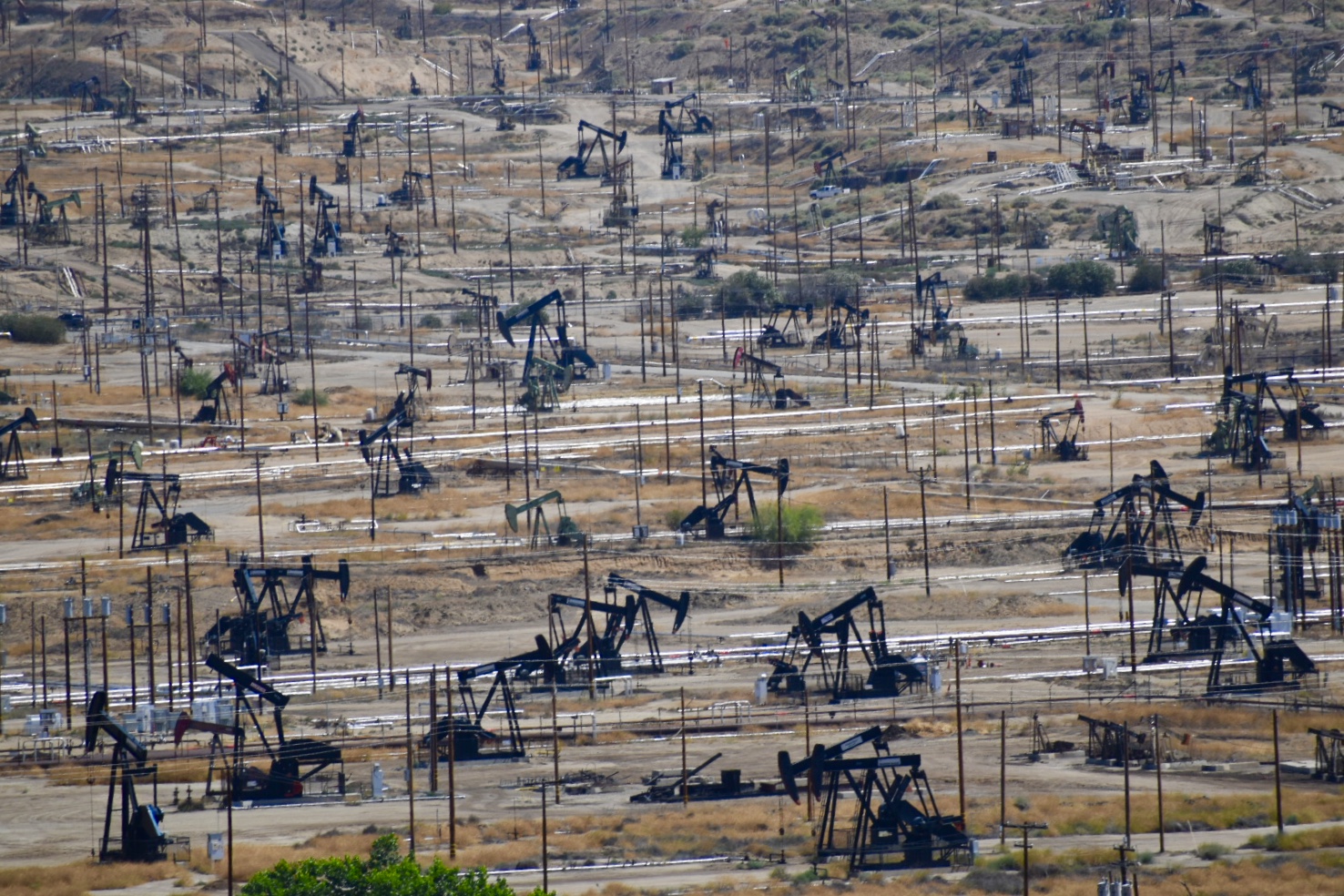
Oil fields. Image Credit: Creative Commons.
There have, throughout the more than 120-day war, been instances where the Iranians allowed ships to pass through the Strait.
The United States and Iran have attempted to create some off-ramps to the war in the form of temporary ceasefires. But those ceasefires have been fleeting.
Because of the untenable nature of those ceasefires, the Iranians have generally kept the flow of ships and their goods tamped down well below the prewar average of trade through the Strait.
Strait of Hormuz Crisis: Iran Can Afford to Wait
Contrary to what many believe, this reality does not harm the Iranians as much as it hurts the United States and the rest of the world. After all, Iran is one of the most heavily sanctioned countries in the world. Due to this, the Iranians have been made to become increasingly self-reliant–and to establish alternative modes of trade (via Chinese-run Belt-and-Road railways and Russian routes in the Caspian Sea).
Meanwhile, ironically, it is the Americans and their allies globally who are disproportionately suffering through the lockdown.
The Ceasefire Was Already Unraveling
Barely a week old, the Memorandum of Understanding (MoU) signed by the United States and the Islamic Republic of Iran has already begun to collapse. During the short-lived MoU, the Iranians allowed some ships to begin to escape the Strait of Hormuz.

Generic Oil Tanker Image. Image Credit: Creative Commons.
There were between 500 and 800 civilian ships barred from leaving the Strait since the start of the war. Iran let maybe 100 out. Interestingly, before the MoU ceasefire (which was only ever going to last 60 days at most) broke down, most of the ships the Iranians allowed to pass through the Strait were, in fact, Iranian-flagged ships.
In other words, the Iranians were slow-walking the movement of non-aligned ships and instead favoring their own ships to pass through the Strait.
Today, an Iranian academic, Professor Seyed Marandi, indicated that the Iranian government was prepared to allow the MoU ceasefire to completely collapse, knowing full well that the Strait of Hormuz would be totally closed once more, leading to a global depression–and the likely collapse of the US government (at least the one led by President Donald J. Trump).
Marandi is not an Iranian official. He is widely viewed as an unofficial mouthpiece for the more hawkish elements of the Iranian regime. And what he said in this context must be taken seriously, given the way in which hostilities are again ramping up.
The Inflation Has Already Been Set in Motion
Even if we do somehow succeed in maintaining the MoU ceasefire, there will be serious second-order inflationary effects. Whereas before the war began, roughly 120 to 140 ships passed through the Strait per day, little more than 100 have been allowed to pass since the MoU was signed a week ago. There has simply been too much time that has been allowed to pass since the volume of the flow of goods was far greater than what it is now.
In other words, inflation is coming. And with inflation will necessarily come increased interest rates. That will, in turn, lead to a deteriorating economic situation. If we’re lucky and the ceasefire holds beyond what it has so far, the Iranians might let more ships out, and we can ameliorate this crisis over time.
At this rate, though, it does look as though the US president cannot accept the conditions of a longer-term ceasefire with Iran, and Iran fully understands how vulnerable the Americans are to the disruptions occurring in the Strait.
It’s No Longer Just an Oil Story
Most Americans think of the Strait as an oil story because that’s how it has been covered since the 1970s. In 2026, though, it has become something much larger. It now serves as a conduit for critical inputs that sustain advanced manufacturing, food production, medical technology, artificial intelligence, and aerospace.
Oil is simply the most visible commodity moving through it; the less visible flows of helium, fertilizer components, sulfur, and petrochemical feedstocks may prove just as consequential now that they’ve been disrupted far longer than current inventories can make up for.
The Shortage Economy Is Coming
Where this is going is that, no matter what now, there will, over the coming year or so–just as with the supply chain disruptions caused by the COVID-19 lockdowns–be cascading shortages of some of America’s most important baseline commodities. These shortages will be severe enough to cause, at the very least, a serious recession.
That lack of helium, which is critical for semiconductor production and essentially sustains the AI bubble currently being created, could pop the AI bubble, deflate the stock market, and likely plunge the economy into a very deep recession. It could possibly lead to depression, too.
Anyway, one squares it, contrary to the nauseatingly positive messaging the Trump administration has laid out, the economy will slam into a wall of shortages resulting from the disastrous Iran War.
The only questions are: how long will the economic downturn last, how many will be affected, how deep will it be, and when will the recovery occur?
America No Longer Controls the Crisis
Because of how President Trump blundered into this most stupid war, and the way in which he has prosecuted the war, Washington has effectively ceded all initiative and control to two foreign powers that hate each other on an existential level–Israel and Iran.
Israel clearly has outsized influence over how the US military will conduct the war against Iran, and the Iranians will never abandon their increasingly vise-like grip on the Strait of Hormuz.
So, here we are. Staring down an economic recession on the eve of America’s 250th anniversary simply because the current occupant of the Oval Office got too cozy with the Likud Party in Israel, and now we can’t seem to extricate ourselves from this foreign war before the worst economic downturn since at least 2008 hits us.
About the Author: Brandon J. Weinchert
Brandon J. Weichert is Senior National Security Editor. He also manages The Weichert Brief on Substack. Weichert also hosts “National Security Talk” on Rumble. He is the author of four bestselling national security books, the most recent of which is A Disaster of Our Own Making: How the West Lost Ukraine (Encounter Books). Follow him via Twitter/X @WeTheBrandon.


