

The fight over the Strait of Hormuz has moved off the water and into the wording of diplomatic statements. Months after Iran’s blockade of the world’s most important oil chokepoint sent crude prices above $120 and stranded thousands of sailors, the question now is not whether ships can pass but whether they will have to pay Tehran for the privilege. Iran wants to charge them. Oman, the sultanate that shares the strait and controls its southern shore, has come out against tolls on passage, a position that puts the small Gulf state between Tehran’s effort to monetize the waterway and Washington’s insistence that no one can charge for it.
What Iran Is Proposing in the Strait of Hormuz: Toll Time
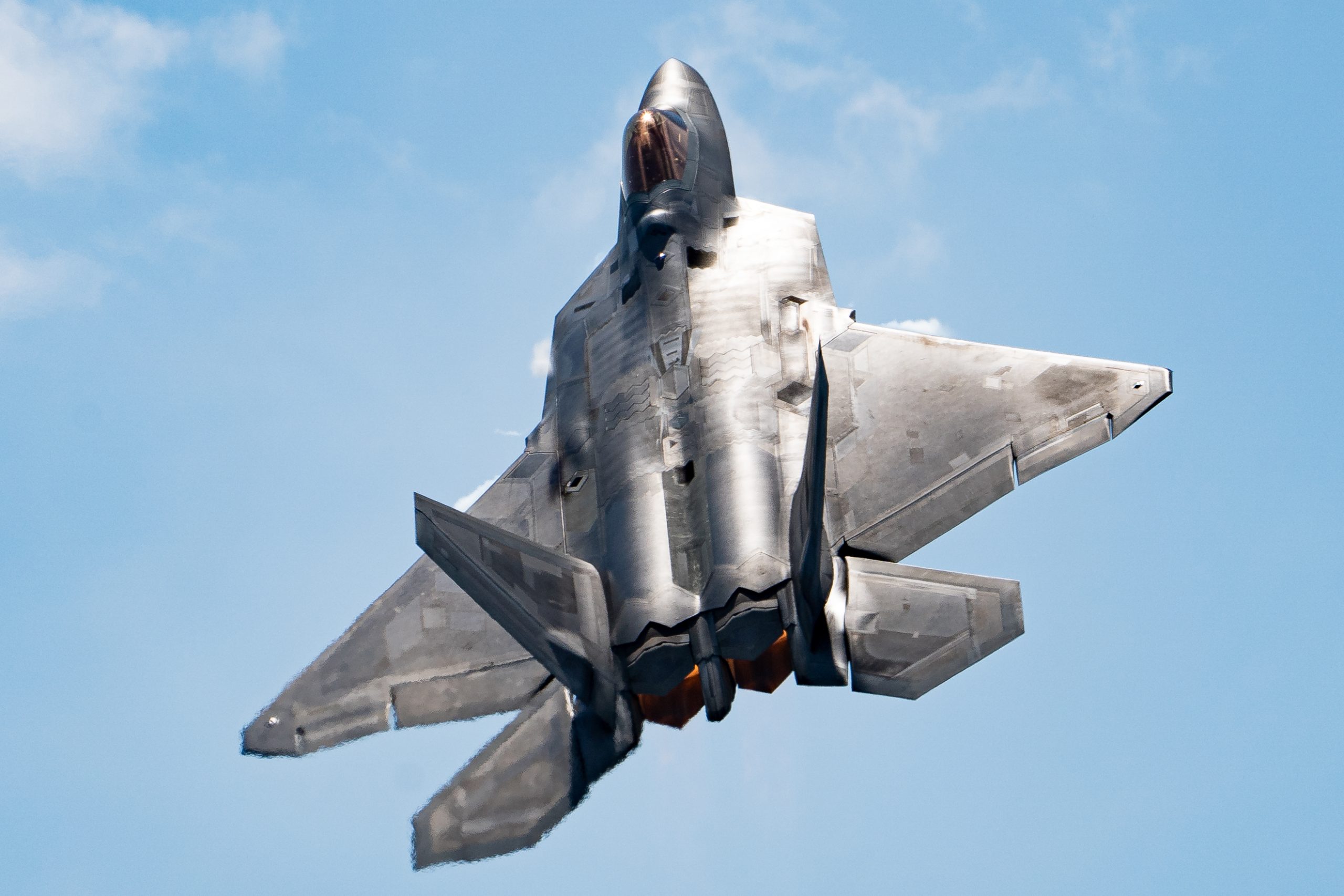
Maj. Joshua “Cabo” Gunderson, F-22 Raptor Demo Team commander and pilot, maneuvers into a climb after a tactical-pitch at the Cold Lake Air Show July 17, 2022, at Cold Lake, Alberta, Canada. The F-22 Raptor’s two Pratt and Whitney F119 Turbofan engines bring a combined 70,000 pounds of thrust in combination with two-dimensional thrust vectoring to enable maximum maneuverability for the multi-role air-to-air stealth fighter. (U.S. Air Force photo by Tech. Sgt. Don Hudson)
Since the spring, Iranian officials have signaled their intent to impose charges on vessels transiting the strait, framing them as “service fees” rather than tolls. Reports put the proposed rate at around $1 per barrel of oil carried, a figure that would add meaningful cost to every cargo passing through a waterway that handles close to a fifth of the world’s oil.
Iran has presented the idea as compensation for managing and securing the channel, and as an extension of the sovereignty it claims over those waters. Tehran has been consistent on that last point throughout the crisis, repeatedly insisting it will retain control over the strait even as it agreed, under the interim deal with Washington, to allow commercial traffic to resume.
The proposal sits within a larger, still-unsettled negotiation. The memorandum of understanding that paused the war requires Iran to permit toll-free passage for at least 60 days while the harder questions are worked out, and one clause of the deal acknowledges Iranian sovereignty over the chokepoint, a concession that gives Tehran a foothold for the argument it is now making. Whether a temporary, no-charge opening becomes a permanent, paid one is exactly what the next two months of talks will decide.
Oman Rules Out Transit Tolls, With a Careful Distinction
Oman’s answer has been deliberate, and it is more precise than a flat refusal. Speaking before a meeting of Gulf foreign ministers and the United States in Bahrain on June 25, Omani Foreign Minister Badr al-Busaidi said that future arrangements for the strait would not include the imposition of any transit fees, and stressed that Oman, as a state bordering the waterway, has a special responsibility to support freedom of navigation.
In separate remarks, he drew the line that matters.
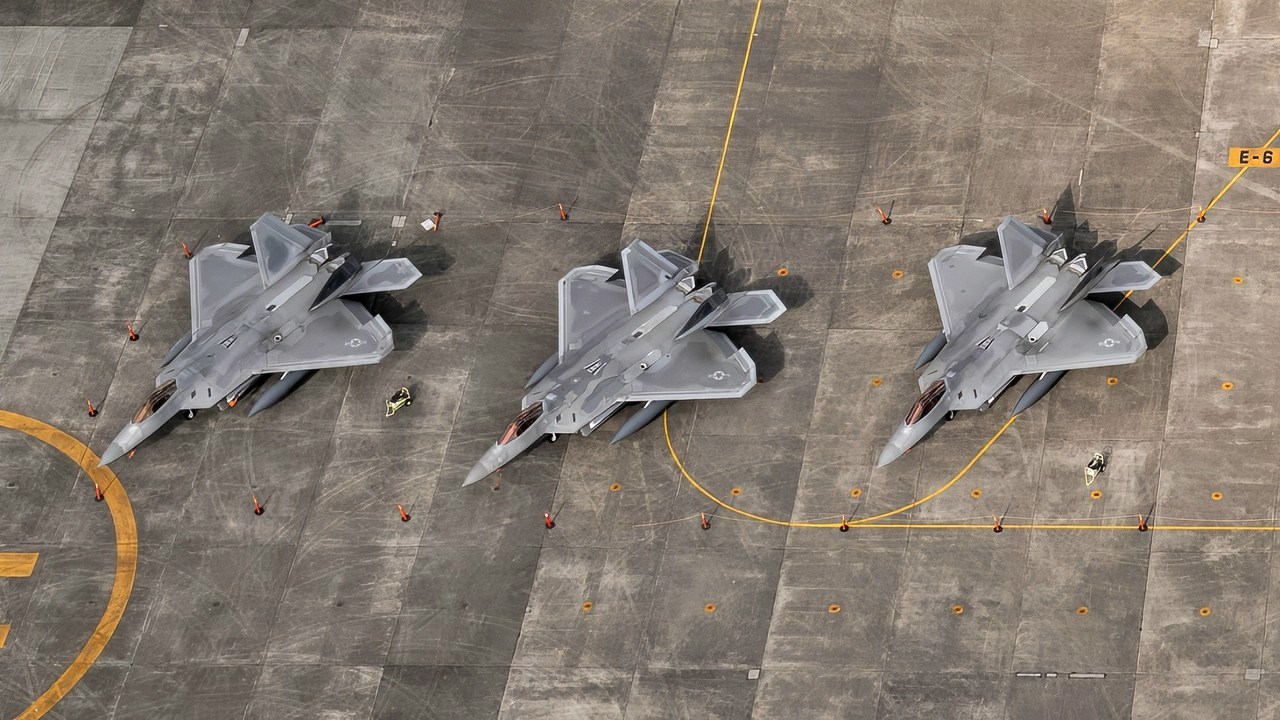
Eight U.S. Air Force F-22 Raptors from Joint Base Elmendorf-Richardson, Alaska, sit on the flightline, July 9, 2018, at Yokota Air Base, Japan. Eight F-22s evacuated from Kadena Air Base, Japan due to Typhoon Maria. The F-22 are deployed under U.S. PACOM’s theater security package (TSP) program, which has been in operation since 2004. (U.S. Air Force photo by Yasuo Osakabe)
Oman opposes tolls on the passage itself, he said, but charges tied to genuine maritime services, navigational safety, pollution prevention, and emergency response could be discussed, citing systems already used in the Strait of Malacca and around Singapore.
That distinction is doing a great deal of work. A toll is a charge for the right to transit, which international law does not permit a coastal state to levy on an international waterway. A service fee, in Oman’s telling, is a voluntary charge for a benefit provided, agreed with the states and companies that use it.
The gap between the two is real in law but narrow in practice, and it leaves room for argument over where a legitimate safety or insurance charge ends and a toll begins. Oman’s framing lets it uphold freedom of navigation and its commitments under the UN Convention on the Law of the Sea without flatly siding against Iran, which is the balance a country that has spent decades as the quiet back channel between Washington and Tehran is trying to strike.
Washington Draws a Red Line on Hormuz Fees
The United States has left no such ambiguity. Secretary of State Marco Rubio, who attended the same Bahrain meeting, said the strait would remain toll-free under any final agreement and dismissed the distinction Iran is leaning on. Whether it is called a toll or a fee is a “game of semantics,”
Rubio said, arguing that no country has the right to charge for the use of international waters and that it would never be an acceptable condition of any deal. He added that there was “zero support” for tolls among the Gulf states, and that Oman had told the meeting it did not favor a tolling system. President Donald Trump went further, telling reporters that any fees on shipping in the strait would be “unacceptable” and a “game changer” that could lead him to reject a final deal, noting that a charge granted to Iran would set a precedent that other countries with their own straits would demand.
Washington’s objection runs deeper than the per-barrel cost. As analysts have noted, the toll fight is entangled with a second and larger dispute over control. Trita Parsi of the Quincy Institute, assessing an Oman-Iran joint statement, argued that the two countries are not announcing that they will collect tolls but rather laying the groundwork for the future administration of the strait and the services provided in it.
The reference in that statement to consulting other littoral states, he said, suggests an attempt to make the waterway’s management a regional affair rather than something Iran and Oman handle alone. For Washington, the unacceptable outcome is any framework that effectively gives Tehran veto power over commercial passage or builds a payment system that acknowledges Iranian authority over transit. The money is the visible part of this fight, but the question of who controls the chokepoint is what gives it weight.
New Routes Past Musandam and Iran’s Warnings
While the diplomacy plays out, Oman has tried to keep ships moving on its own terms. In coordination with the International Maritime Organization, the UN agency responsible for marine safety, Muscat announced new temporary routes to the north and south of the corridor used before the war, explicitly toll-free and intended to restore freedom of navigation.
The southerly route runs close to Oman’s Musandam Peninsula, the rugged headland that forms the strait’s southern shore, and a number of oil tankers began using it, led by the vessel Stoic Warrior. Monday’s traffic through the strait reached its highest level since the war began, though still only around 40 percent of the normal peacetime flow of roughly 120 vessels a day.
Iran moved quickly to contest the arrangement. The Islamic Revolutionary Guard Corps Navy dismissed the new corridor as having been set up without Tehran’s coordination, warned that vessels crossing without its authorization would be dealt with, and insisted that only routes approved by Iran are recognized. Days later, a cargo ship was struck in a suspected drone attack near Oman that US officials attributed to the IRGC, prompting the IMO to suspend a separate plan to evacuate stranded sailors.
The episode underscored how little has actually been settled. Iran has agreed to let ships pass for now, but it is asserting authority over how and where they do so, and pressing a claim that the passage should eventually carry a price.
That is the bind Oman is managing. It cannot afford a closed strait on its doorstep; it cannot endorse a tolling system that its largest security partner has declared a red line; and it cannot openly break with the neighbor it has spent years mediating with.
Its position, no tolls on transit but room to talk about narrowly defined services, administered with regional input rather than by Iranian fiat, is an attempt to thread all three. Whether that careful line holds depends on something Oman cannot control: whether the next two months turn the interim opening of the Strait of Hormuz into a lasting settlement or back into a standoff.
About the Author: Harry J. Kazianis
Harry J. Kazianis (@Grecianformula) was the former Senior Director of National Security Affairs at the Center for the National Interest (CFTNI), a foreign policy think tank founded by Richard Nixon based in Washington, DC. Harry has over a decade of experience in think tanks and national security publishing. His ideas have been published in the NY Times, The Washington Post, The Wall Street Journal, CNN, and many other outlets worldwide. He has held positions at CSIS, the Heritage Foundation, the University of Nottingham, and several other institutions related to national security research and studies. He is the former Executive Editor of the National Interest and the Diplomat. He holds a Master’s degree focusing on international affairs from Harvard University.


