

Contrary to what you might think, the most important ally in the Middle East is not the state of Israel. In fact, it is the Kingdom of Saudi Arabia and several other Gulf Arab states. That’s because those countries have hosted the US military presence that has been the source of US military power in the region.
Washington and Riyadh Reconsider Each Other
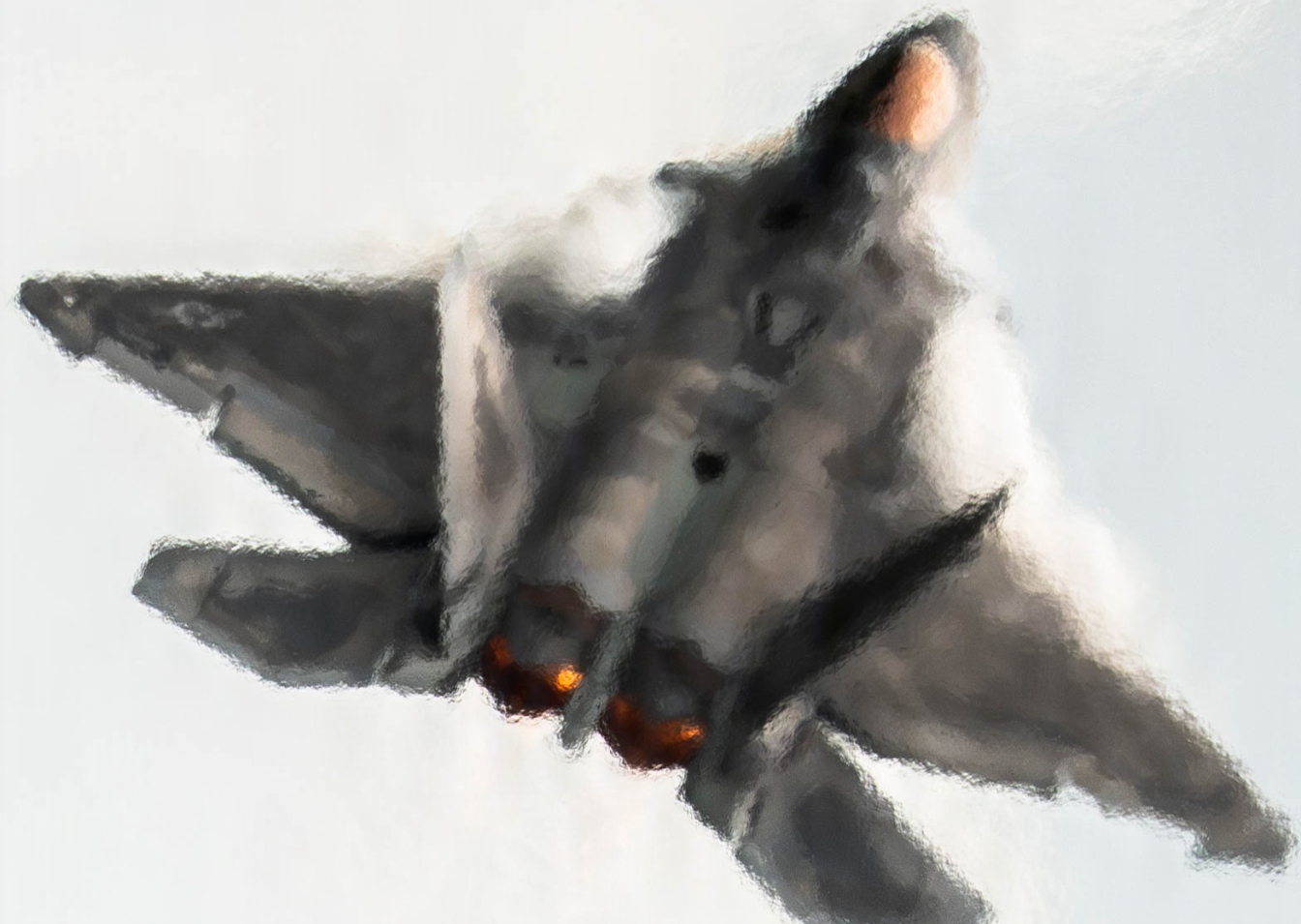
U.S. Air Force Capt. Nick “Laz” Le Tourneau, pilot and commander of the F-22 Raptor Aerial Demonstration Team, performs an aerial demonstration during the Spirit of St. Louis Air Show and STEM Expo in Chesterfield, Missouri, June 7, 2026. Aerial demonstrations are conducted to showcase the capabilities of the F-22 and provide the public an opportunity to observe Air Force operations, gaining a better understanding of its mission. (U.S. Air Force photo by Staff Sgt. Mary Bowers)
While the US military presence in these countries has suffered mightily since the start of the war with Iran, Washington expects that the host governments of these countries will permit the US military to restore its presence in their countries, and allow for their territories to be used by the United States Armed Forces as they were before and during the outbreak of the Iran War.
A recent diplomatic row between the leadership of the Kingdom of Saudi Arabia and the Trump administration underscores how bad an assumption it is for the United States military to make.
In fact, there are already talk and analysis flying around the region that the governments of Bahrain, Qatar, and even Saudi Arabia have hatched plans to see the US military presence in their respective countries if not totally removed, then reduced to such a small presence that it will have no meaning anymore.
Meanwhile, the diplomatic row that erupted between the Trump administration and Saudi Arabia’s Crown Prince Mohammed bin Salman (MbS) lends credence to those rumors. You see, during the Trump administration’s ill-advised counter-blockade of the Iranian blockade of the Strait of Hormuz–Project Freedom–the Saudi government refused to let the Americans use the base in Saudi Arabia to support that mission.
Per the original parameters of the US military mission to keep the Strait of Hormuz open, the US military would have used Saudi airspace to escort commercial shipping through the Strait.
A Diplomatic Rupture
Riyadh refused to allow the Americans to use their bases inside the Kingdom. Without the use of these bases, following the widespread devastation imposed upon other American bases in other Arab states in the region, Project Freedom’s efficacy was at risk. Indeed, the counter-blockade was quite leaky.
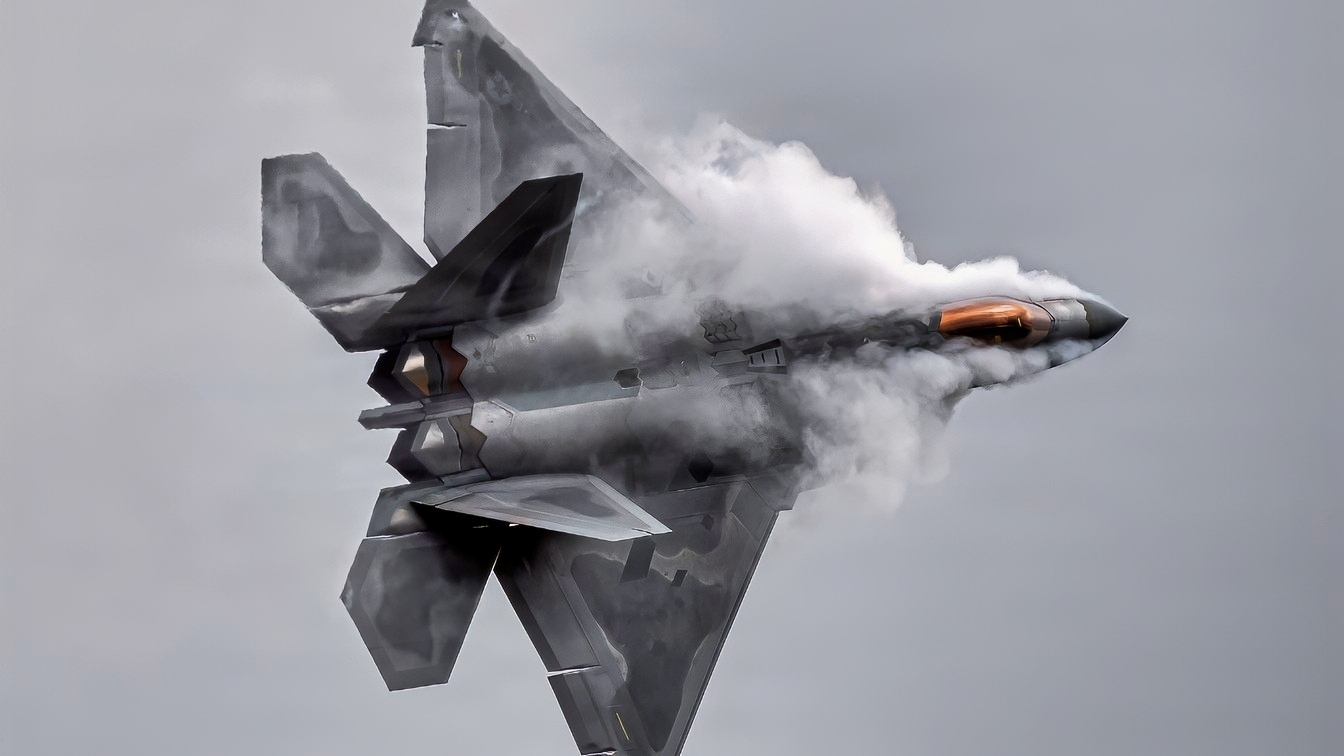
U.S. Air Force Capt. Samuel “RaZZ” Larson, F-22 Raptor Aerial Demonstration Team pilot and commander, performs at the United States Air Force Academy, Colorado Springs, CO, April 14th, 2023. The F-22 Raptor Aerial Demonstration showcases the unmatched maneuverability of the airframe by executing a series of combat maneuvers to inspire Americans and their allies, and deter foreign adversaries. (U.S. Air Force video by Staff Sgt. Michael Bowman)
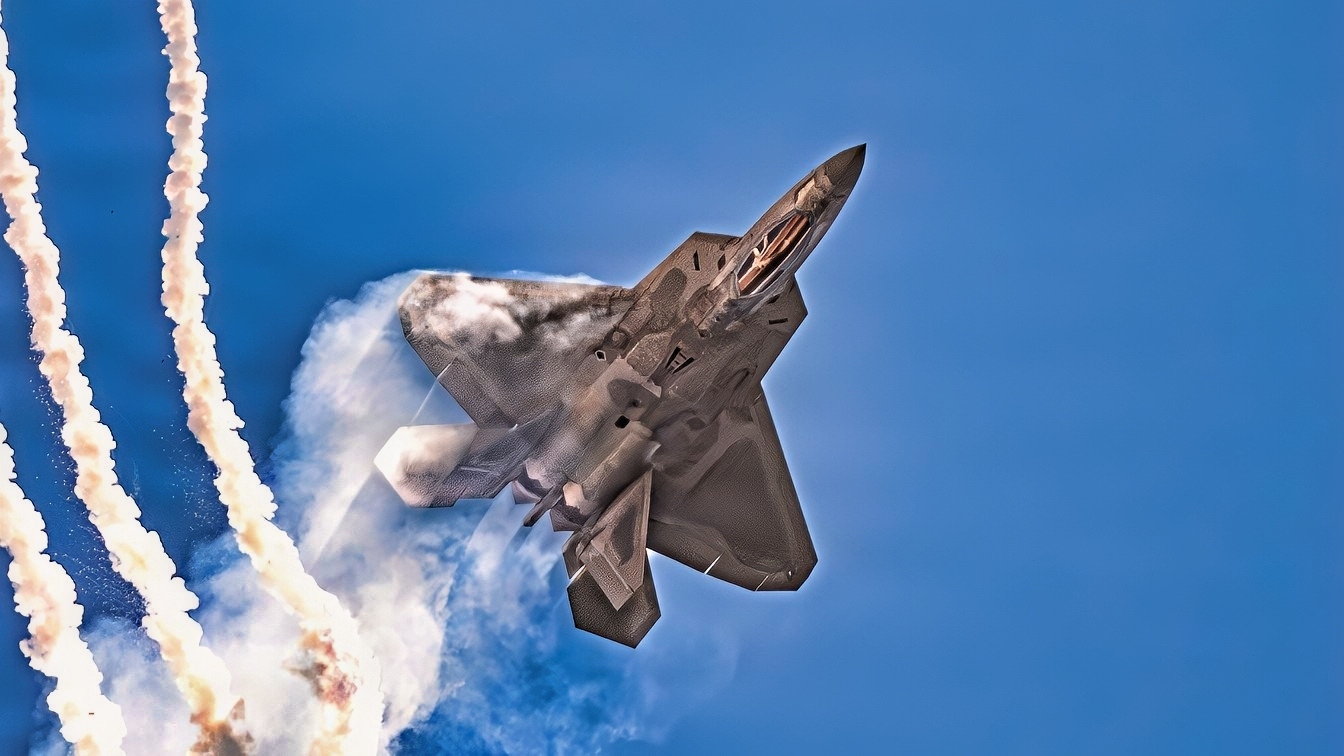
U.S. Air Force Capt. Nick “Laz” Le Tourneau, pilot and commander of the F-22 Raptor Aerial Demonstration Team, performs an aerial demonstration at Air Dot Show Tour Fort Lauderdale, Florida, May 9, 2026. Capt. Le Tourneau showcased the unmatched capabilities of the F-22 by performing a series of combat maneuvers. (U.S. Air Force photo by Staff Sgt. Mary Bowers)
Many ships were allowed through that should not have been. The loss of access to those US bases within Saudi territory was a serious blow to the American attempt to seal off the Strait of Hormuz (and a reminder of how precipitously US power and prestige in the Middle East have declined in the last year alone).
For his part, the forty-seventh president publicly attributed the cancellation of Project Freedom to purported diplomatic progress with Iran. In reality, Riyadh’s refusal was the decisive factor behind the ultimate collapse of Project Freedom. Inevitably, Riyadh allowed a more indirect, covert US use of its territory. But the damage to the US military’s capabilities in the Iran War was irreparable. If that kind of counter-blockade were to have any chance of success, Washington required a robust, overt presence and the capability to sustain it over many weeks and months.
Riyadh deprived Washington of that option, meaning the entire endeavor was fruitless.
Partly because of this incident, and also because American leaders are realizing they cannot protect the bases they have that are so geographically near to Iran, Washington is itself toying with the prospect of seriously reducing its footprint in places like Saudi Arabia.
They are considering repositioning those capabilities away from the Gulf Arab states toward countries that the Trump administration thinks are more supportive of the US position in the Middle East–Israel and Jordan.
Ending the US Alliance?
That, of course, is a ridiculous move.
The US maintains facilities in the Gulf Arab states because they provide critical support for the once-expansive US military presence in places like the Arabian Gulf and the Strait of Hormuz. Americans should be asking their leaders: why keep any bases in this region anymore?
What good is keeping or expanding the US military footprint in places like distant Israel and Jordan?
After all, the United States’ strategic center of gravity is not the Levant. It never was. Instead, it is the Strait of Hormuz. So, if the US military is unwilling or unable to reconstitute its presence in the Gulf Arab states nearest the Arabian Gulf and the Strait of Hormuz, then perhaps the better choice would be to permanently extricate US forces from the Middle East.
Why Would Saudi Arabia Refuse US Military Use of Their Territory?
From Riyadh’s perspective, there are several plausible reasons underscoring why Riyadh did not want the Americans to utilize their territory to harm Iranian interests in and around the Strait of Hormuz.
For starters, Saudi leaders have spent several years repairing relations with Iran after years of confrontation. They have little interest in becoming the launchpad for another major regional war.
Second, the Kingdom knows its own oil facilities, ports, desalination plants, and cities remain highly vulnerable to Iranian missiles and drones.
Third, MbS has made economic modernization under Vision 2030 his top national priority. Another prolonged Gulf war threatens foreign investment and economic growth. Analysts have argued that Saudi Arabia’s overriding objective has been to avoid a direct US-Iran conflict. What’s more, since a Chinese-led rapprochement between the Kingdom and the Islamic Republic, Riyadh has been enjoying thawing relations.
If Riyadh had allowed the Americans to implement Project Freedom from their bases in Saudi Arabia, the Kingdom would have been hit far harder by Iranian missiles than it ultimately was. And let’s face it, much of the financial flow that once went to Dubai has, since the war began, gone to Riyadh (because many investors viewed Riyadh as safer than Dubai).
A Major Regional Realignment Is Underway
Regardless of whether the war resumes in any meaningful way, the regional order in the Middle East is becoming increasingly post-American. Its structure will be multipolar, too. That structure will consist of Pakistan, Saudi Arabia, Iran, Turkey, and Egypt, forcing the smaller states of the region–the United Arab Emirates and Qatar, for instance–to balance against these larger players.
Israel will become isolated geopolitically as well.
Through this process, the Arab states will not entirely abandon their partnerships with the Americans. But they will diversify them and reduce the presence of US forces in the region. In so doing, they will limit the capacity of the Americans to engage militarily as frequently (and thoughtlessly) as Washington has done for so many years since the end of the Cold War.
Indeed, it is likely that Saudi Arabia and other Arab states will diversify their arms purchases away from almost exclusively American systems toward Russian and even Chinese systems.
Again, these states are unlikely to abandon the Americans totally. But they will move to drastically reduce America’s footprint and reach in the region, as these states seek to work with Tehran more thoroughly–and Iran’s partners in Beijing and Moscow.
About the Author: Brandon J. Weichert
Brandon J. Weichert is the Senior National Security Editor at 19FortyFive.com. He also manages The Weichert Brief on Substack. Weichert also hosts “National Security Talk” on Rumble. He is the author of four bestselling national security books, the most recent of which is A Disaster of Our Own Making: How the West Lost Ukraine (Encounter Books). Follow him via Twitter/X @WeTheBrandon.


